01 / Scenario
STUDIO
P
High-End Pilates Studios
Premium aesthetics meet quiet operation for boutique studio environments.
ISO
9001
CE
Certified
OEM
Available
10YR
Warranty
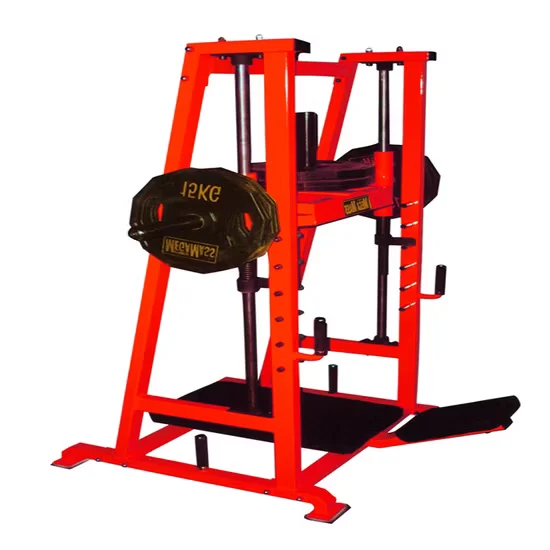
Commercial Vertical Leg Press Machine, 11-Gauge Steel Frame, Plate Loaded, 122kg Net Weight — built with Q235 industrial steel and robotic MIG continuous welding to eliminate spot-weld fatigue under repeated heavy loading. Sealed bearing system and precision guide rods ensure smooth plate movement for high-traffic commercial environments. Every unit undergoes three-stage QC inspection with full load testing before shipment.
// Spec Highlights
• Direct from Manufacturer · No Middlemen · Worldwide Shipping
01
// Material
Imported Solid Wood
Premium hardwood frames sourced for density and visual warmth.
02
// Hardware
Medical-Grade Silent
Whisper-quiet pulleys and springs for clinical environments.
03
// Customization
Appearance OEM
Color, upholstery, and branding tailored to your studio.
04
// Service
Layout Design
Free venue planning for studios and rehab institutions.
Every component is selected for longevity, performance, and aesthetic harmony - from imported hardwood frames to silent medical-grade accessories.
// Features
Mill-Traceable 11-Gauge Steel — Every frame tube on this plate loaded vertical leg press is sourced from certified Q235/Q345 industrial coils with documentation traceable back to the steel mill.
| Parameter | Value |
|---|---|
| Product Type | Vertical Leg Press Machine |
| Exercise Part | Leg |
| Loading Type | Plate loaded |
| Frame Steel Gauge | 11-gauge |
| Steel Grade | Q235 / Q345 industrial steel |
| Welding Type | Robotic MIG, continuous weld lines |
| Product Dimensions | 1300 × 1050 × 1800 mm |
| Net Weight | 122 kg |
| Bearing Type | Sealed industrial bearings |
| Powder Coating | 200μm scratch-resistant, sandblast pre-treated |
| Certification | ISO 9001:2015, CE |
| Warranty | 10-year frame |
| Facility Type | Typical Use |
|---|---|
| Commercial gym strength floor | Primary unilateral leg loading station |
| CrossFit box functional zone | Heavy accessory work for athletes |
| Hotel fitness center | Space-efficient lower-body station |
| University strength and conditioning room | Off-season hypertrophy and rehab return-to-play |
| Rehabilitation and performance center | Controlled single-leg loading post-injury |
A leg press lives or dies by the tube gauge under repeated eccentric loading.
Buyers often see "commercial grade" stamped on a spec sheet with no verifiable wall thickness. The commercial vertical leg press machine absorbs hundreds of kilograms directed at a single structural cross-member every time a user lowers the sled. When that cross-member is fabricated from thin-wall tubing, it does not snap — it yields slowly, developing a permanent bend that shifts the sled track and introduces lateral play [NEED_CITE: structural fatigue under cyclic eccentric loading in fitness equipment]. Spot-welded joints at the pivot points compound the problem, cracking along the heat-affected zone long before the base metal reaches its fatigue limit. I have seen an entire batch of leg presses pulled back from a project because the client insisted on thinner tubing to cut costs; six months of daily use was enough to bend the main beam, forcing a return and full reinforcement weld.
This commercial vertical leg press machine targets unilateral quadriceps, glute, and hamstring development along a fixed sagittal plane. In a strength floor layout, it complements bilateral hack squats and leg extension stations by offering a movement pattern that isolates each limb without requiring spinal stabilization from the user. Facilities running high member throughput benefit from its relatively compact footprint compared to a 45-degree sled press, leaving room for adjacent free-weight stations. The fixed track accommodates users across a wide anthropometric range without demanding complex setup adjustments between sets.
Every repetition subjects the pivot pin and carriage rails to an eccentric load cycle that can exceed several hundred kilograms at the bottom position. Over thousands of cycles per week, these stress concentrations migrate into the weld toes where the carriage arm meets the main upright. Sealed bearings at the pivot resist sweat and chalk infiltration that would otherwise accelerate wear on unsealed bushings [NEED_CITE: bearing degradation in high-moisture gym environments]. The powder coating on contact surfaces must withstand abrasive shoe rubber and cleaning chemicals applied daily; a coating that chips exposes bare steel to oxidation within weeks.
The 11-gauge frame wall thickness sets the deformation threshold well above the loads a commercial vertical leg press machine encounters, even with multiple plates stacked on each side. Robotic MIG welding produces continuous fillet welds along every structural joint, eliminating the localized heat-affected zones that spot welding leaves behind. Sealed industrial bearings at the sled pivot keep rotational play within tight tolerances, so the carriage does not develop lateral drift that would bind the guide rails. The 200μm powder coating, applied after sandblast pre-treatment, anchors mechanically into the steel surface profile rather than sitting on top of mill scale, which is why it resists chipping at shoe-contact and bolt-head areas far longer than conventional electrostatic finishes.
Thinner tubing on a leg press does not fail catastrophically — it creeps. A bent main beam shifts the sled track, forcing the user’s knee into valgus deviation under load and increasing joint shear. Spot welds that crack silently at the carriage pivot can release the sled mid-repetition, creating a liability event no gym owner wants to document. Unsealed bushings require periodic replacement that means pulling the machine off the floor during peak hours [NEED_CITE: maintenance downtime cost for unsealed bearing systems in commercial equipment]. Low-grade powder coating that chips at bolt heads invites corrosion that spreads under adjacent coating, eventually requiring a full strip and re-coat rather than a simple touch-up.
Mill-certified Q235/Q345 steel arrives with a coil trace number, so any deformation issue can be chased back to the heat lot — no vague "commercial grade" claims. Robotic MIG welding with continuous passes means every joint on this commercial vertical leg press machine carries the same fatigue rating as the base metal. Each unit undergoes load testing before crate closure, not sample-based QC on one unit per shipment batch. The 200μm industrial powder coating survives contact with shoe rubber and daily chemical cleaning without exposing substrate. A 10-year frame warranty applies to the structural skeleton, and 2D-3D CAD floor planning ensures this station sits with correct clearance from adjacent racks and cable columns so users never crowd the sled path.
Provide your strength floor square footage and current equipment list to receive a 2D-3D layout showing this vertical leg press machine in context with recommended safety clearances. Specify expected daily user volume so we can confirm the structural grade matches your traffic profile. Share your member demographic height and limb-length range to verify the carriage travel and footplate position cover your population. Note any color, logo, or upholstery customization requirements so the production run reflects your brand specification.
Q: How do I verify the steel gauge claimed on a commercial leg press?
A: Request the mill certificate tied to the coil heat number, not just a "commercial grade" statement. Measure the wall thickness at an exposed tube end with a caliper and compare it against the stated gauge. Reputable manufacturers provide traceable documentation and invite third-party dimensional audits before bulk orders ship.
Q: What is the relationship between frame gauge and load capacity on a plate loaded leg press?
A: Thicker tube walls resist bending and torsional deflection under eccentric loads, keeping the sled track true over years of use. Gauge alone is not the full picture — tube cross-section dimensions and continuous weld quality together determine the actual deformation threshold under sustained commercial loading.
Q: Should I choose plate loaded or selectorized leg presses for a commercial gym?
A: Plate loaded stations suit facilities where users load heavy external weight and prefer incremental plate changes. Selectorized units offer faster weight transitions for high-turnover group class environments. Many strength floors place both types to serve different training preferences and traffic patterns.
Q: How does equipment spacing affect installation of a vertical leg press?
A: Users need clear lateral space to load and unload plates safely, plus rear clearance for the sled travel path. Inadequate spacing creates collision risk with adjacent stations. A 2D-3D floor plan confirms every machine sits within safe operational envelopes before concrete anchors are drilled.
Premium aesthetics meet quiet operation for boutique studio environments.
Medical-grade silence and precision for sports & postpartum recovery.
Furniture-grade craftsmanship for premium residential installations.
Compact premium setups for one-on-one and small-group training.
Aesthetic Pilates integration for hybrid wellness studio programming.
Multi-unit deployment with instructor-grade reliability for certification programs.
Tell us about your project. Our team will respond within 24 hours with pricing, customization options, and shipping details.
// Sales Director
William
+86 132 2531 1800
// Export Manager
Bella
+86 198 5412 8032
william@bickfit.com