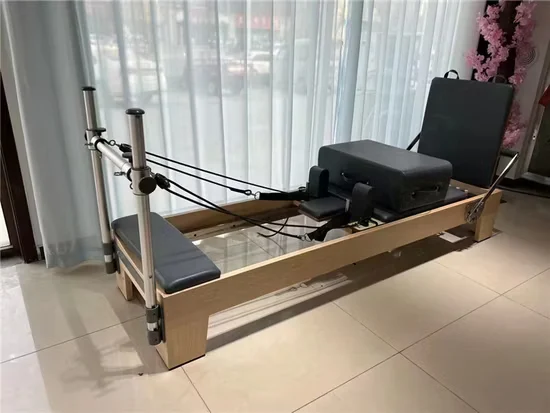
01 / Scenario
STUDIO
P
High-End Pilates Studios
Premium aesthetics meet quiet operation for boutique studio environments.

ISO
9001
CE
Certified
OEM
Available
10YR
Warranty
Wooden Fitness Balance Board, Solid Wood Construction, 1030×300×15mm Dimensions, 5kg Net Weight — engineered with 15mm solid wood thickness to resist warping and delamination under repeated commercial loading, featuring slip-resistant surface treatment for dynamic balance movements. ISO 9001 certified manufacturing with full customization and logo integration available. Every unit undergoes load testing for repeated stress cycles before shipment, backed by a 3-year warranty.
// Spec Highlights
• Direct from Manufacturer · No Middlemen · Worldwide Shipping
01
// Material
Imported Solid Wood
Premium hardwood frames sourced for density and visual warmth.
02
// Hardware
Medical-Grade Silent
Whisper-quiet pulleys and springs for clinical environments.
03
// Customization
Appearance OEM
Color, upholstery, and branding tailored to your studio.
04
// Service
Layout Design
Free venue planning for studios and rehab institutions.
Every component is selected for longevity, performance, and aesthetic harmony - from imported hardwood frames to silent medical-grade accessories.
// Features
Solid Wood Integrity — 15mm solid wood board eliminates layered failure points found in laminated plywood alternatives.
| Parameter | Value |
|---|---|
| Product Type | Balance Board |
| Material | Wood |
| Product Dimensions | 1030×300×15mm |
| Net Weight | 5kgs |
| Color | Solid Color |
| Customization | Available |
| Logo | Customized Is Allowed |
| Warranty | 3 Years |
| Age | Adult |
| Gender | Unisex |
| Certification | ISO 9001 (manufacturer) |
| Facility Type | Typical Use |
|---|---|
| Commercial gym functional zones | Balance and stability training within circuit layouts |
| Yoga and Pilates studios | Core activation and proprioception drills |
| Hotel fitness centers | Compact balance equipment for multi-purpose rooms |
| Rehabilitation and physical therapy facilities | Low-impact balance retraining protocols |
Solid wood eliminates the delamination failure mode entirely.
Balance boards marketed as commercial grade often use thin laminated plywood layers bonded with industrial adhesives. Under repetitive foot traffic and humidity fluctuations in studio environments, these adhesive bonds degrade and layers separate at the edges first. [NEED_CITE: EN 957 structural requirements for stationary training equipment] I have seen laminated boards develop visible edge separation within months when used in high-frequency yoga studios where humidity cycles between sessions. The 15mm solid wood construction of this commercial wooden balance board for yoga training removes the layered structure where moisture infiltration starts the failure cascade.
This board serves the proprioception and balance station within a functional training zone. It pairs with unstable surface trainers, agility ladders, and core-focused equipment to create a movement preparation circuit. The 1030mm length accommodates single-leg stance work and lateral step-touch patterns for users across standard height ranges. Facilities running group classes or open-floor functional zones benefit from the stackable footprint when not in use.
The primary load path runs through the board midspan where repeated foot placement concentrates wear. Static loading during held balance poses creates sustained bending stress, while dynamic movements generate impact at contact points. [NEED_CITE: wood fatigue behavior under cyclic loading conditions] Surface finish must withstand sweat exposure, cleaning agents, and the abrasive contact of bare feet or grippy socks multiple times daily. The 15mm thickness provides the section modulus needed to resist permanent deflection under these cyclic conditions without relying on cross-laminated reinforcement.
Board thickness directly determines bending stiffness and the threshold before permanent sag develops. The 15mm dimension here provides adequate section depth for adult users during single-leg and bilateral stance work. Solid wood selection affects dimensional stability — species with lower moisture absorption rates resist warping when studio humidity fluctuates between heated morning classes and evening cooldowns. Surface finish specification determines both slip resistance during dynamic movements and long-term durability against cleaning chemical exposure.
Thin laminated construction reduces material cost but introduces the delamination failure mode that compounds with each humidity cycle. Boards using particleboard cores or MDF substrates cannot withstand the point loads created when users shift weight to one edge during balance challenges. Non-durable surface finishes wear through to bare wood at high-traffic contact zones, creating both slip hazards and moisture entry points. [NEED_CITE: surface coating durability standards for fitness equipment] Replacement frequency for compromised boards creates cumulative cost that exceeds initial savings within the first year of commercial rotation.
The solid wood construction traces to material grade verification at the source, not just visual inspection of finished boards. Surface treatment specifications are selected for commercial cleaning protocols rather than residential use assumptions. Custom logo integration uses methods that do not compromise surface structural integrity or create moisture entry points. The 3-year warranty reflects the expected service life under daily commercial rotation rather than light-use assumptions. Facility planning support includes spacing recommendations for balance stations within functional training zones to maintain safe clearance during dynamic movements.
Provide your functional training zone dimensions and current equipment list to receive layout recommendations for balance station placement. Specify daily user volume and class frequency to confirm this board meets your traffic requirements. Indicate target user demographics to verify the board dimensions accommodate your client base. Share branding requirements for custom logo placement options and color matching across your equipment fleet.
Q: How do I distinguish commercial-grade balance boards from light-commercial versions?
A: Commercial-grade boards specify material thickness, wood species or grade, and load testing documentation. Light-commercial versions often describe materials vaguely as "wood" without thickness specifications or testing records. Look for warranty terms that reflect daily commercial use assumptions rather than occasional home use. Edge construction and surface treatment specifications also indicate whether the board is built for studio rotation frequency.
Q: What is the relationship between wood material specifications and load capacity?
A: Board thickness, wood species density, and grain orientation all determine bending stiffness and ultimate load capacity. Thicker boards provide greater section modulus, resisting permanent deflection under sustained single-leg loading. Hardwood species with tighter grain structure resist surface denting from repeated foot contact. The 15mm solid wood construction here provides adequate capacity for adult users across standard weight ranges during balance training movements.
Q: What surface treatment options work best for high-traffic studio environments?
A: Commercial balance boards require finishes that maintain slip resistance while withstanding daily cleaning with gym disinfectants. Sealed finishes protect against sweat absorption and humidity-driven warping but must not create a slick surface when wet. Matte or textured finishes provide better grip during barefoot use compared to high-gloss options. Specify chemical resistance requirements when discussing surface treatment options for your facility’s cleaning protocols.
Q: How does the custom branding and logo integration process work?
A: Logo placement options are reviewed against the board surface to identify zones where engraving or printing does not compromise structural integrity or create moisture entry points. You provide artwork files in specified formats, and placement mockups are generated for approval before production begins. Integration methods are selected to maintain surface durability at the branded location. Lead time includes the approval cycle for placement and finish samples.
Premium aesthetics meet quiet operation for boutique studio environments.
Medical-grade silence and precision for sports & postpartum recovery.
Furniture-grade craftsmanship for premium residential installations.
Compact premium setups for one-on-one and small-group training.
Aesthetic Pilates integration for hybrid wellness studio programming.
Multi-unit deployment with instructor-grade reliability for certification programs.
Tell us about your project. Our team will respond within 24 hours with pricing, customization options, and shipping details.
// Sales Director
William
+86 132 2531 1800
// Export Manager
Bella
+86 198 5412 8032
william@bickfit.com