01 / Scenario
STUDIO
P
High-End Pilates Studios
Premium aesthetics meet quiet operation for boutique studio environments.
ISO
9001
CE
Certified
OEM
Available
10YR
Warranty
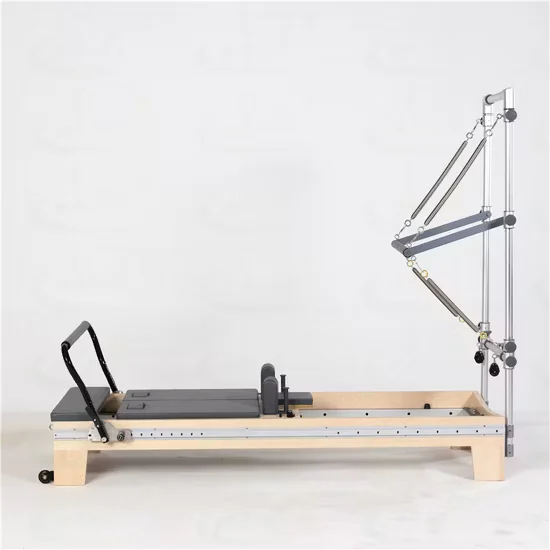
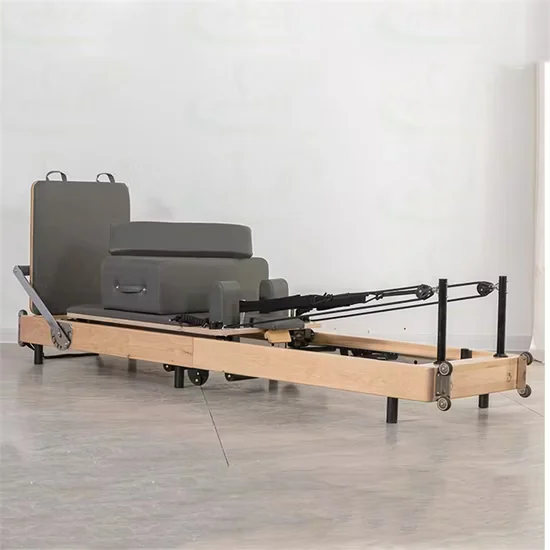
Foldable Pilates Reformer Machine, 2400×600×350mm, 100kg Net Weight — built with reinforced carriage rail system and integrated jump board, long box, and platform compatibility for full-spectrum studio programming. Solid-frame construction with continuous-weld joinery at high-stress junctions eliminates rail flex during dynamic loading. 3-year warranty with 80 pieces/month production capacity. Direct manufacturer with 17 years heritage, 500+ commercial gyms equipped, and 10-year frame warranty on strength lines.
// Spec Highlights
• Direct from Manufacturer · No Middlemen · Worldwide Shipping
01
// Material
Imported Solid Wood
Premium hardwood frames sourced for density and visual warmth.
02
// Hardware
Medical-Grade Silent
Whisper-quiet pulleys and springs for clinical environments.
03
// Customization
Appearance OEM
Color, upholstery, and branding tailored to your studio.
04
// Service
Layout Design
Free venue planning for studios and rehab institutions.
Every component is selected for longevity, performance, and aesthetic harmony - from imported hardwood frames to silent medical-grade accessories.
// Features
Foldable Reformer Frame Rigidity — Heavier-gauge steel rails and continuous-weld carriage joints resist deflection under repeated jump board plyometrics and spring-loaded presses.
| Parameter | Value |
|---|---|
| Product Type | Pilates Reformer Machine |
| Model NO. | SRY-20B |
| Product Dimensions | 2400 × 600 × 350 mm |
| Net Weight | 100 kg |
| Included Accessories | Long Box, Jump Board, Platform |
| Frame Finish | Solid Color Powder Coating |
| Logo | Customized Is Allowed |
| Warranty | 3 Years |
| Production Capacity | 80 Pieces/Month |
| Upholstery | Standard options available |
| Facility Type | Typical Use |
|---|---|
| Boutique Pilates studio | Group reformer classes with full accessory rotation |
| Rehabilitation and physiotherapy center | Low-impact mobility and post-injury conditioning |
| Hotel and resort wellness facility | Compact storage via foldable frame for multi-use rooms |
| Home studio | Space-efficient setup for private daily practice |
A reformer rail that flexes under dynamic loading turns controlled movement into an unpredictable glide path.
Many units marketed for studio use rely on thin-gauge aluminum extrusions for the carriage rail system. Over months of repetitive spring-resisted presses and jump board impacts, those rails develop measurable play between the carriage wheels and the track surface. The result is lateral wobble that instructors feel before they see it — and a maintenance cycle that starts earlier than any floor plan anticipated. I have seen reformer carriages derail mid-session because a spot-welded rail bracket gave way under a plyometric landing. When we evaluate a commercial foldable Pilates reformer machine with jump board capability, the first checkpoint is always the rail-to-frame connection: continuous welds or mechanical fasteners, not intermittent tack welds that fail under cyclic stress [NEED_CITE: weld classification and fatigue performance in structural steel frames].
This foldable reformer covers the full spectrum of Pilates programming — supine presses, seated pulls, prone extensions, and standing platform work — engaging core stabilizers, lower-limb extensors, and upper-body pulling chains across sagittal and frontal planes. In a studio layout, it pairs naturally with mat zones and Cadillac towers for class rotation, serving as the primary resistance station. The foldable footprint suits multi-use rooms where floor space shifts between group classes and private sessions. Carriage travel and spring configuration accommodate users from lighter rehabilitation clients to heavier athletes performing loaded split-leg work.
Dynamic loading on a reformer is not uniform — jump board plyometrics produce impact spikes, while slow eccentric spring releases generate sustained tensile stress on carriage wheels and rail surfaces. In high-traffic studios running back-to-back classes, the foldable hinge mechanism endures thousands of articulation cycles, concentrating fatigue at the pivot pin and surrounding weld zone [NEED_CITE: fatigue cycle analysis for folding structural mechanisms in fitness equipment]. Carriage wheel bearings accumulate particulate wear from studio dust and sweat residue, gradually developing lateral play if unsealed. The powder-coated rail surface must resist abrasion from wheel contact and chemical exposure from daily cleaning agents, while the upholstery on the carriage pad and long box compresses under body weight across hundreds of sessions per week.
The 2400 mm frame length provides full-range carriage travel for tall users without compromising the foldable footprint when stored. At 100 kg net weight, the frame mass reflects steel density sufficient to anchor the unit against lateral drift during asymmetric single-leg exercises — lighter reformers tend to shift on smooth studio floors under off-center loading. The included jump board, long box, and platform expand exercise variety without requiring separate purchases or aftermarket fitting, ensuring accessory mounting points are engineered into the frame from the start. Spring system configuration across multiple resistance levels allows instructors to scale loading from early-stage rehabilitation through advanced athletic conditioning. The three-year warranty signals confidence in structural wear components — rails, hinges, and spring anchors — beyond the cosmetic lifespan of upholstery and grips [NEED_CITE: commercial fitness equipment warranty benchmarks for structural vs. wear components].
Thin-wall rail extrusions deform under repeated jump board landings, creating a concave wear track that accelerates wheel degradation and produces a rough, noisy carriage glide. Spot-welded hinge brackets on foldable models crack at the weld boundary after months of articulation cycles, turning a storage convenience into a structural liability. Non-sealed carriage bearings require frequent cleaning and replacement — a labor cost that compounds across a studio fleet every quarter. Low-density upholstery foam compresses permanently within months of commercial use, exposing the rigid carriage board beneath and forcing pad replacement long before the frame reaches end of life. Undersized spring anchors bend under maximum tension settings, altering resistance calibration and creating inconsistent loading between identical units in a group class setup.
The steel used in this reformer frame is sourced with mill-level traceability, so gauge thickness and alloy composition are verifiable rather than marketed as generic "studio grade." Robotic MIG welding produces continuous weld lines at the rail-to-frame junction and hinge pivot zones, eliminating the intermittent tack welds that crack under cyclic folding stress. Every unit undergoes load testing before packing — not sample-based batch testing, but individual verification of carriage travel, spring tension, and hinge articulation under loaded conditions. The powder coating is applied at industrial thickness to resist abrasion from wheel contact and chemical cleaning agents common in studio maintenance routines. The foldable mechanism is supported by 2D-3D floor planning CAD files so operators can verify stored footprint and safe deployment clearances within their specific room dimensions. OEM customization extends to upholstery color and logo placement for studio branding consistency across a fleet order.
Provide your studio floor dimensions and class capacity targets to receive a 2D-3D layout showing stored and deployed clearances for each foldable unit. Specify average daily session count per machine so we can confirm spring and bearing service intervals match your throughput. Share your client demographic — rehabilitation-focused or athletic performance — to align spring resistance configuration with typical user loading. Indicate upholstery color and logo requirements for fleet-wide branding consistency across your facility.
Q: How do I evaluate rail construction for long-term carriage stability?
A: Check whether the rail is a solid steel extrusion or thin-gauge aluminum, and confirm the rail-to-frame connection uses continuous welds rather than spot welds. Request the rail material specification and hardness rating. Carriage wheels should run on sealed bearings — open bearings accumulate studio dust and develop lateral play quickly. Ask for a loaded carriage deflection test result if available.
Q: What spring configuration works best for group classes versus private sessions?
A: Group classes benefit from a progressive spring set that allows quick resistance changes between exercises without swapping hardware — instructors need to scale loading across mixed-ability participants rapidly. Private sessions often use finer resistance gradations for rehabilitation progressions. Confirm how many springs are included and whether individual spring tension values are documented for programming reference.
Q: What maintenance schedule should a high-traffic studio plan for?
A: Monthly bearing inspection for lateral play, quarterly spring tension verification against baseline calibration, and weekly rail surface cleaning with pH-neutral agents form the core maintenance cycle. Upholstery compression should be assessed every six months. Foldable hinge pins and locking mechanisms need inspection before each operating day to confirm secure engagement during use.
Q: How should foldable reformers be spaced in a multi-use studio?
A: Allow full deployment length plus a minimum clearance zone on both sides for instructor access and client movement between stations. When folded, verify the stored footprint against your wall or rack storage dimensions. Provide your room layout for a CAD-based spacing plan that accounts for both configurations and safe traffic flow during class transitions.
Q: What customization is available for studio branding?
A: Upholstery color can be selected from available options to match studio design standards, and custom logo placement is supported on the frame. Confirm lead time for branded orders and request a color sample swatch before fleet commitment to ensure consistency across your facility aesthetic.
Premium aesthetics meet quiet operation for boutique studio environments.
Medical-grade silence and precision for sports & postpartum recovery.
Furniture-grade craftsmanship for premium residential installations.
Compact premium setups for one-on-one and small-group training.
Aesthetic Pilates integration for hybrid wellness studio programming.
Multi-unit deployment with instructor-grade reliability for certification programs.
Tell us about your project. Our team will respond within 24 hours with pricing, customization options, and shipping details.
// Sales Director
William
+86 132 2531 1800
// Export Manager
Bella
+86 198 5412 8032
william@bickfit.com