01 / Scenario
STUDIO
P
High-End Pilates Studios
Premium aesthetics meet quiet operation for boutique studio environments.
![Foldable Pilates Reformer White Maple Wood for Yoga Studio [WARN] draft identifier mismatch](https://bickgym.com/wp-content/uploads/2026/08/foldable-pilates-reformer-white-maple-wood-for-yoga-studio-warn-draft-identifier-mismatch-d14b7f.webp)
ISO
9001
CE
Certified
OEM
Available
10YR
Warranty
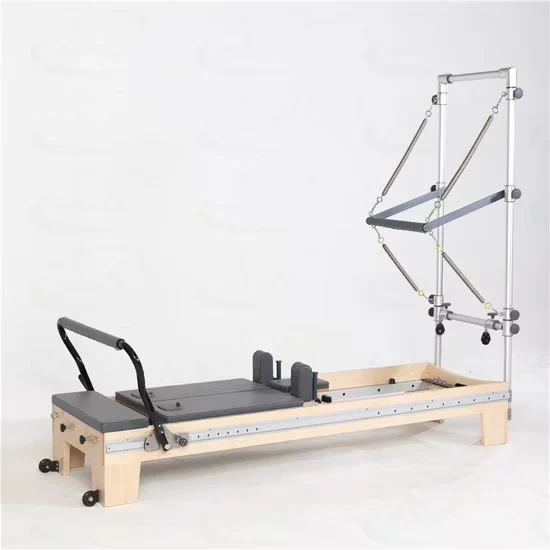
Foldable Pilates Reformer, White Maple Frame, 2400×600mm — solid hardwood construction resists rail warping under daily carriage cycling, with foldable hinge design for compact studio storage. Includes long box, jump board, and platform for full-range training configurations. FSC-certified white maple with controlled moisture content ensures long-term structural stability and smooth glide performance.
// Spec Highlights
• Direct from Manufacturer · No Middlemen · Worldwide Shipping
01
// Material
Imported Solid Wood
Premium hardwood frames sourced for density and visual warmth.
02
// Hardware
Medical-Grade Silent
Whisper-quiet pulleys and springs for clinical environments.
03
// Customization
Appearance OEM
Color, upholstery, and branding tailored to your studio.
04
// Service
Layout Design
Free venue planning for studios and rehab institutions.
Every component is selected for longevity, performance, and aesthetic harmony - from imported hardwood frames to silent medical-grade accessories.
// Features
Every Load Test — Each foldable Pilates reformer undergoes full cycle testing before shipping, not sample-based QC on one unit per batch.
| Parameter | Value |
|---|---|
| Product Type | Pilates Reformer |
| Model NO. | SRY-20B |
| Frame Material | Solid White Maple Wood |
| Dimensions | 2400 × 600 × 350 mm |
| Net Weight | 100 kgs |
| Included Accessories | Long Box / Jump Board / Platform |
| Foldable Design | Yes, for compact storage |
| Customization | Available, logo branding allowed |
| Target User | Adult, Unisex |
| Warranty | 3 Years |
| Facility Type | Typical Use |
|---|---|
| Commercial Pilates Studio | Daily group and private reformer classes with high carriage cycling frequency |
| Boutique Fitness Studio | Mixed-modal sessions combining reformer work with mat and functional training |
| Home Studio Setup | Space-constrained residential environments requiring foldable storage after use |
| Rehabilitation Center | Controlled resistance training for injury recovery and postural correction programs |
The folding mechanism is the first structural point to show fatigue, not the wood rails.
Many studio operators assume the maple frame is the weak link in a commercial foldable pilates reformer, but the pivot hardware and locking pins at the fold point endure repeated stress concentrations that solid wood simply does not experience in the same way. When a reformer folds and unfolds multiple times per day in a busy studio environment, the hinge bears dynamic loads that exceed static use forces. Laminated or undersized hinge plates develop play, and the locking mechanism begins to wobble under carriage movement [NEED_CITE: structural fatigue at mechanical pivot points in folding fitness equipment]. This is where the engineering tolerance of the hinge assembly determines whether the reformer lasts three seasons or three years.
This reformer supports supine, prone, seated, and standing movement configurations across all major joint actions — hip flexion and extension, spinal articulation, shoulder stabilization, and lower limb tracking through the jump board. In a studio layout, it pairs directly with Cadillac towers and chair units for progressive programming, occupying a linear footprint that aligns efficiently along walls or in parallel rows. The foldable design allows operators running high-density class schedules to clear floor space between sessions. The commercial foldable pilates reformer accommodates users across a broad height and weight range through adjustable spring anchor points and carriage travel length.
The carriage generates repetitive impact loads at the rail endpoints during footwork sequences and jump board work, creating micro-stress accumulations at the rail termination points and the fold hinge simultaneously. In a studio running six or more classes daily, the reformer frame experiences thousands of carriage cycles per week, each producing eccentric deceleration forces as the carriage meets the stopper. The spring anchor hardware undergoes continuous tension-release fatigue, and the wheel-to-rail interface develops wear patterns that directly correlate to maintenance intervals [NEED_CITE: cyclic loading effects on wood-frame fitness equipment rails]. Sweat exposure and cleaning chemical contact accelerate finish degradation at high-touch contact zones.
Solid white maple offers consistent grain structure and density that laminated plywood or veneer-over-MDF cannot match under sustained carriage loading. The rail straightness depends entirely on the frame’s resistance to warping from humidity fluctuation and repeated mechanical stress — solid hardwood maintains dimensional stability where composite materials delaminate or bow over time. The carriage wheel material must pair correctly with the maple rail surface: too hard, and the wheels groove the wood; too soft, and the wheels deform and develop flat spots. The foldable hinge mechanism must be engineered with reinforced pivot plates and positive-locking pins that eliminate lateral play during use, because any hinge flexibility translates directly into carriage wobble and user discomfort.
A reformer that folds smoothly on day one can develop dangerous lateral play within months if the hinge pins and locking sleeves are machined from soft metals or lack adequate bearing surfaces. Thin-gauge hinge plates bend under the torsional load of unfolding, and once the pivot geometry shifts, the carriage no longer tracks true on the rails. Operators then face repeated service calls, class cancellations, and eventually full unit replacement — costs that far exceed the initial price differential of properly engineered folding hardware [NEED_CITE: total cost of ownership for folding mechanism failures in commercial studio equipment]. Non-standard accessory mounting systems compound the problem, leaving studios unable to source replacement long boxes or jump boards when attachment points wear out.
Solid white maple is sourced and inspected for grain orientation that maximizes rail straightness under load, not simply selected for appearance. The folding hinge mechanism is load-tested through repeated cycle counts that simulate multi-year studio use before the design is approved for production. Every unit is inspected for carriage glide consistency, rail surface finish, and hinge locking integrity before shipment — not batch-sampled. The commercial foldable pilates reformer ships with a full accessory suite including long box, jump board, and platform, all fitted to standardized mounting points that allow future replacement without frame modification. Logo customization is available for studio branding requirements without compromising structural surfaces.
Provide your studio floor dimensions and class capacity targets to receive a 2D layout showing reformer placement with correct safety clearances and traffic flow. Specify your expected daily carriage cycle volume so we can confirm the structural grade matches your usage intensity. Confirm your user population height and weight range to verify the spring configuration and carriage travel accommodate all clients. State any branding or color customization requirements for coordinated studio aesthetics.
Q: How does solid white maple compare to plywood or birch in reformer frame longevity?
A: Solid white maple maintains consistent density throughout the cross-section, meaning rail surfaces resist warping and groove formation under repeated carriage cycling. Plywood frames rely on adhesive bonds between veneer layers that can delaminate under humidity changes and mechanical stress. Birch is harder but more brittle, making it prone to splitting at hardware mounting points under dynamic loads in commercial studio environments.
Q: Does the folding hinge compromise frame rigidity during active use?
A: A properly engineered hinge uses reinforced pivot plates with positive-locking pins that eliminate lateral and vertical play when deployed. The structural continuity depends on the locking mechanism tolerances and bearing surfaces at the fold point. If any wobble is detectable when the reformer is locked open, the hinge hardware is underspecified for the dynamic loads generated during carriage movement and jump board exercises.
Q: What maintenance does the carriage wheel and rail system require in a high-frequency studio?
A: Carriage wheels should be inspected quarterly for flat spots and deformation, which develop when wheel material is too soft for the maple rail surface. Rail surfaces need visual inspection for groove formation that indicates improper wheel-to-rail material pairing. Keeping rails clean of dust and chalk residue prevents abrasive wear. Replacement wheels and rails should be available as standard spare parts from the manufacturer.
Q: How often should springs be replaced, and can resistance levels be customized?
A: Spring replacement intervals depend on daily cycle volume and the tension range used most frequently in your programming. Springs lose tension consistency over thousands of extension cycles, producing uneven resistance that clients notice during controlled movements. Most studios replace springs annually under heavy use. Custom resistance progressions can be specified by selecting different spring gauges and anchor configurations to match your class programming requirements.
Premium aesthetics meet quiet operation for boutique studio environments.
Medical-grade silence and precision for sports & postpartum recovery.
Furniture-grade craftsmanship for premium residential installations.
Compact premium setups for one-on-one and small-group training.
Aesthetic Pilates integration for hybrid wellness studio programming.
Multi-unit deployment with instructor-grade reliability for certification programs.
Tell us about your project. Our team will respond within 24 hours with pricing, customization options, and shipping details.
// Sales Director
William
+86 132 2531 1800
// Export Manager
Bella
+86 198 5412 8032
william@bickfit.com