01 / Scenario
STUDIO
P
High-End Pilates Studios
Premium aesthetics meet quiet operation for boutique studio environments.

ISO
9001
CE
Certified
OEM
Available
10YR
Warranty
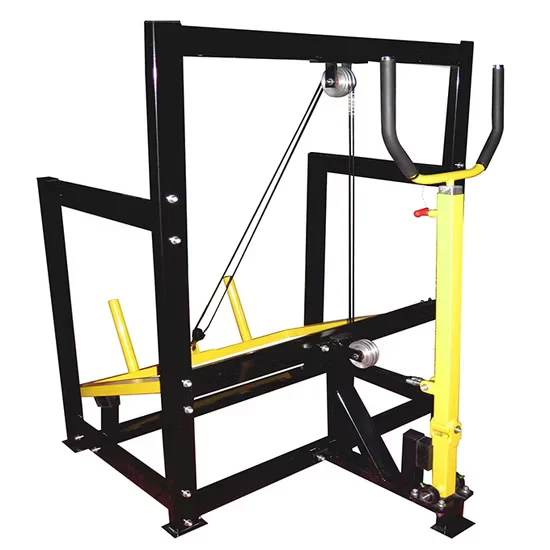
Plate Loaded ISO-Lateral Bench Press, 3×3 Inch Frame Steel, 140kg Net Weight — engineered with Q235/Q345 industrial steel and robotic MIG continuous welding to eliminate cold joints and spot-weld fatigue under repeated heavy loading. Iso-lateral converging arm design reduces joint stress while maintaining pivot rigidity during max-effort presses. Every unit undergoes three-stage QC with load testing before shipment, backed by a 10-year frame warranty.
// Spec Highlights
• Direct from Manufacturer · No Middlemen · Worldwide Shipping
01
// Material
Imported Solid Wood
Premium hardwood frames sourced for density and visual warmth.
02
// Hardware
Medical-Grade Silent
Whisper-quiet pulleys and springs for clinical environments.
03
// Customization
Appearance OEM
Color, upholstery, and branding tailored to your studio.
04
// Service
Layout Design
Free venue planning for studios and rehab institutions.
Every component is selected for longevity, performance, and aesthetic harmony - from imported hardwood frames to silent medical-grade accessories.
// Features
Verified Steel Traceability — Every tube section in this iso-lateral bench press traces back to a certified Q235 or Q345 mill coil, not an unverified commercial grade label.
| Parameter | Value |
|---|---|
| Product Type | Plate Loaded Chest Press |
| Frame Tube Size | 3×3 inch |
| Frame Steel Gauge | 11-gauge |
| Steel Grade | Q235 / Q345 |
| Welding Type | Robotic MIG, continuous weld lines |
| Loading Type | Plate loaded |
| Product Dimensions | 1323×1599×1746mm |
| Net Weight | 140kg |
| Powder Coating | 200μm, sandblast pre-treated |
| Color Options | Main frame and cushion color according to customer requirements |
| Upholstery | Replaceable, available in standard or high-density options |
| Certification | ISO 9001, CE |
| Warranty | 10-year frame warranty |
| Facility Type | Typical Use |
|---|---|
| Commercial gym strength floor | High-traffic hypertrophy and bodybuilding chest training |
| Hotel and resort fitness center | Durable, low-maintenance pressing station for mixed-ability guests |
| University strength and conditioning room | Athlete upper-body strength development under supervised sessions |
| Rehabilitation and performance center | Controlled iso-lateral pressing for return-to-play protocols |
A continuous MIG weld distributes stress across the full joint length; a spot weld concentrates it into a single failure point.
When a lifter racks a heavily loaded plate press, the horn sleeves and frame junctions absorb shock loads that cycle thousands of times per week. Suppliers who quote commercial plate loaded iso-lateral chest press units with spot-welded horn brackets often see cracking within the first year of heavy commercial rotation [NEED_CITE: weld classification and fatigue performance in structural steel]. The joint passes a visual factory inspection but lacks the penetration depth to handle eccentric off-axis forces. We switched to robotic MIG with continuous weld lines after seeing returned units where the loading horn separated from the main frame at the weld boundary — a failure mode that does not occur when the bead runs the full joint perimeter.
This plate loaded iso-lateral bench press occupies the primary horizontal pressing slot in a commercial strength floor layout. It covers the sagittal plane pectoral movement with independent converging arm action, complementing incline and decline stations already present in the zone. For facilities running high daily throughput, the iso-lateral design lets two users alternate without resetting weight pins. The seat and grip geometry accommodates users from the fifth percentile female to the ninety-fifth percentile male without requiring tool-based adjustment between sets.
Each press repetition generates a static load through the frame members and a dynamic shock component when plates contact the horn stops. In a commercial gym running eight or more hours daily, a single station can accumulate tens of thousands of loading cycles per year. The pivot bushings at the arm axis bear the highest wear concentration, and unsealed bearings in this position develop lateral play that transfers misalignment to the weld seams [NEED_CITE: EN 957 structural requirements for stationary training equipment]. The 200μm powder coating on the loading sleeves resists abrasion from repeated plate sliding, while the sandblast pre-treatment prevents subsurface corrosion that would otherwise lift the finish at high-contact zones.
The 3×3 inch tube profile combined with 11-gauge wall thickness gives this frame a deformation threshold that accommodates max-effort loading without visible flex during the press stroke. Robotic MIG welding produces consist*e cold-start defects that appear when manual welders restart a bead mid-seam. The iso-lateral arm pivot uses sealed bushings rather than open bearings, keeping chalk dust and sweat residue out of the friction surface. Sandblast pre-treatment before powder coating creates a mechanical anchor pattern on the steel surface, which is what prevents the finish from chipping when plates bang against the horn stops repeatedly. The replaceable upholstery mounts on a bolted subframe, meaning a torn pad swaps out in minutes without pulling the entire seat assembly off the main tube.
A thinner wall tube on a plate loaded iso-lateral bench press will not fail immediately — it flexes slightly under load, and that flex accumulates into permanent set deformation over months of heavy use. Spot-welded horn brackets hold during factory testing but open fatigue cracks once real users drop plates onto the sleeves at varying angles. Non-sealed pivot bushings absorb moisture and chalk particles, developing a grinding feel that members notice and complain about. Low-density upholstery foam compresses to a hard pancake within a season, forcing the facility to either reupholster or replace the entire pad assembly. Thin powder coating chips down to bare steel at every plate contact point, and the resulting rust spreads under the adjacent finish [NEED_CITE: powder coating thickness standards for commercial fitness equipment].
The 11-gauge frame with mill-traceable steel coil certification means the material spec on the quote matches what arrives on your loading dock. Robotic MIG continuous welding on every joint removes the batch-to-batch inconsistency that appears when different manual welders rotate through production. Every unit undergoes load testing before crating, not sample-based batch testing that misses individual defects. The 200μm industrial powder coating holds up against daily cleaning chemicals and sweat contact without requiring touch-up maintenance cycles. The 10-year frame warranty covers the main tube structure and weld joints under documented commercial use conditions. Our 2D and 3D CAD layout support accounts for this machine’s 1323×1599mm footprint plus the required safety clearance zones on both sides for plate loading access.
Provide your strength zone square footage and existing equipment list so we can generate a 2D or 3D layout showing this press within your available clearance envelope. Specify your estimated daily user volume to confirm the structural grade matches your traffic pattern. Indicate the body type range of your primary user population to verify seat and grip positioning. State any custom requirements for frame color, logo placement, or upholstery material so we can include those in the production specification.
Q: How do I confirm the steel gauge is actually 11-gauge and not a thinner wall marketed as commercial grade?
A: Request the mill certificate that traces the frame steel back to the source coil, which lists the wall thickness and steel grade by batch number. Vague commercial grade claims without documentation typically indicate unverified material sourcing. Our quotes include coil traceability for every frame tube used in production.
Q: What is the practical difference between iso-lateral and standard converging chest press movement?
A: Iso-lateral arms move independently, allowing each side to follow its own natural pressing arc without the stronger side compensating for the weaker one. A linked converging press forces both arms along a single fixed path. Independent movement reduces shoulder strain during heavy sets and allows single-arm work without removing plates from the opposite side.
Q: How does continuous robotic MIG welding affect the frame compared to manual spot welding?
A: Continuous welds distribute mechanical stress along the entire joint length, whereas spot welds concentrate stress into isolated points that become crack origins under repeated loading. Robotic execution maintains consistent penetration depth and travel speed, removing the variation that occurs when different manual welders handle the same joint across production shifts.
Q: What safety clearances should I plan around this machine in a commercial floor layout?
A: You need plate-loading access space on both sides of the unit plus user passage clearance behind the seat. The exact spacing depends on the plate storage location and adjacent equipment orientation. We provide CAD layout files that map this machine footprint with recommended clearance zones based on your specific floor dimensions.
Premium aesthetics meet quiet operation for boutique studio environments.
Medical-grade silence and precision for sports & postpartum recovery.
Furniture-grade craftsmanship for premium residential installations.
Compact premium setups for one-on-one and small-group training.
Aesthetic Pilates integration for hybrid wellness studio programming.
Multi-unit deployment with instructor-grade reliability for certification programs.
Tell us about your project. Our team will respond within 24 hours with pricing, customization options, and shipping details.
// Sales Director
William
+86 132 2531 1800
// Export Manager
Bella
+86 198 5412 8032
william@bickfit.com