01 / Scenario
STUDIO
P
High-End Pilates Studios
Premium aesthetics meet quiet operation for boutique studio environments.

ISO
9001
CE
Certified
OEM
Available
10YR
Warranty
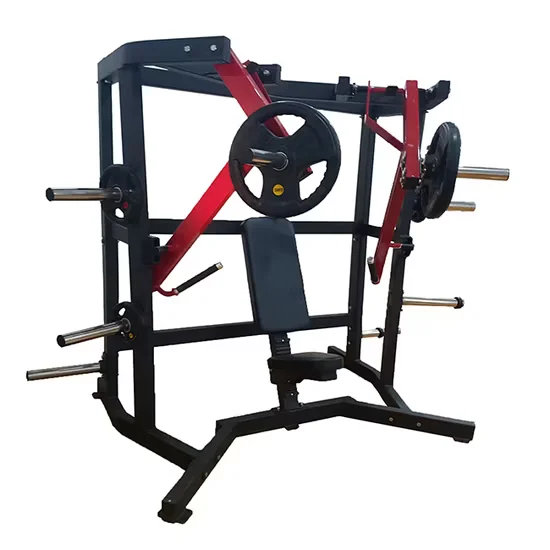
Plate Loaded Rear Deltoid Machine, Plate Loaded Loading, 1982×1003×925mm Dimensions — engineered with industrial-grade steel frame and robotic MIG continuous welding to eliminate fatigue cracking at stress points under repeated heavy loading in high-traffic commercial environments. Sealed bearing pivot joints prevent play development and ensure smooth iso-lateral movement patterns throughout extended daily use. Every unit undergoes individual load testing before shipment with full dimensional verification documentation provided.
// Spec Highlights
• Direct from Manufacturer · No Middlemen · Worldwide Shipping
01
// Material
Imported Solid Wood
Premium hardwood frames sourced for density and visual warmth.
02
// Hardware
Medical-Grade Silent
Whisper-quiet pulleys and springs for clinical environments.
03
// Customization
Appearance OEM
Color, upholstery, and branding tailored to your studio.
04
// Service
Layout Design
Free venue planning for studios and rehab institutions.
Every component is selected for longevity, performance, and aesthetic harmony - from imported hardwood frames to silent medical-grade accessories.
// Features
Traceable Steel Mill Certification — every coil of 11-gauge Q345 steel used in the Plate Loaded Rear Deltoid Machine carries a verifiable mill certificate, so operators can confirm the frame material matches the specification sheet rather than relying on vague "commercial grade" claims.
| Parameter | Value |
|---|---|
| Product Type | Plate Loaded Rear Deltoid Machine |
| Loading Type | Plate loaded |
| Frame Steel Gauge | 11-gauge |
| Frame Tube Size | 3×3 inch |
| Steel Grade | Q345 industrial steel, mill-certified |
| Welding Type | Robotic MIG continuous weld |
| Bearing Type | Sealed industrial bearing at pivot points |
| Powder Coating | 200μm scratch-resistant |
| Product Dimensions | 1982×1003×925mm |
| Net Weight | 83kg |
| Certification | ISO 9001, CE |
| Warranty | 10-year frame |
| Facility Type | Typical Use |
|---|---|
| Commercial gym strength floor | Rear deltoid and upper back isolation station in the plate loaded zone |
| Hotel and resort fitness center | Durable strength station for mixed-ability guest traffic |
| University athletic department | Accessory movement for overhead athletes in strength and conditioning programs |
| CrossFit box functional zone | Bodybuilding accessory station complementing barbell and rig work |
| Rehabilitation and performance center | Controlled rear deltoid activation for return-to-training protocols |
A spot weld on the swing arm bracket will fracture before the frame tube itself yields, leaving operators with an unsafe machine and no recourse under structural warranties.
When operators select a commercial plate loaded rear deltoid machine, most quotation sheets describe the frame as "commercial grade" without disclosing the steel gauge, wall thickness, or weld method. The consequence shows up within the first year of high-traffic use: hairline cracks propagate from spot-welded joints on the pivot arm where repeated eccentric loading concentrates stress. The steel tube itself never reaches its deflection threshold — the joint gives way first. [NEED_CITE: weld classification and fatigue performance in structural steel]
Robotic MIG continuous welding eliminates these stress concentration points by laying a uniform bead along the entire joint perimeter. There is no weak link between the bracket and the main frame, so the load path transfers through the full weld cross-section rather than through isolated tack points.
The Plate Loaded Rear Deltoid Machine targets the posterior deltoid, rhomboids, and mid-trapezius through a converging horizontal pull pattern. In a commercial strength zone, this station sits between lat machines and rowing stations, filling a gap that cable crossovers alone cannot cover with the same degree of isolation. Facilities running high member volume benefit from plate loaded rear deltoid training because users self-regulate load without waiting for selectorized pin changes. The compact footprint of 1982×1003mm fits standard 3-meter safety spacing, accommodating users from light-frame to heavy-build without requiring seat or pad adjustments that slow rotation.
Every repetition on this machine sends an asymmetric torque through the swing arm pivot, where the loaded horn sits offset from the user’s centerline. At peak hours, a single station may endure hundreds of cycles with loads exceeding typical training plates, generating repeated eccentric stress on the pivot bearings and the welds anchoring the arm to the upright. [NEED_CITE: EN 957 structural requirements for stationary training equipment] Sealed industrial bearings prevent dust and chalk ingress that would otherwise grind internal races and develop play within the first six months. The powder coating at contact points — where plates slap the loading horns and where grips meet uprights — must resist impact chipping as well as sweat corrosion from constant handling. Upholstery on the chest pad absorbs compression cycles every set, and high-density foam retains its profile far longer under continuous commercial compression.
The 11-gauge Q345 steel frame establishes a deflection threshold that prevents visible tube flex even under uneven plate stacking. Wall thickness paired with the 3×3 inch cross-section means the main upright absorbs eccentric bending moments without requiring gusset plates as a crutch for undersized tubing. Robotic MIG welding produces continuous bead profiles that distribute stress across the full joint length, avoiding the crack initiation points that form at the edges of spot welds. [NEED_CITE: robotic MIG versus spot weld fatigue life in structural steel frames] Sealed bearings at the pivot axis remove the most common maintenance interval in plate loaded equipment — operators never schedule downtime to replace worn bushings or re-grease open races. The 200μm powder coating, applied after sandblast pre-treatment, bonds to the steel substrate at a thickness that survives repeated plate impacts and daily cleaning with commercial-grade disinfectants.
Thin-wall tubing marketed as "commercial grade" deforms visibly when users load the horns asymmetrically, and once the tube takes a set, the arm no longer tracks its designed arc. Spot-welded joints that pass a visual QC inspection still carry inherent fatigue weaknesses — the failure does not appear at delivery, it appears after months of cyclic loading when the liability window has closed. [NEED_CITE: spot weld fatigue failure timeline in cyclic-loaded fitness equipment] Non-sealed pivot bearings absorb moisture and gym floor dust, developing lateral play that translates into a wobbly swing arm and a member complaint log full of "out of order" tickets. Thin powder coatings chip at plate contact zones within months, exposing bare steel to sweat-borne chlorides that initiate surface corrosion well before the frame reaches its structural end of life.
The 11-gauge Q345 frame with traceable mill certification gives operators documentation they can audit, not just marketing language to trust. Robotic MIG continuous welding means every joint on the Plate Loaded Rear Deltoid Machine carries the same fatigue resistance as the main upright — no secondary brackets held by tack welds. Each unit undergoes load testing before crating, not sample-based batch testing, so the machine arriving at the loading dock has individually verified structural integrity. The 200μm powder coating protects the contact zones where plates and grips cause the most abrasion in daily operation. The 10-year frame warranty is backed by the manufacturing process, not by a distributor agreement that changes with the next contract cycle. Floor planning support includes CAD layouts showing this station’s 1982×1003mm footprint with compliant clearance zones, so operators can confirm spacing before the equipment ships.
Submit your strength floor dimensions and current equipment list to receive a 2D-3D CAD layout showing where the Plate Loaded Rear Deltoid Machine fits within compliant spacing guidelines. Specify your expected daily user volume so the structural grade can be confirmed against your traffic profile. Confirm the body size range of your member population to verify the fixed pad geometry accommodates your user base. Indicate any custom color, logo, or upholstery requirements when requesting the quotation.
Q: How can I verify the steel specification is not just a marketing claim?
A: Request the mill certificate for the steel coil used in production. A legitimate manufacturer provides a document with the heat number, grade designation such as Q345, and mechanical properties tested at the rolling mill. This certificate is traceable back to the originating steelworks and cannot be fabricated for individual orders. Any supplier unable or unwilling to provide this documentation is selling unverified material.
Q: What is the relationship between frame tube gauge and load capacity?
A: Gauge defines wall thickness, and paired with the tube cross-section it determines how much load the frame absorbs before deflecting. An 11-gauge 3×3 inch tube resists bending moments far better than a thinner-walled alternative of the same outer dimension. Load capacity is not just about ultimate failure — it is about whether the frame maintains its geometry through thousands of eccentric loading cycles without permanent deformation.
Q: How does plate loaded compare to selectorized for rear deltoid training?
A: Plate loaded stations allow users to micro-adjust loading and develop grip and stabilization through manual plate handling. Selectorized machines offer faster weight changes and enclosed weight stacks that reduce floor space requirements. For high-traffic commercial floors, plate loaded rear deltoid machines reduce cable and pulley maintenance while giving serious lifters the direct loading feedback they prefer for isolation work.
Q: What floor spacing is required around this machine for safe operation?
A: Operators should allow clearance on the loading side for plate handling and on the user exit side for unobstructed movement. The 1982×1003mm footprint is compact enough for dense strength floor configurations, but the swing arm travel arc requires lateral space that a static footprint diagram alone will not show. Requesting a CAD layout confirms usable spacing before committing to a floor plan.
Q: What maintenance do the pivot bearings require in a high-dust gym environment?
A: Sealed industrial bearings are designed to exclude dust, chalk, and moisture from the internal race without scheduled servicing. In environments with heavy airborne particulate from adjacent functional zones, a visual inspection every six months confirms the seal integrity. If play is detected, the sealed cartridge is replaced as a single unit rather than requiring disassembly and re-greasing of open bearing surfaces.
Premium aesthetics meet quiet operation for boutique studio environments.
Medical-grade silence and precision for sports & postpartum recovery.
Furniture-grade craftsmanship for premium residential installations.
Compact premium setups for one-on-one and small-group training.
Aesthetic Pilates integration for hybrid wellness studio programming.
Multi-unit deployment with instructor-grade reliability for certification programs.
Tell us about your project. Our team will respond within 24 hours with pricing, customization options, and shipping details.
// Sales Director
William
+86 132 2531 1800
// Export Manager
Bella
+86 198 5412 8032
william@bickfit.com