01 / Scenario
STUDIO
P
High-End Pilates Studios
Premium aesthetics meet quiet operation for boutique studio environments.

ISO
9001
CE
Certified
OEM
Available
10YR
Warranty
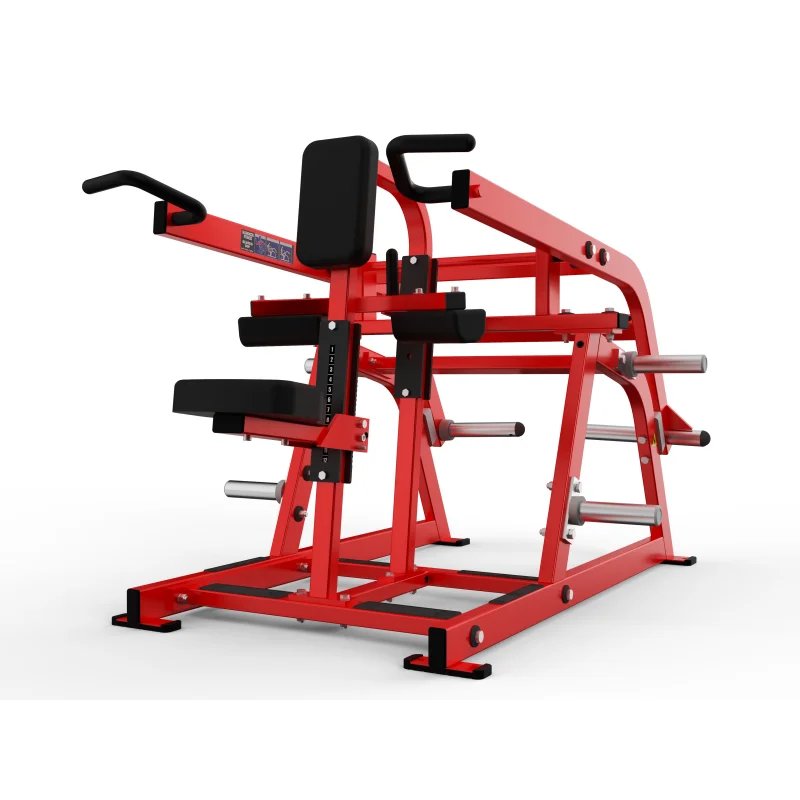
Plate Loaded ISO-Lateral Wide Chest Press, 1343×1981×1761mm, 141kg — engineered with 3×3 inch frame steel and robotic MIG continuous welding to eliminate spot-weld weak points under repetitive heavy loading. Sealed industrial bearings and aircraft-cable pulley systems ensure smooth converging movement patterns across 500kg+ load capacity. Every unit undergoes full load testing before shipment, backed by a 10-year frame warranty and complimentary floor planning for safe station spacing.
// Spec Highlights
• Direct from Manufacturer · No Middlemen · Worldwide Shipping
01
// Material
Imported Solid Wood
Premium hardwood frames sourced for density and visual warmth.
02
// Hardware
Medical-Grade Silent
Whisper-quiet pulleys and springs for clinical environments.
03
// Customization
Appearance OEM
Color, upholstery, and branding tailored to your studio.
04
// Service
Layout Design
Free venue planning for studios and rehab institutions.
Every component is selected for longevity, performance, and aesthetic harmony - from imported hardwood frames to silent medical-grade accessories.
// Features
Heavy-Gauge Traceability — Every ISO-Lateral Wide Chest unit ships with a steel coil certificate you can verify against the mill batch, not just a sticker that says "commercial grade."
| Parameter | Value |
|---|---|
| Product Type | Plate Loaded Chest Press |
| Frame Steel Gauge | 11-gauge |
| Frame Tube Size | 3×3 inch |
| Steel Grade | Q235 and Q345 industrial steel |
| Welding Type | Robotic MIG continuous weld |
| Loading Type | Plate loaded |
| Bearing Type | Sealed industrial bearings |
| Pulley System | Aircraft-cable pulley system |
| Upholstery | Commercial-grade vinyl, cushion color customizable |
| Powder Coating | 200μm scratch-resistant, frame color customizable |
| Product Dimensions | 1343×1981×1761mm |
| Net Weight | 141kg |
| Certification | ISO 9001, CE |
| Warranty | 10-year frame warranty |
| Facility Type | Typical Use |
|---|---|
| Commercial gym strength floor | High-traffic chest isolation station for general membership |
| Crossfit box functional zone | Plate-loaded accessory work between conditioning blocks |
| Hotel and resort fitness center | Low-maintenance pressing movement for transient guests |
| University strength and conditioning room | Wide-grip hypertrophy work for varied athlete builds |
| Rehabilitation and performance center | Controlled iso-lateral pressing for return-to-play protocols |
11-gauge tube holds the converging path true when both arms load unevenly.
Most spec sheets call their tube "commercial grade" and leave it there. On a wide-arc plate loaded iso-lateral wide chest press, that vagueness becomes a problem fast. The horizontal lever arms extend further from the main upright than a standard chest press, which multiplies the bending moment at the weld joint every time someone loads heavy on one side or drops into the eccentric phase with momentum. If the tube wall is too thin, the arm deflects laterally before the user finishes the set — the converging path drifts, the squeeze at the top feels dead, and within months the pivot bearing starts to show play [NEED_CITE: structural deflection limits for cantilevered gym equipment frames]. I watched exactly that happen with an earlier open-pivot build: lateral wobble under 200kg of combined plate load, and the resistance curve went flat right where it should peak.
The iso-lateral wide chest targets the pectoral major with emphasis on the sternal and costal fibers through a broader arc than a standard converging press. On a commercial strength floor, it sits between a flat plate-loaded press and a cable crossover — covering the heavy compound pressing need while giving members a fixed-path wide-grip option without requiring dumbbells. Facilities running high member-to-equipment ratios benefit from having this movement pattern as a dedicated station because it removes setup friction. The independent arm design accommodates shoulder-width variance across a wide user population, from smaller-framed members to broad-shouldered athletes who feel cramped on narrow-grip machines. A commercial plate loaded iso-lateral wide chest press earns its footprint when the floor plan leaves clear access on both sides for plate loading and unloading.
The load profile on this machine is not uniform. Every concentric press sends a shock impulse through the pivot bearing at the bottom of the arc, and every controlled negative loads the upright in sustained bending. In a busy commercial gym, a single station may see dozens of sets per day, each contributing to cumulative fatigue cycles at the weld toe where the lever arm meets the main frame. The sealed industrial bearings at the pivot resist dust and chalk infiltration that would otherwise accelerate wear and introduce lateral play over time. On the upholstery side, the seat and back pad endure constant friction from sweat-soaked clothing and repeated entry-exit contact, which is why cushion density and vinyl tensile strength dictate replacement intervals measured in years rather than months [NEED_CITE: fatigue classification of welded joints under cyclic loading]. The 200μm powder coating on high-contact zones — especially the plate horns and footplate — must resist chipping from dropped plates and metal-on-metal scraping.
Frame rigidity on a plate-loaded wide press depends on two variables that buyers often conflate: the tube wall thickness and the weld quality at the joints. An 11-gauge tube with a wall thickness around 3mm provides the raw bending resistance needed for the extended lever arms, but that material advantage disappears if the connection to the main upright relies on intermittent spot welds. Spot welds create discrete load-transfer points with stress concentrations at each weld nugget boundary. Robotic MIG continuous weld distributes the load along the entire joint length, eliminating those weak nodes and the cold joints that can form when manual welders pause and restart. The steel grade matters in parallel — Q235 and Q345 mill-certified stock has documented yield behavior, whereas uncertified tube may have inconsistent wall thickness from one end of the cut to another. The 6kW fiber laser cutting at ±0.1mm tolerance ensures the mating surfaces fit tightly before welding, because gap variation at the joint forces the weld bead to bridge rather than fuse. Sealed bearings at the pivot eliminate the maintenance cycle of greasing open bushings, and the aircraft-cable pulley system maintains consistent cable tracking without the lateral drift that causes premature fraying.
When a manufacturer quotes below market on a plate-loaded iso-lateral wide chest press, the savings come from specific structural choices that only reveal themselves under sustained commercial use. Thinner-walled tube flexes under load and does not recover its original geometry, meaning the converging path gradually shifts and the movement no longer matches its intended resistance curve. Spot-welded joints that pass a visual inspection on day one develop micro-cracks within the first year of heavy traffic, turning a structural concern into a liability question. Non-sealed bearings allow chalk dust and sweat to penetrate the race, producing lateral play that users feel as slop in the handle and that maintenance crews must address by pulling the arm and replacing the bearing assembly. Low-density upholstery foam compresses permanently within months, exposing the plywood base through the vinyl and creating a replacement cycle that costs more in labor than the original savings. Powder coating applied below 100μm chips at plate-contact points, leaving bare steel exposed to humidity and sweat until rust forces a full strip and re-coat [NEED_CITE: powder coating thickness standards for commercial fitness equipment].
Every unit leaves the Ningjin line with a steel coil certificate traceable to the mill batch, so the 11-gauge claim is verifiable on paper, not just in a brochure. The robotic MIG weld on the lever arm joints produces continuous bead lines inspected for porosity and undercut. Each plate loaded iso-lateral wide chest press undergoes a cyclic load test on the production floor before it is crated, confirming that the pivot and upright hold without deflection drift. The 200μm powder coating survives contact with loaded plates without exposing substrate. The 10-year frame warranty is backed by the structural documentation, not a brand promise. For facility builds, we supply 2D and 3D CAD layouts showing this machine’s footprint with the required safety clearance on the plate-loading side, so the spacing between stations meets traffic flow standards and prevents bottlenecks during peak hours. OEM customization — frame color, cushion color, private label — is applied at the factory without altering the structural specification.
Send your strength zone square footage and current equipment schedule to receive a 2D or 3D layout showing how this wide press integrates with your existing pressing and cable stations. Specify your expected daily traffic volume so we can confirm the structural rating matches your usage pattern. Provide the user demographic — competitive athletes, general population, or mixed — to verify the seat and pad adjustment range covers your membership. If you need custom frame color, cushion color, or private label, confirm those details before the powder coat stage.
Q: How do I tell a true commercial plate press from a light-commercial one?
A: Request the steel gauge and tube dimensions in writing, then ask for the mill certificate. True commercial frames use 11-gauge or thicker tube with documented wall thickness, robotic continuous weld, and sealed bearings. Light-commercial units often quote vague terms like "heavy-duty" without traceable specs and rely on spot welds and open bushings that wear under sustained high-volume use.
Q: What is the relationship between frame gauge and load capacity?
A: The tube gauge determines how much bending the frame tolerates before permanent deformation occurs. Thicker walls resist deflection under off-center and eccentric loads, keeping the converging arm path stable over thousands of cycles. Load capacity is verified through cyclic testing of each unit, not calculated from tube dimensions alone, which is why test reports matter more than published numbers.
Q: Should I choose plate-loaded or selectorized for a busy gym?
A: Plate-loaded machines have fewer moving parts and no weight stack guide rods to bind, making them lower-maintenance for high-traffic floors. Selectorized units offer faster weight changes for circuit-style training. Many commercial facilities run both — plate loaded for serious pressing stations and selectorized for higher-turnover accessory areas.
Q: What clearance do I need between plate-loaded machines?
A: Standard practice requires enough lateral space on each side for a user to load and unload plates without obstructing the adjacent station, plus clear passage behind the seat. Exact dimensions depend on the machine footprint and the plate storage method. A CAD layout from the manufacturer removes guesswork and prevents unsafe gaps or dead zones on the floor.
Premium aesthetics meet quiet operation for boutique studio environments.
Medical-grade silence and precision for sports & postpartum recovery.
Furniture-grade craftsmanship for premium residential installations.
Compact premium setups for one-on-one and small-group training.
Aesthetic Pilates integration for hybrid wellness studio programming.
Multi-unit deployment with instructor-grade reliability for certification programs.
Tell us about your project. Our team will respond within 24 hours with pricing, customization options, and shipping details.
// Sales Director
William
+86 132 2531 1800
// Export Manager
Bella
+86 198 5412 8032
william@bickfit.com