01 / Scenario
STUDIO
P
High-End Pilates Studios
Premium aesthetics meet quiet operation for boutique studio environments.
ISO
9001
CE
Certified
OEM
Available
10YR
Warranty
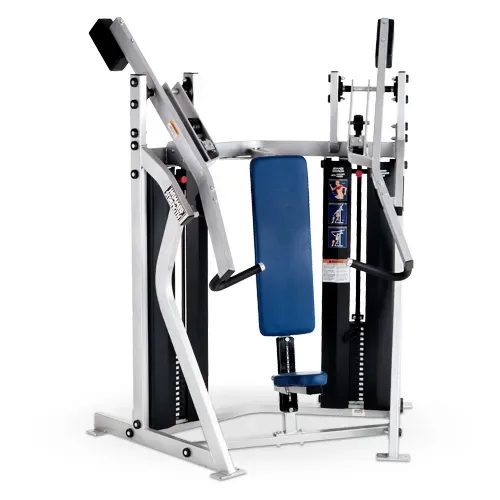
MTS-8007 Selectorized ISO-Lateral High Row Machine, Dual 80kg Stacks, 3×3 Inch Frame — sealed industrial bearings and aircraft-cable pulleys deliver smooth resistance without lubrication cycles, while ISO-lateral converging arms match natural biomechanics under heavy loading. Every unit undergoes full load testing before shipment, backed by a 10-year frame warranty and free floor planning support.
// Spec Highlights
• Direct from Manufacturer · No Middlemen · Worldwide Shipping
01
// Material
Imported Solid Wood
Premium hardwood frames sourced for density and visual warmth.
02
// Hardware
Medical-Grade Silent
Whisper-quiet pulleys and springs for clinical environments.
03
// Customization
Appearance OEM
Color, upholstery, and branding tailored to your studio.
04
// Service
Layout Design
Free venue planning for studios and rehab institutions.
Every component is selected for longevity, performance, and aesthetic harmony - from imported hardwood frames to silent medical-grade accessories.
// Features
Mill-Traceable Steel — Every MTS-8007 frame tube traces back to certified Q235/Q345 coil documentation, eliminating material ambiguity in commercial procurement.
| Parameter | Value |
|---|---|
| Designation | MTS-8007 |
| Product Type | Selectorized ISO-Lateral High Row Machine |
| Frame Tube Size | 3×3 inch |
| Steel Grade | Q235 / Q345 industrial steel |
| Welding Type | Robotic MIG continuous weld |
| Weight Stack | 80 kg × 2 independent stacks |
| Loading Type | Pin select |
| Bearing Type | Sealed industrial bearings |
| Pulley System | Aircraft-grade cable with sealed guides |
| Powder Coating | 200μm scratch-resistant |
| Upholstery | Available in standard or high-density options |
| Product Dimensions | 119 cm × 183 cm × 196 cm |
| Net Weight | 354 kg |
| Certification | CE, ISO 9001, SGS, RoHS |
| Warranty | 10-year frame |
| Facility Type | Typical Use |
|---|---|
| Commercial gym strength floor | Primary back training station in high-traffic selectorized rows |
| University strength and conditioning room | Athletic performance back development for field and court sports |
| Hotel and resort fitness center | Low-maintenance, high-durability pulling movement for guest use |
| Rehabilitation and performance center | Controlled unilateral and bilateral upper-back loading |
Sealed bearings eliminate the contamination pathway that ruins pulley feel in high-traffic facilities.
I have seen selectorized machines develop noticeable cable slack and grinding noise within the first year when unsealed bearings allow gym dust and sweat residue to infiltrate the pivot points. On a commercial selectorized iso-lateral high row machine, this problem surfaces faster because the pulley system handles continuous directional changes under load. Once play develops, the weight stack feels inconsistent through the range of motion, and facility operators face repeated service calls. Sealed industrial bearings shut out that contamination entirely, maintaining smooth resistance delivery through extended daily use cycles [NEED_CITE: bearing contamination failure modes in commercial fitness equipment].
The MTS-8007 covers the vertical pulling plane, targeting the latissimus dorsi, rhomboids, and posterior deltoid through an ISO-lateral converging path. It pairs naturally with a low row and a pulldown station to give facility members complete back development options without redundant movement patterns. This commercial selectorized iso-lateral high row machine fits high-density strength floors where independent dual stacks allow two users to train simultaneously or one user to perform unilateral work with balanced resistance. The converging arc accommodates a wide range of torso lengths, making it viable for diverse membership demographics.
A high row machine in a busy gym endures thousands of eccentric-concentric cycles daily, each generating off-axis forces on the frame joints and pulley anchors. The primary stress concentration points are the tower-to-base connection and the cable routing anchors where directional changes create lateral pull. Continuous robotic MIG welding addresses these junctions by eliminating the start-stop discontinuities that cause fatigue cracking in spot-welded assemblies. Sealed bearings at every pivot point resist the lateral loading that accelerates wear in unsealed alternatives [NEED_CITE: fatigue performance in welded structural steel assemblies]. Upholstery contact zones on the chest pad and seat experience repeated compression, demanding high-density foam that resists permanent deformation over extended commercial use.
The 3×3 inch frame tube provides the cross-sectional area needed to resist bending moments when a user loads one side of the ISO-lateral mechanism independently. Without adequate tube dimensions, the frame develops lateral flex that transfers into the pulley system, creating an inconsistent resistance feel. Continuous robotic MIG welds produce uniform penetration depth along every joint, avoiding the cold joints and incomplete fusion that plague manual welding on production lines running tight schedules. The dual 80 kg weight stacks are guided by precision-machined rods with controlled clearance, preventing the binding that occurs when off-center pin selection creates uneven lateral forces on the guide system. Aircraft-grade cables running through sealed guides maintain tension consistency and reduce the friction that degrades smooth stack travel. The 200μm powder coating, applied after sandblast preparation, provides a barrier thick enough to withstand contact abrasion and cleaning chemical exposure without exposing bare steel at high-wear points.
Thin-wall frame tubes may pass a visual inspection but flex noticeably when a heavier user loads the machine, creating a perception of instability that drives members away from the station. Spot-welded connections hold initially but develop micro-cracks under repeated loading cycles, eventually requiring frame replacement rather than repair. Unsealed bearings demand scheduled lubrication and eventual replacement, adding maintenance labor costs that compound across a facility with dozens of selectorized stations. Low-density upholstery compresses permanently within months of commercial use, forcing reupholstery cycles that take equipment out of service. Thin powder coating chips at cable contact points and user loading zones, exposing steel to humidity and sweat-driven corrosion that spreads beneath the remaining coating layer [NEED_CITE: powder coating thickness and corrosion resistance in commercial environments].
The 11-gauge steel sourcing with mill certification means every MTS-8007 frame traces to verified material properties rather than an unverifiable commercial grade claim. Robotic MIG welding produces continuous weld lines on every structural joint, addressing the exact failure points I monitored during earlier production runs where guide rod alignment depended on frame rigidity. Every unit undergoes full-load and off-center load testing before crating, catching guide rod binding and pulley misalignment issues before they reach a facility floor. The 200μm industrial powder coating resists the chipping that exposes steel at high-contact zones. A 10-year frame warranty backs the structural decision-making, and 2D-3D CAD layout support ensures the 119 cm × 183 cm footprint gets proper clearance within the strength training zone rather than creating unsafe traffic bottlenecks between adjacent stations.
Provide your facility floor area and existing equipment list to receive a 2D-3D layout placing this high row within a logical back training sequence with proper traffic flow. Specify expected daily user volume so structural grade and maintenance intervals align with actual demand. Share your target membership demographics to confirm the adjustment range and pad positioning accommodate your users. Indicate any color, logo, or upholstery customization requirements to integrate the equipment with your facility design standards.
Q: What separates a commercial selectorized machine from light-commercial grade equipment?
A: Commercial units use thicker frame steel, sealed bearings at every pivot, and continuous weld joints designed for continuous daily use across multiple users. Light-commercial machines typically employ thinner tubing, unsealed bushings, and intermittent welds that degrade under facility-level traffic. The difference becomes visible in structural rigidity, resistance smoothness, and maintenance frequency within the first year.
Q: How do sealed bearings reduce long-term maintenance in busy gyms?
A: Sealed bearings prevent gym dust, sweat residue, and cleaning chemicals from reaching internal bearing surfaces, eliminating scheduled lubrication cycles. In unsealed systems, contamination buildup creates grinding noise and cable play that requires bearing replacement. Sealed units run maintenance-free for extended periods, reducing service calls and keeping equipment available for members.
Q: What frame and welding standards prevent structural failure under heavy repeated loading?
A: Frame tubes specified at 11-gauge thickness with certified steel grades resist deformation under asymmetric and impact loads. Continuous robotic MIG welding eliminates the cold joints and incomplete fusion common in manual spot welding. Together, these specifications ensure joints maintain integrity through thousands of daily loading cycles without developing fatigue cracks at stress concentration points.
Q: How should floor spacing be planned around selectorized strength machines?
A: Each station requires clearance on all sides for safe user entry, exit, and weight stack loading. High row machines need additional overhead clearance for the full cable travel path. Proper layout accounts for traffic flow between adjacent stations, preventing bottleneck zones where members wait or navigate around active equipment during peak hours.
Q: What determines upholstery replacement timelines on commercial high row machines?
A: Foam density, daily user volume, and cleaning chemical exposure determine how quickly chest pads and seats compress permanently. High-density foam options resist deformation longer under heavy traffic. Facilities with high daily usage should plan for periodic inspection and scheduled replacement to maintain member comfort and prevent exposed hardware from contacting users.
Premium aesthetics meet quiet operation for boutique studio environments.
Medical-grade silence and precision for sports & postpartum recovery.
Furniture-grade craftsmanship for premium residential installations.
Compact premium setups for one-on-one and small-group training.
Aesthetic Pilates integration for hybrid wellness studio programming.
Multi-unit deployment with instructor-grade reliability for certification programs.
Tell us about your project. Our team will respond within 24 hours with pricing, customization options, and shipping details.
// Sales Director
William
+86 132 2531 1800
// Export Manager
Bella
+86 198 5412 8032
william@bickfit.com