01 / Scenario
STUDIO
P
High-End Pilates Studios
Premium aesthetics meet quiet operation for boutique studio environments.
ISO
9001
CE
Certified
OEM
Available
10YR
Warranty
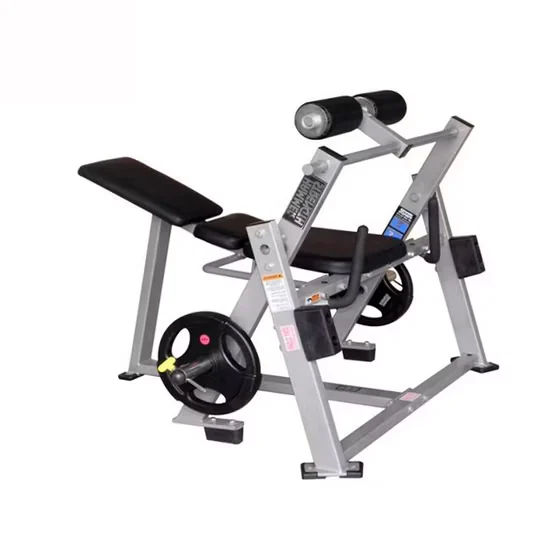
MTS-8013 Selectorized Iso-Lateral Seated Leg Curl, Dual 70 kg Stacks, 3×3 Inch Frame — independent converging arms enable unilateral loading without stack interference, while sealed industrial bearings at pivot points eliminate play under repetitive heavy use. Every unit undergoes load testing before shipment to verify structural integrity for high-traffic commercial environments.
// Spec Highlights
• Direct from Manufacturer · No Middlemen · Worldwide Shipping
01
// Material
Imported Solid Wood
Premium hardwood frames sourced for density and visual warmth.
02
// Hardware
Medical-Grade Silent
Whisper-quiet pulleys and springs for clinical environments.
03
// Customization
Appearance OEM
Color, upholstery, and branding tailored to your studio.
04
// Service
Layout Design
Free venue planning for studios and rehab institutions.
Every component is selected for longevity, performance, and aesthetic harmony - from imported hardwood frames to silent medical-grade accessories.
// Features
11-Gauge Traceable Steel — The MTS-8013 frame is cut from Q235/Q345 industrial steel with mill certification traceable to the original coil, ensuring verifiable structural integrity under repetitive hamstring loading.
| Parameter | Value |
|---|---|
| Designation | MTS-8013 |
| Product Type | Selectorized Iso-Lateral Seated Leg Curl |
| Frame Steel Gauge | 11-gauge |
| Frame Tube Size | 3×3 inch |
| Steel Grade | Q235 / Q345 industrial steel, mill-certified |
| Welding Type | Robotic MIG continuous weld |
| Weight Stack | 70 kg × 2 independent stacks |
| Loading Type | Pin select |
| Bearing Type | Sealed industrial bearings at pivot points |
| Pulley System | Aircraft-cable pulley system |
| Upholstery | Available in standard or high-density options |
| Powder Coating | 200μm scratch-resistant over sandblasted substrate |
| Product Dimensions | 122 cm × 145 cm × 140 cm (L × W × H) |
| Net Weight | 395 kg |
| Adjustment Positions | Iso-lateral converging movement pattern |
| Certification | CE, ISO 9001, SGS |
| Warranty | 10-year frame |
| Facility Type | Typical Use |
|---|---|
| Commercial gym strength floor | Hamstring isolation station in high-traffic leg training zones |
| Hotel and resort fitness center | Low-maintenance seated leg curl for guest use across varied fitness levels |
| University strength and conditioning room | Unilateral and bilateral hamstring work for athletic performance programs |
| Rehabilitation and performance center | Controlled iso-lateral loading for return-to-play hamstring conditioning |
A rigid frame keeps the cam axis aligned with the knee joint through every repetition.
Many selectorized leg curl machines advertise "commercial grade" construction without disclosing the actual tube gauge or wall thickness. Under maximal eccentric hamstring loading, a frame that flexes even slightly shifts the pivot axis away from the user’s knee joint, creating shear at the ankle pad and reducing isolation efficiency. The commercial selectorized iso-lateral seated leg curl market is saturated with units that look substantial on the showroom floor but develop audible flex and misalignment within the first year of heavy use [NEED_CITE: EN 957 structural requirements for stationary training equipment]. Spot-welded joints on thinner frames are the typical failure origin — they pass initial visual inspection but propagate cracks under thousands of off-axis loading cycles.
The MTS-8013 occupies the hamstring isolation station in a comprehensive leg training layout, complementing compound movements like leg presses and squat racks with focused knee-flexion work. Its dual independent 70 kg stacks allow two users to perform the commercial selectorized iso-lateral seated leg curl simultaneously with different loads, effectively doubling station throughput during peak hours. The iso-lateral converging arm design suits a broad range of user anthropometry, from shorter individuals requiring minimal pad adjustment to taller athletes needing full extension clearance. In facilities running high-density programming — university weight rooms, commercial gym leg days, sports performance centers — this machine fills the gap between free-weight Romanian deadlifts and machine-based compound lifts.
Hamstring curls generate significant eccentric force at the bottom of each repetition, transmitting load through the ankle pad, lever arm, pivot bearing, and into the main frame. Over thousands of daily cycles, this creates concentrated fatigue stress at the weld junctions connecting the pivot arm to the upright support. Unsealed bushings at these pivot points accumulate sweat and gym-floor dust, developing rotational play that translates into inconsistent resistance feel and eventual noise [NEED_CITE: bearing degradation in high-cycle fitness equipment applications]. The dual weight stacks introduce additional lateral loading on guide rods when users load one side more heavily — misaligned rods cause the stack to bind, interrupting smooth concentric return. Upholstery at the thigh hold-down pad endures constant compression and friction, and low-density foam compresses permanently within months under continuous commercial use.
The 11-gauge, 3×3 inch frame tube provides the cross-sectional area and wall thickness needed to resist torsional flex when a loaded user drives through maximal hamstring contraction. Thinner tubes with identical outer dimensions will deflect under the same load, shifting the biomechanical pivot point. Robotic MIG continuous welding eliminates the intermittent start-stop pattern of manual spot welding, producing uniform penetration along the full joint length — critical at the pivot-to-upright junction where fatigue cracks originate. Sealed industrial bearings at each pivot point keep contaminants out and lubrication in, maintaining zero-play rotation for a meaningfully longer service life compared to unsealed bushings. The 200μm powder coating, applied over a sandblasted substrate, provides mechanical adhesion that resists chipping at high-contact zones like seat adjustment levers and foot-plate edges where bare-metal exposure leads to corrosion. Guide rod tolerance directly affects stack behavior under off-center loading — precision-machined rods with tight clearance prevent binding when one stack is loaded heavier than the other during unilateral work.
Substituting thin-wall tubing for genuine 11-gauge steel saves material cost upfront but transfers the expense to the gym floor as frame flex, pivot misalignment, and eventual weld failure under cyclic loading. Spot-welded joints that crack create safety liability and require complete frame section replacement rather than simple repair. Unsealed bushings demand regular maintenance intervals — teardown, cleaning, re-lubrication — that pull the machine off the floor and reduce available station count. Low-density upholstery that collapses forces facilities to schedule re-upholstery work, and when replacement pads are unavailable from the original manufacturer, custom fabrication adds further downtime and cost. Thin powder coating that chips at contact points exposes bare steel to sweat and humidity, accelerating corrosion in a way that degrades both appearance and structural surface integrity [NEED_CITE: powder coating adhesion standards for commercial fitness environments]. Non-standard fasteners and proprietary hardware mean that when components do fail, sourcing replacements becomes a supply chain problem rather than a simple parts swap.
Every frame tube on the MTS-8013 uses 11-gauge Q235/Q345 steel with mill certification traceable to the coil — this is not a generic "commercial grade" claim but a verifiable material specification. Robotic MIG welding produces continuous weld lines at every structural joint, removing the weak-link failure pattern inherent to spot-welded assemblies. Each unit undergoes load testing before shipment as part of a three-stage QC protocol, catching alignment and stack-binding issues that sample-based inspection would miss. The 200μm industrial powder coating over sandblasted steel resists the chipping and corrosion cycle that degrades appearance in high-humidity gym environments. A 10-year frame warranty reflects confidence in the structural system rather than a marketing add-on. For facilities planning a complete leg zone, CAD-based floor layout support ensures the MTS-8013 footprint integrates with adjacent stations while maintaining safe user clearance and traffic flow — the 122 cm × 145 cm footprint requires specific spacing to accommodate full range of motion and user entry/exit without interference.
Provide your strength zone dimensions and current equipment list to receive a 2D or 3D layout showing how the MTS-8013 integrates with existing and planned stations. Specify expected daily user volume so the structural grade and stack configuration match actual loading patterns. Identify your primary user population’s anthropometric range to confirm the adjustment positions cover the full spectrum comfortably. Communicate any customization requirements including frame color, logo placement, or upholstery specification to align the unit with your facility’s visual identity.
Q: How do I verify that a selectorized leg curl is truly built for commercial traffic rather than light-commercial use?
A: Request the frame steel gauge and wall thickness in writing — genuine commercial machines specify 11-gauge or thicker with traceable mill certification. Confirm that all pivot points use sealed industrial bearings rather than unsealed bushings, which develop play rapidly under high-cycle use. Ask whether every unit is load-tested before shipment or only sample-based inspection is performed. These three specifications separate machines that sustain daily commercial loading from those that require replacement within two years.
Q: What does dual-stack iso-lateral design mean for users training one leg at a time?
A: Dual independent 70 kg stacks allow each leg to work against its own weight stack without cross-interference, meaning a user performing unilateral curls gets consistent resistance regardless of what is loaded on the opposite side. This supports rehabilitation protocols requiring asymmetric loading and athletes addressing bilateral strength imbalances. The converging arm geometry keeps the movement path aligned with natural knee flexion, whether both legs work together or individually.
Q: How does guide rod tolerance affect long-term stack performance on selectorized machines?
A: Guide rods machined to tight tolerance keep the weight stack traveling vertically without lateral drift, which prevents binding when the load is applied off-center during unilateral use. Excessive clearance allows the stack to tilt and catch, creating inconsistent resistance feel and accelerating wear on the selector mechanism. Precision rods combined with sealed linear bearings maintain smooth stack travel through thousands of cycles without the maintenance interventions that loose-tolerance systems require.
Q: What powder coating specification is needed to resist chipping in a commercial gym environment?
A: Commercial environments demand a minimum 200μm coating thickness applied over a sandblasted substrate for mechanical adhesion. Thin coatings chip at high-contact points — adjustment levers, foot-plate edges, stack shrouds — exposing bare steel to sweat and humidity. The sandblast pre-treatment creates surface profile that bonds the coating mechanically rather than relying on chemical adhesion alone, which degrades under repeated impact and cleaning chemical exposure.
Premium aesthetics meet quiet operation for boutique studio environments.
Medical-grade silence and precision for sports & postpartum recovery.
Furniture-grade craftsmanship for premium residential installations.
Compact premium setups for one-on-one and small-group training.
Aesthetic Pilates integration for hybrid wellness studio programming.
Multi-unit deployment with instructor-grade reliability for certification programs.
Tell us about your project. Our team will respond within 24 hours with pricing, customization options, and shipping details.
// Sales Director
William
+86 132 2531 1800
// Export Manager
Bella
+86 198 5412 8032
william@bickfit.com