01 / Scenario
STUDIO
P
High-End Pilates Studios
Premium aesthetics meet quiet operation for boutique studio environments.
ISO
9001
CE
Certified
OEM
Available
10YR
Warranty
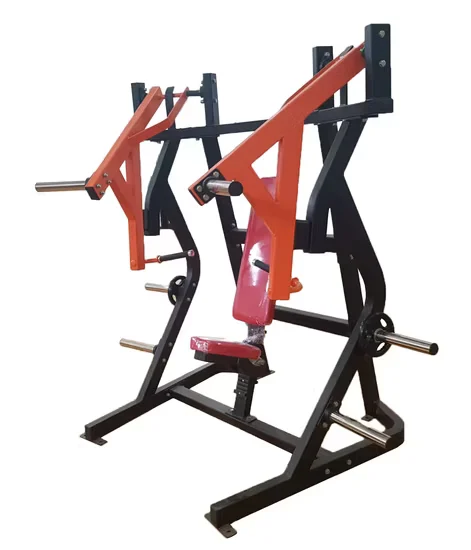
Plate Loaded Bench Press, 1323×1599×1746mm, 140kg Net Weight — engineered with plate-loaded resistance for commercial chest training in high-traffic facilities. ISO 9001 and CE certified, built for gym strength zones, hotel fitness centers, and institutional athletic departments. Every unit undergoes load testing before shipment, backed by a 10-year frame warranty and free floor planning CAD layout.
// Spec Highlights
• Direct from Manufacturer · No Middlemen · Worldwide Shipping
01
// Material
Imported Solid Wood
Premium hardwood frames sourced for density and visual warmth.
02
// Hardware
Medical-Grade Silent
Whisper-quiet pulleys and springs for clinical environments.
03
// Customization
Appearance OEM
Color, upholstery, and branding tailored to your studio.
04
// Service
Layout Design
Free venue planning for studios and rehab institutions.
Every component is selected for longevity, performance, and aesthetic harmony - from imported hardwood frames to silent medical-grade accessories.
// Features
Robotic Continuous Welds — Every plate loaded bench press frame is welded using robotic MIG with continuous seams, eliminating the spot-weld weak points that crack under repeated heavy loading.
| Parameter | Value |
|---|---|
| Product Type | Plate Loaded Chest Press |
| Frame Steel Gauge | 11-gauge (per manufacturer catalog) |
| Frame Tube Size | 3×3 inch (per manufacturer catalog) |
| Steel Grade | Q235 / Q345 industrial steel, mill-certified |
| Welding Type | Robotic MIG continuous welding |
| Loading Type | Plate loaded |
| Bearing Type | Sealed industrial bearings |
| Pulley System | Aircraft-cable pulley system |
| Powder Coating | 200μm scratch-resistant, sandblast pre-treated |
| Product Dimensions | 1323×1599×1746 mm |
| Net Weight | 140 kg |
| Certification | ISO 9001:2015, CE |
| Facility Type | Typical Use |
|---|---|
| Commercial gym strength floor | High-volume plate loaded chest training for diverse member base |
| Hotel and resort fitness center | Durable frame and finish under varied user loads |
| University athletic department | Sustained heavy loading during team strength cycles |
| EPC contractor gym build-out | Integrated into full plate loaded strength zone layouts |
A plate loaded bench press is only as strong as its weakest weld joint.
Many suppliers quote "commercial grade" steel without verifiable gauge or mill certification — and rely on spot welds that pass visual inspection but crack under repeated heavy loading within the first year. On a plate loaded chest press, the pressing arms and seat frame absorb cyclic forces from heavy plate loading. Spot-welded joints create stress concentration points where micro-cracks propagate under fatigue loading, eventually leading to visible frame separation. This is not a cosmetic issue — it is a structural failure under load [NEED_CITE: weld classification and fatigue performance in structural steel].
This plate loaded bench press targets the horizontal pressing plane, engaging the pectoralis major, anterior deltoids, and triceps through a converging movement path. In a commercial strength zone, it pairs with incline and decline plate loaded variants to cover the full chest development arc, and complements free-weight bench stations for users who prefer barbell work. The converging path reduces shoulder joint shear compared to fixed linear rails, making it suitable for a wide range of user anthropometry. The plate loaded bench press is designed for high-traffic facilities where multiple users share the same station across extended operating hours.
A commercial plate loaded bench press endures static loads from heavy plate stacks, dynamic冲击 forces from uncontrolled eccentric phases, and eccentric loading when users load plates asymmetrically. The seat frame and pressing arm pivot points experience the highest cyclic stress — thousands of load-unload repetitions per week in a busy gym. Weld joints at these junctions must resist fatigue crack initiation over the equipment’s service life. Sealed bearings at pivot points resist chalk dust and sweat infiltration that would otherwise accelerate wear in open bushing designs. The 200μm powder coating must withstand repeated contact with metal plates, sweat, and commercial cleaning agents without chipping at load-bearing edges [NEED_CITE: fatigue behavior of welded steel structures under cyclic loading].
The 11-gauge, 3×3 inch frame tube provides a defined cross-sectional moment of inertia that determines how much the frame resists bending under heavy plate loads. Thinner-wall tubes deflect permanently after repeated loading, even if they appear rigid when new. Robotic MIG continuous welding produces full-penetration seams along the entire joint length, distributing stress evenly rather than concentrating it at discrete spot-weld locations. Sealed industrial bearings at pivot and pulley points prevent contaminant ingress — a critical factor in environments where chalk dust and sweat are constant. The 200μm powder coating, applied over sandblast-prepared steel, provides a thick, uniform barrier that resists chipping at plate contact points and prevents bare steel exposure that leads to corrosion.
Thin-wall frame tubes may pass initial visual inspection but deflect progressively under heavy plate loading, eventually causing misalignment at pivot points and uneven wear on bearings and guide rods. Spot welds that appear intact can develop subsurface cracks that propagate invisibly until sudden joint failure occurs — creating both user injury risk and operator liability. Non-sealed bearings develop play within months in high-traffic environments, requiring frequent replacement and generating downtime. Low-density upholstery compresses permanently under daily use, losing support and requiring replacement within the first year. Thin powder coating chips at plate contact zones, exposing bare steel to sweat-induced corrosion that spreads beneath adjacent coating [NEED_CITE: corrosion mechanisms in fitness equipment exposed to sweat and cleaning chemicals].
Every plate loaded bench press frame is built on 11-gauge steel with mill certification traceable to the original coil — not vague "commercial grade" claims. Robotic MIG welding produces continuous seams with no spot-weld weak points, verified through per-unit weld inspection. Each unit undergoes load testing before shipment, not sample-based抽检. The 200μm industrial powder coating is applied over sandblast pre-treatment for adhesion and chip resistance. A 10-year frame warranty covers structural integrity. 2D-3D CAD floor planning support ensures this plate loaded bench press is positioned with correct clearance from adjacent stations and safe traffic flow paths. OEM private label and custom color options are available for brand-specific deployments.
Provide your strength zone floor area and target equipment list to receive a 2D-3D CAD layout showing this plate loaded bench press positioned with correct spacing and traffic flow. Specify your expected daily user volume so the structural grade can be matched to your usage intensity. Indicate the user body size range to confirm seat and press arm adjustability meets your population. Custom frame colors, upholstery options, and private label branding are available for facility-specific requirements.
Q: What frame steel gauge is required for a commercial plate loaded bench press?
A: A commercial plate loaded bench press should be built on at least 11-gauge steel with a minimum 3×3 inch tube cross-section. This combination provides sufficient moment of inertia to resist permanent frame deflection under repeated heavy plate loading. Thinner-wall tubes may appear rigid initially but deflect progressively over time, leading to pivot misalignment and accelerated bearing wear. Always request mill certification with traceable coil numbers rather than accepting vague "commercial grade" claims.
Q: How does robotic MIG welding differ from spot welding on plate loaded equipment?
A: Robotic MIG welding produces continuous full-penetration seams along the entire joint length, distributing cyclic stress evenly across the weld zone. Spot welding creates discrete attachment points where stress concentrates, and subsurface cracks can propagate invisibly until sudden joint failure occurs. On a plate loaded bench press subject to thousands of pressing cycles weekly, continuous welds significantly extend fatigue life and eliminate the hidden failure risk inherent in spot-welded frames.
Q: Why are sealed bearings critical on a plate loaded chest press?
A: Sealed industrial bearings prevent chalk dust, sweat, and airborne contaminants from entering the bearing raceway. On a plate loaded bench press pivot point, open bushings allow these contaminants to accelerate wear, developing play within months in high-traffic environments. Sealed units maintain smooth rotation and precise joint alignment over extended service life, reducing maintenance frequency and downtime. This is especially important in commercial gyms where equipment runs eight or more hours daily.
Q: What powder coating specification prevents chipping on plate loaded equipment?
A: A 200μm scratch-resistant powder coating applied over sandblast-prepared steel provides a thick, uniform barrier that resists chipping at plate contact points and grip zones. Thin coatings chip quickly under repeated metal-to-metal contact, exposing bare steel to sweat-induced corrosion that spreads beneath adjacent coating. Sandblast pre-treatment ensures strong adhesion between the steel substrate and powder layer, preventing delamination under impact and cyclic loading conditions typical in commercial gym environments.
Q: How should I plan spacing for a plate loaded bench press in my gym layout?
A: The plate loaded bench press requires a 1323×1599 mm footprint plus minimum 600 mm clearance on all sides for safe plate loading, user entry and exit, and maintenance access. Adjacent stations must be positioned so that users loading plates or performing repetitions do not interfere with traffic flow or other equipment users. A 2D-3D CAD floor plan accounts for these clearances across your full strength zone, optimizing equipment density while maintaining safe operational spacing and emergency egress paths.
Premium aesthetics meet quiet operation for boutique studio environments.
Medical-grade silence and precision for sports & postpartum recovery.
Furniture-grade craftsmanship for premium residential installations.
Compact premium setups for one-on-one and small-group training.
Aesthetic Pilates integration for hybrid wellness studio programming.
Multi-unit deployment with instructor-grade reliability for certification programs.
Tell us about your project. Our team will respond within 24 hours with pricing, customization options, and shipping details.
// Sales Director
William
+86 132 2531 1800
// Export Manager
Bella
+86 198 5412 8032
william@bickfit.com