01 / Scenario
STUDIO
P
High-End Pilates Studios
Premium aesthetics meet quiet operation for boutique studio environments.
ISO
9001
CE
Certified
OEM
Available
10YR
Warranty
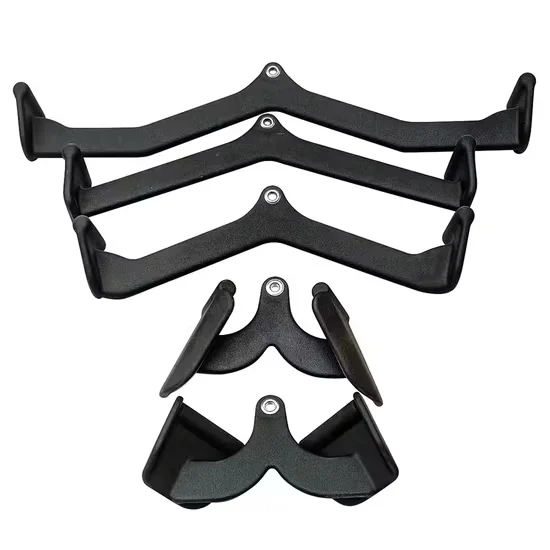
Heavy Duty Pull-up Bar & Lat Pulldown Handle, Steel Construction, 17kg Net Weight — engineered with continuous robotic MIG welding at grip-to-shaft junctions to eliminate spot-weld fatigue under dynamic loading. Sealed connection hardware and ergonomic grip geometry ensure secure attachment to commercial cable machine carriages. Each unit undergoes individual load testing before shipment, backed by a 10-year frame warranty from our 17-year manufacturing facility.
// Spec Highlights
• Direct from Manufacturer · No Middlemen · Worldwide Shipping
01
// Material
Imported Solid Wood
Premium hardwood frames sourced for density and visual warmth.
02
// Hardware
Medical-Grade Silent
Whisper-quiet pulleys and springs for clinical environments.
03
// Customization
Appearance OEM
Color, upholstery, and branding tailored to your studio.
04
// Service
Layout Design
Free venue planning for studios and rehab institutions.
Every component is selected for longevity, performance, and aesthetic harmony - from imported hardwood frames to silent medical-grade accessories.
// Features
Continuous MIG Welds at Every Grip Junction — robotic welding eliminates spot-weld weak points where dynamic pulling forces concentrate on the lat pulldown handle shaft.
| Parameter | Value |
|---|---|
| Product Type | Pull-up Bar / Lat Pulldown Handle Attachment |
| Model NO. | ATC-2100 |
| Material | Steel |
| Application | Indoor |
| Net Weight | 17.000 kg |
| HS Code | 9506911900 |
| Certification | CE / ISO 9001 / SGS |
| Customization | Available |
| Facility Type | Typical Use |
|---|---|
| Commercial gym strength floor | Cable crossover attachment for lat pulldown and pull-up variations |
| Functional training zone | Modular rig-mounted grip station for high-rep bodyweight and loaded pulling |
| University strength and conditioning room | Multi-user pulling attachment for athletic performance programs |
| Hotel fitness center | Space-efficient cable machine accessory for compound upper-body work |
| Rehabilitation and performance center | Controlled-resistance grip station for progressive loading protocols |
Generic "commercial grade" pull-up bars often fracture at the grip-to-shaft junction under repeated dynamic loading — spot welds crack, grip surfaces wear smooth, and chrome plating chips within months of daily use.
The commercial heavy duty pull-up bar lat pulldown handle attachment from BICKFIT uses robotic continuous MIG welding at every structural joint, eliminating the intermittent weld pattern that creates fatigue initiation points under cyclic pulling forces.
In high-traffic commercial environments, a pull-up bar or lat pulldown handle endures thousands of load cycles per week. When manufacturers substitute continuous welds with spot welds to cut labor costs, the resulting discontinuous fusion zones become stress concentrators. Under the eccentric loading patterns typical of pulling movements — where force is not evenly distributed across the grip width — these spot welds develop micro-cracks that propagate with each repetition. The failure is not sudden; it is cumulative, and it occurs at loads well below the rated capacity of the parent steel tube [NEED_CITE: weld classification and fatigue performance in structural steel joints under cyclic loading].
The ATC-2100 serves as a primary attachment for vertical and horizontal pulling movements across the latissimus dorsi, rhomboids, posterior deltoids, and biceps complex. In a commercial cable crossover station, it functions as the default grip for wide-grip lat pulldowns, close-grip seated rows, and straight-arm pulldowns — covering the majority of upper-back and pulling musculature in a single accessory. For functional training zones with modular rigs, it mounts directly to cable machine carriages, enabling high-density floor configurations without dedicated single-purpose stations. The commercial heavy duty pull-up bar lat pulldown handle attachment accommodates a wide range of user hand sizes and grip widths, making it suitable for multi-user facilities where equipment turnover between sessions is constant.
Pulling attachments experience a combination of static tensile load, impact force at the start of each repetition, and eccentric loading when users grip asymmetrically or perform unilateral variations. The grip-to-shaft junction bears the highest stress concentration, particularly where the handle tube meets the central shaft or swivel point. In commercial environments operating eight or more hours daily, these junctions undergo tens of thousands of load cycles per month. Non-sealed connection points allow sweat, chalk dust, and cleaning chemicals to penetrate bearing surfaces, accelerating wear and introducing play that degrades movement quality. The surface treatment on the grip zone — whether knurling, chrome plating, or powder coating — must resist abrasion from repeated hand contact and chemical exposure without flaking or smoothing over time [NEED_CITE: surface finish durability under commercial gym environmental conditions including sweat and disinfectant exposure].
The steel tube diameter and wall thickness of a pulling attachment directly determine its deflection threshold under load. A thicker wall and larger cross-section resist bending moments at the grip-to-shaft junction, where the lever arm is longest and stress is highest. The welding method is equally critical: robotic continuous MIG welding produces a uniform fusion zone along the entire joint length, distributing stress evenly rather than concentrating it at discrete spot-weld locations. For connection hardware — the bolt or pin that attaches the handle to the cable carriage — thread engagement depth and bolt grade determine whether the attachment remains secure under dynamic loading or works loose over time. The grip surface treatment must balance tactile feedback with durability; deep knurling provides secure grip in humid conditions but requires a substrate that resists corrosion beneath the pattern, while powder-coated grips offer uniform coverage but must be applied at sufficient thickness to avoid chipping at high-contact edges [NEED_CITE: structural steel tube section modulus and deflection under bending load in fitness equipment].
Thin-wall steel tubes deflect visibly under heavy pulling loads, creating a sensation of instability that undermines user confidence and accelerates fatigue at weld joints. Spot-welded connections — common in cost-reduced manufacturing — develop cracks at the weld toes under cyclic loading, eventually leading to complete joint separation. Non-sealed bearing points at swivel joints allow contamination ingress, resulting in binding, noise, and premature replacement. Low-density grip coatings chip at contact edges within months, exposing bare steel to sweat-induced corrosion. When connection hardware uses non-standard thread pitches or undersized bolts, replacement parts become unavailable after the original components wear, rendering the entire attachment unusable rather than serviceable [NEED_CITE: fatigue failure mechanisms in spot-welded structural joints under repeated tensile loading].
Every ATC-2100 unit undergoes load testing before shipment, verifying structural integrity at the grip-to-shaft junction under forces exceeding typical commercial use levels. Robotic continuous MIG welding ensures every joint is fully fused without the intermittent weak points inherent in manual spot welding. The steel material is sourced from mill-certified Q235 or Q345 grade, with traceability documentation available for procurement verification. The 200μm industrial powder coating provides scratch and corrosion resistance across the full surface, including high-contact grip zones. BICKFIT offers customization of grip diameter, width, and surface finish to match specific facility requirements, and provides 2D-3D CAD layout support to ensure proper clearance between cable stations and adjacent equipment in the strength zone.
Provide your strength zone floor area and current equipment list to receive a 2D-3D CAD layout showing optimal placement of the commercial heavy duty pull-up bar lat pulldown handle attachment within your cable station configuration. Specify average daily user volume to confirm the structural grade matches your facility’s usage intensity. Indicate any customization requirements for grip diameter, width, or surface finish to ensure the attachment aligns with your member demographic and training focus.
Q: How do I distinguish a commercial-grade pulling attachment from a light-commercial alternative?
A: Examine the welding method at grip-to-shaft junctions — continuous welds indicate commercial structural intent, while spot welds signal cost reduction. Check steel tube wall thickness and diameter specifications rather than generic "commercial grade" claims. Verify that connection hardware uses standard bolt sizes with documented torque specifications, and confirm the manufacturer performs individual unit load testing rather than batch sampling.
Q: What impact does steel tube gauge and wall thickness have on load capacity and deflection?
A: Tube wall thickness and outer diameter together determine the section modulus, which governs how much the handle resists bending under load. Thicker walls and larger diameters reduce visible deflection at the grip ends during heavy pulling, maintaining structural rigidity and user confidence. Undersized tubes flex noticeably under load, transferring additional stress to weld joints and accelerating fatigue failure at connection points.
Q: What grip surface options are available and how do they affect durability?
A: Grip surfaces may feature knurling for high-friction tactile feedback, chrome plating for smooth corrosion resistance, or powder coating for uniform coverage and color matching. Knurling depth affects grip security in humid conditions but requires a corrosion-resistant substrate beneath. Powder-coated grips must be applied at sufficient thickness to resist chipping at high-contact edges, while chrome plating provides durable smooth coverage but offers less friction for users with dry hands.
Q: How do I confirm compatibility with different cable machine carriage systems?
A: Identify the carriage pin diameter and hole spacing on your cable machine, then confirm the attachment connection hardware matches those specifications. The ATC-2100 supports customization of connection hardware dimensions to fit various carriage systems. Request specification drawings from the manufacturer to verify bolt diameter, thread pitch, and insertion depth before ordering, ensuring secure attachment without modification.
Q: What maintenance is required for connection hardware and grip surface inspection?
A: Inspect connection bolts monthly for loosening under dynamic loading and retighten to the specified torque value. Check grip surfaces quarterly for coating wear, knurling smoothing, or chrome flaking that exposes bare steel to corrosion. Clean with non-abrasive disinfectants and avoid solvent-based products that degrade surface treatments. Replace grip components when wear compromises structural integrity or user comfort.
Premium aesthetics meet quiet operation for boutique studio environments.
Medical-grade silence and precision for sports & postpartum recovery.
Furniture-grade craftsmanship for premium residential installations.
Compact premium setups for one-on-one and small-group training.
Aesthetic Pilates integration for hybrid wellness studio programming.
Multi-unit deployment with instructor-grade reliability for certification programs.
Tell us about your project. Our team will respond within 24 hours with pricing, customization options, and shipping details.
// Sales Director
William
+86 132 2531 1800
// Export Manager
Bella
+86 198 5412 8032
william@bickfit.com