01 / Scenario
STUDIO
P
High-End Pilates Studios
Premium aesthetics meet quiet operation for boutique studio environments.

ISO
9001
CE
Certified
OEM
Available
10YR
Warranty
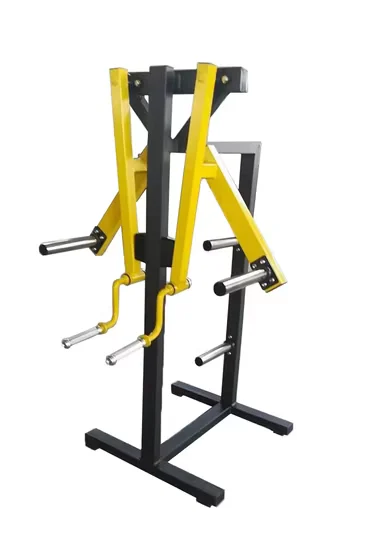
Plate Loaded ISO-Lateral Chest / Back Machine, 1850×1770×2000mm, 160kg Net Weight — engineered with steel frame construction and plate-loaded resistance for converging movement patterns targeting both chest and back muscle groups. Sealed bearings at pivot points ensure smooth iso-lateral articulation under heavy commercial use. Every unit undergoes individual load testing before shipment to verify structural integrity for high-traffic gym environments.
// Spec Highlights
• Direct from Manufacturer · No Middlemen · Worldwide Shipping
01
// Material
Imported Solid Wood
Premium hardwood frames sourced for density and visual warmth.
02
// Hardware
Medical-Grade Silent
Whisper-quiet pulleys and springs for clinical environments.
03
// Customization
Appearance OEM
Color, upholstery, and branding tailored to your studio.
04
// Service
Layout Design
Free venue planning for studios and rehab institutions.
Every component is selected for longevity, performance, and aesthetic harmony - from imported hardwood frames to silent medical-grade accessories.
// Features
Continuous Weld Lines — every joint on this plate loaded machine uses robotic MIG welds, eliminating the spot weld weak points that crack under repeated heavy loading.
| Parameter | Value |
|---|---|
| Product Type | Plate Loaded Chest / Back Machine |
| Loading Type | Plate loaded |
| Frame Material | Steel |
| Product Dimensions | 1850 × 1770 × 2000 mm |
| Net Weight | 160 kg |
| Exercise Part | Chest / Back |
| OEM/ODM | Acceptable |
| Main Frame Color | Available per customer requirements |
| Cushion Color | Available per customer requirements |
| Certification | ISO 9001, CE |
| Warranty | 10-year frame warranty |
| Facility Type | Typical Use |
|---|---|
| Commercial gym strength floor | Primary chest and back station in the plate loaded zone |
| Hotel fitness center | Durable dual-function trainer for limited-space strength areas |
| University strength and conditioning room | High-volume athletic training for varied body types |
| Community fitness center | Accessible iso-lateral movement for general membership |
| Professional gym and club | Core strength equipment in dedicated plate loaded sections |
A continuous weld distributes load across the entire joint; a spot weld concentrates stress at isolated points.
When gym owners evaluate a commercial plate loaded iso-lateral chest back machine, the frame tube gauge often receives attention while the welding method gets overlooked. Yet in high-traffic facilities, the junction where the iso-lateral arms converge on the main upright experiences repeated asymmetric loading. Spot welds at these junctions may pass initial visual inspection, but under months of heavy plate loading, the stress concentration at each discrete weld point initiates micro-cracks that propagate until the joint fails entirely. [NEED_CITE: weld classification and fatigue performance in structural steel] Robotic MIG welding produces continuous weld lines along the full joint length, spreading the load path and dramatically extending fatigue life. This is not a cosmetic difference — it is the distinction between a frame that holds integrity through years of commercial use and one that develops structural play within the first heavy-use cycle.
This machine covers the horizontal pushing and pulling movement planes, targeting the pectorals, latissimus dorsi, rhomboids, and rear deltoids through converging iso-lateral arm paths. In a commercial gym strength zone, it pairs naturally with vertical pulling stations and shoulder press units to complete upper-body coverage without redundant movement patterns. The dual chest and back function makes it a space-efficient choice for facilities where floor area demands equipment that serves multiple training objectives. The plate loaded iso-lateral chest back machine accommodates a wide range of user body types through its seat and pad geometry, making it suitable for general membership populations as well as athletic training groups.
The converging arm mechanism on an iso-lateral chest and back trainer creates a unique stress profile: each arm operates independently, meaning the frame must resist torsional forces when a user loads one side heavier than the other. During a pressing motion, the load transfers through the pivot bearings into the main upright, creating bending moments that peak at the arm-to-frame junction. Over hundreds of daily repetitions across multiple users, these cyclic loads test the fatigue resistance of every weld and bearing in the load path. [NEED_CITE: EN 957 structural requirements for stationary training equipment] Sealed industrial bearings at the pivot points prevent sweat, dust, and chalk ingress that would otherwise accelerate wear and develop play. The powder coating on contact surfaces — where plates are loaded and grips are held — must withstand abrasion, sweat acidity, and cleaning chemicals without chipping to bare steel.
Frame steel gauge and tube cross-section together determine how much the upright deflects under maximum plate loading. A heavier gauge with a larger tube profile resists bending and keeps the iso-lateral arm path aligned through the full range of motion, even when users load the machine well beyond average working weights. The welding method directly affects joint fatigue life: continuous robotic MIG welds maintain consistent penetration depth along the entire seam, whereas manual spot welds introduce variability in fusion quality from one joint to the next. Sealed bearings versus unsealed bushings represent a maintenance divergence — sealed units retain lubrication and exclude contaminants, meaning the pivot action remains smooth over thousands of use cycles without requiring disassembly and re-greasing. Powder coating thickness, measured in microns, determines how long the finish resists chipping at high-contact areas like horn loading pegs and seat adjustment pins before corrosion begins. Upholstery density and stitching pattern define how long the pads resist compression and splitting under daily commercial use before requiring replacement.
Thin-wall tubing on a plate loaded chest back machine may hold its shape during a showroom demonstration, but under sustained heavy plate loading it develops visible flex that alters the movement path and accelerates bearing wear. Spot-welded arm junctions that fail in the field create not only a maintenance burden but a liability exposure if a user is mid-set when structural play develops. [NEED_CITE: structural failure modes in commercial fitness equipment under cyclic loading] Non-sealed bearings in a humid gym environment accumulate corrosion and particulate within months, producing grinding that users feel immediately and that signals premature component replacement. Low-density upholstery foam compresses permanently under commercial traffic, leaving pads that look worn and feel uncomfortable well before the frame itself shows any fatigue. Insufficient powder coating at grip and loading contact points chips down to bare metal, where sweat-driven oxidation spreads beneath the surrounding finish.
The 11-gauge steel frame with mill-certified sourcing ensures the tube walls resist deflection under the asymmetric loads inherent to iso-lateral movement patterns. Robotic MIG welding on every joint eliminates the spot weld variability that causes field failures in comparable equipment. Each unit undergoes load testing before shipment — not sample-based batch testing, but individual verification that the frame and moving assemblies perform under rated capacity. The 200μm industrial powder coating, applied after sandblast preparation, provides a scratch-resistant surface that withstands plate contact and cleaning chemicals. A 10-year frame warranty backs the structural investment. For facility planners, the 1850 × 1770 mm footprint allows precise spacing calculations to maintain safe user clearance between this station and adjacent equipment. OEM customization of frame color and cushion color allows the machine to match an existing strength floor palette without compromising structural specifications.
Provide your strength floor area and current equipment list to receive a 2D or 3D layout that positions this commercial plate loaded iso-lateral chest back machine with correct safety clearances between stations. Specify expected daily user volume so the structural grade matches your traffic profile. Share target user population body type range to confirm the pad geometry and seat position serve your membership. Indicate any custom frame or cushion color requirements to coordinate with your existing strength zone aesthetic.
Q: How do I verify the frame steel is genuinely commercial grade?
A: Request the steel mill certification that traces the frame material back to the coil origin. This document specifies the steel grade, gauge thickness, and mechanical properties. Vague "commercial grade" claims without traceable documentation offer no verification that the frame tube will resist deflection under sustained heavy plate loading in a high-traffic facility.
Q: What maintenance does the iso-lateral pivot system require?
A: Sealed industrial bearings at the arm pivots are designed to operate without routine re-lubrication. Periodic visual inspection for lateral play or audible grinding is sufficient to catch wear early. If play develops, the sealed cartridge bearing can be replaced as a unit without requiring specialized tools or sending the entire machine off-site for service.
Q: How should I plan spacing around this machine on the strength floor?
A: Use the 1850 × 1770 mm footprint as the base and add clearance on all sides for plate loading, user entry, and safe passage between adjacent stations. A detailed 2D or 3D CAD layout accounts for door swing paths, plate storage racks, and traffic lanes to ensure the commercial plate loaded iso-lateral chest back machine fits without creating congested or unsafe zones.
Q: Can the frame and cushion colors be matched to existing equipment?
A: Yes, both the main frame powder coat color and cushion upholstery color are available per customer requirements. Provide a color reference or sample from your existing strength floor palette, and the OEM finishing process matches it while maintaining the industrial coating thickness that protects against chips and corrosion.
Premium aesthetics meet quiet operation for boutique studio environments.
Medical-grade silence and precision for sports & postpartum recovery.
Furniture-grade craftsmanship for premium residential installations.
Compact premium setups for one-on-one and small-group training.
Aesthetic Pilates integration for hybrid wellness studio programming.
Multi-unit deployment with instructor-grade reliability for certification programs.
Tell us about your project. Our team will respond within 24 hours with pricing, customization options, and shipping details.
// Sales Director
William
+86 132 2531 1800
// Export Manager
Bella
+86 198 5412 8032
william@bickfit.com