01 / Scenario
STUDIO
P
High-End Pilates Studios
Premium aesthetics meet quiet operation for boutique studio environments.
ISO
9001
CE
Certified
OEM
Available
10YR
Warranty
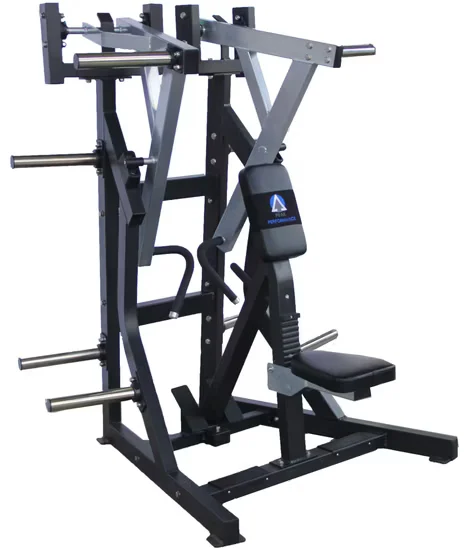
Plate Loaded ISO-Lateral Low Row Machine, 139kg Net Weight, 1250×1056×1700mm — built with 3×3 inch frame steel and sealed industrial bearings for smooth converging arm movement under heavy plate loading. Robotic MIG continuous welds eliminate spot-weld fatigue at high-stress pivot joints, while 200μm powder coating resists chipping at contact points. Every unit undergoes individual load testing before shipment, backed by a 10-year frame warranty and free floor planning support for optimal station spacing.
// Spec Highlights
• Direct from Manufacturer · No Middlemen · Worldwide Shipping
01
// Material
Imported Solid Wood
Premium hardwood frames sourced for density and visual warmth.
02
// Hardware
Medical-Grade Silent
Whisper-quiet pulleys and springs for clinical environments.
03
// Customization
Appearance OEM
Color, upholstery, and branding tailored to your studio.
04
// Service
Layout Design
Free venue planning for studios and rehab institutions.
Every component is selected for longevity, performance, and aesthetic harmony - from imported hardwood frames to silent medical-grade accessories.
// Features
Mill-Traceable Steel — Every frame tube on the ISO Lateral Low Row Machine traces back to certified Q235 or Q345 coil stock with verifiable gauge documentation.
| Parameter | Value |
|---|---|
| Product Type | Plate Loaded Low Row Machine |
| Frame Steel Gauge | 11-gauge |
| Frame Tube Size | 3×3 inch |
| Steel Grade | Q235 / Q345 industrial steel |
| Welding Type | Robotic MIG continuous weld |
| Loading Type | Plate loaded (ISO-lateral) |
| Bearing Type | Sealed industrial bearings |
| Pulley System | Aircraft-cable pulley system |
| Upholstery | Standard or high-density options available |
| Powder Coating | 200μm scratch-resistant finish |
| Product Dimensions | 1250×1056×1700mm |
| Net Weight | 139kg |
| Certification | ISO 9001, CE |
| Warranty | 10-year frame warranty |
| Facility Type | Typical Use |
|---|---|
| Commercial gym strength floor | Dedicated plate-loaded back training station within a high-traffic row and pull circuit |
| CrossFit box functional zone | Heavy pulling work for conditioning athletes, paired with rigs and free weight stations |
| Hotel and resort fitness center | Low-maintenance back machine for mixed-ability guests in unsupervised settings |
| University strength and conditioning room | Progressive overload rowing for varsity athletes in periodized programs |
| Rehabilitation and performance center | Controlled bilateral and unilateral rowing with ISO-lateral arm independence |
A continuous MIG weld distributes load across the entire joint, not just at discrete tack points.
Most gym owners do not see the welds underneath a freshly painted frame. On a plate-loaded low row, the arm assembly junction endures repeated eccentric pulls — every rep cycles tension through the pivot where the arm meets the upright. Spot welds pass a visual inspection but concentrate stress at isolated points, and under sustained heavy loading those joints develop hairline cracks that grow with each training session. We run robotic MIG welds along the full seam length so that fatigue resistance is built into the geometry of the joint itself. [NEED_CITE: weld classification and fatigue performance in structural steel]
The commercial plate loaded iso-lateral low row machine targets the mid-back — lats, rhomboids, and rear delts — through a converging arm path that follows natural shoulder retraction. On a commercial strength floor, it complements high row and pulldown stations to cover the full vertical and horizontal pulling planes. The ISO-lateral independence lets users work one side at a time, which suits both rehabilitation contexts and experienced lifters addressing imbalances. Its footprint fits standard plate-loaded zone spacing, allowing two adjacent units without sacrificing safe clearance for loading and unloading bumpers.
Every rep on a low row generates a compound load: static tension from the plates, dynamic shock at the bottom of the pull, and eccentric deceleration as the arm returns. In a commercial gym pulling 200+ reps per day per station, fatigue accumulation concentrates at the pivot bearing housing and the weld seam where the arm gusset meets the main upright. Sealed bearings resist contamination from chalk dust and sweat that accelerate bushing wear. The powder coating on contact surfaces must withstand repeated bumper plate impacts without chipping to bare steel, where moisture initiates oxidation. [NEED_CITE: EN 957 structural requirements for stationary training equipment]
Frame gauge and tube cross-section define how much the arm assembly resists lateral flex when a user loads one side heavier than the other — 11-gauge 3×3 inch tubing provides a deflection threshold suited for loads well beyond typical commercial use. Robotic MIG welding ensures consistent penetration depth across every unit rather than relying on an operator’s manual consistency. Sealed industrial bearings outlast unsealed bushings in high-rep environments because they keep lubrication isolated from the contamination path. The 200μm powder coat, applied over sandblasted steel, creates a mechanical bond that resists chipping at the high-contact zones where bumper plates are loaded and unloaded daily.
A thinner frame tube on a low row will visibly flex under heavy plate loads — not enough to snap, but enough to shift the movement path and create uneven resistance through the range of motion. Spot-welded arm junctions typically show stress fractures first on the side users favor, leading to asymmetric feel and eventually a structural failure that pulls the machine off the floor for emergency repair. Non-sealed bushings develop lateral play within months of commercial traffic, producing a rattling pivot that users notice and avoid. Thin powder coatings chip at the horn and selector pin contact points, exposing steel that rusts visibly under gym lighting. [NEED_CITE: powder coating adhesion standards for fitness equipment]
The 11-gauge steel specification is not a marketing claim — it traces to certified coil stock from the mill, so you can verify the gauge and grade before the equipment ships. Robotic MIG welding on the arm-to-frame junction means the same continuous weld profile on every unit, eliminating the inconsistency of manual welding shifts. Every ISO Lateral Low Row Machine undergoes a three-stage inspection with load testing before it leaves the 15,000㎡ facility in Ningjin — not sample-based, but unit-by-unit. The 200μm industrial powder coating is matched to the contact and impact zones specific to this machine’s loading pattern. Floor planning CAD support ensures the station footprint, loading clearance, and user egress are mapped before the equipment arrives. OEM private label options are available for operators building a branded environment.
Provide your plate-loaded zone dimensions and current equipment list to receive a 2D-3D layout showing this low row integrated with adjacent stations. Specify your facility’s average daily user volume so we can confirm the structural grade matches your traffic profile. Share the body type range of your primary users to verify seat and pad adjustment positions cover your population. Indicate any color, logo, or upholstery customization requirements for brand alignment.
Q: How do I tell true commercial-grade plate-loaded equipment from light-commercial alternatives?
A: Request the frame steel gauge and tube dimensions in writing, with mill certificates to verify. Check whether the welding is continuous robotic MIG or manual spot welds at structural joints. Confirm the load testing protocol covers every unit, not just production samples. Commercial-grade equipment also uses sealed bearings rather than open bushings at all pivot points.
Q: What frame steel gauge handles heavy plate loading on a low row machine?
A: An 11-gauge frame with 3×3 inch tube cross-section provides the deflection resistance needed for sustained commercial plate loading. Thinner gauges will flex visibly under uneven single-side loads, shifting the movement path and creating asymmetric feel. The gauge must be paired with continuous weld construction at the arm-to-frame junction to prevent fatigue cracking at stress points.
Q: ISO-lateral vs. fixed-path row machines — which suits different training goals?
A: ISO-lateral machines allow each arm to move independently on its own pivot, accommodating natural asymmetry in shoulder mechanics and enabling unilateral work. Fixed-path machines lock both arms into a single bar, which limits individual-side training but simplifies the movement for novice users. Commercial strength floors typically benefit from both, with ISO-lateral units serving experienced lifters and rehab applications.
Q: What maintenance do sealed bearings require in a high-traffic gym?
A: Sealed industrial bearings at the ISO-lateral pivot need periodic visual inspection for contamination and smooth rotation, but they do not require lubrication like open bushings. The seal prevents chalk dust, sweat, and cleaning solution from reaching the bearing race. In a commercial environment running eight or more hours daily, sealed bearings meaningfully extend service intervals compared to unsealed alternatives that develop lateral play.
Premium aesthetics meet quiet operation for boutique studio environments.
Medical-grade silence and precision for sports & postpartum recovery.
Furniture-grade craftsmanship for premium residential installations.
Compact premium setups for one-on-one and small-group training.
Aesthetic Pilates integration for hybrid wellness studio programming.
Multi-unit deployment with instructor-grade reliability for certification programs.
Tell us about your project. Our team will respond within 24 hours with pricing, customization options, and shipping details.
// Sales Director
William
+86 132 2531 1800
// Export Manager
Bella
+86 198 5412 8032
william@bickfit.com