01 / Scenario
STUDIO
P
High-End Pilates Studios
Premium aesthetics meet quiet operation for boutique studio environments.

ISO
9001
CE
Certified
OEM
Available
10YR
Warranty
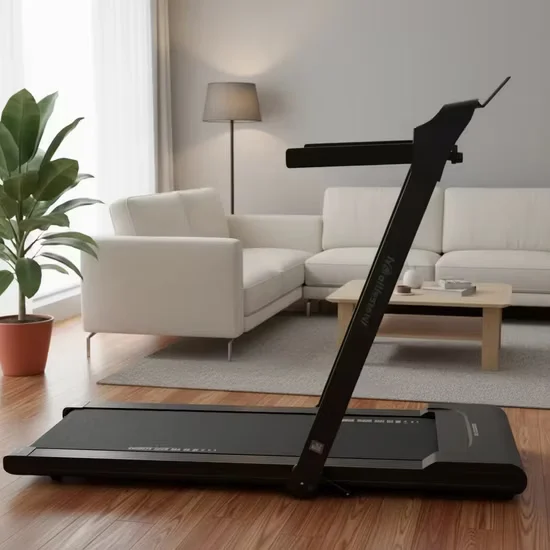
MT296 Commercial Motorized Treadmill, DC2.0HP Motor, 1200×520mm Runway — engineered with 16 preset programs and a foldable frame to optimize floor space in high-traffic cardio zones. The DC motor delivers consistent speed control up to 20 km/h, while the 520mm belt width provides adequate stride safety for diverse user profiles. Backed by 10-year frame warranty and full OEM-ODM customization from our 15,000㎡ vertically integrated facility.
// Spec Highlights
• Direct from Manufacturer · No Middlemen · Worldwide Shipping
01
// Material
Imported Solid Wood
Premium hardwood frames sourced for density and visual warmth.
02
// Hardware
Medical-Grade Silent
Whisper-quiet pulleys and springs for clinical environments.
03
// Customization
Appearance OEM
Color, upholstery, and branding tailored to your studio.
04
// Service
Layout Design
Free venue planning for studios and rehab institutions.
Every component is selected for longevity, performance, and aesthetic harmony - from imported hardwood frames to silent medical-grade accessories.
// Features
DC Motor Thermal Management — The DC2.0HP motor in MT296 is paired with a forced-air cooling path that dissipates heat during extended commercial operation cycles.
| Parameter | Value |
|---|---|
| Designation | MT296 |
| Product Type | Commercial Motorized Treadmill |
| Motor Power | DC 2.0HP |
| Maximum Speed | 1–20 km/h |
| Runway Size | 1200 × 520 mm |
| Programs | 16 |
| Display | LCD (Speed / Distance / Time / Calories / Pulse) |
| Product Unfold Size | 1580 × 865 × 1300 mm |
| Product Folded Size | 910 × 865 × 1345 mm |
| Foldable | Yes |
| Shell Material | ABS |
| Color Options | Multicolor / Customizable |
| Certification | CE, RoHS |
| Customization | OEM / ODM Available |
| Facility Type | Typical Use |
|---|---|
| Commercial Gym Cardio Zone | Primary running and walking stations for high-traffic member flow |
| Hotel and Resort Fitness Center | Compact foldable unit for limited-space guest wellness areas |
| Corporate Wellness Facility | Employee fitness rooms with mixed-use aerobic demands |
A 1200 × 520 mm runway demands consistent belt velocity under users exceeding 90 kg, yet undersized DC motors stall or trigger thermal shutdown before the session ends. The DC2.0HP motor in the commercial motorized treadmill MT296 sustains belt speed across the full 1–20 km/h range without intermittent cutoffs during continuous commercial shifts. Operators who accept vague wattage labels on spec sheets often discover that peak ratings mask continuous-duty shortfalls — the motor overheats within the first hour of back-to-back use, and belt slippage becomes a recurring member complaint [NEED_CITE: IEC 60034 motor thermal classification under continuous duty ratings].
The commercial motorized treadmill MT296 occupies a mid-footprint position on the cardio floor, bridging the gap between compact home-oriented units and full-size club treadmills. Its 1200 × 520 mm running surface accommodates stride lengths for users from approximately 160 cm to 190 cm tall, while the foldable frame allows operators to reclaim floor area during off-peak hours or reconfigure the layout for functional training events. The 16 preset programs provide structured variety for members who prefer guided sessions without requiring instructor intervention.
Every footstrike on the MT296 generates an impact load that travels through the running deck into the frame welds and motor mount. Over thousands of daily cycles, these repeated forces concentrate at the hinge points of the folding mechanism and the motor bracket — areas where thin-gauge steel or incomplete weld penetration accelerates fatigue cracking. The ABS shell panels absorb incidental contact from footwear and cleaning tools, but the underlying frame joints must resist both vertical compression and lateral torsion caused by asymmetric stride patterns [NEED_CITE: fatigue failure mechanisms in welded steel structures under cyclic loading].
The 1200 × 520 mm runway dimension directly determines the safe stride envelope — a width below 500 mm forces narrower-than-natural foot placement at higher speeds, increasing lateral instability. The DC2.0HP rating indicates continuous motor output capacity; when paired with the 20 km/h top speed, this combination defines the maximum user weight the belt system can sustain without thermal derating. The folding mechanism relies on a hinge assembly that must endure thousands of articulation cycles in a commercial setting, where units are collapsed and redeployed daily for floor cleaning or space reallocation. The LCD console integrates speed, distance, time, calorie, and pulse readouts into a single interface, reducing the component count that can fail independently.
Operators who select treadmills based on price alone often encounter frame flex under heavier users, where the running deck deflects noticeably at mid-stride — a sign that the underlying steel gauge cannot resist the combined static and dynamic loads. Folding hinges designed without reinforced pivot bushings develop play within months, creating audible knocking and uneven belt tracking. Non-sealed motor bearings draw in dust and sweat residue from the gym environment, leading to premature seizure that requires full motor replacement rather than a simple bearing swap. Thin ABS panels crack under repeated impact from dropped towels or misplaced footwear, leaving sharp edges and exposing internal wiring.
Every MT296 unit undergoes individual load testing before shipment, verifying that the motor, belt, and frame perform as an integrated system rather than a collection of separately rated components. The foldable design is engineered with reinforced hinge points that maintain alignment through repeated commercial deployment cycles, preserving belt tracking consistency. The 1200 × 520 mm footprint is mapped into 2D-3D CAD floor plans that account for safe clearance distances between adjacent units and emergency egress paths. OEM color and branding customization allows the MT296 to align with facility design standards without requiring a separate production run.
Provide your cardio zone floor area and target daily user volume so the engineering team can match the commercial motorized treadmill MT296 to your operational density and produce a 2D-3D layout with verified clearance distances. Specify the expected user weight range and height distribution to confirm that the 1200 × 520 mm running surface and 20 km/h speed ceiling meet your member profile. Indicate any OEM requirements for color matching, facility branding, or console customization to align the MT296 with your existing equipment aesthetic.
Q: What structural differences separate commercial motorized treadmills from residential models?
A: Commercial motorized treadmill MT296 uses higher-gauge frame steel, sealed motor bearings, and a reinforced folding hinge rated for thousands of articulation cycles. Residential units typically rely on lighter-gauge tubing and open bearings that degrade quickly under continuous daily use. The MT296 also undergoes individual load testing rather than batch sampling, ensuring each unit meets commercial durability thresholds before shipment.
Q: How does DC motor power affect treadmill performance under heavy users?
A: The DC2.0HP motor in the commercial motorized treadmill MT296 provides sufficient continuous torque to maintain belt speed at 20 km/h without thermal cutoff, even under users approaching the maximum rated weight. Undersized DC motors experience voltage drop and overheating when load increases, causing intermittent speed fluctuations that disrupt running rhythm. The MT296 motor thermal management system sustains output across extended commercial operating windows.
Q: Why does running surface width matter for user safety at higher speeds?
A: A 520 mm running width on the commercial motorized treadmill MT296 provides adequate lateral margin for natural stride placement at speeds up to 20 km/h. Narrower surfaces force users to constrain foot placement, increasing the risk of lateral foot slip off the belt edge during high-speed running. The 1200 mm length accommodates full stride extension for taller users without heel overhang at the rear roller.
Q: What maintenance checks should be performed on the folding mechanism?
A: The folding hinge on the commercial motorized treadmill MT296 should be inspected monthly for pivot play, lubricated at the bushing points, and checked for frame alignment after each deployment. Loose hinges cause belt tracking drift and audible knocking during use. Operators should verify that the locking latch engages fully before each session to prevent unintended frame collapse under user weight.
Q: How do continuous power and peak power ratings differ for treadmill motors?
A: Continuous power reflects the sustained output a DC motor can deliver without overheating, while peak power indicates the maximum short-duration output before thermal protection triggers. The commercial motorized treadmill MT296 DC2.0HP rating represents continuous duty capacity, meaning the motor sustains this output across extended commercial sessions. Peak ratings on competitor units often mask inadequate continuous performance under real-world loading conditions.
Premium aesthetics meet quiet operation for boutique studio environments.
Medical-grade silence and precision for sports & postpartum recovery.
Furniture-grade craftsmanship for premium residential installations.
Compact premium setups for one-on-one and small-group training.
Aesthetic Pilates integration for hybrid wellness studio programming.
Multi-unit deployment with instructor-grade reliability for certification programs.
Tell us about your project. Our team will respond within 24 hours with pricing, customization options, and shipping details.
// Sales Director
William
+86 132 2531 1800
// Export Manager
Bella
+86 198 5412 8032
william@bickfit.com