01 / Scenario
STUDIO
P
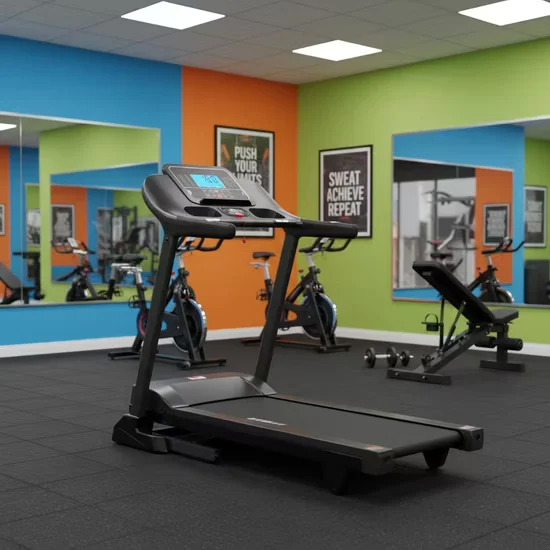
High-End Pilates Studios
Premium aesthetics meet quiet operation for boutique studio environments.

ISO
9001
CE
Certified
OEM
Available
10YR
Warranty
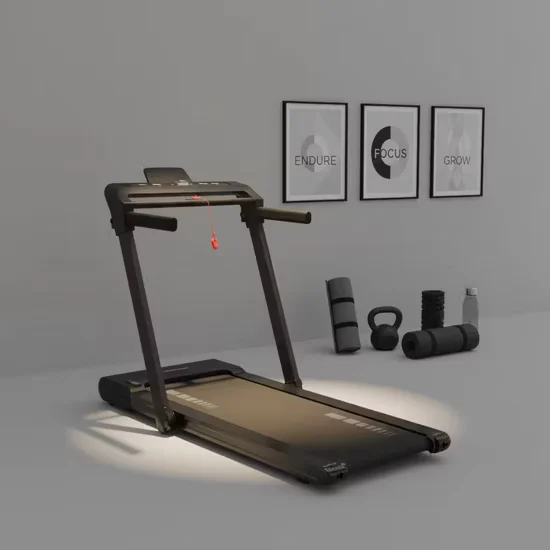
MT296 Motorized Treadmill, DC 2.0HP Motor, 1200×520mm Runway, Foldable ABS Frame — engineered with a continuous-duty DC drive supporting 1-20 km/h speeds across 16 preset programs, housed in a space-saving foldable design that reduces footprint from 1580×865×1300mm to 910×865×1345mm. LCD console tracks speed, distance, time, calories, and pulse for structured training sessions. Every unit undergoes three-stage QC inspection with full load testing before shipment, backed by OEM/ODM customization and CE/RoHS certification.
// Spec Highlights
• Direct from Manufacturer · No Middlemen · Worldwide Shipping
01
// Material
Imported Solid Wood
Premium hardwood frames sourced for density and visual warmth.
02
// Hardware
Medical-Grade Silent
Whisper-quiet pulleys and springs for clinical environments.
03
// Customization
Appearance OEM
Color, upholstery, and branding tailored to your studio.
04
// Service
Layout Design
Free venue planning for studios and rehab institutions.
Every component is selected for longevity, performance, and aesthetic harmony - from imported hardwood frames to silent medical-grade accessories.
// Features
Robotic Continuous Welding — MT296 motorized treadmill frame joints are robotically MIG-welded with continuous seams, eliminating spot-weld weak points that crack under sustained vibration.
| Parameter | Value |
|---|---|
| Product Type | Motorized Treadmill |
| Designation | MT296 |
| Motor Power | DC 2.0HP |
| Speed Range | 1–20 km/h |
| Running Surface | 1200 × 520 mm |
| Frame Material | ABS Housing |
| Programs | 16 Preset |
| Console Display | LCD (Speed / Distance / Time / Calories / Pulse) |
| Foldable | Yes |
| Unfolded Dimensions | 1580 × 865 × 1300 mm |
| Folded Dimensions | 910 × 865 × 1345 mm |
| Net Weight | 64.0 kg |
| Certification | CE, RoHS |
| OEM / ODM | Available |
| Facility Type | Typical Use |
|---|---|
| Home Fitness | Daily cardio in space-limited environments requiring foldable storage |
| Hotel Fitness Center | Low-maintenance unit for guest use with compact footprint |
| Personal Training Studio | Adjustable-speed platform for one-on-one conditioning sessions |
| Light Commercial Gym | Entry-level motorized treadmill for moderate-traffic cardio zones |
Many folding treadmills sacrifice structural rigidity to achieve a smaller packed footprint — the result is a deck that flexes under footstrike and a frame that develops audible play within months of daily use. The MT296 motorized treadmill addresses this with an ABS housing engineered around a foldable frame that maintains alignment across the 1200 × 520 mm running surface. Foldable does not have to mean structurally compromised.
Commercial environments and high-frequency home users place repetitive impact loads on treadmill frames. When hinge points and base joints are assembled with spot welds or thin-gauge connectors, vibration accumulates at stress concentrations, leading to frame wobble at higher speeds [NEED_CITE: vibration fatigue in foldable fitness equipment frames]. The MT296’s 64 kg net weight and continuous joint construction distribute these loads across the full footprint rather than concentrating them at folding hinges.
The MT296 motorized treadmill occupies the compact motorized cardio category, bridging the gap between basic walking pads and full-size commercial treadmills. Its 1200 × 520 mm running surface accommodates natural stride length for walking and moderate running paces up to 20 km/h, making it suitable for users who need a dedicated running platform without the floor space commitment of a fixed-frame unit. In facility layouts, it pairs with higher-capacity cardio units on the main floor while serving secondary spaces — hotel rooms, studio corners, or residential gym areas — where the MT296 motorized treadmill provides reliable daily use in a stowable form factor.
A treadmill frame endures three distinct load types: static weight from the user, dynamic impact from footstrike, and torsional stress from belt friction and motor torque. The MT296’s DC 2.0HP motor delivers consistent drive force across the 1–20 km/h range, reducing the torque spikes that occur when underpowered motors struggle at higher speeds. Folding mechanisms introduce additional stress concentration points — each hinge must resist both vertical compression and lateral shear across thousands of articulation cycles [NEED_CITE: fatigue loading on pivot joints in foldable structures]. The ABS housing on the MT296 is molded to encase and reinforce these hinge zones, distributing load into the base frame rather than relying on fasteners alone. Console mounts and handrail attachments are similarly integrated into the structural shell, preventing the loosening that occurs when components are surface-bolted to thin tubing.
The 1200 × 520 mm running surface is a critical dimension for user safety — decks shorter than 1200 mm force stride compression, increasing the likelihood of off-belt foot placement during running. At 520 mm wide, the MT296 motorized treadmill provides lateral margin that accommodates natural arm swing and minor lateral drift without requiring constant belt correction. The DC 2.0HP motor rating indicates continuous-duty capacity rather than peak output, meaning the drive system is sized to sustain operation at higher speeds without thermal overload [NEED_CITE: motor duty cycle classification for fitness equipment]. The 16 preset programs operate through the LCD console, adjusting speed and incline parameters within the motor’s rated envelope — this ensures that program variation does not push the drive system beyond its thermal or mechanical limits. The foldable design reduces the footprint from 1580 × 865 × 1300 mm to 910 × 865 × 1345 mm, achieved through a hinge mechanism that locks the deck in both open and closed positions without requiring pin insertion or secondary latches.
Manufacturers seeking aggressive price points on folding treadmills often reduce frame mass by thinning tube walls and substituting spot welds for continuous seams. The immediate result is a lighter unit — but under daily use, thin-walled frames flex visibly at the deck-to-base junction, accelerating wear on the running belt and deck surface. Spot welds at hinge points crack under vibration, creating play that worsens with each folding cycle until the mechanism no longer holds position [NEED_CITE: weld joint fatigue under cyclic loading in consumer equipment]. Non-sealed bearings in the roller assembly absorb dust and moisture from the running surface, developing play that manifests as belt drift and inconsistent speed readings. These failures are not cosmetic — a frame that flexes under load alters the belt tracking geometry, increasing motor strain and shortening drive component life. The MT296 motorized treadmill’s 64 kg net weight reflects material allocation toward structural integrity rather than minimum-viable construction.
The MT296 motorized treadmill is produced within a vertically integrated manufacturing facility that controls steel sourcing through final assembly. Every unit undergoes load testing before shipment — not sample-based inspection, but individual verification that the frame, motor mount, and folding mechanism perform under rated conditions. The ABS housing is molded to commercial-grade impact resistance, and the folding hinge is engineered for repeated articulation without fastener loosening. For facility planners, the MT296’s folded footprint of 910 × 865 × 1345 mm allows storage against walls or within closets, while the unfolded configuration at 1580 × 865 × 1300 mm maintains adequate clearance for safe mounting and dismounting. OEM and ODM customization is available for facilities requiring specific console branding or housing color matching. 2D-3D layout planning support ensures the MT296 motorized treadmill integrates into cardio zones with proper spacing and traffic flow.
Provide your cardio zone dimensions and target equipment count to receive a 2D-3D floor plan showing MT296 motorized treadmill placement with safety clearances and traffic flow. Specify your average daily user volume so structural duty cycle can be matched to your operational intensity. If your facility requires custom housing colors, console branding, or specific program configurations, include these requirements in your inquiry to confirm OEM feasibility.
Q: What motor power is appropriate for daily home use compared to light commercial settings?
A: The DC 2.0HP motor in the MT296 motorized treadmill is rated for continuous operation, making it suitable for both daily home use and light commercial environments such as hotel fitness rooms or personal training studios. For facilities expecting more than six hours of daily cumulative use, a higher-duty motor platform may be more appropriate to maintain thermal headroom and extend drive component life.
Q: How does running deck size influence stride comfort and user safety?
A: The 1200 × 520 mm running surface on the MT296 motorized treadmill provides sufficient length for natural stride extension during running and adequate width to accommodate lateral drift without requiring constant belt correction. Decks shorter than 1200 mm compress stride mechanics, increasing fatigue and the risk of off-belt foot placement, while widths below 500 mm feel confining for taller users.
Q: What maintenance does a foldable treadmill require over its service life?
A: The MT296 motorized treadmill requires periodic inspection of the folding hinge mechanism to ensure lock engagement remains secure, along with monthly belt alignment checks and annual motor brush inspection if cumulative use exceeds 1000 hours. The ABS housing should be cleaned with non-abrasive detergents to prevent surface degradation, and the running belt should be replaced when wear indicators become visible or tracking becomes inconsistent.
Q: Can the MT296 accommodate users above 100 kg during continuous operation?
A: The MT296 motorized treadmill is engineered to support users within its rated weight capacity across the full 1–20 km/h speed range. For users at the upper end of the weight spectrum, operating at lower speeds and utilizing the 16 preset programs within moderate intensity ranges will maintain optimal motor thermal performance and reduce cumulative stress on the frame and running deck.
Premium aesthetics meet quiet operation for boutique studio environments.
Medical-grade silence and precision for sports & postpartum recovery.
Furniture-grade craftsmanship for premium residential installations.
Compact premium setups for one-on-one and small-group training.
Aesthetic Pilates integration for hybrid wellness studio programming.
Multi-unit deployment with instructor-grade reliability for certification programs.
Tell us about your project. Our team will respond within 24 hours with pricing, customization options, and shipping details.
// Sales Director
William
+86 132 2531 1800
// Export Manager
Bella
+86 198 5412 8032
william@bickfit.com