01 / Scenario
STUDIO
P
High-End Pilates Studios
Premium aesthetics meet quiet operation for boutique studio environments.

ISO
9001
CE
Certified
OEM
Available
10YR
Warranty
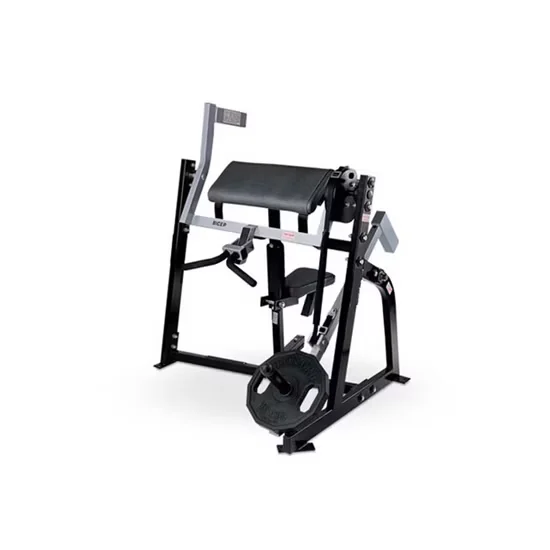
Plate Loaded Chest Press Machine, 1304×1300×1234mm, Steel Frame — engineered with 3×3 inch frame tubing and robotic MIG continuous welding to eliminate cold joints under cyclic heavy loading. Sealed industrial bearings at pivot points prevent play buildup across years of high-traffic commercial use. Frame and cushion colors available per customer requirements, with OEM/ODM acceptable. Every unit undergoes three-stage QC with load testing before shipment, backed by 10-year frame warranty and CAD floor planning support.
// Spec Highlights
• Direct from Manufacturer · No Middlemen · Worldwide Shipping
01
// Material
Imported Solid Wood
Premium hardwood frames sourced for density and visual warmth.
02
// Hardware
Medical-Grade Silent
Whisper-quiet pulleys and springs for clinical environments.
03
// Customization
Appearance OEM
Color, upholstery, and branding tailored to your studio.
04
// Service
Layout Design
Free venue planning for studios and rehab institutions.
Every component is selected for longevity, performance, and aesthetic harmony - from imported hardwood frames to silent medical-grade accessories.
// Features
11-Gauge Steel Traceable to Coil Origin — Every frame tube on this commercial plate loaded chest press is milled from Q235 industrial steel with mill certification traceable to the original coil, ensuring verifiable gauge consistency across production runs.
| Parameter | Value |
|---|---|
| Product Type | Plate Loaded Chest Press Machine |
| Frame Steel Gauge | 11-gauge, 3×3 inch tube |
| Steel Grade | Q235 industrial steel, mill-certified |
| Welding Type | Robotic MIG continuous weld |
| Loading Type | Plate Loaded |
| Bearing Type | Sealed industrial bearings at pivot points |
| Powder Coating | 200μm scratch-resistant, sandblast pre-treated |
| Upholstery | Available in standard or high-density options |
| Frame Color | According to customer requirements |
| Cushion Color | According to customer requirements |
| Product Dimensions | 1304×1300×1234mm |
| Power Source | Manual |
| Assembly State | Unfolded |
| Certification | ISO 9001, CE |
| OEM/ODM | Acceptable |
| Facility Type | Typical Use |
|---|---|
| Commercial gym strength floor | Primary plate-loaded pressing station in high-traffic zones |
| Hotel and resort fitness center | Durable chest press for diverse guest usage patterns |
| University athletic training facility | Structural reliability for team strength and conditioning programs |
| Professional fitness club | Heavy-duty pressing for experienced lifters and bodybuilders |
Many suppliers label frame tubing as commercial grade without disclosing actual steel gauge or providing mill certification. The result: frames that flex permanently under repeated heavy loading and spot welds that crack within the first year of intense use.
This commercial plate loaded chest press uses 11-gauge, 3×3 inch frame steel with mill-certified Q235 grade, paired with robotic MIG continuous welding that eliminates cold joints and spot-weld failure points.
Without verifiable steel specifications, gym owners inherit equipment that deforms at the横梁 under max loading — a structural compromise that no amount of repadding or repainting can fix. The deformation threshold is determined by tube wall thickness and cross-sectional geometry, not by marketing language. [NEED_CITE: structural steel gauge specifications and load-bearing capacity in fitness equipment]
This plate loaded chest press targets the horizontal pressing movement pattern, engaging the pectoralis major, anterior deltoids, and triceps through an iso-lateral converging path. In a commercial strength zone, it complements incline and decline pressing stations, cable crossover systems, and shoulder-focused equipment to create a complete upper-body pressing circuit. The design accommodates users across a wide range of body sizes, with seat height and grip positioning suited for both compact and larger-frame athletes. High-traffic facilities benefit from the plate-loaded resistance system, which avoids the maintenance demands of selectorized stacks while supporting progressive overload without mechanical complexity.
Commercial plate loaded chest press equipment endures static loading during plate changes, impact forces during heavy reps, and eccentric stress when users lower loads abruptly. The pivot points experience repeated rotational cycles — often hundreds per day in busy facilities — making bearing integrity critical to long-term smoothness. Weld joints at the frame-to-arm connections concentrate stress during maximal efforts, and any discontinuity in the weld bead becomes a fatigue crack initiation site over time. Upholstery contact surfaces degrade from sweat exposure and cleaning chemicals, while the powder coating at grip zones and plate loading horns faces mechanical abrasion from barbell collars and hand contact. [NEED_CITE: weld classification and fatigue performance in structural steel under cyclic loading]
The 11-gauge, 3×3 inch tube cross-section provides a specific moment of inertia that resists bending under off-center and maximal loads. Thinner-walled tubing of the same outer dimension will deflect permanently once the yield point is reached — a failure mode that is invisible until the frame no longer returns to its original alignment. Robotic MIG continuous welding produces uniform penetration along the entire joint length, eliminating the cold joints and incomplete fusion that characterize manual spot welding. Sealed industrial bearings at pivot points prevent contamination ingress from gym dust and sweat, maintaining rotational smoothness far longer than open bushings that degrade rapidly in high-traffic environments. The 200μm powder coating, applied over sandblast pre-treatment, creates a mechanical bond that resists chipping at contact points where barbell collars and user hands repeatedly impact the surface.
Thin-wall tubing may pass visual inspection but will flex permanently under repeated heavy loading, requiring full frame replacement rather than simple repair. Spot welds that appear intact can crack internally under cyclic stress, creating sudden failure points that pose liability risks in commercial settings. Non-sealed bearings develop play within months of heavy use, generating noise and requiring frequent replacement — a maintenance burden that compounds across a full gym floor. Low-density upholstery compresses permanently under daily use, splitting at seam lines with no standardized replacement parts available. Inadequate powder coating chips at contact zones, exposing bare steel to sweat-induced corrosion that spreads beneath adjacent coating layers. [NEED_CITE: corrosion mechanisms and coating failure in high-humidity fitness environments]
Every commercial plate loaded chest press leaving the factory undergoes individual load testing — not sample-based inspection — verifying structural integrity before shipment. The 11-gauge frame steel is traceable to coil origin, providing documentation that distinguishes verified specification from vague marketing claims. Robotic MIG continuous welding ensures every joint meets the same penetration standard, with three-stage QC inspection confirming weld quality across production runs. The 200μm industrial powder coating with sandblast pre-treatment provides long-term resistance to chipping and corrosion in high-traffic environments. A 10-year frame warranty backs the structural engineering decisions embedded in every unit. Floor planning CAD support ensures proper equipment spacing and safe clearances around this commercial plate loaded chest press, preventing unsafe proximity to adjacent stations. OEM customization options allow frame and cushion color matching to facility branding.
Provide your facility floor dimensions and target equipment list to receive 2D-3D space planning that accounts for safe clearances around this commercial plate loaded chest press. Specify expected daily user volume to confirm structural grade alignment with your traffic intensity. Indicate target user body size range to verify seat and grip adjustability meets your population. Custom frame color, cushion color, and branding options are available for facility-specific requirements.
Q: How can I verify that frame steel is genuinely commercial grade rather than just labeled as such?
A: Request mill-certified steel specification documentation traceable to the original coil origin. Genuine commercial-grade frame steel includes verifiable gauge measurements and material grade certification — not vague marketing terms. The 11-gauge, 3×3 inch tube used here comes with documentation confirming Q235 industrial steel grade, allowing independent verification of wall thickness and material composition before purchase.
Q: What is the difference between plate loaded and selectorized systems for high-traffic commercial gyms?
A: Plate loaded systems offer simpler mechanical construction with fewer wear components, reducing maintenance frequency in high-traffic environments. Selectorized systems provide faster weight changes but require stack guide rod maintenance and cable inspection. For facilities prioritizing structural longevity and minimal downtime, plate loaded equipment delivers consistent resistance without the complexity of pin-select mechanisms and weight stack assemblies.
Q: How does frame tube gauge affect load capacity and long-term deformation resistance?
A: Frame tube gauge directly determines the moment of inertia and yield point under loading. Thicker-walled tubing resists permanent deflection at higher loads, while thin-wall tubes may appear rigid initially but deform progressively under repeated heavy use. The 11-gauge specification provides a measurable deformation threshold that maintains structural alignment over years of commercial operation, unlike lighter gauge alternatives that compromise long-term geometry.
Q: What spacing and floor planning considerations apply to commercial plate loaded chest press installation?
A: Equipment placement must account for the 1304×1300×1234mm footprint plus clearance for plate loading access and user movement around the station. Adjacent equipment requires sufficient separation to prevent interference during use and ensure safe egress paths. Floor planning CAD support helps optimize strength zone density while maintaining safe operational clearances between stations throughout the facility layout.
Q: What upholstery density options are available and how do they affect long-term commercial durability?
A: Upholstery is available in standard or high-density options to match facility usage intensity. High-density foam resists permanent compression under daily commercial use, extending replacement intervals compared to standard density alternatives. Standardized replacement parts ensure long-term maintainability without requiring custom fabrication when upholstery eventually requires service after extended heavy use.
Premium aesthetics meet quiet operation for boutique studio environments.
Medical-grade silence and precision for sports & postpartum recovery.
Furniture-grade craftsmanship for premium residential installations.
Compact premium setups for one-on-one and small-group training.
Aesthetic Pilates integration for hybrid wellness studio programming.
Multi-unit deployment with instructor-grade reliability for certification programs.
Tell us about your project. Our team will respond within 24 hours with pricing, customization options, and shipping details.
// Sales Director
William
+86 132 2531 1800
// Export Manager
Bella
+86 198 5412 8032
william@bickfit.com

![MTS-8015 ISO-Lateral Squat Press Machine for Commercial Gym Fitness [WARN] draft identifier mismatch](https://bickgym.com/wp-content/uploads/2026/08/hammer-strength-mts-8007-iso-lateral-high-row-gym-machine-2920f1.webp)