01 / Scenario
STUDIO
P
High-End Pilates Studios
Premium aesthetics meet quiet operation for boutique studio environments.
ISO
9001
CE
Certified
OEM
Available
10YR
Warranty
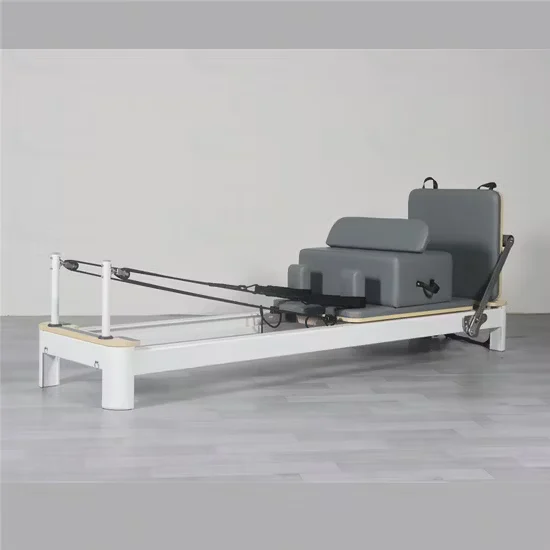
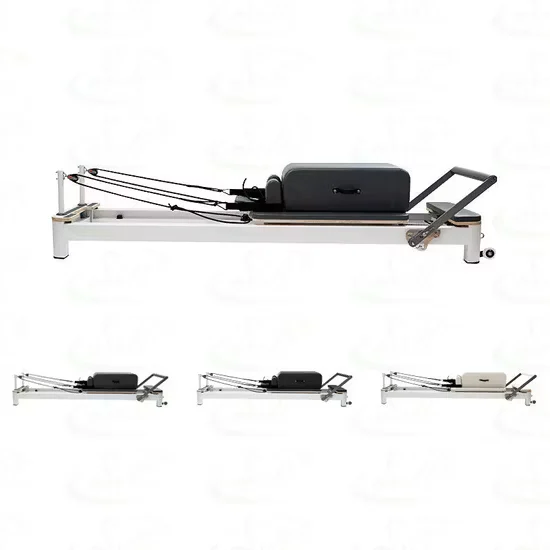
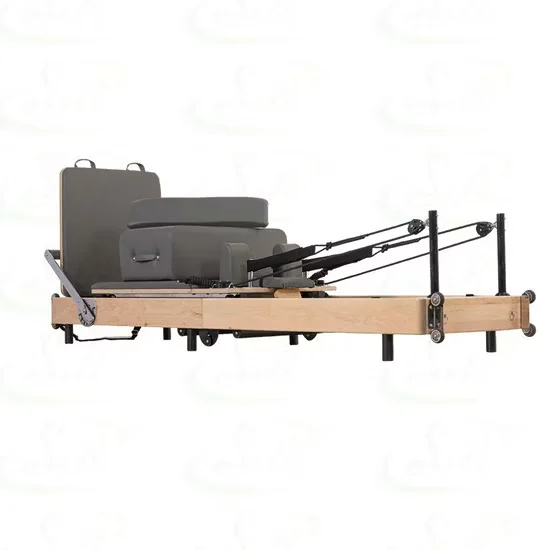
Professional Pilates Reformer, 2400×600×350mm, 100kg Net Weight — solid wood frame with folding mechanism for space-efficient studio and home use. Includes long box, jump board, and platform; solid-color upholstery rated for daily commercial sessions. Backed by 3-year warranty, ISO 9001:2015/CE/SGS certified, and custom logo options available. Every unit undergoes 32-point inspection and full load testing before shipment.
// Spec Highlights
• Direct from Manufacturer · No Middlemen · Worldwide Shipping
01
// Material
Imported Solid Wood
Premium hardwood frames sourced for density and visual warmth.
02
// Hardware
Medical-Grade Silent
Whisper-quiet pulleys and springs for clinical environments.
03
// Customization
Appearance OEM
Color, upholstery, and branding tailored to your studio.
04
// Service
Layout Design
Free venue planning for studios and rehab institutions.
Every component is selected for longevity, performance, and aesthetic harmony - from imported hardwood frames to silent medical-grade accessories.
// Features
Factory-Direct Build — Solid wood frame engineered for daily studio loads with full traceability from timber sourcing to final assembly.
| Parameter | Value |
|---|---|
| Product Type | Pilates Reformer |
| Product Dimensions | 2400×600×350mm |
| Net Weight | 100kgs |
| Frame Material | Solid Wood |
| Folding Mechanism | Integrated hinge and lock system |
| Carriage System | Precision rail with low-friction pulley assembly |
| Upholstery | Solid color, commercial-grade vinyl |
| Accessories Included | Long Box / Jump Board / Platform |
| Logo | Customized Is Allowed |
| Certification | ISO 9001:2015 / CE / SGS |
| Warranty | 3 Years |
| Production Capacity | 80 Pieces/Month |
| Target User | Adult, Unisex |
| Facility Type | Typical Use |
|---|---|
| Commercial Pilates studio | Daily group and private reformer sessions across beginner to advanced repertoires |
| Hotel and resort wellness zone | Guest-accessible equipment requiring compact storage when not in use |
| Home fitness studio | Space-conscious residential installation with full accessory capability |
| Rehabilitation and physical therapy center | Controlled resistance work for post-injury and mobility recovery protocols |
| Boutique fitness club | Mixed-format classes blending reformer work with mat and functional movement |
Rigidity starts at the frame, not the rail.
Most reformers on the market describe their frame material vaguely as "commercial grade" without specifying wood species, moisture content, or load-bearing cross-section. I once saw a studio go through three reformer frames in eighteen months — the carriage started drifting off-center because the rails had subtly warped as the timber dried unevenly. The studio owner blamed the rail manufacturer, but the root cause was a frame that was never engineered for the static and dynamic loads of eight sessions per day [NEED_CITE: structural timber grading standards for fitness equipment frames]. When a commercial pilates reformer folding professional yoga training equipment unit sits on a studio floor, it must hold dimensional stability through seasonal humidity swings, sweat exposure, and thousands of carriage cycles. A frame that twists even fractionally throws off rail alignment, and once the carriage binds, members notice immediately.
This reformer covers the full sagittal and frontal plane repertoire — footwork, leg circles, long stretch, elephant, and coordinated arm-and-leg sequences all run cleanly on the carriage travel length. In a studio layout, it pairs naturally with the Cadillac and Wunda Chair to form a complete apparatus triangle, letting instructors rotate clients through stations without redundant movement patterns. For facilities running high-density class schedules, the folding capability means the unit stores vertically between sessions, freeing floor space for mat work or group functional drills. The carriage width and strap positions accommodate users across a broad range of body sizes without requiring hardware adjustments between clients, which matters when class changeover windows are tight. A commercial pilates reformer folding professional yoga training equipment unit earns its floor space by serving multiple class formats without reconfiguration downtime.
Every reformer session loads the frame in two distinct modes: static compression when the user presses through the footbar, and dynamic lateral shear when the carriage reverses direction at speed. The folding hinge sits at the highest stress concentration point — it must absorb both the weight of the carriage assembly during transport and the torsional forces when the unit locks into its deployed position. Over months of daily open-and-close cycles, a poorly engineered hinge develops play, and that play transfers directly into rail misalignment. The pulley bearings face their own wear pattern: sweat and studio dust infiltrate unsealed bearing races, creating abrasive paste that accelerates play development. Upholstery on the shoulder rest and carriage pad endures concentrated compression at the same contact points session after session, so density and recovery rate determine whether the padding holds or develops permanent depressions [NEED_CITE: bearing seal performance under particulate contamination in fitness environments].
The 2400mm frame length sets the carriage travel distance, which directly governs how tall a user can be before the carriage bottoms out during full-extension exercises like long spine or semi-circle work. Solid wood as a frame material offers inherent vibration damping that metal frames cannot replicate — when the carriage reverses direction, the energy dissipates through the timber rather than ringing through a hollow tube. The 350mm bed height positions the carriage at a working level that suits both standing exercises beside the reformer and seated work from a box or platform. The integrated long box, jump board, and platform kit eliminates the accessory gap that forces studios to source add-ons separately, and having everything matched to the same frame tolerances means accessories seat properly without shimming. Solid-color upholstery in commercial-grade vinyl resists the cleaning chemicals studios use between sessions, and custom logo application on the frame or pad lets facilities brand their equipment without aftermarket wraps that peel under sweat exposure.
A reformer built with underspecified timber will look fine at delivery, but as the wood acclimates to studio humidity, uneven shrinkage pulls the rails out of parallel. Once that happens, the carriage develops lateral play, and the smooth glide that defines the reformer experience degrades into something members describe as "sticky." Non-sealed bearings in the pulley system fail silently at first — the resistance simply becomes inconsistent, and instructors spend class time troubleshooting instead of teaching. Low-density upholstery compresses within weeks of commercial use, creating hard spots on the carriage pad that clients feel immediately during supine exercises. When the vinyl cover splits at a seam, the entire pad needs replacement because the internal foam has absorbed sweat and cannot be sanitized — a maintenance cost that compounds across a studio full of units [NEED_CITE: commercial upholstery durability standards for fitness and wellness equipment].
The solid wood frame provides the mass and rigidity that keeps the reformer planted during jump board work, where repeated impact loading would shift a lighter unit across the floor. The folding mechanism addresses the space economics of urban studios, where square-meter costs demand that every piece of equipment either serves multiple functions or stores out of the way. The three-year warranty covers the structural elements that studios cannot repair in-house — frame integrity, rail alignment, and hinge function. Custom color and logo options let facilities match the reformer to their interior design scheme without aftermarket modification. For studio buildouts, the 2400×600mm footprint allows layout planning with predictable safety clearances between units, and the 80-pieces-per-month production capacity supports multi-unit orders for new studio launches or fleet replacements. Every commercial pilates reformer folding professional yoga training equipment order ships in a standard wood case that protects the frame during freight, reducing the damage rate that plagues poorly packaged fitness equipment deliveries.
Provide your studio floor dimensions and target reformer count so we can supply a 2D layout showing unit spacing, storage positions, and instructor circulation paths. Specify your average daily session volume per unit to confirm the structural grade matches your traffic load. Confirm your user population size range so carriage travel length and strap positions are validated against your client base. Detail any custom color, upholstery, or logo requirements early in the specification process to align with the production schedule.
Q: How do I distinguish a commercial-grade reformer frame from a home-use one?
A: Commercial frames specify wood species, moisture content range, and cross-section dimensions that can be verified against mill certificates. Home-use frames often list only "solid wood" with no traceability. Ask the manufacturer for the timber grading standard used and whether load testing is performed on every unit or only on samples. The difference shows up within six months of daily studio use.
Q: What are the trade-offs between solid wood and metal frames for a reformer?
A: Solid wood provides natural vibration damping and aesthetic warmth suited to studio interiors, but it requires humidity-controlled storage and is sensitive to liquid damage if not properly sealed. Metal frames resist moisture and offer uniform dimensions but transmit carriage vibration more directly. For most commercial studios, solid wood is preferred when the environment is climate-controlled and the frame joinery is engineered for repeated loading.
Q: How should I verify the folding hinge is safe for daily use?
A: Request the hinge cycle test report from the manufacturer, which documents how many open-and-close cycles the mechanism survived before developing play. Inspect the lock pin engagement in person — it should click into a positive detent with no wobble. A commercial hinge should operate smoothly one-handed while the frame remains rigid when fully deployed and loaded.
Q: What maintenance does the carriage rail and pulley system require?
A: Wipe the rail surface daily with a dry cloth to remove dust and sweat residue that accelerates bearing wear. Quarterly, check each pulley for lateral play by gripping the wheel and attempting to rock it side to side. Any detectable movement indicates bearing wear that requires replacement before the carriage begins to bind or track unevenly during use.
Q: What happens when the upholstery pad compresses or the cover splits?
A: Confirm with the manufacturer that replacement pads and covers are available as individual spare parts rather than requiring a full carriage assembly purchase. Commercial-grade vinyl should hold for an extended service life under daily use, but eventual replacement is expected. Ask for the pad attachment method — bolted pads are field-replaceable in minutes, while bonded pads require workshop service.
Premium aesthetics meet quiet operation for boutique studio environments.
Medical-grade silence and precision for sports & postpartum recovery.
Furniture-grade craftsmanship for premium residential installations.
Compact premium setups for one-on-one and small-group training.
Aesthetic Pilates integration for hybrid wellness studio programming.
Multi-unit deployment with instructor-grade reliability for certification programs.
Tell us about your project. Our team will respond within 24 hours with pricing, customization options, and shipping details.
// Sales Director
William
+86 132 2531 1800
// Export Manager
Bella
+86 198 5412 8032
william@bickfit.com