SM-500 Smith Machine Technical Data Sheet – Wholesale Supplier
Most buyers assume heavier load capacity equals better quality. The real safety determinant is whether guide rail travel matches the actual range of motion for squats and bench presses.
The SM-500 Smith Machine technical data sheet provides verified specifications including guide rail travel length, static and dynamic load capacity, pulley system ratios, bearing seal ratings, and footprint dimensions. These parameters directly affect equipment safety, maintenance frequency, and end-user experience in commercial gym environments.
Early in my career, I helped a Southeast Asian fitness chain source strength equipment from a new supplier. The Smith machines arrived with guide rails that looked substantial, but during installation we discovered the actual travel distance fell noticeably short of what the documentation claimed. Members doing deep squats hit a hard stop before reaching proper depth, and the bar path developed a slight bind near the bottom of the movement. Within weeks, complaints piled up and the entire container had to be returned. The freight losses and customs reprocessing costs wiped out a significant portion of that order’s margin. That situation pushed me to personally verify every critical dimension with measuring tools and load cells before approving any shipment. Working now on the manufacturing side, I apply the same scrutiny to every SM-500 Smith Machine technical data sheet we release. [NEED_CITE: ISO 20957-1 stationary training equipment safety requirements]

Let me walk you through what actually matters when you read these specifications and how to separate reliable data from marketing claims.
What Are the Core Technical Parameters of the SM-500 Smith Machine?
Guide rail travel, load capacity ratings, and pulley system ratios form the three pillars of any credible SM-500 Smith Machine technical data sheet.
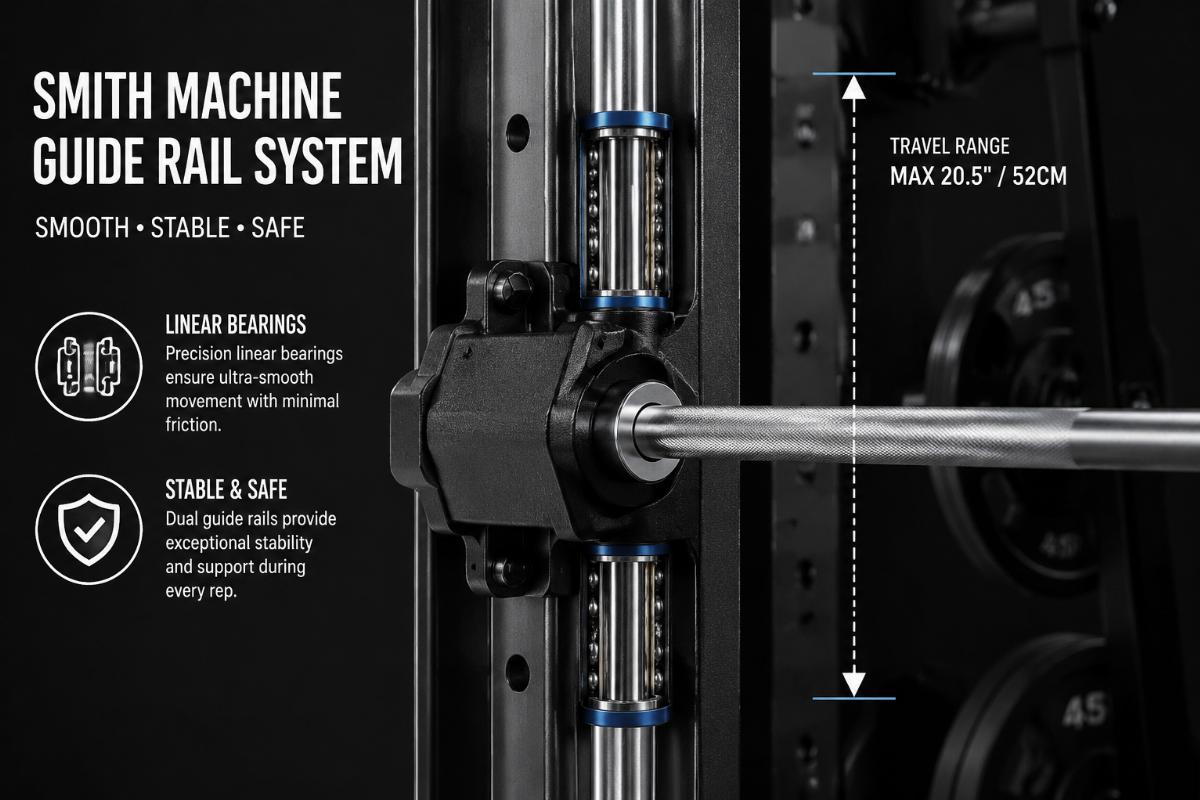
The guide rail system determines how far the barbell can travel vertically. For commercial applications, sufficient travel allows users to perform full-depth squats and complete bench press ranges without mechanical interference. When travel is restricted, lifters compensate with improper form, increasing injury risk. [NEED_CITE: biomechanical analysis of Smith machine bar path constraints]
Load capacity appears in two forms: static load rating and dynamic load rating. Static capacity refers to the maximum weight the frame and guide rails can support without deformation when the bar is at rest. Dynamic capacity accounts for forces generated during actual lifting, including momentum and impact loads when plates contact the safety stops. A credible SM-500 Smith Machine technical data sheet must specify both values separately.
The pulley system ratio affects cable attachment exercises integrated into the machine. A higher mechanical advantage reduces the force needed to move the weight stack but increases cable travel distance. This ratio directly influences cable wear patterns and replacement intervals. [NEED_CITE: mechanical efficiency calculations for cable pulley systems in strength equipment]
| Parameter Category | Commercial-Grade Specification | Budget Alternative | Verification Method |
|---|---|---|---|
| Guide Rail Travel | Full range for deep squats | Often restricted | Direct measurement with tape |
| Load Capacity | Separate static and dynamic ratings | Single combined figure | Third-party load testing |
| Pulley Ratio | Specified with mechanical advantage | Rarely disclosed | Cable travel measurement |
| Bearing Seal Rating | IP-rated for humidity resistance | Basic sealed bearings | Manufacturer documentation |
| Frame Steel Thickness | Meets commercial standards | Often thinner gauge | Ultrasonic thickness gauge |
A distributor in the Middle East once received a shipment where the pulley ratio was not documented. After six months of operation, cables began fraying at an accelerated rate because the system required more frequent replacement than anticipated. Without knowing the ratio, the facility could not calculate expected cable lifespan or budget for maintenance properly. [NEED_CITE: cable wear correlation with pulley mechanical advantage]
How Can Buyers Verify Data Sheet Accuracy?
Physical measurement and third-party testing reports are the only reliable methods to confirm that an SM-500 Smith Machine technical data sheet reflects actual product specifications.
Requesting documentation is straightforward. Verifying it requires deliberate action. Here is the process I follow for every production batch:
Step 1: Guide Rail Travel Measurement
Use a steel tape measure to determine the distance between the upper and lower mechanical stops. Record the value and compare it against the data sheet. Any deviation beyond minimal tolerance indicates a production inconsistency. The measurement must account for the full range where the bar carriage moves freely without binding.
Step 2: Frame Steel Thickness Verification
An ultrasonic thickness gauge provides non-destructive measurement of steel tube walls. Sample multiple points across the frame structure, particularly at welded joints where material thinning can occur during fabrication. Compare readings against the SM-500 Smith Machine technical data sheet specifications. [NEED_CITE: ultrasonic testing methods for welded steel structures]
Step 3: Load Testing Protocol
Apply calibrated weight plates incrementally to the bar carriage. Observe the frame for any visible deflection, listen for unusual sounds from guide rail bearings, and check that the carriage moves smoothly throughout the full travel range. Dynamic testing involves controlled lifting motions to simulate actual use conditions.
Step 4: Pulley System Inspection
Measure the cable travel distance relative to weight stack movement. Calculate the actual mechanical ratio and compare it against documented values. Inspect cable routing for sharp bends that accelerate wear.
Step 5: Bearing and Seal Assessment
In humid environments, bearing seal quality becomes critical. Check manufacturer documentation for IP ratings or seal specifications. Manually rotate the carriage through the full travel range and note any roughness or grinding sensations that indicate inadequate sealing or lubrication.
A hotel fitness center operator in a tropical coastal region faced repeated bearing failures on equipment from one supplier. The SM-500 Smith Machine technical data sheet from that supplier listed basic sealed bearings without specifying environmental protection ratings. After switching to equipment with properly rated seals, maintenance calls dropped substantially and equipment uptime improved noticeably. [NEED_CITE: bearing seal requirements for humid environment fitness equipment]

How Should Parameters Be Selected for Different Applications?
Commercial high-traffic facilities and hospitality low-frequency installations have distinctly different parameter priorities when selecting from an SM-500 Smith Machine technical data sheet.
Commercial gyms operate with continuous member flow throughout the day. Equipment endures hundreds of cycles daily, with users of varying experience levels and lifting techniques. In this environment, guide rail durability, bearing quality, and frame rigidity take priority over aesthetic features. The SM-500 Smith Machine technical data sheet should show robust specifications across all structural parameters.
Linear bearings must handle repetitive motion without developing play. Guide rails need sufficient surface hardness to resist wear from constant carriage movement. The frame must remain rigid under dynamic loads to prevent flex that could affect bar path consistency. [NEED_CITE: bearing life calculations for linear motion systems under cyclic loading]
Hotel and residential fitness centers see lower daily usage but face different challenges. Equipment may sit idle for extended periods in environments with varying humidity levels. Corrosion resistance becomes more important than extreme load capacity. Bearing seals must prevent moisture ingress during idle periods. Finish quality affects long-term appearance when equipment is not constantly used and cleaned.
A fitness chain operator across multiple Southeast Asian locations learned this distinction the hard way. They initially specified maximum load capacity for all locations without considering that hotel facilities needed different priorities. The hotel equipment suffered corrosion issues while the commercial locations performed well. After reviewing the SM-500 Smith Machine technical data sheet options, they adjusted specifications to match each environment’s actual demands.
| Application Type | Priority Parameters | Secondary Considerations |
|---|---|---|
| Commercial Gym | Load capacity, bearing durability, frame rigidity | Aesthetic finish, attachment options |
| Hotel Fitness | Corrosion resistance, seal quality, finish durability | Maximum load capacity, heavy-duty bearings |
| Residential Complex | Balanced specifications, space efficiency | Commercial-grade durability at lower cost |
| Boutique Studio | Specific exercise functionality, compact footprint | Multi-user durability features |
The key is matching the SM-500 Smith Machine technical data sheet specifications to actual usage patterns rather than defaulting to maximum specifications across all applications.

What Risks Come from Inaccurate Parameter Documentation?
Guide rail travel discrepancies and load capacity misrepresentation directly cause safety incidents, member complaints, and financial losses through returns and replacements.
When an SM-500 Smith Machine technical data sheet overstates guide rail travel, users encounter unexpected mechanical stops during exercises. This creates two problems: immediate safety risk from interrupted movement patterns, and long-term reputation damage as members lose confidence in equipment reliability.
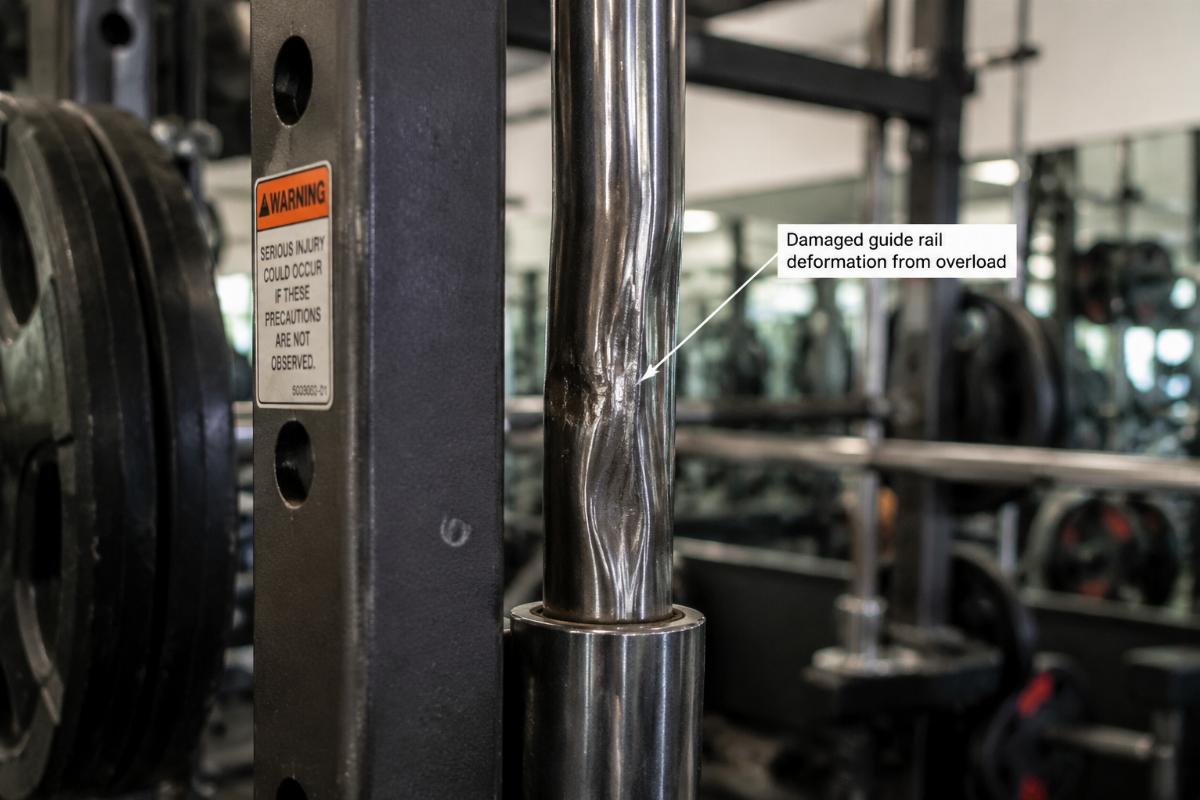
Load capacity misrepresentation poses even greater risks. If the dynamic load rating falls below actual usage demands, frame components can fatigue prematurely. Welded joints may develop cracks. Guide rails can deform under repeated overload conditions. These failures often occur without warning, creating serious injury potential. [NEED_CITE: fatigue failure analysis in welded steel fitness equipment frames]
A distributor in Latin America received customer complaints about a Smith machine model where the documentation showed adequate specifications. Investigation revealed that the actual dynamic load capacity was substantially lower than documented. The supplier had tested only static loads and applied those results to dynamic conditions. After several warranty claims and one injury incident, the distributor switched suppliers and now requires third-party verification of all load ratings before placing orders.
The financial impact extends beyond individual warranty claims. Consider the costs of:
- Return freight for non-conforming equipment
- Customs duties on returned shipments
- Replacement equipment procurement
- Customer relationship damage and lost future orders
- Potential liability exposure from safety incidents
A single container of rejected equipment can generate losses that exceed the profit from multiple successful shipments. The SM-500 Smith Machine technical data sheet must be accurate and verifiable to prevent these cascading costs.
Conclusion
Accurate technical documentation protects buyers from safety risks, financial losses, and reputation damage in commercial fitness equipment procurement.
The SM-500 Smith Machine technical data sheet serves as the foundation for informed purchasing decisions. Guide rail travel, load capacity ratings, pulley ratios, and bearing specifications must be verified through physical measurement and third-party testing rather than accepted at face value. Different applications require different parameter priorities, and mismatched specifications lead to premature failures or unnecessary costs. Buyers who invest time in verification avoid the expensive consequences of inaccurate documentation.