SX-900 Selectorized Series OEM Customization Manufacturer
Most buyers assume OEM customization simply means swapping a logo plate. In reality, the cost drivers that matter most are weight stack tonnage and upholstery grade combinations — choices that silently reshape cable routing, pulley geometry, and foam density.
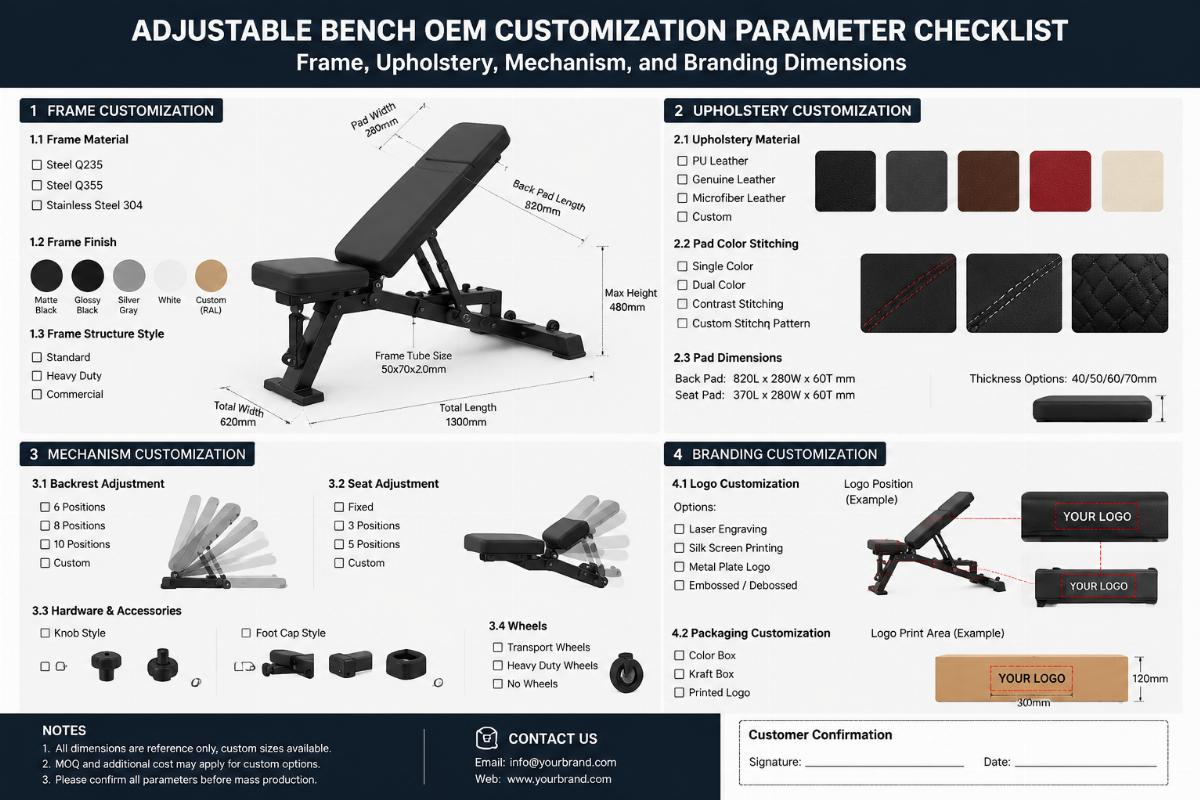
The SX-900 Selectorized Series OEM customization manufacturer offers full-spectrum private-label options spanning upholstery color, weight stack configuration, branded nameplates, and export packaging — all factory-direct from Shandong with pricing positioned substantially below tier-one international brands. MOQ flexibility ranges from single-unit trial orders to full container mixed-model shipments.
I spent my early career handling shipping documents at Yantian Port, staring at packing lists and bills of lading day after day, before moving into sales and finally getting my hands on the machines themselves. During that transition, a Riyadh-based buyer ordered a batch of selectorized cable crossovers requesting burgundy leather and Arabic-script nameplates. I was so focused on optimizing container volume across three units that I failed to cross-check every line of the OEM specification sheet against the production order. When the containers arrived and were unsealed, the upholstery Pantone match was visibly off, and the nameplate font had drifted. The buyer rejected the entire shipment, and we had to air-freight replacement seat pads at a cost that wiped out the margin on the whole deal. That single mistake drilled into me a permanent rule: when sourcing from a selectorized strength machine OEM manufacturer, every parameter must be locked down on paper before production begins. [NEED_CITE: root causes of OEM quality disputes in fitness equipment supply chains]

Let me walk through exactly what customization dimensions are available, how specification changes ripple through machine design, how to verify quality before shipment, and how to optimize container loading for mixed orders.
What OEM Customization Options Are Available for SX-900 Series?
The SX-900 Selectorized Series OEM customization manufacturer supports four core modification dimensions: upholstery material and color, weight stack tonnage, branded nameplates and logos, and export packaging with custom shipping marks.
Each dimension operates on its own lead-time track, and understanding the separation prevents costly bottlenecks.
| Customization Dimension | Standard Offering | Customization Range | Lead-Time Impact |
|---|---|---|---|
| Upholstery Material | PVC vinyl | PVC / PU / Microfiber leather | Noticeably extended for microfiber |
| Upholstery Color | Black only | Full Pantone matching | Minimal under standard molds |
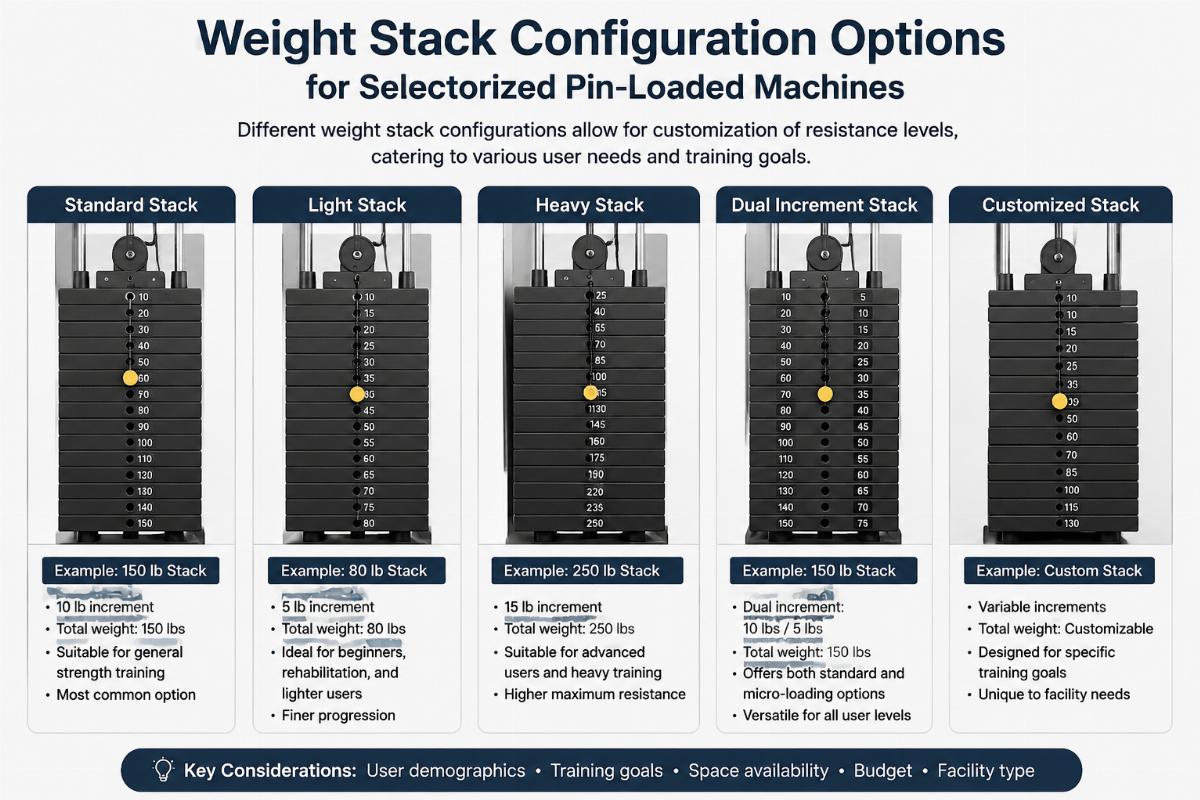
| Weight Stack | 70 kg standard | 70 kg / 90 kg / 110 kg tiers | Substantially extended for 110 kg tier |
| Nameplate / Logo | Generic factory mark | Custom metal or acrylic plate with buyer branding | Minimal |
| Packaging | Standard brown box | Custom printed carton with buyer shipping marks | Noticeably extended |
A distributor in the Middle East once placed an initial trial order for a single unit to validate craftsmanship before committing to a full container of thirty machines. The trial unit specified burgundy microfiber upholstery and Arabic-language branding on the nameplate. Once the sample passed inspection, the follow-up container order proceeded smoothly because every specification had been locked during the trial phase. [NEED_CITE: best practices for OEM trial order validation in strength equipment sourcing]
The key insight here is that color and upholstery switching under standardized molds requires only a modest additional time investment — the real schedule pressure comes from weight stack upgrades and custom packaging tooling. Many buyers mistakenly believe customization always elongates delivery timelines, but the reality is more nuanced: a color change on an existing mold adds negligible production time, while a weight stack upgrade from the standard tier to the heaviest tier triggers downstream adjustments to cable length, pulley alignment, and guide rod diameter.

How Does Custom Weight Stack Affect Machine Specs and Cost?
Upgrading the weight stack on the SX-900 Selectorized Series requires synchronized adjustments to the cable system and pulley assembly — but the cost increase remains controlled within a narrow band when handled by an experienced selectorized strength machine OEM manufacturer.
The weight stack is not a standalone component. It is the gravitational anchor of the entire resistance mechanism. Change its mass, and you alter the tension profile across the full cable routing path.
| Weight Stack Tier | Target User Profile | Cable & Pulley Adjustment Required | Cost Impact vs. Standard |
|---|---|---|---|
| Standard (70 kg) | Entry-level commercial gyms, hotel fitness centers | None — baseline configuration | Baseline |
| Mid-tier (90 kg) | Mid-range fitness chains, serious home gyms | Moderate — cable gauge and pulley bearing upgrade | Noticeably higher |
| Heavy-duty (110 kg) | Professional bodybuilding gyms, athletic performance facilities | Substantial — full cable re-routing, reinforced guide rods, upgraded selector pin | Substantially higher |
A gym chain operator in South America ordered a fleet of selectorized machines for multiple locations and requested that the weight stack be upgraded from the mid-tier to the heavy-duty tier across all units. The selectorized strength machine OEM manufacturer had to recalculate the cable travel distance, reinforce the pulley bracket mounting points, and source thicker guide rods to prevent lateral deflection under the increased load. The per-unit cost increase was meaningful but manageable — and critically, the structural modifications were completed within the existing frame footprint, meaning no changes to the machine’s external dimensions or floor space requirements. [NEED_CITE: engineering considerations for weight stack upgrades in pin-loaded equipment]
The counterintuitive point that catches many first-time buyers off guard: the weight stack upgrade does not simply mean stacking more plates. The guide rod must handle increased bending moments, the selector pin hole pattern must be re-drilled to maintain consistent resistance increments, and the cable anchor point may need repositioning to preserve smooth engagement across the full range of motion. These are not cosmetic changes — they are structural engineering modifications that require the manufacturer to run load calculations before committing to production.
This is precisely why working with a selectorized strength machine OEM manufacturer that maintains in-house engineering capability matters. If the factory merely assembles purchased sub-components without engineering oversight, a weight stack upgrade request will either be refused outright or executed without proper recalibration — both outcomes create field failures down the line.
What Is the OEM Verification Process to Avoid Quality Disputes?
A disciplined four-step verification process — color card confirmation, pre-production sample, in-line inspection, and pre-shipment audit — reduces the claim rate to a minimal level when sourcing from a selectorized strength machine OEM manufacturer.
Skipping any single step compounds risk exponentially. I learned this the hard way, as my earlier anecdote illustrated. Here is how the process should unfold in practice.
Step One: Color Card and Material Confirmation. The buyer submits a Pantone reference or physical swatch. The manufacturer returns a matched material sample with a signed color approval card. This card becomes the binding reference for all subsequent production. No production begins until this card is countersigned by both parties.
Step Two: Pre-Production Sample. Before the full batch enters the production line, the manufacturer builds a complete pre-production unit incorporating all custom specifications — upholstery, nameplate, weight stack tier, and packaging. The buyer inspects this unit either on-site or via detailed photo and video documentation. Any deviation from the approved color card or specification sheet is corrected at this stage, when rework cost is lowest. [NEED_CITE: pre-production sample approval protocols in fitness equipment manufacturing]
Step Three: In-Line Inspection. During mass production, a quality inspector checks a statistically meaningful sample of units against the approved pre-production sample. This is where upholstery stitching consistency, weld quality on the frame, and pulley alignment are verified. Catching defects at this stage prevents them from being buried inside finished, packed units.
Step Four: Pre-Shipment Audit. Once production is complete and units are packed, a final audit verifies carton markings, shipping marks, accessory inclusion, and overall packaging integrity. This is the last opportunity to catch errors before the container is sealed.
An importer in Africa once bypassed the pre-production sample step to save a few days on lead time. When the container arrived at destination, the upholstery color was close but not exact, and the custom shipping marks on the cartons were printed in the wrong language variant. The buyer had no signed color card to reference, and the manufacturer’s position was that the goods matched their internal standard. The dispute consumed months of correspondence and ultimately required a partial credit settlement. [NEED_CITE: importance of documented approval chains in OEM fitness equipment transactions]
The lesson is unambiguous: the verification process is not bureaucratic overhead — it is the buyer’s primary insurance policy. A selectorized strength machine OEM manufacturer that encourages buyers to skip verification steps is signaling that their process discipline is weak. Conversely, a manufacturer that insists on every step is protecting both parties.

How to Optimize Container Loading for Mixed Selectorized Orders?
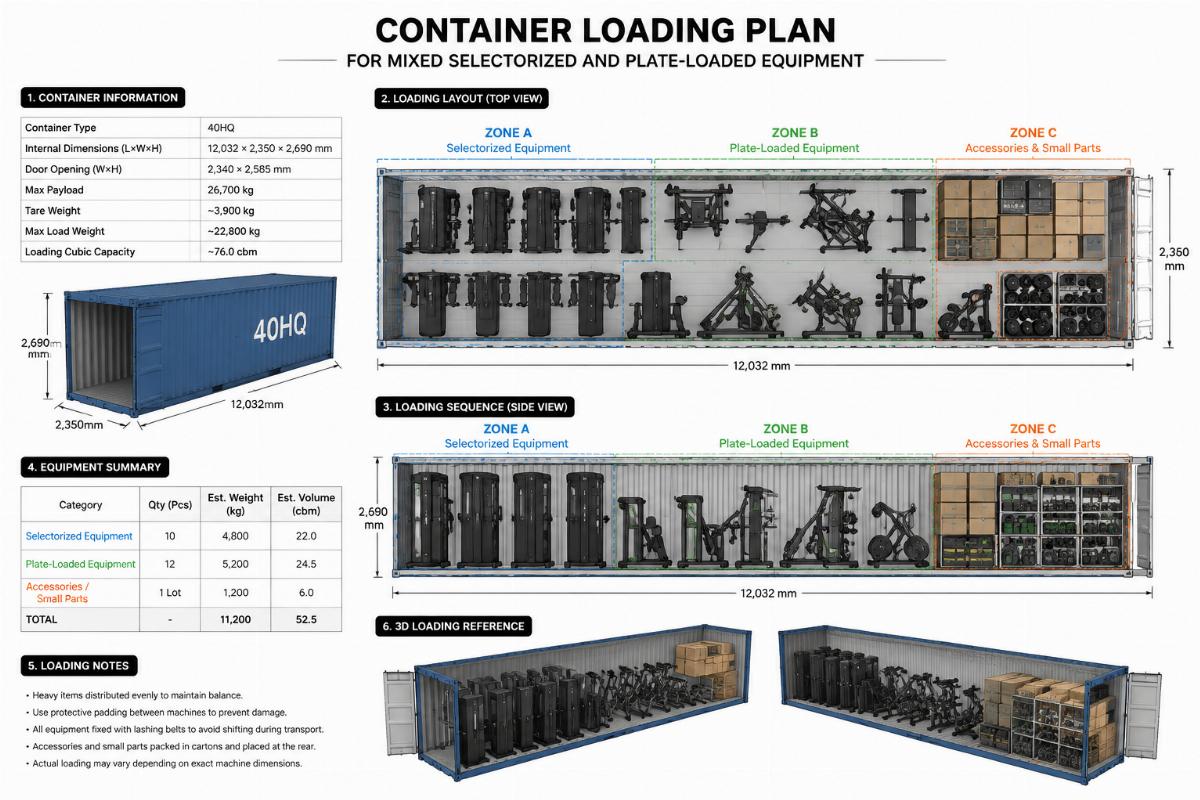
Strategic mixed-model container loading can improve space utilization substantially, reducing per-unit ocean freight costs — and the SX-900 Selectorized Series OEM customization manufacturer supports mixed-model consolidation as a standard service.
Buyers ordering multiple selectorized models in a single shipment face a spatial puzzle. Different machines have different frame geometries, different disassembly configurations, and different packaging dimensions. Loading them efficiently requires understanding how each model nests inside a standard container.
| Loading Strategy | Description | Space Utilization | Risk Profile |
|---|---|---|---|
| Single-model full container | One machine type fills the entire container | Standard | Low — minimal handling complexity |
| Mixed-model optimized | Multiple selectorized models nested based on dimensional compatibility | Substantially improved | Moderate — requires detailed loading plan |
| Mixed-model unoptimized | Multiple models loaded without pre-planning | Wasteful | High — damaged goods risk, unused voids |
An importer in West Africa regularly orders mixed containers combining several selectorized models along with plate-loaded machines and free weight equipment. By working with the manufacturer’s logistics team to develop a detailed loading plan before production begins, the importer achieved a meaningful improvement in container fill rate compared to unoptimized loading. The key was sequencing: larger-frame machines were positioned first against the container walls, and smaller units were nested into the remaining voids. Custom packaging dimensions were adjusted slightly to enable tighter nesting — a change that required coordination between the packaging department and the loading team but delivered measurable freight savings. [NEED_CITE: container loading optimization techniques for mixed fitness equipment shipments]
The selectorized strength machine OEM customization manufacturer plays a critical role here because custom packaging dimensions directly affect loading efficiency. If the packaging department designs cartons without consulting the loading team, even a well-designed loading plan will fail. The best outcomes occur when the manufacturer treats container loading as an integrated engineering problem rather than an afterthought.
Another consideration: mixed-model orders with custom branding on each model type require careful carton labeling to ensure the correct shipping marks appear on the correct boxes. A labeling error on a mixed container is far more disruptive than on a single-model container, because mislabeled cartons cannot be identified without opening them — and opening cartons at the destination port creates customs complications.
Conclusion
The SX-900 Selectorized Series OEM customization manufacturer delivers comprehensive private-label capabilities across upholstery, weight stack, branding, and packaging — with pricing and flexibility designed for importers and distributors building their own brand portfolios. Success in OEM sourcing depends not on finding the cheapest factory, but on locking every specification in writing, following a disciplined verification process, and treating container loading as an engineering discipline rather than a packing afterthought. The manufacturers that treat these three pillars seriously are the ones whose buyers reorder container after container without quality disputes.