Vertical Climber Preventive Maintenance Schedule | OEM Manufacturer
Silence is not a sign of health; it is often the quiet before a catastrophic bearing seizure.
A rigorous Vertical Climber Preventive Maintenance Schedule requires daily visual inspections for cable fraying, weekly lubrication of guide rails with silicone-based agents, monthly torque checks on pedal assemblies, and annual professional servicing of internal bearings to ensure user safety and equipment longevity in commercial settings.
I still remember the smell of burnt rubber and the distinct metallic screech that echoed through a high-traffic hotel gym in Dubai. The facility manager had assumed that because the vertical climber was quiet during low-usage hours, it was in good condition. He was wrong. The silence was due to dry guides that had stopped moving smoothly, masking the internal grinding of the bearings until they seized completely during a peak-hour session. That incident resulted in a guest injury, a closed facility for repairs, and a reputation hit that cost far more than the few minutes required for proper maintenance. In my years handling fitness equipment exports, I have seen that neglecting a structured Vertical Climber Preventive Maintenance Schedule is the fastest way to turn a premium asset into a liability. [NEED_CITE: common failure modes in linear motion fitness equipment]
The difference between a machine that lasts five years and one that fails in six months is not always the initial build quality, but the consistency of care. Commercial environments place unique stresses on these machines, with hundreds of users daily subjecting the frame to dynamic loads. Without a plan, minor issues like loose bolts or dry tracks escalate into structural failures. This guide outlines the exact steps facility managers need to implement to keep their equipment safe, quiet, and profitable.
Why Is a Preventive Maintenance Schedule Critical for Vertical Climbers?
Proactive care prevents the majority of unexpected breakdowns and significantly extends the operational life of commercial fitness assets.
Vertical climbers are deceptively simple in appearance but complex in their mechanical demands. Unlike a treadmill where the belt moves over rollers, a vertical climber relies on a system of cables, pulleys, and linear guides that must move in perfect synchronization. When one component wears out, it places uneven stress on the entire frame. Implementing a Vertical Climber Preventive Maintenance Schedule is not just about cleanliness; it is about preserving the structural integrity of the machine. [NEED_CITE: impact of preventive maintenance on fitness equipment lifespan]
Consider the case of a boutique studio in London. They noticed a slight wobble in the foot pedals of their primary climber. Instead of ignoring it, they adhered to their maintenance protocol and discovered that the mounting bolts had loosened due to the constant vertical vibration. Had this been left unchecked, the pedal assembly could have detached during use, leading to severe injury. By catching it early, they avoided a costly replacement and potential legal issues. This highlights why a scheduled approach is non-negotiable for commercial operators.
The core argument here is simple: reactive maintenance is expensive. Waiting for a part to break means downtime, which means lost revenue from members who cannot use the equipment. A well-executed Vertical Climber Preventive Maintenance Schedule ensures that the machine remains available and safe, protecting your return on investment. It also helps in maintaining warranty validity, as many manufacturers require proof of regular service to honor claims for major components like frames or electronic consoles.
What Are the Daily and Weekly Maintenance Tasks?
Quick visual checks and surface cleaning prevent debris accumulation and immediate safety hazards without requiring specialized tools.
Daily and weekly tasks are the first line of defense in any Vertical Climber Preventive Maintenance Schedule. These actions do not require a technician but should be performed by trained floor staff. The goal is to identify visible signs of wear before they become functional problems.
Daily Tasks:
- Visual Cable Inspection: Check the main lift cables for any signs of fraying, kinks, or exposed metal strands. Even a single broken strand can indicate imminent failure. [NEED_CITE: safety standards for fitness equipment cables]
- Pedal and Handle Grip Check: Ensure that the foot pedals and handlebars are secure and that the grip tape is intact. Loose grips can cause users to slip, leading to accidents.
- Console Wipe Down: Clean the electronic console with a dry or slightly damp cloth. Avoid spraying liquids directly onto the screen or buttons, as moisture can seep into the electronics and cause corrosion.
Weekly Tasks:
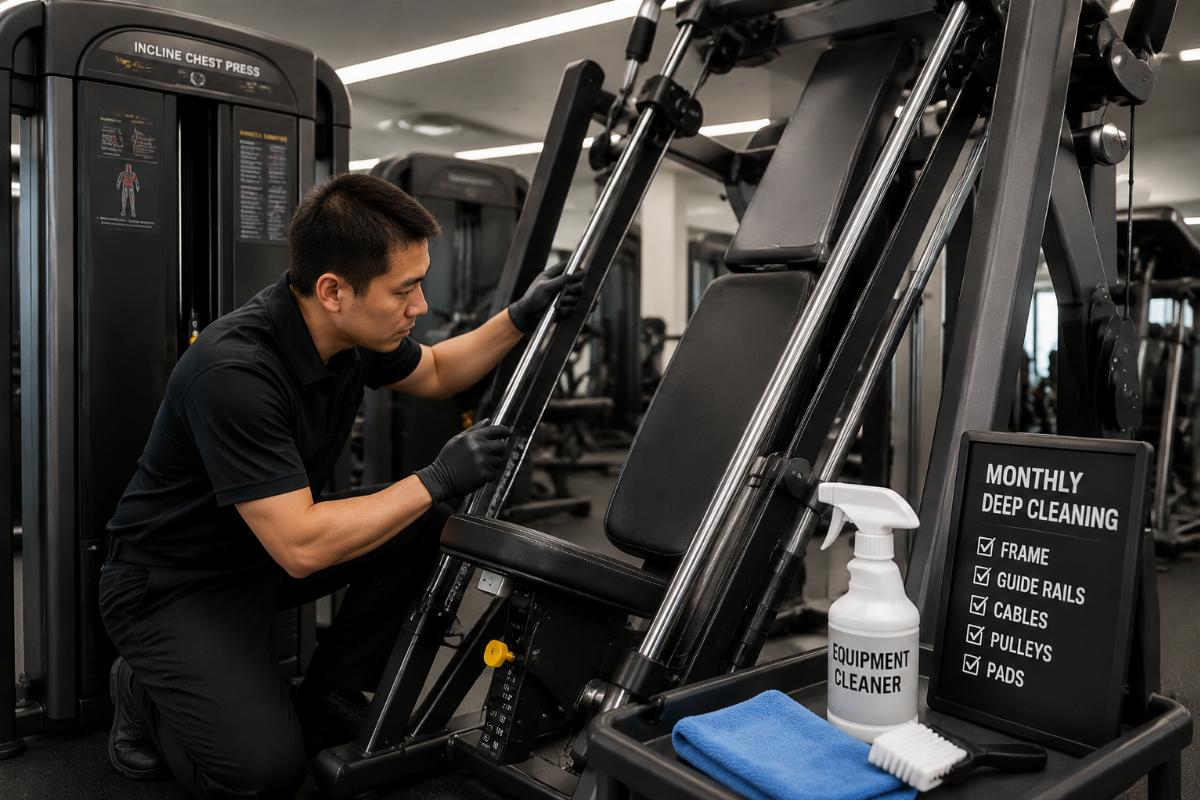
- Guide Rail Cleaning: Wipe down the vertical guide rails with a clean, dry cloth to remove dust and sweat residue. Buildup on these rails increases friction and accelerates wear on the glide wheels.
- Lubrication Application: Apply a thin layer of silicone-based lubricant to the guide rails. Do not use petroleum-based oils, as they can attract dirt and degrade plastic components. Silicone is preferred because it does not gum up and provides smooth, silent operation. [NEED_CITE: recommended lubricants for linear motion systems]
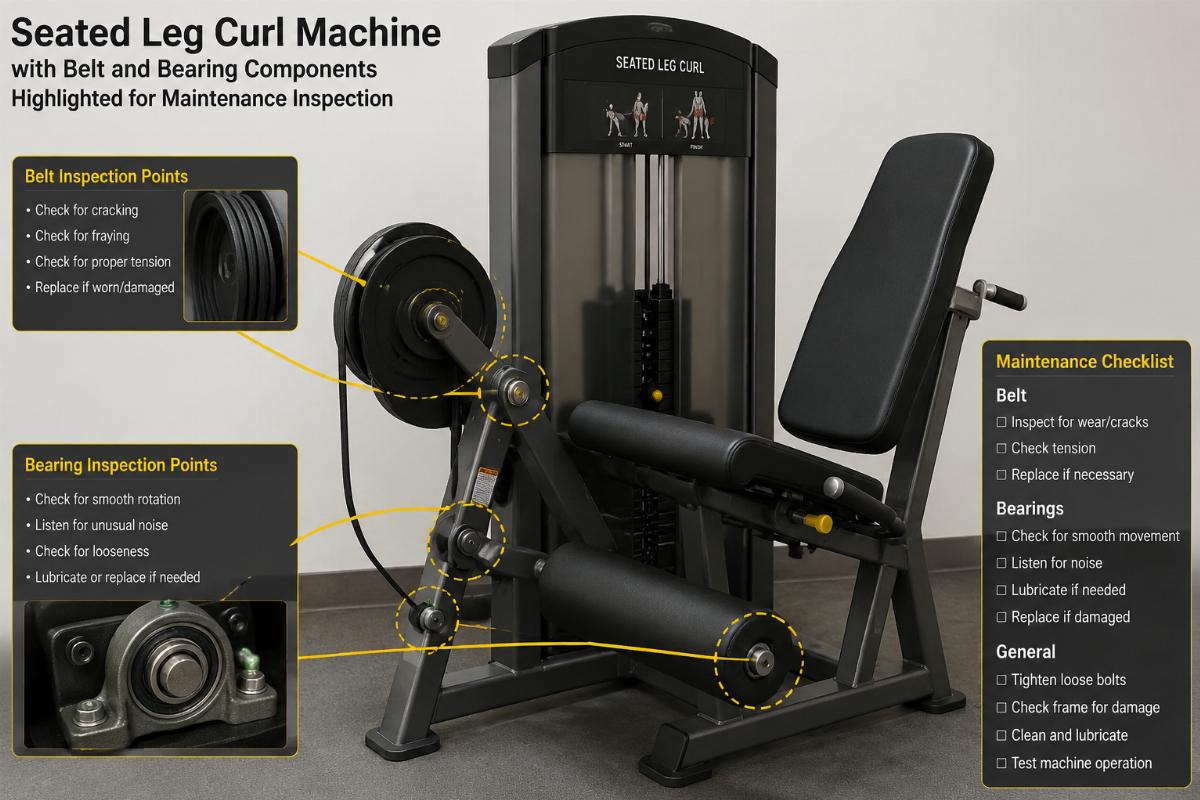
- Noise Check: Listen for any unusual squeaking or grinding sounds during operation. Silence is good, but a new squeak often indicates dry bearings or misaligned guides.
A common mistake observed in many gyms is the use of excessive water or harsh cleaning chemicals near the base of the climber. This can lead to rust on the lower frame components and damage the electronic sensors. Stick to mild, non-abrasive cleaners and ensure all surfaces are dried thoroughly after cleaning.
How to Perform Monthly Mechanical Inspections?
Tightening fasteners and inspecting cable tension ensures structural stability and smooth motion under heavy load.
Monthly inspections require a bit more technical knowledge and should be performed by a maintenance lead or a certified technician. This phase of the Vertical Climber Preventive Maintenance Schedule focuses on the mechanical connections that hold the machine together. Over time, the constant vibration and dynamic loading can cause bolts to loosen, even if they were torqued correctly at installation.
Key Inspection Points:
- Torque Check on Pedal Assemblies: Use a torque wrench to check the bolts securing the foot pedals to the main arm. Refer to the manufacturer’s specifications for the correct torque value. Loose pedals create a wobbling sensation that can destabilize the user.
- Handlebar Mount Integrity: Inspect the bolts connecting the handlebars to the sliding carriage. Ensure they are tight and that there is no play in the connection.
- Cable Tension Adjustment: Check the tension of the lift cables. If the cables are too loose, the pedals may feel sluggish or uneven. If they are too tight, it places excessive stress on the motor and bearings. Adjust the tension according to the manual, ensuring both sides are equal.
- Pulley and Wheel Inspection: Examine the pulleys and glide wheels for signs of wear or cracking. Replace any components that show significant degradation to prevent sudden failure.
In a chain gym in Lagos, a routine monthly inspection revealed that the cable tension on several climbers had become uneven due to temperature fluctuations. Adjusting the tension restored smooth operation and prevented premature wear on the pulleys. This example underscores the importance of regular mechanical checks, especially in environments with varying climate conditions.
| Component | Inspection Frequency | Action Required | Risk if Neglected |
|---|---|---|---|
| Guide Rails | Weekly | Clean and Lubricate | Increased friction, noise, wear |
| Lift Cables | Daily | Visual Check for Fraying | Catastrophic failure, injury |
| Pedal Bolts | Monthly | Torque Check | Wobble, instability, detachment |
| Glide Wheels | Monthly | Visual Check for Wear | Jerky motion, rail damage |
When Should You Schedule Professional Servicing?
Annual deep-dive servicing by certified technicians addresses internal bearing wear and electronic calibration that routine checks miss.
While daily and monthly tasks handle the exterior and accessible components, some parts of the vertical climber require specialized attention. Scheduling professional servicing once a year is a crucial part of a comprehensive Vertical Climber Preventive Maintenance Schedule. This is when internal components, such as bearings and electronic sensors, are inspected and calibrated.
Professional Service Includes:
- Bearing Inspection: Technicians will inspect the internal bearings for signs of wear or contamination. Replacing worn bearings before they fail prevents damage to the shafts and other components. [NEED_CITE: bearing failure analysis in fitness equipment]
- Electronic Calibration: The console and resistance mechanisms are calibrated to ensure accurate readings and consistent performance. This is particularly important for connected fitness equipment where data accuracy is key.
- Frame Integrity Check: A thorough inspection of the welds and frame joints for any signs of stress cracks or fatigue. This is critical for high-usage commercial machines.
- Software Updates: If the equipment has smart features, software updates are installed to improve functionality and security.
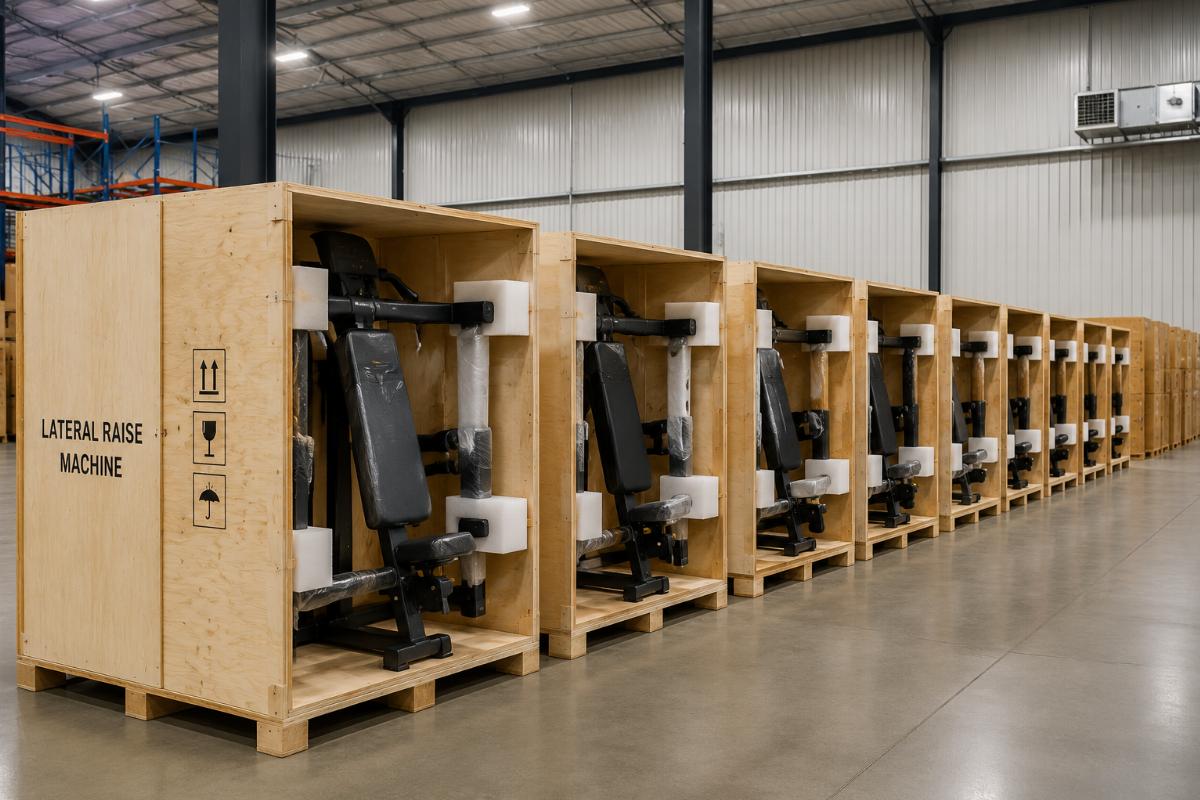
For facilities managing multiple units, coordinating professional servicing can be streamlined by working with manufacturers who provide detailed OEM maintenance manuals and spare parts kits. For instance, having access to genuine replacement cables and bearings allows local technicians to perform minor repairs quickly, reducing downtime. This support structure is vital for maintaining a high standard of equipment availability across large networks.
Ignoring this annual step can lead to hidden issues going unnoticed until they cause major failures. A professional eye can spot subtle signs of wear that untrained staff might miss, ensuring that the equipment remains safe and efficient for years to come.
Conclusion
Consistency in maintenance is the single most effective strategy for maximizing the lifespan and safety of commercial vertical climbers.
By implementing a structured Vertical Climber Preventive Maintenance Schedule, facility managers can avoid the high costs associated with unexpected breakdowns and liability claims. Daily visual checks, weekly lubrication, monthly mechanical inspections, and annual professional servicing form a complete care cycle that keeps equipment running smoothly. This proactive approach not only protects your investment but also ensures a safe and enjoyable experience for every user. Remember, the goal is not just to fix what is broken, but to prevent it from breaking in the first place.