Wholesale Shoulder Press Machine – Commercial Gym Equipment Manufacturer
Most buyers think MOQ is a fixed number printed on a price list. It is not. MOQ for a wholesale shoulder press machine is reverse-engineered from container capacity.
For a wholesale shoulder press machine, the realistic MOQ threshold sits at around 200 units per model to unlock the best tier pricing, but the real leverage comes from filling a full container. A 20GP can hold roughly 45 to 55 units depending on packaging orientation, and once you hit that full-container mark, the per-unit freight cost drops sharply enough to reshape your landed cost structure entirely.
I learned this the hard way. A few years back, I was sourcing equipment for a commercial complex in Jakarta. The client wanted a full container of shoulder press machines mixed with Smith machines and dumbbell sets. We loaded the main units at roughly 60% of the container volume and filled the remaining space with accessories. When the shipment hit Tanjung Priok port, the local broker classified everything under a generic "fitness equipment" HS code. The duty rate jumped to 25%. The client nearly abandoned the cargo. I spent days flipping through Indonesian import tariff schedules before we reclassified the shoulder press machines under "fixed strength training equipment," which carried a materially lower rate. [NEED_CITE: HS code classification differences for strength training equipment across ASEAN tariff schedules]
Since then, I never ship a container to Southeast Asia without cross-checking every HS code, product description, and certificate-of-origin format with the buyer’s local broker beforehand.
Let me walk you through the actual mechanics of ordering a wholesale shoulder press machine in bulk, from MOQ logic to customs clearance.
What Is the MOQ for Wholesale Shoulder Press Machines?
The MOQ for a wholesale shoulder press machine is not a standalone factory policy. It is derived from container loading efficiency.
Factories set MOQs based on production run economics. But smart buyers calculate MOQ backward from how many units fit in a container. Here is the logic:
- A standard shoulder press machine, fully assembled and boxed, occupies a specific cubic footprint.
- A 20GP container has a fixed internal volume.
- Divide the usable container volume by the per-unit footprint, and you get your practical loading quantity.
- That loading quantity becomes your de facto MOQ for the best price.
For most commercial-grade shoulder press machines, a 20GP holds between 45 and 55 units. [NEED_CITE: standard container loading calculations for commercial strength equipment] If you order 200 units of a single model, you are essentially committing to four to five full containers over a production cycle. That volume gives the factory enough run length to justify dedicated tooling setup, which is where the real price breaks begin.
A distributor in the Middle East once placed a trial order of 50 units to test market response. The per-unit cost was noticeably higher than the catalog tier for 200-plus units. Six months later, they came back with a full-container order and renegotiated. The lesson: use the trial order to validate demand, then commit to the container-load MOQ to capture the margin.
Risk if you ignore this: You order 80 units, pay a mid-tier price, and then realize you need another 120 units a few months later. The factory may not honor the original pricing for the supplemental order, and your blended cost rises.
How Are Pricing Tiers Structured for Bulk Orders?
Pricing for a wholesale shoulder press machine follows a stepped discount curve tied to order volume, with the steepest drops occurring at full-container thresholds.
Factories typically structure pricing in three to four tiers:
- Sample or trial tier: Single-digit quantities. Highest per-unit cost. Used for market testing.
- Mid-volume tier: Roughly 50 to 150 units. Moderate discount. Often the default for first-time buyers who are not yet ready to commit to full containers.
- Full-container tier: 200 units and above. Significant price reduction. This is where the wholesale shoulder press machine becomes commercially viable for distribution.
- OEM and exclusive-territory tier: 500 units and above. Beyond pricing, buyers at this level can negotiate private-label branding, custom colorways, and regional exclusivity agreements.
[NEED_CITE: typical pricing tier structures for commercial gym equipment OEM orders]
A West African distributor I worked with placed an OEM order for a shoulder press machine with custom branding. The factory required a minimum of 500 units because the packaging customization, logo printing, and color-matched upholstery all involve dedicated production runs. The packaging lead time alone extended the schedule noticeably. If the buyer had ordered 300 units, the factory would have absorbed the setup cost into the unit price, erasing the volume discount.
What to watch for: Some factories quote an attractive unit price at the 200-unit tier but exclude shipping, crating, or tooling amortization. Always ask for a landed-cost breakdown, not just the FOB number.
What Payment Terms Apply to Container-Load Orders?
Standard payment terms for a wholesale shoulder press machine container order follow a 30-70 structure: 30% deposit upon order confirmation, 70% balance before shipment or against copy of the bill of lading.
This structure protects both sides. The deposit covers raw material procurement and production scheduling. The balance payment trigger ensures the buyer has leverage to inspect goods before releasing full payment.
For larger or repeat orders, some buyers and factories move to a letter of credit (L/C). This is common when:
- The order value reaches a threshold where both parties’ banks are comfortable with documentary credit.
- The buyer operates in a country with foreign-exchange controls that require formal banking channels.
- The relationship is still new, and neither side has built enough trust for open-account terms.
[NEED_CITE: common payment terms and trade finance instruments for commercial fitness equipment exports]
I have seen buyers in Southeast Asia attempt to negotiate 100% payment after delivery. Factories will not accept this for custom or OEM orders. The production commitment is too high. For standard catalog models with no customization, a factory might consider more flexible terms after several successful orders, but this is the exception, not the rule.
A practical note: If you are ordering a wholesale shoulder press machine alongside other equipment to fill a container, clarify whether the payment terms apply to the consolidated order or to each product line separately. Some factories issue separate invoices for different product categories, and the deposit calculation can get confusing.
How to Avoid Customs Classification Issues in Southeast Asia?
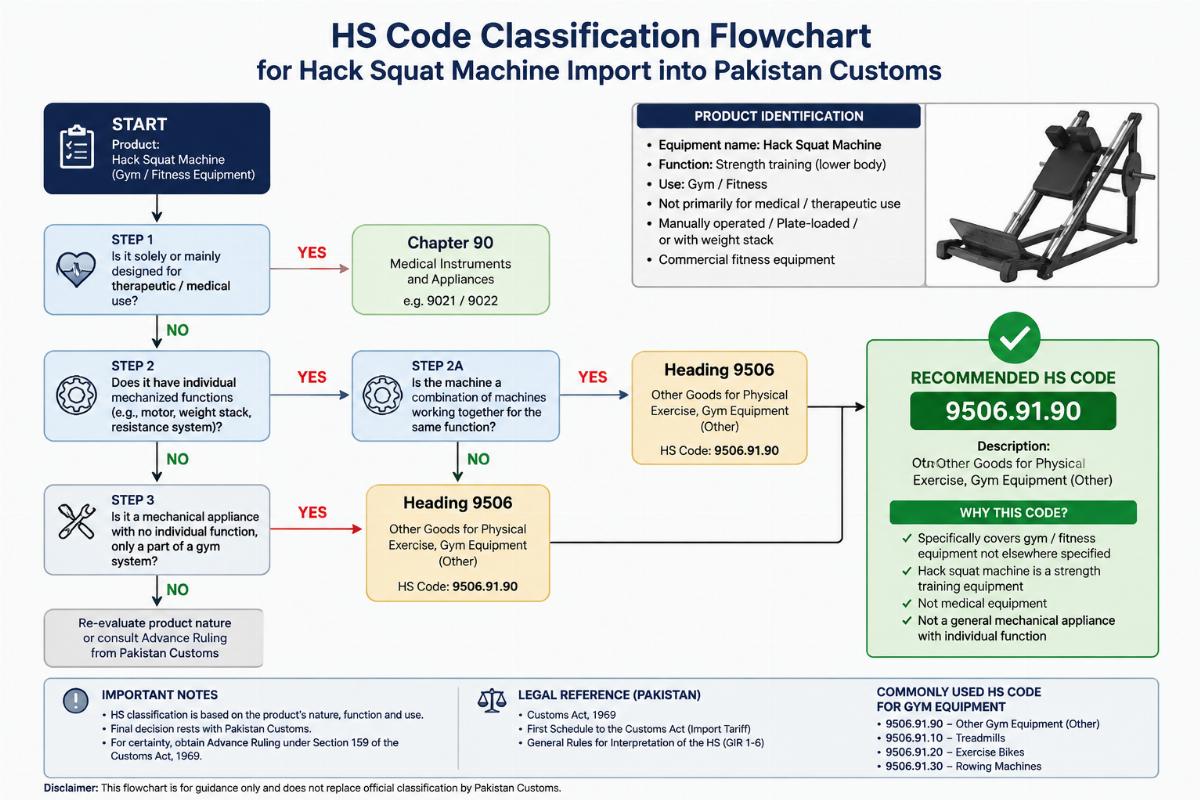
The single biggest customs risk for a wholesale shoulder press machine shipment to Southeast Asia is HS code misclassification. Do not assume "fitness equipment" is a universal category.
Each country in the ASEAN region has its own tariff schedule with sub-classifications that differ from the generic WCO HS code headings. [NEED_CITE: ASEAN country-specific HS code variations for commercial strength training equipment]
Here is what goes wrong in practice:
- The exporter declares the shoulder press machine under a broad "gym equipment" heading.
- The importing country’s customs system has a more specific sub-heading for "fixed strength training machines" versus "general fitness apparatus."
- The broader heading carries a higher duty rate.
- The buyer pays the higher rate or faces delays while the classification is disputed.
In the Jakarta case I mentioned earlier, the difference between the generic classification and the correct one was substantial enough to threaten the entire order’s economics. The fix was straightforward once we identified it: reclassify under the specific strength-equipment sub-heading, provide supporting documentation (product photos, technical drawings, end-use declaration), and resubmit.
What I do before every Southeast Asia shipment:
- Send the buyer a complete document package: product name, proposed HS code, material composition, end-use description, and certificate-of-origin format.
- The buyer takes this package to their local broker and confirms the code before the goods leave the factory.
- If the broker suggests a different code, we adjust the commercial invoice and packing list accordingly before shipment.
This process costs nothing extra but prevents port delays, unexpected duty assessments, and in worst cases, cargo abandonment.
How to Optimize Container Loading for Shoulder Press Machines?
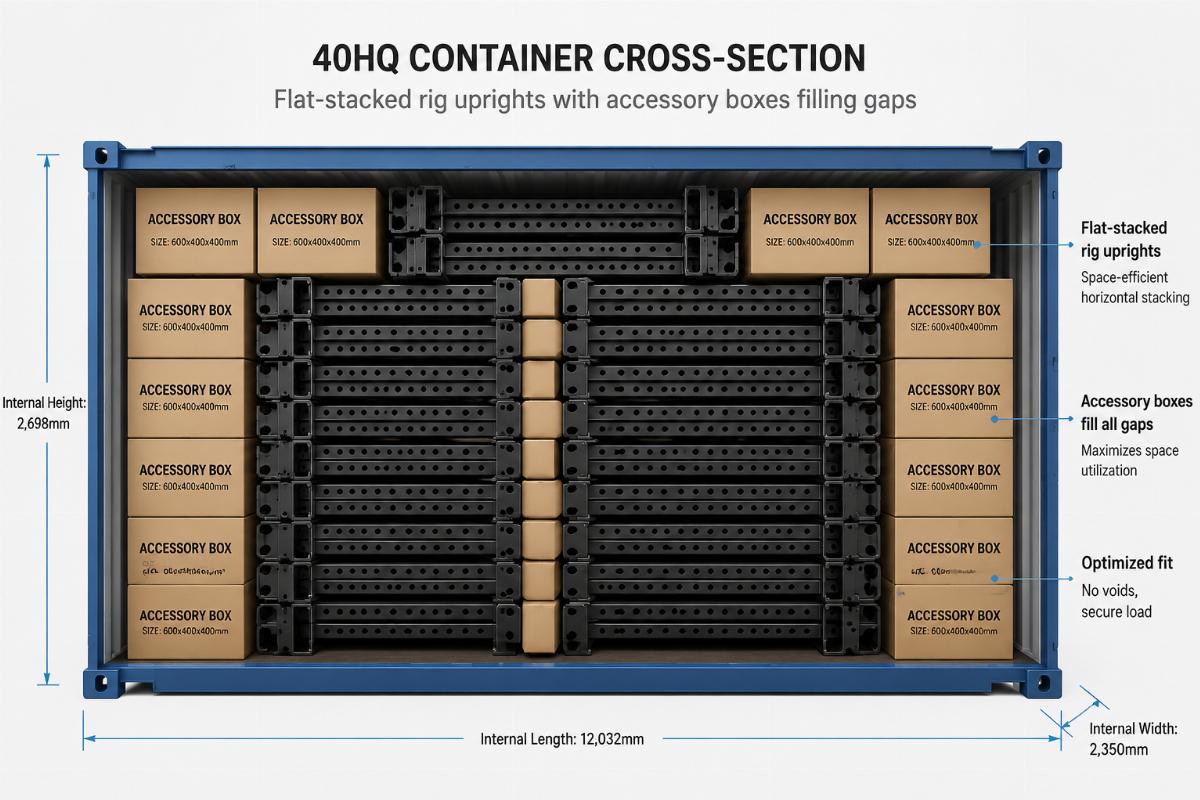
Container loading optimization for a wholesale shoulder press machine order is about mixing product categories to fill every cubic meter, not just stacking identical boxes.
A container full of only shoulder press machines is rarely the most cost-efficient load. The machines have a fixed footprint, and there is always unused space above, below, or between units. Smart buyers fill that space with complementary products:
- Free weights: Dumbbells, barbells, and weight plates are dense and stackable. They fill the gaps between machines and add value without consuming disproportionate space.
- Accessories: Resistance bands, mats, and small functional training tools pack into any remaining voids.
- Smaller strength equipment: Benches, cable attachments, and plate-loaded accessories nest efficiently around the main units.
[NEED_CITE: container loading optimization strategies for mixed commercial gym equipment shipments]
The target mix is roughly 60% main equipment by volume and 40% accessories and free weights. This ratio maximizes the container’s weight and volume capacity without overloading the floor weight limit.
A buyer in the Philippines once ordered a container of only selectorized machines. The container hit its weight limit at roughly 70% volume utilization. The remaining 30% of space was wasted, and the per-unit freight cost was higher than necessary. On the next order, they mixed in free weights and benches, filled the container to capacity, and reduced the per-unit shipping cost noticeably.
Practical loading tips:
- Orient the shoulder press machine boxes to align with the container’s length. This minimizes wasted lateral space.
- Use airbags or bracing to prevent shift during transit.
- Label the heaviest items for bottom-layer placement.
- Confirm the total weight with the logistics provider before sealing.
Conclusion
Ordering a wholesale shoulder press machine in bulk is a logistics and compliance exercise as much as a purchasing decision. The MOQ is driven by container capacity, pricing tiers reward full-container commitments, payment terms follow established trade patterns, customs classification requires country-specific verification, and loading optimization depends on strategic product mixing. Get these elements right, and the landed cost of your shoulder press machine drops to a level that supports healthy distribution margins across multiple markets.