01 / Scenario
STUDIO
P
High-End Pilates Studios
Premium aesthetics meet quiet operation for boutique studio environments.
ISO
9001
CE
Certified
OEM
Available
10YR
Warranty
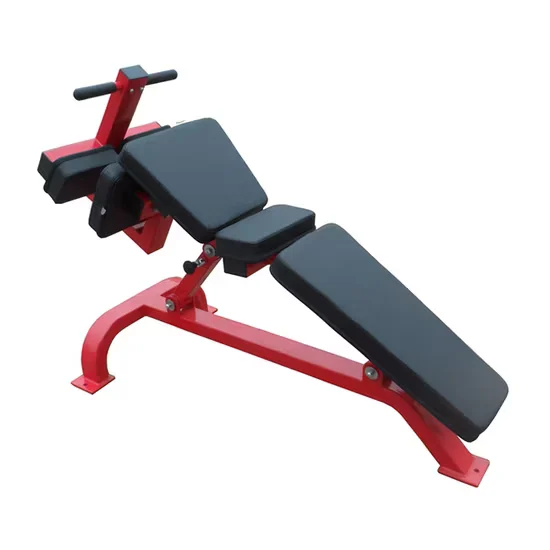
Adjustable Abdominal Board, 1400×680×600mm, 48kg Steel Frame — engineered with heavier gauge steel tubing and robotic MIG continuous welding at stress zones to resist hinge fatigue under repeated angled loading. High-density upholstery maintains support integrity across daily commercial use cycles. ISO9001 & CE certified, OEM/ODM customization available. Every unit undergoes three-stage load testing before shipment, backed by a 10-year frame warranty and mill-certified steel traceability.
// Spec Highlights
• Direct from Manufacturer · No Middlemen · Worldwide Shipping
01
// Material
Imported Solid Wood
Premium hardwood frames sourced for density and visual warmth.
02
// Hardware
Medical-Grade Silent
Whisper-quiet pulleys and springs for clinical environments.
03
// Customization
Appearance OEM
Color, upholstery, and branding tailored to your studio.
04
// Service
Layout Design
Free venue planning for studios and rehab institutions.
Every component is selected for longevity, performance, and aesthetic harmony - from imported hardwood frames to silent medical-grade accessories.
// Features
Unfolded frame rigidity — the non-folding 48kg steel chassis eliminates hinge-point flex during inclined abdominal loading cycles.
| Parameter | Value |
|---|---|
| Product Type | Adjustable Bench |
| Frame Material | Steel |
| Product Dimensions | 1400×680×600mm |
| Net Weight | 48kg |
| Folded | Unfolded |
| Adjustment Positions | Adjustable |
| Power Source | Manual |
| Certification | ISO9001, CE |
| OEM/ODM | Available |
| Facility Type | Typical Use |
|---|---|
| Commercial gym strength floor | Core training zone bench for sit-up and decline abdominal work |
| Hotel and resort fitness center | Multi-user adjustable bench for guest core conditioning |
| University strength and conditioning room | High-frequency student athlete abdominal training station |
| Community fitness center | Shared adjustable bench for general member core workouts |
A commercial adjustable abdominal board must resist angular deflection at the pivot joint through repeated daily use, not just look sturdy on day one.
Too many benches marketed as commercial grade rely on vague "heavy-duty steel" claims without disclosing tube gauge or wall thickness. The adjustment hinge is the first structural weak point — spot-welded brackets crack under repeated recline-and-lock cycles, and the pin-and-hole positioning mechanism develops lateral play within months of high-traffic use [NEED_CITE: weld classification and fatigue performance in structural steel joints].
This commercial adjustable abdominal board occupies the intersection of free weight floor space and dedicated core stations. The adjustable angle mechanism allows transition from flat positioning for standard crunch variations to inclined or declined orientations for progressive overload on rectus abdominis and oblique muscle groups. In a typical strength floor layout, it pairs with hyperextension benches and cable core stations to form a complete abdominal training circuit. The 1400×680mm footprint accommodates a wide range of user heights while maintaining safe clearance from adjacent equipment.
Abdominal training benches experience a distinct load profile: dynamic eccentric force as the user lowers through the range of motion, combined with torsional stress at the frame joints during angle transitions. The adjustment mechanism endures shear forces each time the backrest is repositioned and locked. Over thousands of cycles in a commercial environment, non-sealed pivot points accumulate sweat and chalk dust, accelerating wear at bearing surfaces. High-density upholstery must resist compression set from repeated body weight loading at the hip and shoulder contact zones [NEED_CITE: upholstery compression testing standards for commercial fitness equipment].
The 48kg net weight of this unit reflects a steel frame built without hollow shortcuts. Heavier gauge tubing increases the moment of inertia at the frame’s cross-section, reducing lateral sway during decline-position exercises where the user’s center of gravity shifts away from the base. Robotic MIG continuous welding at stress concentration zones — particularly where the adjustment bracket meets the main rail — eliminates the cold-joint and incomplete-penetration defects common in manual spot-welded frames. The unfolded, non-folding design removes an entire category of mechanical failure: folding hinges that loosen over time and create dangerous wobble under load.
When manufacturers reduce steel gauge to cut weight and shipping cost, the frame flexes visibly under heavier users during decline movements. Spot-welded adjustment brackets crack without warning, creating sudden angle collapse. Non-sealed pivot bearings develop play that makes the bench feel unstable at extreme positions, leading to premature replacement. Low-density foam compresses permanently within months, forcing costly re-upholstery or full unit replacement. Thin powder coating chips at contact points where users grip or adjust the bench, exposing bare steel to sweat-induced corrosion [NEED_CITE: powder coating adhesion and corrosion resistance in high-humidity fitness environments].
Every commercial adjustable abdominal board shipped from our facility carries traceable steel mill certification for the frame material. Robotic MIG welding produces continuous weld seams at every structural joint, verified through three-stage QC inspection. Each unit undergoes load testing before shipment — not sample-based auditing. The 200μm industrial powder coating resists chipping at high-contact adjustment points. Our 10-year frame warranty reflects confidence in the underlying structure. For facility planners, we provide 2D-3D CAD layout support to ensure this bench’s 1400×680mm footprint integrates with proper safety clearances in your core training zone. OEM private label and custom upholstery color options are available for brand-aligned deployments.
Share your strength floor dimensions and target equipment list to receive a 2D-3D CAD layout showing how this commercial adjustable abdominal board fits within your core training circuit. Specify your average daily user volume so we can confirm the structural grade matches your traffic intensity. If your facility requires custom frame color, branded upholstery, or logo placement, include those specifications in your inquiry.
Q: How do I verify whether an adjustable abdominal board meets true commercial-grade structural standards?
A: Request the steel mill certification for frame tube material and confirm the welding method. Commercial-grade units use continuous MIG welding at all structural joints rather than spot welds, and the frame tube gauge should be explicitly stated — not described vaguely as "heavy-duty." The net weight relative to frame size also indicates material density; a 48kg bench in this dimension range reflects solid steel construction without hollow compromises.
Q: What causes the adjustment mechanism to become loose over time on abdominal benches?
A: The adjustment pin-and-hole system experiences shear stress each time the backrest angle is changed under load. Non-sealed pivot points allow sweat and debris to enter the mechanism, accelerating wear at the bearing surface. Units with open pivot designs develop lateral play within months of commercial use. Sealed or shielded adjustment joints with precision-machined pin holes maintain positional accuracy significantly longer under high-frequency operation.
Q: How does frame tube specification relate to load capacity and long-term rigidity?
A: Heavier gauge steel with larger cross-section dimensions increases the frame’s resistance to bending and torsional flex. During decline-position abdominal work, the user’s center of gravity shifts away from the base, creating a lever effect that stresses the frame rails. Thicker tube walls with appropriate cross-section geometry resist this deflection, maintaining structural rigidity and preventing the wobble that develops in thin-wall frames under repeated loading.
Q: What determines how long the upholstery lasts on a commercial adjustable bench?
A: Upholstery longevity depends on foam density and cover material quality. High-density foam resists permanent compression set from repeated body weight loading, while low-density foam collapses within months in high-traffic environments. The vinyl or synthetic leather cover must withstand sweat exposure, cleaning chemicals, and friction from user clothing. Commercial-grade upholstery maintains support integrity and surface appearance significantly longer than standard residential-grade materials.
Q: Can the frame color and upholstery be customized for branded facility deployments?
A: OEM private label manufacturing is available, including custom powder coating color for the frame and custom upholstery color or material selection. Logo placement on frame surfaces or upholstery is also supported. Provide your brand color specifications and quantity requirements to confirm availability and lead time for customized production runs.
Premium aesthetics meet quiet operation for boutique studio environments.
Medical-grade silence and precision for sports & postpartum recovery.
Furniture-grade craftsmanship for premium residential installations.
Compact premium setups for one-on-one and small-group training.
Aesthetic Pilates integration for hybrid wellness studio programming.
Multi-unit deployment with instructor-grade reliability for certification programs.
Tell us about your project. Our team will respond within 24 hours with pricing, customization options, and shipping details.
// Sales Director
William
+86 132 2531 1800
// Export Manager
Bella
+86 198 5412 8032
william@bickfit.com