01 / Scenario
STUDIO
P
High-End Pilates Studios
Premium aesthetics meet quiet operation for boutique studio environments.
ISO
9001
CE
Certified
OEM
Available
10YR
Warranty
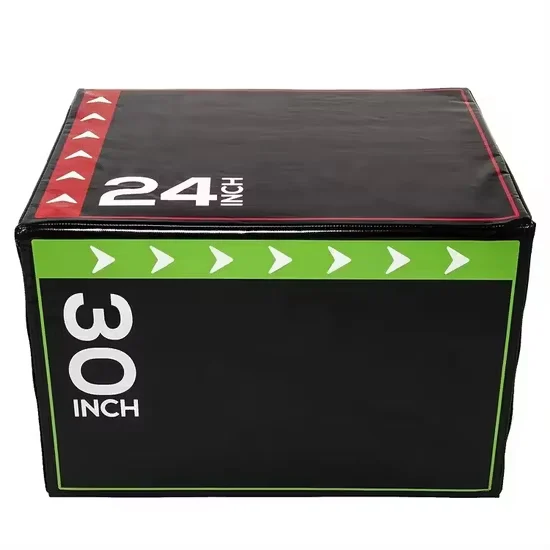
Adjustable Plyo Box, PVC Cover with EPE Core, 50×60×75 cm — engineered for high-repetition jump training in commercial functional zones, featuring high-density EPE core for shape retention under repeated impacts and abrasion-resistant PVC cover with reinforced seam stitching to prevent splitting at corner stress points. Multi-height adjustable design reduces floor footprint while expanding exercise range, with non-slip base and rounded edges for safety. Backed by 10-year frame warranty and floor planning support from our 15,000㎡ vertically integrated facility.
// Spec Highlights
• Direct from Manufacturer · No Middlemen · Worldwide Shipping
01
// Material
Imported Solid Wood
Premium hardwood frames sourced for density and visual warmth.
02
// Hardware
Medical-Grade Silent
Whisper-quiet pulleys and springs for clinical environments.
03
// Customization
Appearance OEM
Color, upholstery, and branding tailored to your studio.
04
// Service
Layout Design
Free venue planning for studios and rehab institutions.
Every component is selected for longevity, performance, and aesthetic harmony - from imported hardwood frames to silent medical-grade accessories.
// Features
Load-Tested Before Shipping — Every unit undergoes three-stage inspection with structural load verification before leaving our Ningjin facility.
| Parameter | Value |
|---|---|
| Product Type | Plyo Box |
| Core Material | High-Density EPE Foam |
| Cover Material | PVC, abrasion-resistant |
| Product Dimensions | 50 × 60 × 75 cm |
| Adjustment Heights | Three-position adjustable |
| Net Weight | 15 kg |
| Color Options | Black |
| Customization | Logo and color available on request |
| Application | Indoor commercial facilities |
| MOQ | 50 PCS |
| Facility Type | Typical Use |
|---|---|
| Commercial gym functional training zone | Group plyometric circuits and conditioning classes |
| CrossFit box plyometric area | Box jumps, step-ups, and depth jump progressions |
| University athletic performance center | Explosive power development for sport-specific programs |
| Hotel fitness center | Low-impact step work and introductory jump training |
| Rehabilitation and performance center | Controlled plyometric return-to-play protocols |
A commercial adjustable plyo box either holds shape under daily impact cycles or becomes a liability within months.
Most foam jump boxes on the market use low-density cores that compress permanently after repeated high-impact landings. The cover seams split at corner stress points where athletes push off laterally, exposing crumbling foam underneath. Facility operators end up rotating units out of service or risking athlete stability on deformed surfaces. [NEED_CITE: EN 957 structural requirements for stationary training equipment] When we evaluate a plyo box for a high-traffic functional zone, EPE core density and PVC seam construction are the two failure points we examine first — because everything else is cosmetic.
A commercial adjustable plyo box occupies a compact footprint while covering explosive lower-body power development — primarily targeting the sagittal and frontal movement planes through jumps, step-ups, and lateral bounds. In a functional training zone, it complements rigs, sleds, and free weight platforms by filling the plyometric gap that barbells and dumbbells cannot address. The three-height adjustable design suits facilities that serve mixed-ability groups, from beginners stepping onto the lowest face to advanced athletes performing maximal-effort box jumps. The 50 × 60 × 75 cm dimensions allow placement in high-density layouts without compromising landing clearance between stations.
Every box jump landing generates peak impact forces significantly exceeding the athlete’s body weight, transmitted through the top surface into the core material and down to the base. In a commercial gym running group classes, a single plyo box may absorb hundreds of high-impact landings per day, creating cyclic compression that tests the EPE core’s recovery rate. [NEED_CITE: material fatigue behavior in high-density foam under cyclic loading] The PVC cover endures shear stress at seams during lateral push-offs, while the base surface must resist sliding on rubber flooring without degrading from sweat and cleaning chemicals. Non-slip base construction and rounded edge profiles reduce the injury risk when athletes miss their landing target during high-repetition conditioning sessions.
The EPE core density is the single most important structural specification — it determines whether the box retains its shape after months of compression cycles or sags into an unstable landing surface. PVC cover material grade directly affects tear resistance at the seams, where corner stitching absorbs the highest shear forces during lateral movements. The three-position adjustable design means one unit replaces multiple fixed-height boxes, reducing both floor footprint and equipment inventory. A 15 kg net weight provides enough mass to resist tipping during aggressive push-offs while remaining movable for floor layout reconfiguration. Rounded edge profiles and a non-slip base surface are not cosmetic additions — they address the two most common plyo box injury mechanisms in high-repetition class environments.
Facilities that select plyo boxes based on lowest unit cost typically face replacement cycles measured in months rather than years. Low-density EPE cores compress permanently under daily commercial use, creating uneven landing surfaces that increase ankle and knee injury risk during fatigued training sessions. PVC covers with insufficient stitch density at corner seams split open, exposing foam that crumbles under continued impact. [NEED_CITE: commercial fitness equipment lifecycle cost analysis] When replacement covers and core inserts are unavailable from the original supplier, the entire unit must be discarded — turning a minor cost-saving decision into recurring capital expenditure and procurement overhead.
Our EPE core sourcing and compression testing follow the same three-stage QC inspection protocol applied across our commercial strength equipment lines. The PVC covers are specified for abrasion resistance consistent with upholstery standards used on our selectorized and free weight benches. Our 11-gauge steel frame heritage informs how we evaluate structural integrity — we apply the same load-testing mindset to foam density recovery as we do to welded steel frames. [NEED_CITE: ISO 9001 quality management in fitness equipment manufacturing] The vertically integrated plant in Ningjin enables OEM customization including logo placement and color specification on the PVC cover. We provide 2D-3D floor planning CAD support that includes plyo box station spacing, ensuring safe landing clearance between functional zone equipment. Replacement covers and core inserts are available for long-term maintenance planning.
Provide your functional training area dimensions and current equipment list to receive a 2D-3D floor plan incorporating plyo box station placement with proper safety clearances. Specify your average daily user count and class sizes so we can recommend EPE core density specifications matched to your traffic volume. Share your target user population’s training level range to confirm the three-height adjustment covers your programming needs. Contact us with customization requirements including logo placement, color options, and cover material preferences for facility branding alignment.
Q: How do I evaluate whether an EPE core is dense enough for commercial use?
A: Request compression test data from the manufacturer showing recovery rate after repeated load cycles. Commercial-grade EPE should return to original dimensions without permanent deformation marks after sustained use. Low-density cores show visible compression lines within weeks of daily group class traffic. Ask specifically about core density specifications measured in kilograms per cubic meter and whether the manufacturer tests every batch or relies on sample-based inspection protocols.
Q: What causes PVC covers to split on plyo boxes and how can I prevent it?
A: Corner seams bear the highest shear stress when athletes push off laterally or miss their landing target. Covers with low stitch-per-inch counts and thin PVC material split first at these stress concentration points. Specify abrasion-resistant PVC with reinforced corner stitching when ordering. Rotating box orientation periodically distributes wear more evenly, and keeping replacement covers in stock eliminates downtime when seam failure does occur under heavy daily use.
Q: How does an adjustable-height plyo box compare to buying multiple fixed-height units?
A: A single adjustable unit covering three heights replaces two or three fixed boxes, reducing floor footprint and storage requirements in high-density functional zones. Programming flexibility increases because coaches can progress athletes through heights without moving equipment between stations. The trade-off is that adjustable boxes require stable interlocking construction to prevent shifting during use — verify that the adjustment mechanism locks securely and does not create uneven landing surfaces at any height setting.
Q: What spacing do I need between plyo box stations in a busy functional area?
A: Allow sufficient clearance on all sides for safe landing zones, accounting for athlete overshoot during fatigued repetitions. High-traffic class environments need more spacing than semi-private training facilities where usage is supervised and controlled. Include this equipment in your overall floor plan alongside rigs and platforms to avoid creating unsafe traffic corridors. We provide CAD layout support that factors in plyo box dimensions and recommended clearances for your specific facility configuration.
Q: How often should I expect to replace covers or core inserts under daily commercial use?
A: Replacement intervals depend on daily user volume, class intensity, and the original material specifications of both the PVC cover and EPE core. High-density cores with reinforced covers in moderately trafficked facilities typically outlast low-density alternatives by a significant margin. Ordering replacement covers and inserts as part of your initial procurement ensures continuity when maintenance is needed, rather than pulling entire units from the floor while waiting for parts availability.
Premium aesthetics meet quiet operation for boutique studio environments.
Medical-grade silence and precision for sports & postpartum recovery.
Furniture-grade craftsmanship for premium residential installations.
Compact premium setups for one-on-one and small-group training.
Aesthetic Pilates integration for hybrid wellness studio programming.
Multi-unit deployment with instructor-grade reliability for certification programs.
Tell us about your project. Our team will respond within 24 hours with pricing, customization options, and shipping details.
// Sales Director
William
+86 132 2531 1800
// Export Manager
Bella
+86 198 5412 8032
william@bickfit.com