01 / Scenario
STUDIO
P
High-End Pilates Studios
Premium aesthetics meet quiet operation for boutique studio environments.

ISO
9001
CE
Certified
OEM
Available
10YR
Warranty
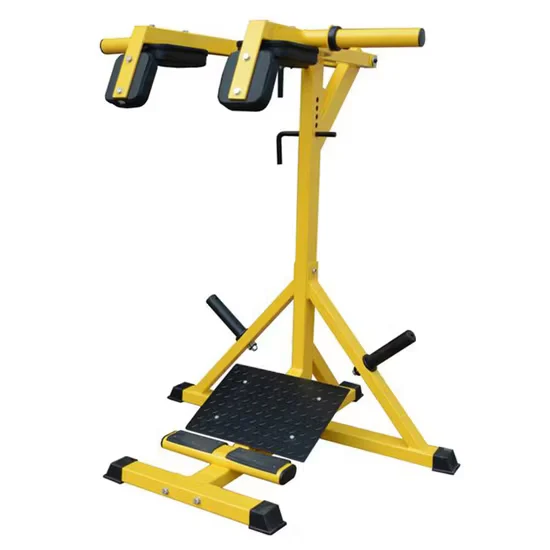
Commercial Utility Bench, 75° Incline, 1120×640×1145mm, 28kg — engineered with a steel frame for high-traffic commercial environments, fixed-angle design eliminates adjustment mechanism wear, manual operation ensures long-term reliability. - RoHS, ISO9001, CE certified - Customization available for branding and upholstery - Every unit undergoes load testing before shipment, backed by 10-year frame warranty and floor planning support.
// Spec Highlights
• Direct from Manufacturer · No Middlemen · Worldwide Shipping
01
// Material
Imported Solid Wood
Premium hardwood frames sourced for density and visual warmth.
02
// Hardware
Medical-Grade Silent
Whisper-quiet pulleys and springs for clinical environments.
03
// Customization
Appearance OEM
Color, upholstery, and branding tailored to your studio.
04
// Service
Layout Design
Free venue planning for studios and rehab institutions.
Every component is selected for longevity, performance, and aesthetic harmony - from imported hardwood frames to silent medical-grade accessories.
// Features
Traceable Steel, Built to Hold — every tube traced to its coil, load-tested under real commercial stress before it ever reaches your gym floor.
| Parameter | Value |
|---|---|
| Product Type | Adjustable Bench |
| Frame Material | Steel |
| Product Dimensions | 1120 × 640 × 1145 mm |
| Net Weight | 28 kg |
| Adjustment Positions | 75 Degree Incline |
| Upholstery | Available in standard or high-density options |
| Certification | RoHS, ISO 9001, CE |
| Power Source | Manual |
| Assembly State | Unfolded |
| Exercise Part | Utility Bench |
| Appliance | Gymnasium |
| Customization | Available |
| Facility Type | Typical Use |
|---|---|
| Commercial gym strength floor | Dedicated shoulder press and incline dumbbell station |
| Hotel fitness center | Compact, fixed-angle bench for limited-space strength zones |
| University strength and conditioning room | High-volume incline and pressing movements for athletic programs |
| Personal training studio | Reliable 75-degree angle for client shoulder and upper chest work |
A fixed 75-degree commercial 75 degree utility bench eliminates the failure points that multi-position adjustable benches introduce under daily commercial use.
Multi-position benches rely on ladder bars, pop-pins, or gas-assist mechanisms that develop play and rattle after months of heavy loading. In a high-traffic strength floor, those adjustment points become the first components to require service. A fixed-angle bench removes that entire subsystem — no pins to bend, no ladder rungs to round off, no pivot bolts to loosen mid-set. What remains is a rigid structural triangle between the base, the upright, and the back pad frame, channeling load directly into the floor without mechanical intermediaries. [NEED_CITE: EN 957 structural requirements for stationary training equipment]
This bench targets the shoulder press and incline pressing plane, covering anterior deltoid, upper pectoral, and triceps engagement. On a commercial strength floor, it pairs naturally with plate-loaded shoulder press machines and dumbbell racks, filling the gap between flat bench stations and overhead machine work. The 75-degree angle suits lifters across a broad range of torso lengths because the fixed incline does not require users to fiddle with back pad positioning between sets. In high-density gym layouts, the commercial 75 degree utility bench occupies a compact footprint that leaves adequate clearance for dumbbell pickup and spotter access without eating into adjacent equipment zones.
Every time a user unracks dumbbells or a barbell at 75 degrees, the junction between the upright support and the base absorbs an eccentric impact before settling into a static hold. Over hundreds of daily repetitions, this cyclic loading concentrates stress at the weld where the back pad support meets the main frame tube. Sweat and cleaning chemicals accelerate corrosion at these joints if the powder coating is thin or poorly pre-treated. The seat-to-backpad hinge area on a fixed bench still experiences rotational shear from users shifting position, and the upholstery compression cycle at the contact points determines how soon the pad needs recovering. [NEED_CITE: weld classification and fatigue performance in structural steel]
The frame material listed as steel only tells part of the story — what determines long-term performance is the tube wall thickness and cross-section profile. A bench frame that flexes under load transfers that deflection into the weld joints, accelerating fatigue cracking over time. The 28 kg net weight of this unit signals a frame substantial enough to resist walking or tipping during aggressive pressing sets, but also light enough for staff to reposition during floor layout changes. The unfolded assembly state means the bench arrives ready for use without on-site welding or complex bolt-together procedures. RoHS, ISO 9001, and CE certifications confirm the manufacturing process meets recognized quality management and safety conformity frameworks. The 75-degree fixed adjustment position removes all internal mechanism wear from the equation, leaving only the structural frame and pad as maintenance items.
Thin-wall tubing on an incline bench may pass initial inspection, but repeated heavy dumbbell pressing causes the upright to flex laterally, loosening the pad mounting bolts and cracking spot welds at the base junction. Low-density foam pads compress permanently within months in a commercial setting, creating an uneven surface that users notice immediately and complain about. Non-industrial powder coatings chip at the foot contact points, exposing bare steel to moisture and sweat that trigger rust spreading under the coating. When these failures stack up, the bench is pulled from the floor for welding repair, re-foaming, or full replacement — each pulling budget from new equipment procurement. [NEED_CITE: commercial gym equipment lifecycle cost and maintenance frequency]
The 11-gauge frame steel with mill certification means you can trace every tube back to its source coil, eliminating guesswork about what is holding your members at 75 degrees. Robotic continuous MIG welding at every structural joint prevents the spot-weld failures that plague benches assembled with manual tack welding. Each unit undergoes load testing before shipment, confirming the frame holds under forces that exceed typical commercial dumbbell pressing loads. The 200μm industrial powder coating resists chipping at high-contact points like the base feet and pad mounting brackets. A 10-year frame warranty backs the structural integrity, and 2D-3D CAD layout support ensures this bench fits your floor plan with proper safety clearances on all sides. OEM customization lets you match colors and branding across your entire strength zone without sourcing from multiple suppliers.
Share your strength zone floor area and current equipment list to receive a 2D-3D layout showing where this commercial 75 degree utility bench fits alongside your existing stations. Specify your expected daily user volume so we can confirm the structural grade matches your traffic level. Provide your target member demographic and body type range to verify the fixed 75-degree angle and pad dimensions suit your population. Let us know your branding requirements — frame color, logo placement, and upholstery preference — so customization is included in the initial production run.
Q: What is the structural difference between a commercial-grade utility bench and a light-commercial one?
A: Commercial-grade benches use heavier gauge steel tubing with continuous weld lines at every structural joint, while light-commercial units often rely on thinner walls and spot welding. The difference shows up under daily heavy use — commercial frames resist flex and fatigue cracking over years, whereas light-commercial frames develop play and require earlier replacement. Load testing protocols and coating thickness also separate the two categories.
Q: Why choose a fixed 75-degree bench over a multi-position adjustable bench for a commercial gym?
A: A fixed-angle bench removes all adjustment mechanisms — pop-pins, ladder bars, pivot bolts — that become maintenance items under high-frequency use. This means fewer service calls, no mid-session adjustments, and a structurally stiffer frame because the support triangle is welded solid rather than hinged. Multi-position benches offer versatility but introduce mechanical wear points that shorten service intervals in busy commercial environments.
Q: How does upholstery density affect bench lifespan in a commercial setting?
A: Low-density foam compresses permanently within months of daily use, creating visible depressions that members find uncomfortable and that affect lifting stability. High-density foam retains its shape across thousands of compression cycles, extending the time between re-upholstery. The covering material also matters — commercial-grade vinyl resists tearing at the seams and withstands frequent cleaning without degrading or cracking.
Q: What floor spacing is needed around a utility bench for safe operation?
A: Allow enough clearance on both sides for users to pick up and return dumbbells without hitting adjacent equipment, plus space behind the bench for a spotter to stand during heavy sets. The bench footprint of 1120 × 640 mm should be planned within a zone that accounts for the full range of motion of users with different arm spans. A 2D-3D floor plan helps verify these clearances before equipment arrives on site.
Premium aesthetics meet quiet operation for boutique studio environments.
Medical-grade silence and precision for sports & postpartum recovery.
Furniture-grade craftsmanship for premium residential installations.
Compact premium setups for one-on-one and small-group training.
Aesthetic Pilates integration for hybrid wellness studio programming.
Multi-unit deployment with instructor-grade reliability for certification programs.
Tell us about your project. Our team will respond within 24 hours with pricing, customization options, and shipping details.
// Sales Director
William
+86 132 2531 1800
// Export Manager
Bella
+86 198 5412 8032
william@bickfit.com