01 / Scenario
STUDIO
P
High-End Pilates Studios
Premium aesthetics meet quiet operation for boutique studio environments.
ISO
9001
CE
Certified
OEM
Available
10YR
Warranty
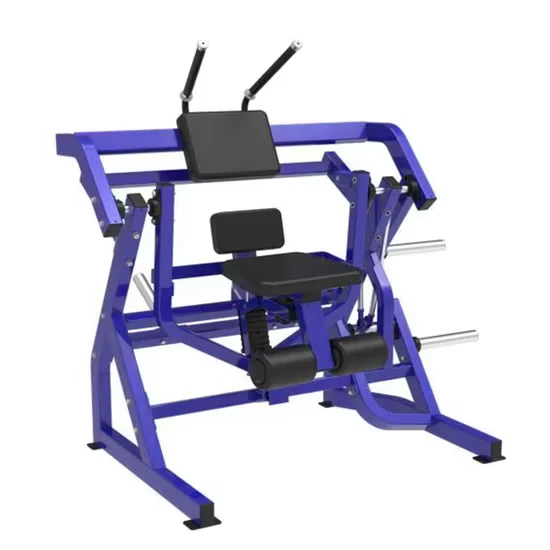
Commercial Selectorized Abdominal Oblique Crunch Machine, 1670x1100x1600mm, 121kg Net Weight — engineered with 3×3 inch frame steel and sealed industrial bearings at pivot points to eliminate play under repetitive rotational loading. Robotic MIG continuous welding prevents joint fatigue failure during lateral torque movements. Every unit undergoes load testing before shipment with mill-certified steel traceable to coil origin.
// Spec Highlights
• Direct from Manufacturer · No Middlemen · Worldwide Shipping
01
// Material
Imported Solid Wood
Premium hardwood frames sourced for density and visual warmth.
02
// Hardware
Medical-Grade Silent
Whisper-quiet pulleys and springs for clinical environments.
03
// Customization
Appearance OEM
Color, upholstery, and branding tailored to your studio.
04
// Service
Layout Design
Free venue planning for studios and rehab institutions.
Every component is selected for longevity, performance, and aesthetic harmony - from imported hardwood frames to silent medical-grade accessories.
// Features
Steel Frame Traceability — Every tube in this selectorized abdominal trainer traces back to the originating steel coil, so buyers can verify exactly what supports repetitive rotational loading.
| Parameter | Value |
|---|---|
| Product Type | Selectorized Abdominal Trainer |
| Model NO. | 5025 |
| Exercise Part | Abdominal |
| Frame Steel | 11-gauge, 3×3 inch tube |
| Steel Grade | Q235 / Q345 mill-certified |
| Welding Type | Robotic MIG continuous weld |
| Bearing Type | Sealed industrial bearings |
| Pulley System | Aircraft-cable with sealed pulleys |
| Weight Stack | Pin-select, up to 150kg |
| Powder Coating | 200μm scratch-resistant, sandblast pre-treated |
| Upholstery | Standard or high-density options available |
| Product Dimensions | 1670×1100×1600mm |
| Net Weight | 121kg |
| Certification | ISO 9001, CE |
| Warranty | 10-year frame |
| Facility Type | Typical Use |
|---|---|
| Commercial gym strength floor | Dedicated core isolation station in the selectorized line |
| Hotel fitness center | Compact footprint abdominal trainer for limited-space layouts |
| University athletic department | Supplemental rotational core work alongside free weight zones |
| Rehabilitation and performance center | Controlled oblique loading for return-to-play protocols |
| Corporate wellness facility | Pin-select simplicity for unsupervised user populations |
A single spot weld on a cam arm bracket will crack long before the steel tube does — continuous MIG welds change that outcome entirely.
When a commercial selectorized abdominal oblique crunch machine develops pivot play within its first year, the root cause is rarely user abuse. Unsealed bearings allow sweat and chalk dust to infiltrate the articulation point, creating lateral slop that transfers uneven forces into the frame joints. Spot-welded brackets on the pivot arm handle static loads fine in testing, but six months of off-center rotational loading exposes the discontinuity at the weld toe [NEED_CITE: weld classification and fatigue performance in structural steel]. The frame tube itself may be rated for far more stress than the joint can transfer, making the connection method the actual failure threshold.
The selectorized abdominal oblique crunch machine targets rotational and lateral flexion movement patterns that complement sagittal-plane machines like leg presses and seated crunches. In a commercial strength floor layout, it occupies the core isolation segment alongside rotary torso and back extension stations, giving members a complete trunk circuit without competing for free weight space. The pin-select interface suits high-turnover facilities where users range from beginners to experienced lifters, since weight changes happen in seconds without plate handling. Its footprint accommodates standard commercial aisle clearances while still allowing full range of motion for users across typical adult body dimensions.
Rotational abdominal work generates eccentric loading at the pivot axis — the user pushes laterally against resistance, then controls the return through a deceleration phase that multiplies shear force on the bearing and its mounting bracket. In a busy commercial selectorized abdominal oblique crunch machine, that cycle repeats thousands of times weekly, each repetition applying torque at an angle that pure vertical-load testing never replicates. The weld seam where the pivot arm meets the main frame column becomes a fatigue accumulation point if the weld is discontinuous. Sealed bearings resist this environment by keeping contaminants out of the race, while unsealed bushings develop play that amplifies the oscillating stress on surrounding joints [NEED_CITE: EN 957 structural requirements for stationary training equipment]. Powder coating at contact edges must withstand repeated adjustment pin insertion and sweat exposure without chipping down to bare steel.
The 11-gauge steel tube at 3×3 inches provides the torsional rigidity needed when a loaded pivot arm applies lateral force to the main column — thinner walls deflect visibly under heavy pin selections, altering the intended movement path. Robotic MIG welding produces a continuous bead along the joint perimeter, distributing stress across the full weld length rather than concentrating it at discrete spot-weld points. Sealed industrial bearings at the pivot axis maintain rotational smoothness regardless of chalk dust, sweat, or cleaning chemical exposure that would degrade an open bushing within months. The sandblast pre-treatment before the 200μm powder coat creates a mechanical bond that resists chipping at the adjustment interfaces and weight stack guard contact points, where friction and impact are most frequent.
Manufacturers who reduce frame tube gauge save on raw steel but introduce flex that users feel as instability during heavy rotational sets. Spot-welded pivot brackets pass initial quality inspection yet crack progressively under repeated off-axis torque, eventually creating a liability event when a loaded stack drops without warning. Open bushings cost less than sealed bearings at assembly but demand scheduled maintenance intervals that most commercial facilities never execute, resulting in wobble complaints within the first year. Low-density upholstery foam compresses permanently under daily commercial use, splitting at the seam and requiring full pad replacement — a downtime cost that high-density options prevent. Thin powder coating chips at adjustment holes and exposes bare steel to sweat corrosion, accelerating the visual aging of the machine on the gym floor [NEED_CITE: powder coating durability standards for commercial fitness equipment].
The 11-gauge frame with mill-certified Q235 or Q345 steel means every tube’s origin is traceable to the coil, eliminating ambiguity about material grade in a product category where "commercial grade" often lacks verification. Robotic MIG continuous welding on the pivot arm and main column joints removes the spot-weld failure mode that plagues rotational machines under sustained lateral loading. Every unit undergoes load testing before shipment rather than relying on sample-based batch approval, catching assembly defects that would surface only after installation. The 200μm industrial powder coating with sandblast pre-treatment resists chipping at the weight stack guide and pin interfaces where repeated metal-on-metal contact occurs. Floor layout CAD support accounts for the 1670×1100mm footprint plus required safety clearance on all sides, ensuring the machine integrates into a core training zone without creating pinch points or traffic conflicts. The 10-year frame warranty reflects confidence in the structural specification rather than a conditional guarantee limited by usage tiers.
Provide your core training zone dimensions and existing equipment list to receive a 2D-3D layout that positions this machine within proper safety clearances. Specify estimated daily user volume so the structural grade and weight stack configuration match actual traffic demands. Indicate the target user population’s body dimension range to confirm the adjustment positions cover your membership. Note any custom finish, logo, or upholstery color requirements for brand alignment across your facility’s selectorized line.
Q: How do I distinguish commercial-grade from light-commercial abdominal equipment?
A: Inspect the frame tube gauge and cross-section dimensions — commercial units use thicker steel that resists torsional flex under loaded rotational movements. Verify the welding method at pivot joints; continuous welds handle repetitive lateral stress while spot welds develop cracks. Request mill certificates for the steel and load testing records for each unit, not just sample batch approvals.
Q: Why does frame tube gauge matter for rotational core machines?
A: Rotational movements apply torque perpendicular to the main frame column, creating bending stress that thinner tubes cannot resist without visible deflection. An 11-gauge tube at 3×3 inches maintains rigidity through the full loaded range of motion, keeping the pivot axis stable and preventing the movement path from drifting as the weight stack increases.
Q: Are sealed bearings necessary for high-traffic abdominal machines?
A: Sealed industrial bearings keep chalk dust, sweat, and cleaning residue out of the pivot race, maintaining smooth articulation without scheduled maintenance. Open bushings in the same environment develop lateral play within months of heavy use, transferring uneven forces into the frame welds and accelerating fatigue at the joint connections.
Q: What floor space and clearance does this machine require?
A: The unit occupies a 1670×1100mm footprint on the gym floor. Add safety clearance on all sides for user entry, exit, and full rotational movement without contacting adjacent equipment. Facility layout CAD files are available to integrate this footprint into your core training zone plan with proper aisle spacing.
Q: How often does upholstery need replacement in commercial use?
A: Replacement frequency depends on daily user volume and foam density selection. Standard upholstery may compress and split within a year of heavy traffic, while high-density options extend service life meaningfully. Specify the higher-density pad at order to reduce downtime and replacement part costs across the equipment lifespan.
Premium aesthetics meet quiet operation for boutique studio environments.
Medical-grade silence and precision for sports & postpartum recovery.
Furniture-grade craftsmanship for premium residential installations.
Compact premium setups for one-on-one and small-group training.
Aesthetic Pilates integration for hybrid wellness studio programming.
Multi-unit deployment with instructor-grade reliability for certification programs.
Tell us about your project. Our team will respond within 24 hours with pricing, customization options, and shipping details.
// Sales Director
William
+86 132 2531 1800
// Export Manager
Bella
+86 198 5412 8032
william@bickfit.com