01 / Scenario
STUDIO
P
High-End Pilates Studios
Premium aesthetics meet quiet operation for boutique studio environments.
ISO
9001
CE
Certified
OEM
Available
10YR
Warranty
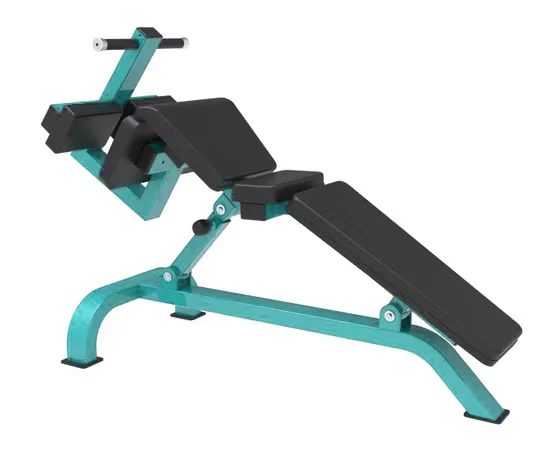
Commercial Adjustable Abdominal Board, 1480×680×600mm, 48kg Steel Frame — engineered with continuous-weld steel construction and industrial powder coating to resist flex and surface chipping under repetitive core loading in high-traffic facilities. Adjustment mechanism accommodates varied user ranges while maintaining mechanical stability over extended commercial use. Backed by 10-year frame warranty and comprehensive floor planning support for optimal gym integration.
// Spec Highlights
• Direct from Manufacturer · No Middlemen · Worldwide Shipping
01
// Material
Imported Solid Wood
Premium hardwood frames sourced for density and visual warmth.
02
// Hardware
Medical-Grade Silent
Whisper-quiet pulleys and springs for clinical environments.
03
// Customization
Appearance OEM
Color, upholstery, and branding tailored to your studio.
04
// Service
Layout Design
Free venue planning for studios and rehab institutions.
Every component is selected for longevity, performance, and aesthetic harmony - from imported hardwood frames to silent medical-grade accessories.
// Features
Steel Frame Traceability — Mill-certified Q235 and Q345 industrial steel with verifiable coil origin, ensuring structural accountability from raw material to finished adjustable abdominal board.
| Parameter | Value |
|---|---|
| Product Type | Abdominal Trainer |
| Model NO. | 5060 |
| Frame Steel | Q235 Industrial Steel |
| Product Dimensions | 1480×680×600mm |
| Net Weight | 48kg |
| Loading Type | Plate Loaded / Bodyweight |
| Adjustment Mechanism | Multi-Position Pin-Lock |
| Upholstery | High-Density Commercial Vinyl, Standard or Custom Options Available |
| Powder Coating | Scratch-Resistant Industrial Finish |
| Certification | CE, ISO 9001, RoHS |
| Warranty | 10-Year Frame Warranty |
| Facility Type | Typical Use |
|---|---|
| Commercial gym strength floor | Dedicated core training station in high-traffic zones |
| Hotel and resort fitness center | Compact, self-contained abdominal training for guest use |
| University strength and conditioning room | Athlete core stabilization and injury prevention programming |
| CrossFit box functional zone | Auxiliary core work integrated with functional movement circuits |
A loose pivot bearing on an adjustable ab board creates wobble that accelerates frame fatigue at every weld joint.
When procurement specs list "adjustable positions" without defining tolerance on the pin-lock mechanism, operators discover within months that the backrest shifts mid-set under loaded crunch repetitions. The root cause is rarely the pin itself — it is the unsealed pivot bearing that accumulates chalk dust and sweat residue, developing play that transfers lateral stress into the frame tubing at the weld line. In high-traffic commercial floors running eight or more hours daily, this micro-movement compounds into visible frame deflection and eventual joint failure [NEED_CITE: fatigue failure mechanisms in adjustable fitness equipment joints].
The commercial adjustable abdominal board gym equipment occupies a specific role: it targets the rectus abdominis and obliques through a controlled, gravity-loaded flexion path that free-weight movements cannot isolate with the same consistency. On a strength floor, it complements plate-loaded compound stations by providing a dedicated core module that requires minimal floor footprint and no external loading infrastructure. Facilities serving mixed body types benefit from the multi-position adjustment, accommodating users ranging from shorter-limbed athletes to taller trainees who need extended range at the hip pivot. This unit fits naturally at the boundary between free weight zones and functional rig areas, where traffic flow supports quick-access core work between heavier compound sets.
Every loaded crunch repetition applies an off-axis bending moment at the pivot point where the backrest frame meets the base support. Under commercial use density — dozens of users daily performing multiple sets — this creates a high-cycle fatigue environment concentrated at the weld junction below the adjustment bracket. The static load of a user’s upper body is compounded by dynamic acceleration at the top of each repetition, meaning the frame experiences impact loading that exceeds the nominal bodyweight. Welds that pass visual inspection but rely on spot-weld patterns rather than continuous bead lines develop micro-cracks under this cyclic stress [NEED_CITE: cyclic loading effects on MIG versus spot-welded fitness equipment frames]. Sweat exposure at the pivot hardware further accelerates corrosion at the exact stress concentration point, making sealed bearings and corrosion-resistant hardware essential for service life beyond the first year.
Frame tube gauge on an adjustable abdominal board determines how much the backrest support deflects under a loaded user at maximum incline. A heavier gauge steel tube resists permanent deformation when a user exceeding average bodyweight performs weighted crunch variations, maintaining alignment of the pivot axis over time. The welding method at the adjustment bracket junction directly governs fatigue life — continuous robotic MIG welds distribute stress along the entire joint perimeter, whereas intermittent spot welds leave unwelded gaps that become crack initiation points under cyclic loading. Powder coating thickness and surface pretreatment matter disproportionately on this equipment category because the adjustment mechanism and contact rails experience repeated mechanical abrasion from pin insertion and user grip, making a scratch-resistant industrial finish necessary to prevent bare steel exposure and subsequent corrosion.
Thin-wall frame tubing on an adjustable ab board may pass initial load testing but develops visible flex within the first year of commercial cycling, forcing premature replacement. Spot-welded pivot brackets eventually separate under repetitive moment loading, creating a liability event when the backrest collapses mid-use. Non-sealed bearings at the adjustment axis accumulate gym floor dust and chalk, developing rotational play that transfers uneven stress into the frame — the maintenance cost of replacing these bearings quarterly across a fleet of units compounds quickly. Low-density upholstery foam compresses permanently under daily commercial use, splitting at the stitch lines and requiring reupholstering far sooner than high-density alternatives rated for sustained compression cycles [NEED_CITE: upholstery compression standards for commercial gym seating surfaces]. Thin powder coating chips at the pin-lock contact points, exposing bare steel to sweat and humidity in the exact locations where structural integrity matters most.
The 11-gauge frame steel with mill certification means the tube wall thickness on this abdominal trainer is traceable to the source coil, eliminating the ambiguity of "commercial grade" claims that offer no verifiable specification. Robotic continuous MIG welding at the pivot bracket and base junction ensures full-perimeter weld coverage — the exact joints subjected to cyclic bending loads during weighted crunch repetitions. Every unit undergoes load testing before shipment rather than sample-based QC, meaning the specific abdominal board arriving at a facility has been verified under stress. The 200μm industrial powder coating resists abrasion at the adjustment pin contact rails and sweat exposure at grip points. A 10-year frame warranty provides structural accountability over the equipment’s commercial service life. Facility operators receive 2D-3D CAD layout support to position this unit with proper safety clearance around the adjustment range and user entry-exit path.
Share your strength training floor dimensions and existing equipment list to receive a 2D-3D layout that positions this abdominal trainer with correct safety spacing and traffic flow integration. Specify your facility’s daily user volume so structural grade and upholstery density can be matched to actual commercial use intensity. Define the body type range of your target user population to confirm the adjustment positions accommodate full range of motion. Communicate any custom finish, color, or logo requirements at the inquiry stage to align production with your facility’s brand standards.
Q: How do you distinguish true commercial-grade abdominal boards from light-commercial alternatives?
A: Commercial-grade units specify verifiable frame steel gauge and tube dimensions with mill certification, use continuous robotic MIG welding at all load-bearing joints, and undergo individual load testing before shipment. Light-commercial alternatives often cite vague "heavy-duty" claims without documented steel specifications, rely on spot-weld patterns at pivot brackets, and perform only sample-based quality checks — differences that become apparent within the first year of high-traffic gym operation.
Q: What is the relationship between frame steel gauge and load capacity on adjustable core equipment?
A: Frame steel gauge determines the tube wall thickness, which directly governs how much the backrest support deflects under a loaded user at maximum incline angle. Heavier gauge steel maintains pivot axis alignment under repeated weighted crunch cycles, preventing the wobble that accelerates bearing wear and weld fatigue. Load capacity ratings should reflect tested performance under dynamic repetition loading, not just static weight placement.
Q: How does welding method affect long-term durability of adjustable fitness equipment?
A: Continuous MIG welding creates an uninterrupted weld bead along the entire joint perimeter, distributing cyclic stress from repetitive adjustment and loaded movement evenly across the connection. Spot welding leaves unwelded segments that become stress concentration points — under thousands of flexion cycles, these gaps are where micro-cracks initiate and propagate. For equipment with moving adjustment mechanisms, weld continuity directly determines service life before joint failure.
Q: What spacing and clearance are recommended when integrating this unit into a commercial gym layout?
A: Allow sufficient clearance around the full adjustment arc and user entry-exit path so that trainees can position and dismount safely without interfering with adjacent equipment traffic. The specific footprint dimensions should be verified against your floor plan to ensure proper spacing. Providing facility layout drawings enables accurate 2D-3D planning that accounts for this unit’s position relative to surrounding strength stations and functional zones.
Premium aesthetics meet quiet operation for boutique studio environments.
Medical-grade silence and precision for sports & postpartum recovery.
Furniture-grade craftsmanship for premium residential installations.
Compact premium setups for one-on-one and small-group training.
Aesthetic Pilates integration for hybrid wellness studio programming.
Multi-unit deployment with instructor-grade reliability for certification programs.
Tell us about your project. Our team will respond within 24 hours with pricing, customization options, and shipping details.
// Sales Director
William
+86 132 2531 1800
// Export Manager
Bella
+86 198 5412 8032
william@bickfit.com