01 / Scenario
STUDIO
P
High-End Pilates Studios
Premium aesthetics meet quiet operation for boutique studio environments.

ISO
9001
CE
Certified
OEM
Available
10YR
Warranty
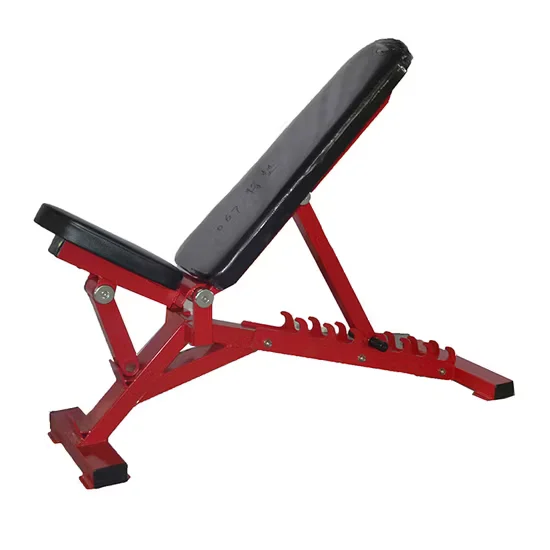
Commercial Adjustable Bench, 50×100mm Frame Tube, 38kg Net Weight — engineered with 50×100mm steel tubing and multi-position backrest adjustment for stable barbell pressing in high-traffic environments. Industrial-grade upholstery and sealed pivot mechanisms resist compression and wear under daily commercial use. Direct from a 15,000㎡ vertically integrated facility with 17 years of strength equipment manufacturing and three-stage QC inspection on every unit.
// Spec Highlights
• Direct from Manufacturer · No Middlemen · Worldwide Shipping
01
// Material
Imported Solid Wood
Premium hardwood frames sourced for density and visual warmth.
02
// Hardware
Medical-Grade Silent
Whisper-quiet pulleys and springs for clinical environments.
03
// Customization
Appearance OEM
Color, upholstery, and branding tailored to your studio.
04
// Service
Layout Design
Free venue planning for studios and rehab institutions.
Every component is selected for longevity, performance, and aesthetic harmony - from imported hardwood frames to silent medical-grade accessories.
// Features
Continuous-Weld Frame Integrity — Robotic MIG welding eliminates spot-weld failure points at the adjustment pivot and seat-to-frame joints under repeated barbell pressing loads.
| Parameter | Value |
|---|---|
| Product Type | Adjustable Bench |
| Frame Tube Size | 50×100mm |
| Net Weight | 38kg |
| Product Dimensions | 1615×560×1450mm |
| Loading Type | Free weight compatible |
| Exercise Part | Adjustable Bench |
| Age Group | Adult |
| Gender | Unisex |
| Appliance | Community, Gymnasium |
| Fit Area | Professional Gym and Club |
| OEM/ODM | Available |
| Transport Package | Plywood Case |
| HS Code | 9506911900 |
| Production Capacity | 500 PCS/Month |
| Certification | ISO 9001, CE |
| Facility Type | Typical Use |
|---|---|
| Commercial gym strength floor | Primary pressing station for dumbbell and barbell incline, flat, and decline movements |
| Hotel fitness center | Multi-position bench supporting diverse guest strength training needs |
| University strength and conditioning room | High-traffic bench for athletic development programs |
| Community fitness center | Durable pressing platform for general membership use |
The adjustment pivot and seat bracket are the first failure points on most commercial adjustable benches.
In high-traffic gym environments, the seat-to-frame joint and backrest pivot endure cyclic loading every time a member presses heavy dumbbells or transitions between positions. Spot-welded joints pass visual inspection at the factory but develop micro-cracks under repeated off-center barbell loads, eventually failing catastrophically during use [NEED_CITE: weld classification and fatigue performance in structural steel]. Thin upholstery compresses within months, leaving members pressing on a hardened surface that shifts under load.
This commercial adjustable bench occupies the central pressing plane in any strength-focused facility. It supports flat, incline, and decline dumbbell presses, seated shoulder work, and supported row variations across multiple backrest angles. In a well-planned free-weight zone, it pairs directly with power racks and dumbbell storage walls, creating a dense pressing circuit without requiring members to cross active lifting lanes. The 1615×560×1450mm footprint accommodates a wide range of user heights while maintaining safe clearance from adjacent stations.
Commercial adjustable benches face three distinct stress categories: static compression from heavy barbell pressing, impact loading when members drop dumbbells onto the seat pad, and eccentric forces during unilateral movements. The seat bracket and backrest pivot experience the highest fatigue cycles — every position change and every rep adds to cumulative stress at these junctions. Upholstery contact surfaces degrade from sweat exposure and cleaning chemicals, while the adjustment mechanism endures repeated pin insertion and removal under load. Powder coating at contact points chips from plate loading and dumbbell contact, exposing bare steel to corrosion [NEED_CITE: corrosion resistance requirements for fitness equipment finishes].
The 50×100mm frame tube provides a rectangular cross-section that resists torsional deflection during heavy pressing — a critical factor when members perform unilateral dumbbell work with significant offset loading. The 38kg net weight indicates sufficient mass to prevent bench shift during aggressive pressing movements, though proper floor contact and leveling remain essential. The 1615mm length accommodates taller users without requiring excessive seat extension that could compromise stability. Free-weight compatibility means the bench lacks integrated weight stacks or cable systems, placing all structural demand on the frame and adjustment mechanism rather than distributed across multiple components.
Facilities that specify adjustable benches with vague "commercial-grade" frame claims often discover the reality within six months: thin-wall tubing deflects visibly under 100kg barbell loads, creating an unstable pressing platform that compromises both performance and safety. Spot-welded joints at the pivot points crack under cyclic loading, requiring complete frame replacement rather than simple repair. Non-sealed adjustment mechanisms develop play and binding, making position changes difficult and unreliable under load. Low-density upholstery compresses permanently within the first quarter of commercial use, forcing premature replacement that disrupts facility operations [NEED_CITE: upholstery density standards for commercial fitness equipment].
Every commercial adjustable bench undergoes three-stage inspection with load testing on each unit before shipment — not sample-based verification. The frame uses mill-certified steel with traceable gauge specifications, ensuring the 50×100mm tube meets structural requirements for heavy pressing applications. Robotic MIG welding produces continuous weld seams at all critical joints, eliminating the spot-weld failure points that plague cost-reduced alternatives. The 200μm powder coating provides industrial-grade scratch and corrosion resistance at high-contact areas. BICKFIT’s vertically integrated manufacturing facility in Ningjin supports OEM customization including frame color, upholstery options, and facility-specific branding.
Provide your strength zone floor plan dimensions and target equipment list to receive 2D-3D layout planning with optimized spacing for this commercial adjustable bench. Specify your average daily member traffic volume to ensure structural grade matches usage intensity. Indicate target user height range to confirm adjustment mechanism accommodates your membership demographic. Custom color, upholstery, and branding options are available for multi-location facility deployments.
Q: How do I verify an adjustable bench meets commercial-grade structural requirements?
A: Request mill-certified steel documentation showing specific gauge and tube dimensions rather than vague "commercial-grade" claims. Verify welding method at pivot joints — continuous welds resist fatigue cycling far better than spot welds under repeated barbell loading. Confirm the manufacturer performs individual unit load testing rather than batch sampling before shipment.
Q: What frame tube dimensions are necessary for heavy barbell pressing movements?
A: Rectangular tube sections like 50×100mm provide superior torsional resistance compared to square or round profiles during unilateral dumbbell pressing with offset loads. The tube wall gauge determines deflection threshold under static compression — thinner walls flex visibly under heavy loads, creating an unstable pressing platform that compromises both safety and performance.
Q: How does adjustment mechanism design affect bench stability under load?
A: Ladder-pin systems with positive mechanical engagement maintain rigid positional lock under heavy pressing loads, while friction-based or gas-spring mechanisms may develop play over time. The pivot joint construction matters equally — continuous-welded brackets at the seat-to-frame junction resist fatigue cracking better than spot-welded alternatives during repeated position changes.
Q: What is the expected upholstery replacement cycle in high-traffic commercial environments?
A: High-density foam with commercial-grade vinyl typically maintains structural integrity for 18-24 months under daily eight-hour use before visible compression or surface degradation occurs. Facilities should maintain replacement pad inventory to minimize downtime, and specify benches with easily swappable upholstery rather than bonded construction requiring full disassembly.
Premium aesthetics meet quiet operation for boutique studio environments.
Medical-grade silence and precision for sports & postpartum recovery.
Furniture-grade craftsmanship for premium residential installations.
Compact premium setups for one-on-one and small-group training.
Aesthetic Pilates integration for hybrid wellness studio programming.
Multi-unit deployment with instructor-grade reliability for certification programs.
Tell us about your project. Our team will respond within 24 hours with pricing, customization options, and shipping details.
// Sales Director
William
+86 132 2531 1800
// Export Manager
Bella
+86 198 5412 8032
william@bickfit.com