01 / Scenario
STUDIO
P
High-End Pilates Studios
Premium aesthetics meet quiet operation for boutique studio environments.
ISO
9001
CE
Certified
OEM
Available
10YR
Warranty
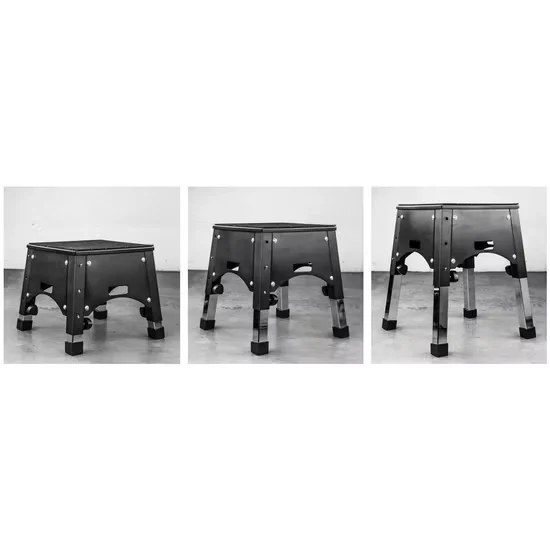
Adjustable Plyometric Jump Box, 500×500×420mm Steel Frame, Black Powder Coated — engineered with continuous robotic MIG welds at all stress joints to resist fatigue cracking under repeated high-impact landings. Height-adjustable platform with reinforced locking mechanism maintains zero-play stability across settings. Every unit undergoes full load testing before shipment, backed by a 10-year frame warranty for commercial training environments.
// Spec Highlights
• Direct from Manufacturer · No Middlemen · Worldwide Shipping
01
// Material
Imported Solid Wood
Premium hardwood frames sourced for density and visual warmth.
02
// Hardware
Medical-Grade Silent
Whisper-quiet pulleys and springs for clinical environments.
03
// Customization
Appearance OEM
Color, upholstery, and branding tailored to your studio.
04
// Service
Layout Design
Free venue planning for studios and rehab institutions.
Every component is selected for longevity, performance, and aesthetic harmony - from imported hardwood frames to silent medical-grade accessories.
// Features
Impact-Resistant Steel Base — Repeated high-impact landings on adjustable plyometric jump box platforms expose weak joints; this unit uses 11-gauge steel frames with robotic continuous MIG welds to eliminate spot-weld fatigue points.
| Parameter | Value |
|---|---|
| Product Type | Plyo Box |
| Frame Steel Gauge | 11-gauge |
| Frame Tube Size | 3×3 inch |
| Steel Grade | Q235 industrial steel, mill-certified |
| Welding Type | Robotic MIG, continuous weld |
| Product Dimensions | 500×500×420mm |
| Adjustment Mechanism | Height-adjustable platform with locking pins |
| Powder Coating | 200μm scratch-resistant industrial finish |
| Color | Black (customization available) |
| Surface Finish | Sandblasted pre-treatment |
| Customization | Available |
| Logo | Customized Logo Available |
| MOQ | 50PCS |
| Facility Type | Typical Use |
|---|---|
| Commercial gym functional training zones | Box jumps, step-ups, depth drops, lateral bounds |
| CrossFit box functional zones | High-rep plyometric circuits, team training stations |
| University strength and conditioning rooms | Athletic performance testing and explosive power drills |
| Hotel and resort fitness centers | Multi-use training areas with varied guest fitness levels |
| Athletic performance facilities | Sport-specific vertical power development |
Most plyo boxes on the market use thin-gauge steel or wood composites that warp, dent, or split after months of box jumps and step-ups — leaving unstable surfaces and sharp edges that compromise athlete safety. This commercial adjustable plyometric jump box uses 11-gauge steel with continuous robotic welds to maintain structural integrity under repeated high-impact loading.
When a 90kg athlete performs depth drops onto a plyo box, the frame absorbs dynamic forces significantly exceeding static body weight. Thin-wall tubes — often spec’d vaguely as "commercial grade" without gauge verification — deflect under these loads, progressively loosening joint connections. Spot welds at stress intersections develop micro-cracks that propagate with each landing cycle [NEED_CITE: weld classification and fatigue performance in structural steel]. The result is not sudden failure but gradual instability: a platform that shifts slightly, edges that separate, and surfaces that develop play where locking mechanisms once held firm.
This commercial adjustable plyometric jump box occupies the high-impact zone of any functional training area, covering vertical and lateral power development across multiple movement planes. The adjustable height platform allows coaches to progress athletes from conservative step-up heights to advanced depth drop configurations without requiring multiple standalone units. In a commercial gym strength floor, this plyo box pairs with cable machines for contrast training, sits adjacent to turf zones for sprint-to-jump circuits, and integrates with storage walls for efficient equipment flow. The 500×500mm footprint provides adequate landing surface for most athletes while maintaining safe clearance spacing when multiple units are deployed in team training configurations.
Plyometric training subjects equipment to impact forces fundamentally different from steady-state strength equipment. Each box jump landing generates dynamic loads that travel through the frame’s vertical members and concentrate at welded joints connecting the platform to the base structure. Unlike selectorized machines where loads move through guided cable paths, the commercial adjustable plyometric jump box receives forces from unpredictable angles — athletes land off-center, shift weight during step-ups, and apply lateral shear during lateral bounds.
These multi-directional impact cycles create fatigue stress at weld intersections, particularly where horizontal platform supports meet vertical frame legs. Continuous robotic MIG welds distribute stress along the entire joint length, whereas spot welds concentrate force at discrete points, accelerating crack initiation [NEED_CITE: fatigue behavior of welded steel joints under cyclic loading]. The 200μm powder coating must also withstand repeated shoe contact at landing edges, where abrasion and impact combine to challenge surface adhesion.
The 11-gauge, 3×3 inch frame tube specification directly determines the commercial adjustable plyometric jump box’s resistance to deformation under dynamic loading. Thinner gauge steel — even at identical outer dimensions — deflects more under impact, transferring greater stress to welded joints and accelerating fatigue failure. The 3×3 inch square tube profile provides torsional rigidity that round tubes cannot match, resisting the twisting forces generated when athletes land with asymmetric foot placement.
Continuous robotic MIG welding eliminates the weak points inherent in spot-welded construction. Each joint receives a complete weld bead along its full length, creating uniform stress distribution rather than concentrated load paths. This welding approach, combined with 11-gauge steel, ensures that the frame maintains dimensional stability through thousands of impact cycles. The locking pin adjustment mechanism must similarly resist play at every height setting — a requirement that demands precision-machined receiver holes and hardened pins rather than stamped components that wear and loosen.
The 200μm powder coating, applied over sandblasted surface preparation, provides impact resistance at contact edges where athletes repeatedly land and step. This thickness exceeds typical decorative finishes, creating a durable barrier that resists chipping even under concentrated shoe rubber contact.
Facilities that specify plyo boxes based on visual appearance rather than structural specifications encounter predictable failures. Thin-wall frames deflect visibly under heavy athletes, creating an unstable platform feel that undermines training confidence. Spot-welded joints crack at stress intersections — often hidden beneath powder coating until failure becomes visible as frame separation or platform tilt.
Non-sealed adjustment mechanisms develop play as receiver holes elongate from repeated pin insertion under load. Low-density powder coating chips at landing edges, exposing bare steel to moisture from shoe contact and facility cleaning chemicals, initiating corrosion that spreads beneath surrounding coating. When these failures occur, replacement parts are unavailable from manufacturers who used非标 hardware, forcing complete unit replacement rather than component repair [NEED_CITE: total cost of ownership in commercial fitness equipment procurement].
Every commercial adjustable plyometric jump box ships with mill-certified steel documentation traceable to the original coil, verifying 11-gauge thickness and Q235 grade compliance. Robotic continuous MIG welding ensures every joint receives uniform, complete weld beads — no spot-weld shortcuts that pass visual inspection but fail under cyclic loading. Each unit undergoes individual load testing before shipment, not sample-based inspection, confirming structural integrity at the specific dimensions ordered.
The 200μm industrial powder coating, applied after sandblast surface preparation, provides impact and abrasion resistance at contact edges. A 10-year frame warranty covers structural components against manufacturing defects. For facility planning, 2D-3D CAD layout support ensures proper spacing between units and adjacent equipment, maintaining safe clearance zones for multi-athlete training configurations. OEM customization allows color and logo alignment with facility branding across 50-piece minimum orders.
Provide your functional training zone dimensions and equipment requirements to receive 2D-3D layout planning with proper commercial adjustable plyometric jump box spacing. Specify daily athlete volume to confirm structural grade appropriateness for your usage intensity. Indicate target user height ranges to verify adjustment mechanism coverage. Custom color and logo options are available for facility branding alignment.
Q: What distinguishes commercial-grade plyo boxes from light-commercial or home-use alternatives?
A: Commercial-grade construction uses 11-gauge steel frames with continuous robotic welding to withstand repeated high-impact landings from multiple athletes daily. Light-commercial alternatives typically employ thinner gauge steel and spot welding, which develop joint fatigue and frame instability under intensive facility use. The 200μm powder coating on commercial units resists chipping at contact edges, while lighter-duty finishes degrade quickly under athletic shoe abrasion.
Q: What steel gauge and frame dimensions are required for repeated high-impact plyometric training?
A: The 11-gauge, 3×3 inch square tube frame provides the torsional rigidity and impact resistance necessary for dynamic loading from box jumps and depth drops. Thinner gauge steel deflects under heavy athletes, transferring excessive stress to welded joints and accelerating fatigue failure. The square tube profile resists twisting forces from asymmetric landings better than round tubes, maintaining platform stability throughout the equipment service life.
Q: How does the adjustable height mechanism maintain structural stability across all settings?
A: Precision-machined receiver holes and hardened locking pins ensure zero-play engagement at every height position. Unlike stamped components that elongate under repeated load insertion, machined receivers maintain dimensional accuracy through thousands of adjustments. The locking pin must resist shear forces from lateral movement during step-ups and bounds, requiring adequate pin diameter and secure engagement depth to prevent platform shift during use.
Q: What surface finishing prevents chipping and injury at landing zones?
A: The 200μm industrial powder coating, applied over sandblasted surface preparation, provides superior adhesion and impact resistance at contact edges where athletes repeatedly land. This thickness exceeds decorative finishes, creating a durable barrier that resists chipping from shoe rubber contact. Sandblast pre-treatment removes mill scale and creates surface profile for coating adhesion, preventing the peeling and corrosion that occurs when coating fails at high-wear landing areas.
Q: How should plyo boxes be integrated into functional zone floor planning?
A: Maintain minimum 600mm clearance between commercial adjustable plyometric jump box units to allow safe athlete movement and multi-user training configurations. Position units with adequate approach and landing space for box jumps and depth drops, considering athlete height and movement patterns. Integrate with adjacent equipment like cable machines and turf zones for contrast training circuits, ensuring traffic flow prevents congestion during peak usage periods.
Premium aesthetics meet quiet operation for boutique studio environments.
Medical-grade silence and precision for sports & postpartum recovery.
Furniture-grade craftsmanship for premium residential installations.
Compact premium setups for one-on-one and small-group training.
Aesthetic Pilates integration for hybrid wellness studio programming.
Multi-unit deployment with instructor-grade reliability for certification programs.
Tell us about your project. Our team will respond within 24 hours with pricing, customization options, and shipping details.
// Sales Director
William
+86 132 2531 1800
// Export Manager
Bella
+86 198 5412 8032
william@bickfit.com