
01 / Scenario
STUDIO
P
High-End Pilates Studios
Premium aesthetics meet quiet operation for boutique studio environments.
ISO
9001
CE
Certified
OEM
Available
10YR
Warranty
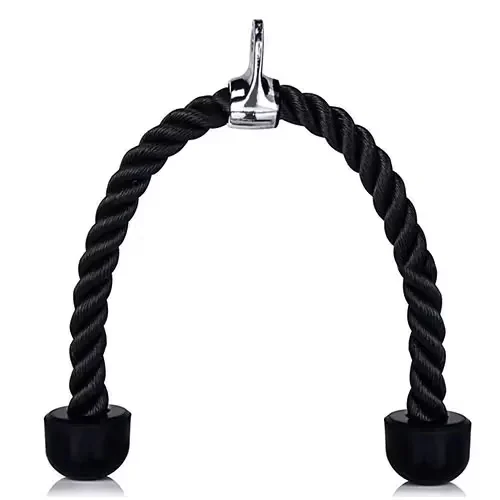
Ergonomic Adjustable Triceps Pull Down Rope, 40CM Length, Custom Colors & Logo — engineered with reinforced end caps and high-tensile rope core to resist fraying under repetitive commercial cable loading, available with UV-stable dye options for facility branding programs. Every unit undergoes pull-out strength testing on end cap attachments before shipment, backed by our 10-year frame warranty and full OEM-ODM capability for high-volume gym operators.
// Spec Highlights
• Direct from Manufacturer · No Middlemen · Worldwide Shipping
01
// Material
Imported Solid Wood
Premium hardwood frames sourced for density and visual warmth.
02
// Hardware
Medical-Grade Silent
Whisper-quiet pulleys and springs for clinical environments.
03
// Customization
Appearance OEM
Color, upholstery, and branding tailored to your studio.
04
// Service
Layout Design
Free venue planning for studios and rehab institutions.
Every component is selected for longevity, performance, and aesthetic harmony - from imported hardwood frames to silent medical-grade accessories.
// Features
Reinforced Rope Core — High-tensile fiber core with UV-stable dye resists fraying under repeated heavy cable loading.
| Parameter | Value |
|---|---|
| Product Type | Triceps Rope Attachment |
| Model NO. | ATC-2000 |
| Specification Length | 40CM |
| Color Options | Customized Colors Available |
| Logo | Customized Logo Available |
| MOQ | 50PCS |
| Standards | CE, ISO 9001:2015, SGS |
| Applications | Commercial Cable Machines, Selectorized Stations, Functional Training Towers |
| Transport Package | Carton |
| Production Capacity | 10000/Years |
| Facility Type | Typical Use |
|---|---|
| Commercial Gym Strength Floor | Cable crossover triceps extensions and pushdowns |
| CrossFit Box Functional Zone | High-volume rope pulls on functional cable rigs |
| Hotel Fitness Center | Compact attachment for multi-station cable systems |
| University Strength & Conditioning | Student-athlete arm conditioning on plate loaded towers |
| Rehabilitation & Performance Center | Controlled eccentric loading for elbow recovery protocols |
Reinforced end caps and high-tensile rope core prevent premature fraying at cable contact points.
At any major trade show, I watch operators grab a triceps rope off a selectorized stack and feel the play developing within weeks. Standard ropes fray at the contact zone where the cable housing meets the end cap, creating uneven wear that compromises grip security and forces early replacement. The rope core material and tensile construction determine how well the attachment resists this degradation under repeated high-load movements [NEED_CITE: material fatigue performance under cyclic loading in fitness accessories].
This commercial adjustable triceps pull down rope attachment targets the sagittal plane extension pattern, engaging the triceps brachii through a converging path that follows natural elbow mechanics. It pairs directly with selectorized cable towers and plate loaded cable crossovers, filling the rope-based attachment slot that complements straight bars, EZ-curl bars, and D-handles already in the accessory rack. Facilities running 8+ hours of daily traffic need this attachment built to withstand continuous eccentric overload without core separation. The 40CM length accommodates a wide range of user arm spans and grip preferences across mixed-gender populations.
Cable rope attachments experience a distinct stress profile: repetitive tensile loading during concentric phases, sudden eccentric deceleration at lockout, and lateral shear forces when users pull at angles outside the cable plane. The end cap attachment zone bears the highest concentration of these forces, where the rope core meets the hardware interface. Over thousands of cycles in a high-traffic facility, inferior end cap bonding separates from the rope core, creating a safety hazard during loaded movements. The rope surface itself undergoes abrasive wear against the cable housing and the user’s grip, demanding a core material that maintains structural integrity without fiber migration [NEED_CITE: abrasive wear mechanisms in synthetic fiber rope under gym conditions].
The rope core construction determines resistance to fraying and elongation under load. High-tensile fiber cores maintain dimensional stability across repeated loading cycles, preventing the rope from stretching and developing slack that compromises movement control. The end cap attachment method — whether mechanical crimp, adhesive bonding, or a combination — directly affects pull-out strength during eccentric overload phases. Ergonomic taper geometry distributes grip pressure across the hand surface rather than concentrating force at the thumb-index web space, reducing localized wear points on both the rope and the user’s skin. Custom color options utilize UV-stable dyes that resist fading under commercial gym lighting and repeated exposure to cleaning chemicals, maintaining facility branding consistency over the attachment service life.
Standard triceps ropes with basic fiber cores fray at contact points within months of commercial use, requiring replacement well before the expected service interval. End caps that rely solely on adhesive bonding separate during heavy eccentric loading, creating equipment downtime and potential injury liability. Non-standard hardware threads on the cable attachment point make replacement impossible when the original hardware wears, forcing facilities to discard entire attachment assemblies rather than swap components. UV-unstable dyes fade under gym lighting, creating a mismatched appearance across the accessory rack that undermines facility presentation standards. These failures compound maintenance costs and disrupt training continuity in high-traffic environments [NEED_CITE: total cost of ownership analysis for gym accessory replacement cycles].
Every commercial adjustable triceps pull down rope attachment undergoes pull-out strength testing on the end cap attachment before shipment, verifying that the rope core and hardware interface withstand eccentric overload beyond typical commercial loads. Custom color programs use UV-stable dye systems matched to facility branding specifications, with color consistency verified across production batches. OEM private label options allow operators to integrate the attachment into branded accessory ecosystems without third-party marking. Our 2D-3D facility planning support ensures the cable station layout provides adequate clearance for full rope extension without interference from adjacent equipment or traffic paths. The 10-year frame warranty on compatible cable systems extends to attachment hardware when used within specified load parameters.
Provide your cable station layout and daily usage volume to receive a 2D-3D facility plan that specifies attachment quantities and accessory rack positioning. Specify your target user population and training focus to confirm the 40CM length and taper geometry match your programming requirements. Detail your custom color and logo branding needs to initiate the OEM approval process with color sample verification.
Q: How do you evaluate rope attachment durability for commercial versus light commercial use?
A: Commercial-grade rope attachments require high-tensile fiber cores that resist elongation and fraying under thousands of daily loading cycles. The end cap attachment method must withstand eccentric overload without separation, verified through pull-out strength testing. Light commercial ropes may use basic fiber cores adequate for lower-volume environments but will degrade rapidly under continuous facility traffic.
Q: What rope core materials resist fraying under heavy repetitive loading?
A: High-tensile synthetic fiber cores maintain structural integrity under cyclic tensile loading and resist abrasive wear at cable contact points. The fiber construction must prevent individual strand migration that creates surface fuzz and eventual core exposure. UV-stable treatment protects the fiber from degradation under commercial gym lighting conditions.
Q: How does end cap design affect attachment security and user safety?
A: End caps must combine mechanical retention with adhesive bonding to prevent separation during eccentric overload phases. The hardware interface must use standard threads compatible with commercial cable machine attachment points. Poorly bonded end caps create sudden failure risk during loaded movements, compromising user safety and equipment reliability.
Q: What custom color matching and logo branding options are available for facility programs?
A: Custom color programs use UV-stable dye systems matched to facility branding specifications, with approval samples provided before production. Logo application options include heat transfer, screen printing, or woven labels integrated into the end cap assembly. Color consistency is verified across production batches to maintain brand standards.
Q: What replacement intervals should facilities expect based on traffic volume?
A: High-traffic facilities running 8+ hours daily should inspect rope attachments quarterly and plan replacement cycles based on visible wear at contact points and end cap integrity. Facilities with lower daily usage may extend service intervals but should maintain spare inventory to avoid equipment downtime during unexpected failures.
Premium aesthetics meet quiet operation for boutique studio environments.
Medical-grade silence and precision for sports & postpartum recovery.
Furniture-grade craftsmanship for premium residential installations.
Compact premium setups for one-on-one and small-group training.
Aesthetic Pilates integration for hybrid wellness studio programming.
Multi-unit deployment with instructor-grade reliability for certification programs.
Tell us about your project. Our team will respond within 24 hours with pricing, customization options, and shipping details.
// Sales Director
William
+86 132 2531 1800
// Export Manager
Bella
+86 198 5412 8032
william@bickfit.com


