01 / Scenario
STUDIO
P
High-End Pilates Studios
Premium aesthetics meet quiet operation for boutique studio environments.
ISO
9001
CE
Certified
OEM
Available
10YR
Warranty
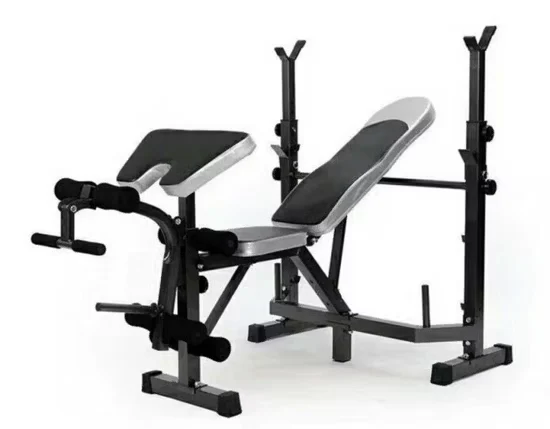
Adjustable Weightlifting Bench with Folding Rack, 1460×1050×1330mm, Multi-Position Back Pad — engineered for high-traffic commercial free weight zones with customizable frame and cushion colors to match facility branding. The steel frame construction supports chest, leg, arm, and abdominal training, while the integrated folding rack design maximizes floor efficiency without compromising structural rigidity. Every unit undergoes three-stage load testing before shipment, ensuring adjustment pins and rack uprights meet commercial durability standards.
// Spec Highlights
• Direct from Manufacturer · No Middlemen · Worldwide Shipping
01
// Material
Imported Solid Wood
Premium hardwood frames sourced for density and visual warmth.
02
// Hardware
Medical-Grade Silent
Whisper-quiet pulleys and springs for clinical environments.
03
// Customization
Appearance OEM
Color, upholstery, and branding tailored to your studio.
04
// Service
Layout Design
Free venue planning for studios and rehab institutions.
Every component is selected for longevity, performance, and aesthetic harmony - from imported hardwood frames to silent medical-grade accessories.
// Features
Traceable 11-Gauge Steel — Every tube used in this bench frame is traceable to the mill coil, with certified gauge documentation provided upon request.
| Parameter | Value |
|---|---|
| Product Type | Adjustable Bench |
| Frame Material | Steel |
| Frame Color | Customizable |
| Cushion Color | Customizable |
| Product Dimensions | 1460×1050×1330mm |
| Exercise Part | Chest, Leg, Arm, Abdominal |
| Adjustment Positions | Multi-position back pad |
| Net Weight | 25kg |
| Transport Package | Plywood Box |
| OEM/ODM | Acceptable |
| Certification | ISO 9001, CE |
| Facility Type | Typical Use |
|---|---|
| Commercial gym strength floor | Primary dumbbell pressing and bench work in free weight zones |
| Hotel and resort fitness center | Space-efficient bench solution for compact layouts with folding rack storage |
| University strength and conditioning room | Multi-sport athlete training requiring adjustable positioning for varied exercises |
| Community fitness club | High-turnover bench for general membership chest, arm, and abdominal training |
Gauge verification separates commercial benches from light-commercial ones marketed as commercial.
Walk into most equipment showrooms and nearly every adjustable bench carries a "commercial grade" label. Yet when you request the mill certificate, the documentation trail often stops at the assembler, not the steel mill. [NEED_CITE: steel traceability requirements in commercial fitness equipment procurement] Thin-gauge frames flex noticeably under heavy dumbbell pressing, and spot-welded joints at the adjustment bracket develop visible cracking within months of daily use in high-traffic free weight zones. The commercial adjustable weightlifting bench with rack you select today determines whether your maintenance team is tightening wobbly frames next quarter or focusing on actual member service.
This bench covers horizontal, incline, and decline pressing planes for chest, shoulder, and triceps work, while the integrated folding rack supports barbell movements when floor space demands dual-purpose equipment. It complements power racks and dumbbell stations by filling the adjustable bench role without requiring a separate rack footprint. In high-density commercial layouts, the folding mechanism recovers usable floor area during peak hours. The multi-position back pad accommodates users across a wide anthropometric range, from shorter members needing steeper incline angles to taller lifters requiring extended pad support.
Every dumbbell press transmits eccentric and impact loads through the adjustment pins, back pad hinges, and rack uprights simultaneously. In a busy commercial gym, a single bench may endure hundreds of loading cycles daily, each introducing fatigue stress at the weld junctions where the back pad bracket meets the main frame. [NEED_CITE: fatigue classification for welded joints in repeatedly loaded steel structures] The folding rack mechanism introduces additional stress concentration points at the pivot hinges, where cyclic folding and unfolding compounds the static loading from racked barbells. Upholstery contact zones endure abrasive wear from clothing friction and chemical exposure from sweat and cleaning agents, while powder coating at frame contact points faces scratching from plate loading and equipment repositioning.
The frame tube dimensions and wall thickness directly govern how much deflection occurs when a loaded barbell sits on the rack uprights — thicker walls with larger cross-sections resist bending moments that cause the visible wobble members feel during setup. Continuous robotic MIG welding produces uniform fusion along the entire joint length, eliminating the intermittent weak points inherent to spot-welded assemblies where cracks initiate at unwelded gaps. The adjustment mechanism design determines whether pins engage with positive detent positioning or rely on friction fits that gradually loosen, introducing lateral play that compromises stability during unilateral movements. [NEED_CITE: pin-loaded adjustment mechanism tolerances in fitness equipment standards] Upholstery foam density and vinyl thickness dictate how many months of commercial use pass before compression set creates the sunken pad appearance that signals replacement time. Powder coating thickness measured in micrometers correlates directly with scratch resistance at contact points where dumbbells and plates rest against the frame during loading and unloading.
Bench frames built with thin-wall tubing visibly deflect under heavy dumbbell loads, creating an unstable pressing surface that experienced lifters immediately notice and avoid. Spot-welded joints at stress concentration points fail progressively — the first crack appears at a single unwelded gap, then propagates through adjacent spots until the entire bracket assembly requires replacement rather than repair. Non-industrial upholstery compresses within weeks of commercial use, forcing facility operators into repeated reupholstery cycles that accumulate costs far exceeding the initial savings from cheaper materials. Insufficient powder coating thickness allows scratches at contact points to expose bare steel, initiating corrosion that spreads beneath the coating layer and eventually compromises structural appearance and member perception.
The 11-gauge steel frame in this commercial adjustable weightlifting bench with rack is sourced from certified mills with coil-level traceability — not anonymous commercial-grade tubing with unverifiable specifications. Robotic MIG welding produces continuous weld lines at every joint, eliminating the spot-weld weak points that crack under repeated heavy loading in high-traffic facilities. Every unit undergoes individual load testing before shipment, verifying structural integrity rather than relying on sample-based batch inspection. The 200μm industrial powder coating resists scratching at dumbbell and plate contact points, maintaining appearance through years of daily commercial use. The 10-year frame warranty reflects confidence in the structural engineering rather than a marketing exercise. For facility planning, the folding rack design allows operators to recover floor space during peak hours, and our 2D-3D CAD layout support ensures proper clearance spacing between this bench and adjacent stations.
Provide your free weight zone dimensions and current equipment list to receive a 2D-3D CAD layout showing optimal placement of this commercial adjustable weightlifting bench with rack alongside existing stations. Specify your expected daily user volume so we can confirm the structural grade matches your traffic requirements. Communicate your member demographic range to verify the adjustment positions accommodate your user base. Detail any customization requirements including frame color, cushion color, or logo placement for OEM private label projects.
Q: How can I verify that an adjustable bench is truly commercial grade rather than light commercial?
A: Request mill-certified steel specifications showing exact gauge and tube dimensions, not just a "commercial grade" marketing label. Verify the welding methodology — continuous MIG welds outperform spot welds under repeated heavy loading. Ask for load testing documentation on individual units rather than sample-based batch reports. True commercial benches provide traceable documentation from steel mill through final assembly.
Q: What frame steel specifications are needed for heavy dumbbell pressing in a commercial gym?
A: Frame tubes should use verifiable gauge thickness with adequate cross-section dimensions to resist deflection under off-center dumbbell loads. The steel grade should be documented with mill certificates rather than left unspecified. Welding at adjustment brackets and rack uprights must be continuous rather than spot-welded to prevent progressive cracking. Request load capacity testing records that demonstrate performance under realistic commercial loading scenarios.
Q: How does the adjustment mechanism affect long-term bench stability and member safety?
A: Positive detent pin mechanisms maintain positioning accuracy through thousands of adjustment cycles, while friction-based systems gradually develop lateral play that compromises stability. The pin engagement depth and bracket tolerances determine whether the back pad wobbles under load. Inspect adjustment hardware specifications and ask for cycle testing data. Worn adjustment mechanisms create unsafe conditions during heavy pressing movements.
Q: What upholstery specifications prevent premature splitting and compression in commercial environments?
A: High-density foam resists compression set far longer than standard-density alternatives, maintaining pad shape through years of daily use. Vinyl covers should feature reinforced stitching at stress points where members grip during exercises. Confirm that replacement upholstery is available with documented lead times, since even commercial-grade materials eventually require renewal. Ask about foam thickness and density specifications rather than accepting generic durability claims.
Q: How do I integrate folding rack benches into high-density floor plans without compromising safety clearances?
A: Request CAD layout support showing the folded and deployed footprint dimensions with recommended clearance spacing from adjacent equipment. Consider peak-hour traffic patterns — folded racks recover floor space when bench stations are unoccupied. Verify that the folding mechanism does not create pinch points or protruding hardware in the stored position. Proper layout planning ensures safe member movement between stations during busy periods.
Premium aesthetics meet quiet operation for boutique studio environments.
Medical-grade silence and precision for sports & postpartum recovery.
Furniture-grade craftsmanship for premium residential installations.
Compact premium setups for one-on-one and small-group training.
Aesthetic Pilates integration for hybrid wellness studio programming.
Multi-unit deployment with instructor-grade reliability for certification programs.
Tell us about your project. Our team will respond within 24 hours with pricing, customization options, and shipping details.
// Sales Director
William
+86 132 2531 1800
// Export Manager
Bella
+86 198 5412 8032
william@bickfit.com