01 / Scenario
STUDIO
P
High-End Pilates Studios
Premium aesthetics meet quiet operation for boutique studio environments.

ISO
9001
CE
Certified
OEM
Available
10YR
Warranty
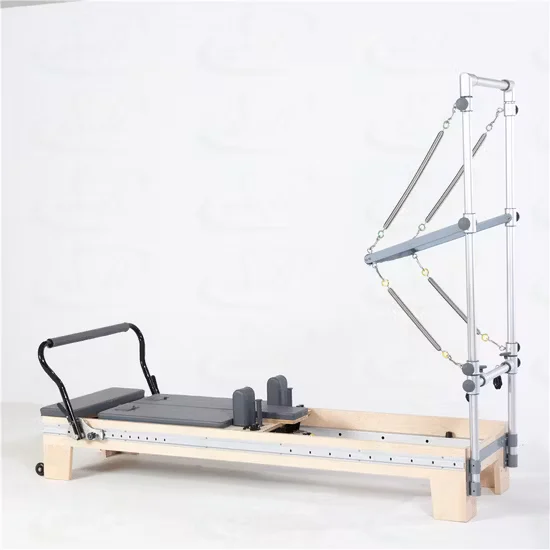
Commercial Pilates Reformer Half Tower, Aluminium Alloy Frame, 2570×730×1850mm — engineered with corrosion-resistant aluminium construction and integrated half tower for standing and seated resistance work. Includes long box, jump board, and platform with precision-machined attachment points. Backed by 3-year warranty and factory-direct pricing for studio operators.
// Spec Highlights
• Direct from Manufacturer · No Middlemen · Worldwide Shipping
01
// Material
Imported Solid Wood
Premium hardwood frames sourced for density and visual warmth.
02
// Hardware
Medical-Grade Silent
Whisper-quiet pulleys and springs for clinical environments.
03
// Customization
Appearance OEM
Color, upholstery, and branding tailored to your studio.
04
// Service
Layout Design
Free venue planning for studios and rehab institutions.
Every component is selected for longevity, performance, and aesthetic harmony - from imported hardwood frames to silent medical-grade accessories.
// Features
Traced Alloy Construction — Every extrusion batch carries mill certification from coil to finished carriage rail, ensuring torsional rigidity holds under daily studio scheduling.
| Parameter | Value |
|---|---|
| Product Type | Pilates Reformer with Half Tower |
| Model NO. | SRY-12A |
| Frame Material | Aluminium Alloy |
| Frame Finish | White powder coating |
| Product Dimensions | 2570 × 730 × 1850 mm |
| Net Weight | 130 kg |
| Standard Accessories | Long Box / Jump Board / Platform |
| Logo Customization | Available on frame and upholstery |
| Warranty | 3 Years |
| Production Capacity | 80 Pieces / Month |
| Facility Type | Typical Use |
|---|---|
| Commercial Pilates studio | Group reformer classes with half tower circuits |
| Boutique wellness facility | Semi-private and one-on-one sessions integrating tower springs |
| Hotel or resort fitness center | Reformer-based wellness programming for transient guests |
| Rehabilitation and physiotherapy center | Equipment-assisted Pilates protocols for controlled resistance work |
Carriage misalignment starts at the frame, not the wheels.
Many Pilates reformers labeled "commercial grade" arrive with thin-wall extrusions that deflect under repetitive loading. The carriage begins tracking off-center within months, wheels bind against the rail shoulder, and the characteristic smooth glide degrades into a grinding chatter. Studio owners replace wheels and springs, but the root cause sits in the aluminium profile itself — wall thickness and alloy temper dictate whether the rail stays straight after thousands of carriage cycles. [NEED_CITE: EN 957 structural requirements for stationary training equipment]
When a reformer frame flexes, the half tower attachment amplifies the problem. Standing exercises with overhead spring resistance introduce lateral forces that a consumer-grade frame was never engineered to absorb. The tower joint loosens, anchor points shift, and the resistance vector drifts away from the intended movement path.
A commercial aluminium pilates reformer half tower occupies a distinct role in the group class environment. The half tower attachment extends the movement repertoire to standing, kneeling, and seated exercises using vertical spring anchors, complementing the horizontal carriage work that defines traditional reformer sessions. This dual-plane capability means a single piece of equipment covers the scope that would otherwise require a separate tower unit — a meaningful consideration when floor space determines class capacity. The carriage accommodates users across a broad height range, and the 2570 mm length provides adequate travel for full-body extension work.
A reformer in a commercial studio faces a distinct fatigue profile compared to strength equipment. The loading is lighter per repetition but the cycle count is far higher — a fully booked studio might run eight to ten classes daily, each with multiple carriage transitions and spring changes. The carriage wheels bear continuous rolling contact stress, and the rail surface must resist micro-abrasion from particulate dust that accumulates despite routine cleaning. [NEED_CITE: wear mechanisms in aluminium rail and wheel assemblies under high-cycle use] The half tower joints experience cyclic tension as springs engage and release, making the fastening method at the tower-to-frame connection a critical long-term durability point. Sweat and cleaning solvents contact the powder coating daily, so adhesion and thickness determine whether the white finish maintains its appearance or begins chalking at high-contact zones.
The aluminium alloy frame specification governs two competing demands: the reformer must be light enough for instructors to reposition between classes, yet rigid enough to resist torsional deflection under dynamic carriage loading. Extrusion wall thickness and alloy temper directly set this threshold. The half tower integration introduces vertical anchor points for spring-loaded resistance, and the structural adequacy of the tower frame — its gauge, joint reinforcement, and fastening to the main rail — determines whether alignment holds over months of standing exercises. Carriage wheel material and rail tolerance define glide smoothness and noise level; harder wheel compounds last longer but transmit more vibration, while softer compounds dampen sound but wear faster in high-traffic settings. Accessory attachment points for the long box, jump board, and platform must be machined to close tolerances, because any play at these interfaces becomes a safety concern when users apply dynamic force during jump board sequences.
A reformer that undercuts on structural specification creates a compounding maintenance burden. Thin-wall extrusions deform under loaded carriage travel, accelerating wheel and rail wear until replacement intervals shorten to a fraction of expected service life. Non-precision accessory mounts develop play that requires increasingly frequent adjustment and eventually compromises user safety during jump board work. Low-grade springs lose tension consistency across the set, forcing instructors to compensate with verbal cues rather than trusting the equipment. [NEED_CITE: spring fatigue and load consistency in commercial resistance equipment] Insufficient powder coating thickness leads to surface chalking and staining from sweat exposure, degrading the studio’s visual standards within the first year.
Every aluminium extrusion batch is verified against mill certification before entering production — no unverified alloy enters the assembly line. Carriage rail straightness is checked with precision measurement after machining, catching any thermal deformation from fabrication before the wheel track is ever loaded. Robotic MIG welding produces continuous weld lines at the half tower joint, eliminating the inconsistency of manual spot welds that crack under cyclic spring tension. Each completed unit undergoes load testing simulating commercial class usage before packing — not sample-based inspection, but every individual reformer. The 200μm industrial powder coating provides surface protection calibrated for daily sweat and solvent exposure. Our 2D-3D floor planning CAD support accounts for the 2570 × 730 mm footprint with adequate clearance between units, ensuring instructors can circulate safely during group sessions. OEM customization covers frame color and logo placement to align with studio branding.
Provide your studio floor dimensions and class scheduling volume so we can generate a 2D-3D layout showing reformer spacing and instructor circulation paths. Specify your average class size and target user demographic so we can confirm the carriage travel range and spring resistance progression match your programming needs. Share any branding requirements — frame color, logo placement, or upholstery selection — so the commercial aluminium pilates reformer half tower integrates with your studio identity from the first day of operation.
Q: How do I distinguish a commercial-grade aluminium reformer from a consumer model?
A: Commercial units use thicker extrusion walls with documented alloy specifications and mill certification. The carriage rail is machined to tighter straightness tolerances, and accessory attachment points are precision-bored rather than stamped. Ask the manufacturer for extrusion wall thickness data and carriage load testing records — consumer models rarely provide either.
Q: What frame specifications determine carriage stability under repeated studio use?
A: Extrusion wall thickness, alloy temper designation, and rail machining tolerance are the governing factors. A frame that flexes under loaded carriage travel accelerates wheel wear and causes tracking drift. The half tower connection method also matters — a bolted joint with reinforcement plates holds alignment longer than a simple bracket mount under cyclic spring loading.
Q: Half tower vs. full tower — what are the trade-offs for studio layout?
A: A half tower provides vertical spring anchors for standing and seated work while keeping the reformer footprint unchanged and preserving sightlines across the studio floor. A full tower adds overhead bar work and additional exercise variety but increases height clearance requirements and may limit ceiling-mounted lighting or HVAC positioning above the equipment row.
Q: What maintenance intervals apply to springs, wheels, and rails in a high-traffic studio?
A: Spring tension should be verified monthly across the full set and springs replaced as matched groups when inconsistency appears. Carriage wheels need inspection for flat-spotting and bearing play at intervals proportional to class volume. Rail surfaces require regular cleaning of particulate dust that accumulates from foot traffic and degrades glide smoothness over time.
Premium aesthetics meet quiet operation for boutique studio environments.
Medical-grade silence and precision for sports & postpartum recovery.
Furniture-grade craftsmanship for premium residential installations.
Compact premium setups for one-on-one and small-group training.
Aesthetic Pilates integration for hybrid wellness studio programming.
Multi-unit deployment with instructor-grade reliability for certification programs.
Tell us about your project. Our team will respond within 24 hours with pricing, customization options, and shipping details.
// Sales Director
William
+86 132 2531 1800
// Export Manager
Bella
+86 198 5412 8032
william@bickfit.com