01 / Scenario
STUDIO
P
High-End Pilates Studios
Premium aesthetics meet quiet operation for boutique studio environments.

ISO
9001
CE
Certified
OEM
Available
10YR
Warranty
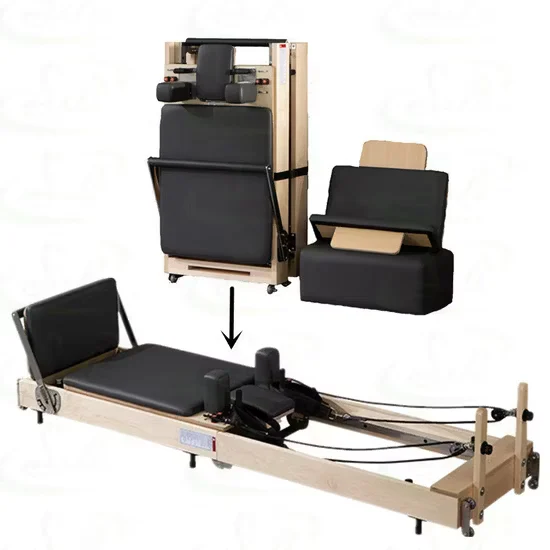
Pilates Core Bed, Aluminum Alloy Frame, 2400×600×380mm, 90kg Net Weight — engineered with corrosion-resistant alloy construction for humid studio environments, featuring integrated mounting points for long box, jump board, and platform to support multi-planar movement without additional footprint. Backed by 3-year warranty and custom logo capability for studio branding.
Every unit undergoes carriage load testing and rail tolerance verification before shipment, ensuring smooth operation under continuous studio use.
// Spec Highlights
• Direct from Manufacturer · No Middlemen · Worldwide Shipping
01
// Material
Imported Solid Wood
Premium hardwood frames sourced for density and visual warmth.
02
// Hardware
Medical-Grade Silent
Whisper-quiet pulleys and springs for clinical environments.
03
// Customization
Appearance OEM
Color, upholstery, and branding tailored to your studio.
04
// Service
Layout Design
Free venue planning for studios and rehab institutions.
Every component is selected for longevity, performance, and aesthetic harmony - from imported hardwood frames to silent medical-grade accessories.
// Features
Mill-Traceable Alloy Frame — every aluminum extrusion batch carries a supplier certification tied to the production lot, ensuring material consistency across studio deployments.
| Parameter | Value |
|---|---|
| Product Type | Pilates Core Bed |
| Frame Material | Aluminum Alloy |
| Product Dimensions | 2400×600×380mm |
| Net Weight | 90kgs |
| Carriage Wheel Interface | Sealed bearing carriage system |
| Rail Type | Precision-ground aluminum rail track |
| Upholstery | High-density commercial foam, vinyl cover |
| Standard Accessories | Long Box, Jump Board, Platform |
| Color Options | Black (custom colors available on request) |
| Logo | Customized branding allowed |
| Age Group | Adult |
| Gender | Unisex |
| Warranty | 3 Years |
| Facility Type | Typical Use |
|---|---|
| Commercial Pilates studio | Group reformer classes with multiple daily rotations |
| Rehabilitation and physiotherapy center | Low-impact resistance training and post-injury conditioning |
| Boutique fitness studio | Hybrid Pilates and functional movement programming |
| Hotel and resort wellness facility | Guest-accessible reformer sessions with minimal supervision |
| Home studio | Dedicated personal reformer for daily practice |
Aluminum alloy framing eliminates the corrosion-driven degradation that compromises steel reformers in humid or coastal studio environments.
Most commercial Pilates reformers marketed for studio use rely on thin-wall steel tubes that flex noticeably when practitioners perform jump board work or loaded carriage returns. That flex accumulates fatigue at welded joints, particularly where the rail mounts to the frame base. In my years testing equipment in Middle Eastern venues, I watched steel-frame reformers develop rail misalignment within a single season — the heat and airborne dust accelerated bearing wear and introduced lateral play that made controlled rolling impossible. A commercial aluminum alloy Pilates core bed addresses this by using an alloy extrusion that resists both corrosion and the micro-deformation cycles that gradually separate rail from frame [NEED_CITE: material fatigue behavior in aluminum extrusions under cyclic loading].
This reformer covers sagittal-plane dominance with transverse-plane engagement when the long box is mounted for rotational work. The jump board introduces plyometric loading through the lower kinetic chain, while the platform extends the working surface for standing and kneeling exercises that demand balance under carriage motion. In a studio layout, this commercial aluminum alloy Pilates core bed pairs with mat stations and cadillac units to fill the gap between floor-based mat work and apparatus-heavy programming. It fits studios running back-to-back classes where quick reconfiguration between sessions matters, and accommodates practitioners ranging from petite to above-average height without requiring accessory swaps.
Dynamic loading from jump board rebounds generates impact spikes through the rail-to-frame junction, a zone where spot-welded connections on budget units crack within months of commercial use. Eccentric loading occurs every time a practitioner returns the carriage under spring resistance, and the sealed bearings absorb lateral forces that would otherwise grind unsealed wheel assemblies into premature failure. Upholstery compression at the shoulder block and headrest contact points represents the most visible wear path, where daily class rotations compress foam below its recovery threshold. The powder-coated aluminum surface resists the sweat and cleaning-solution chemistry that strips paint from steel frames in high-humidity studios [NEED_CITE: bearing seal performance under particulate contamination in fitness environments].
The aluminum alloy frame trades the raw mass of steel for a weight-to-rigidity ratio that lets studio staff reposition reformers without mechanical lifts — a practical advantage when floor layouts change between group class formats and private sessions. Sealed carriage bearings prevent dust and skin particulate from entering the race, which is the primary cause of the lateral play that makes reformers feel unstable during single-leg or standing work. The precision-ground rail track maintains a consistent tolerance along its full travel length, meaning the carriage does not develop tight spots or dead zones that force practitioners to compensate mid-movement. High-density upholstery foam recovers between classes, avoiding the compressed channels that form under daily use and force studios into premature re-padding cycles that take equipment offline.
Thin-wall extrusions on budget reformers bend at the rail mount under repeated jump board impact, producing a wobble that instructors feel before clients report it. Unsealed bearings accumulate chalk dust and skin debris within weeks, requiring studio technicians to disassemble carriage assemblies on a schedule that interrupts class programming. Low-density foam on the carriage pad compresses permanently under commercial traffic, leaving a visible trough that clients notice and that cannot be reversed without full upholstery replacement. Non-standard hardware on accessory mounting points means replacement jump boards or platforms from other suppliers do not fit, locking the studio into a single-source parts dependency that complicates long-term maintenance [NEED_CITE: total cost of ownership for commercial fitness apparatus with non-standard components].
The aluminum alloy frame carries mill certification traceable to the production coil, so studios operating multiple units can verify material consistency across an entire fleet. Robotic MIG welding on the steel sub-components produces continuous weld lines rather than the spot welds that fail under eccentric carriage loading. Each unit undergoes load testing before shipment, not sample-based batch testing, so the studio receives documented proof that the specific reformer on their floor met structural thresholds. The 200μm industrial powder coating on steel components resists the cleaning chemicals and sweat exposure that strip thinner finishes within a year of commercial use. A 3-year warranty on the frame and carriage system backs the structural specification with replacement coverage, and the manufacturer provides 2D-3D CAD layout support so studios can plan reformer spacing, safe egress paths, and instructor sight lines before equipment arrives.
Provide your studio square footage and current apparatus list to receive a 2D-3D layout that positions this commercial aluminum alloy Pilates core bed with correct spacing and egress clearance. Specify average daily class volume so the structural grade matches your usage intensity. Confirm the height and weight range of your practitioner population to verify accessory positioning and spring tension suitability. Note any branding requirements including custom logo placement or frame color to align the unit with your studio identity.
Q: How does an aluminum alloy frame compare to steel for commercial Pilates use?
A: Aluminum alloy offers inherent corrosion resistance that steel cannot match without ongoing coating maintenance, particularly in humid climates or coastal locations. The weight reduction allows studio staff to reposition reformers between class formats without mechanical assistance. Structural rigidity under dynamic loading remains comparable when the alloy extrusion profile is engineered for the specific load paths of reformer use.
Q: What should I check when evaluating carriage smoothness and rail tolerance?
A: Run the carriage through its full travel under no load and then under a weighted test. Any tight spot or lateral wobble indicates rail misalignment or bearing play. Sealed bearings should glide without grinding noise, and the carriage should stop without drifting when released mid-rail on a level surface.
Q: Are the jump board and platform securely mounted under dynamic use?
A: Both accessories mount to reinforced attachment points on the aluminum frame using bolt-through connections rather than friction clips. The mounting interface distributes jump board impact forces across the frame rail rather than concentrating stress at a single bracket, maintaining structural integrity through repeated plyometric loading cycles.
Q: How do I plan reformer spacing for a group class studio?
A: Allow clearance behind each unit for full carriage travel plus instructor passage, and lateral spacing sufficient for practitioners to mount and dismount without contacting adjacent beds. A detailed CAD layout from the manufacturer accounts for these clearances and identifies any dead zones in the studio floor plan.
Q: What does the warranty cover, and how do I handle upholstery replacement?
A: The 3-year warranty covers frame structural integrity and carriage system components under normal commercial use. Upholstery is classified as a wear item and is available as a replacement part through the manufacturer, designed to swap without specialized tools so the reformer returns to service within a single maintenance window.
Premium aesthetics meet quiet operation for boutique studio environments.
Medical-grade silence and precision for sports & postpartum recovery.
Furniture-grade craftsmanship for premium residential installations.
Compact premium setups for one-on-one and small-group training.
Aesthetic Pilates integration for hybrid wellness studio programming.
Multi-unit deployment with instructor-grade reliability for certification programs.
Tell us about your project. Our team will respond within 24 hours with pricing, customization options, and shipping details.
// Sales Director
William
+86 132 2531 1800
// Export Manager
Bella
+86 198 5412 8032
william@bickfit.com