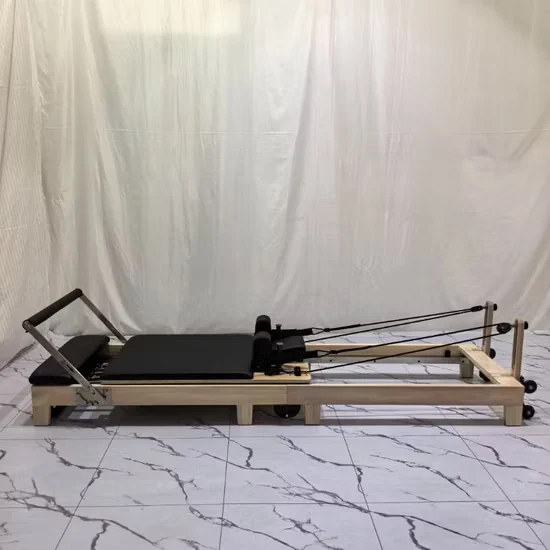
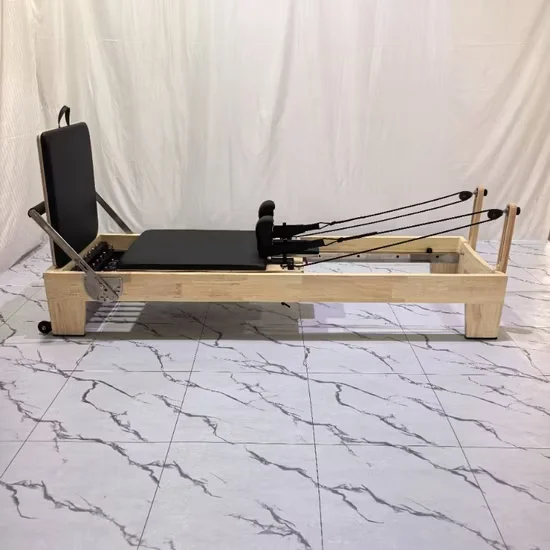
01 / Scenario
STUDIO
P
High-End Pilates Studios
Premium aesthetics meet quiet operation for boutique studio environments.
ISO
9001
CE
Certified
OEM
Available
10YR
Warranty
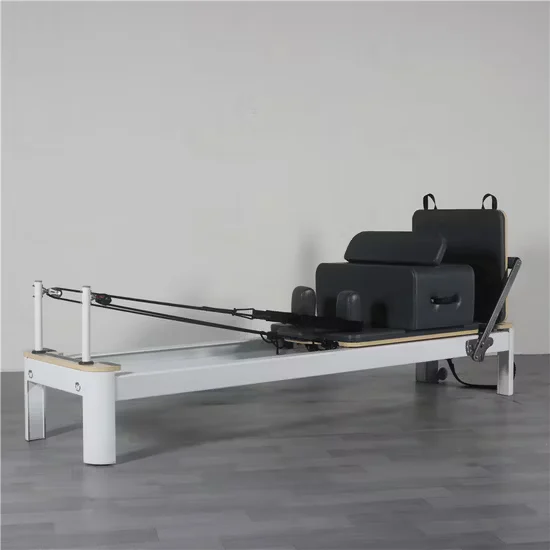
Commercial Aluminum Pilates Reformer Bed, 2570×730×270mm, 90kg Net Weight — full aluminum frame delivers high rigidity-to-weight ratio for stable carriage glide under repetitive studio use. Includes long box, jump board, and platform to support complete reformer curriculum programming. Backed by a 3-year warranty and customized logo options for branded studio deployments.
// Spec Highlights
• Direct from Manufacturer · No Middlemen · Worldwide Shipping
01
// Material
Imported Solid Wood
Premium hardwood frames sourced for density and visual warmth.
02
// Hardware
Medical-Grade Silent
Whisper-quiet pulleys and springs for clinical environments.
03
// Customization
Appearance OEM
Color, upholstery, and branding tailored to your studio.
04
// Service
Layout Design
Free venue planning for studios and rehab institutions.
Every component is selected for longevity, performance, and aesthetic harmony - from imported hardwood frames to silent medical-grade accessories.
// Features
Factory Load-Tested — every Pilates Bed unit undergoes full carriage load cycling before crating, not sample-based inspection.
| Parameter | Value |
|---|---|
| Product Type | Pilates Reformer Bed |
| Frame Material | Aluminum |
| Product Dimensions | 2570 × 730 × 270 mm |
| Net Weight | 90 kg |
| Color | White |
| Included Accessories | Long Box, Jump Board, Platform |
| Warranty | 3 Years |
| Logo | Customized |
| Target User | Adult, Unisex |
| Facility Type | Typical Use |
|---|---|
| Commercial Pilates studio | Group reformer classes and private sessions |
| Yoga and functional training center | Mat-to-reformer progression programming |
| Rehabilitation and physical therapy clinic | Low-impact guided resistance recovery work |
| Hotel and resort fitness center | Guest-accessible guided movement station |
| University athletic department | Sport-specific flexibility and core conditioning |
A reformer carriage under spring tension loads the frame in bending, not compression — and thin-wall aluminum tubing has no reserve.
When a studio owner specs a Pilates Bed based on weight and price alone, the failure mode shows up within months. The carriage rail develops lateral play, the glide becomes uneven, and clients feel the wobble through every controlled eccentric phase. The aluminum frame tube, if undersized in wall thickness, deflects visibly under spring-loaded resistance at mid-span. Spot-welded joints on the cross-members crack under repeated cyclic loading because aluminum fatigue behaves differently than steel — it has no endurance limit, meaning every stress cycle accumulates damage [NEED_CITE: aluminum alloy fatigue behavior under cyclic loading in fitness equipment frames]. The result is a carriage that no longer tracks true, upholstery that shifts on its mounting, and a unit that gets pulled from rotation.
A commercial aluminum pilates reformer bed occupies a specific role in a movement studio: it handles the loaded, guided-resistance portion of a session where the carriage rail and spring system do the work that gravity alone cannot. In a mixed-modality space, it pairs with mat zones for warm-up and cooldown sequences, and with functional rig areas for standing load work. The 2570 mm length requires adequate clearance at both ends for jump board use and long box extensions. For studios running back-to-back group classes, the footprint must accommodate instructor circulation between units — typically a minimum clear passage on the working side for cueing and manual contact.
Every reformer repetition cycles the frame through a load-unload sequence. The springs pull the carriage toward the foot bar, and the return stroke releases that tension. Over hundreds of daily cycles across multiple users, the cross-members connecting the two rail beams experience alternating bending stress. The welded or bolted joints at these connections are where fatigue damage concentrates first. Aluminum alloys used in extruded profiles respond to this differently than mild steel — surface micro-cracks initiate at stress concentrations and propagate without visible warning [NEED_CITE: stress concentration and crack initiation in extruded aluminum structural joints]. The carriage wheels running on the rail also generate localized wear at the contact surface, and any misalignment accelerates this wear asymmetrically, leading to a carriage that drifts to one side under load.
The frame material being aluminum tells you about weight and corrosion resistance, but the wall thickness of the extruded profile determines whether the rail beam resists deflection under a loaded carriage at full spring tension. A thicker-walled profile holds its straightness over years of use, keeping the carriage tracking parallel. The accessory package — long box, jump board, platform — defines what movement vocabulary the unit supports without aftermarket additions. The 2570 × 730 mm footprint is sized for dedicated reformer use rather than compact home setups, meaning the rail length accommodates full-range supine and prone work for taller users. The 90 kg net weight reflects the mass of the aluminum frame plus carriage and spring hardware; a unit significantly lighter than this at the same dimensions typically indicates thinner extrusion walls or lighter carriage construction.
When a studio purchases reformers without verifying frame wall thickness and carriage rail bearing specification, the maintenance ledger tells the story within the first year. Carriage wheels develop flat spots from running on a rail that has deflected out of alignment. Spring anchor points on thin-gauge cross-members elongate under repeated tension cycling. Upholstery on the carriage platform splits at the mounting holes because the underlying board flexes with every loaded repetition. Replacement parts become an issue when the manufacturer used proprietary hardware or discontinued the profile — the unit sits idle in the studio waiting for a component that may never arrive [NEED_CITE: equipment downtime costs in commercial fitness and studio environments]. The total cost of pulling a unit from class rotation, diagnosing the failure, sourcing parts, and reinstalling exceeds the price difference that drove the original purchasing decision.
The aluminum frame construction addresses the moisture and cleaning chemical exposure inherent in studio environments where sweat and disinfectant contact the equipment multiple times daily. The full accessory kit — long box, jump board, platform — means the unit supports the complete classical and contemporary reformer syllabus without requiring separate purchases. The 3-year warranty period signals the manufacturer’s confidence in the frame and carriage system surviving commercial-class daily use cycles. Custom logo application supports studio branding consistency across a fleet of units. For operators planning multi-unit layouts, providing floor dimensions and class capacity targets allows 2D-3D layout planning that accounts for carriage extension travel and instructor access paths between stations.
Provide the studio floor area and planned reformer count to receive a 2D-3D layout showing unit placement, carriage travel clearance, and instructor circulation paths. Specify daily class frequency and average user weight range so the structural grade can be matched to actual loading conditions. Indicate any branding requirements including custom logo placement and color preferences to align with studio interior design. Share target user demographics to confirm the accessory package covers the intended movement programming.
Q: How does an aluminum frame compare to wood for daily commercial studio use?
A: Aluminum extrusions resist warping from humidity and cleaning chemical exposure that causes wood frames to shift over time. The dimensional stability of an aluminum profile keeps the carriage rail parallel, which is critical for smooth carriage tracking. Wood requires climate-controlled environments and more frequent fastener checks to maintain structural alignment in high-traffic studio conditions.
Q: What should I check to confirm the carriage rail system is built for heavy use?
A: Verify the rail profile wall thickness and the carriage wheel bearing specification. Sealed bearings resist contamination from sweat and cleaning solutions, maintaining smooth travel over extended use. The wheel-to-rail contact surface should show even wear distribution when inspected — asymmetric wear indicates the rail has deflected or the carriage has developed lateral play that compromises movement quality.
Q: How often do the springs on a commercial reformer need replacement?
A: Spring replacement intervals depend on daily cycle count and maximum load applied. Springs lose their calibrated resistance over repeated tension cycles, and a spring that no longer returns to its resting length signals fatigue accumulation. Studios running multiple classes daily should inspect springs quarterly for permanent elongation and replace any unit showing visible deformation or inconsistent resistance through its travel range.
Q: What are the safe spacing requirements between multiple reformers in a group class layout?
A: Each unit requires the reformer footprint plus carriage extension travel at both ends, plus lateral clearance for instructor passage and client mounting. A typical group class layout allows a clear walking path on the working side of each unit. Provide your room dimensions and target unit count for a scaled layout that confirms safe spacing and emergency egress compliance.
Q: Can the upholstery on the carriage platform be replaced when it wears out?
A: Carriage platform upholstery is a wear item in commercial environments and replacement requires matching the original mounting hole pattern and foam density. Confirm with the manufacturer that replacement pads are available as spare parts before purchasing. A unit with proprietary mounting that cannot be serviced locally will sit idle during repair, affecting class scheduling and client retention.
Premium aesthetics meet quiet operation for boutique studio environments.
Medical-grade silence and precision for sports & postpartum recovery.
Furniture-grade craftsmanship for premium residential installations.
Compact premium setups for one-on-one and small-group training.
Aesthetic Pilates integration for hybrid wellness studio programming.
Multi-unit deployment with instructor-grade reliability for certification programs.
Tell us about your project. Our team will respond within 24 hours with pricing, customization options, and shipping details.
// Sales Director
William
+86 132 2531 1800
// Export Manager
Bella
+86 198 5412 8032
william@bickfit.com