01 / Scenario
STUDIO
P
High-End Pilates Studios
Premium aesthetics meet quiet operation for boutique studio environments.

ISO
9001
CE
Certified
OEM
Available
10YR
Warranty
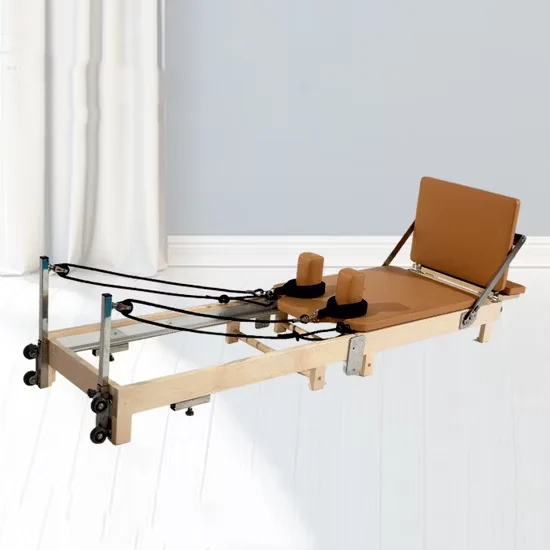
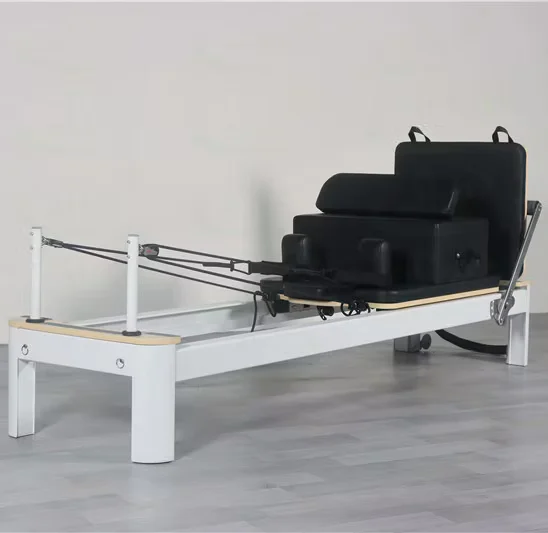
Commercial Aluminum Pilates Reformer with Half Tower, 2570×730×890mm, 90kg — aircraft-grade aluminum alloy frame delivers corrosion resistance and structural rigidity under continuous spring loading, with integrated half tower providing vertical resistance in a single footprint. Includes long box, jump board, and platform for modular class programming. Backed by 3-year warranty and full customization for color and logo.
// Spec Highlights
• Direct from Manufacturer · No Middlemen · Worldwide Shipping
01
// Material
Imported Solid Wood
Premium hardwood frames sourced for density and visual warmth.
02
// Hardware
Medical-Grade Silent
Whisper-quiet pulleys and springs for clinical environments.
03
// Customization
Appearance OEM
Color, upholstery, and branding tailored to your studio.
04
// Service
Layout Design
Free venue planning for studios and rehab institutions.
Every component is selected for longevity, performance, and aesthetic harmony - from imported hardwood frames to silent medical-grade accessories.
// Features
Structural Traceability — Every extrusion of the aluminum alloy frame is mill-certified, so the material spec is verifiable from coil to carriage.
| Parameter | Value |
|---|---|
| Product Type | Pilates Reformer |
| Frame Material | Aluminium Alloy |
| Model NO. | SRY-27 |
| Color | Black (custom options available) |
| Product Dimensions | 2570 × 730 × 890 mm |
| Net Weight | 90 kgs |
| Standard Accessories | Long Box / Jump Board / Platform |
| Accessory Attachment | Integrated mounting interface |
| Bearing Type | Sealed industrial bearings |
| Pulley System | Aviation-grade steel cable |
| Half Tower | Integrated vertical spring resistance |
| Logo | Customized is allowed |
| Warranty | 3 Years |
| Facility Type | Typical Use |
|---|---|
| Boutique Pilates studio | Group reformer classes with tower-based spring variations |
| Rehabilitation and physical therapy center | Low-impact resistance work with adjustable spring tension |
| Hotel and resort wellness facility | Multi-user daily operation in humid environments |
| Private home studio | Compact footprint integrating reformer and half tower functions |
The alloy frame maintains carriage alignment where thin-wall steel tubes gradually deflect under cyclic loading.
Many reformers sold as studio equipment rely on unspecified alloys or thin-gauge steel that shows dimensional drift after months of high-repetition spring work. The carriage begins to track off-center, and the rail develops uneven wear patterns that compound over time. For a commercial aluminum pilates reformer with half tower deployed in a studio running six or more classes daily, the frame material directly determines how long the equipment holds calibration before maintenance intervention becomes necessary [NEED_CITE: structural fatigue in aluminum alloy vs. mild steel under cyclic tension loading].
This unit covers the full horizontal resistance plane through the reformer carriage and adds the vertical spring resistance plane through the integrated half tower, addressing spinal articulation, limb loading, and standing work from a single footprint. In a studio layout, it pairs with mat zones and cadillac units rather than duplicating their function, allowing floor space to serve more clients per session. The commercial aluminum pilates reformer with half tower suits facilities running group classes of four to eight participants, where each station must deliver a complete exercise library without requiring members to rotate between machines. The carriage length and footbar positions accommodate users across a wide height range.
The primary stress cycles occur at the carriage-to-rail interface during eccentric return phases, where spring tension decelerates the carriage mass against the stopper. The half tower upright absorbs lateral deflection when clients work asymmetrical spring configurations or perform standing exercises with uneven weight distribution. Sealed bearings at the carriage wheels prevent studio dust and chalk residue from penetrating the race, which is where unsealed units develop play within the first year of heavy use. The spring anchor points on the half tower frame experience the highest cycle count and require periodic inspection for metal fatigue at the weld junctions [NEED_CITE: weld classification and fatigue performance in aluminum structural components]. The aviation-grade steel cable running through the pulley system resists fraying under the repetitive bending cycles that studio use demands.
The aluminum alloy frame provides corrosion resistance that steel cannot match in humid studio environments or wellness centers where perspiration and cleaning solutions constantly contact the surface. The extruded profile geometry determines rigidity more than wall thickness alone, and the alloy maintains dimensional stability across the temperature variations that occur between climate-controlled studios and storage areas. Sealed bearings in the carriage wheels eliminate the most common maintenance call in high-traffic studios — the lateral play that develops when dust infiltrates an open bearing race and accelerates wear on the rail surface. Aviation-grade steel cable through the pulley system offers a tensile rating appropriate for the maximum spring resistance the unit can deliver, with a safety margin that accounts for dynamic loading when clients perform explosive movements like jump board sequences.
Thin-wall tubes that save weight on paper begin to show permanent deflection at the spring anchor points, shifting the resistance curve away from the manufacturer’s original calibration. Non-sealed bearings in the carriage require scheduled replacement as studio dust accelerates race wear, generating downtime and parts cost that offset the initial purchase savings. Spray-painted finishes on bare steel chip at the contact points where accessories mount and dismount, exposing untreated metal to perspiration corrosion that spreads beneath the coating. Non-standard hardware on budget units means that when a pulley fails or a spring hook fractures, replacement parts are unavailable and the entire station sits idle until a fabrication shop produces a custom substitute [NEED_CITE: total cost of ownership for commercial fitness equipment bearing and cable systems].
The aluminum alloy frame with mill certification gives studio owners documentation that the material grade matches the structural demands of continuous commercial spring loading. The sealed bearing specification means carriage maintenance intervals extend rather than compress as class volume increases, which matters when a studio schedules back-to-back sessions from early morning through evening. Each unit undergoes load testing before shipment to confirm that the carriage travels true and the half tower upright holds vertical alignment under maximum spring tension. The 200μm industrial powder coating, applied over proper surface preparation, resists the chipping and chemical attack that studio cleaning protocols inflict on lesser finishes. The three-year warranty reflects confidence in component longevity under the specific duty cycle that studio environments impose.
Provide your studio floor dimensions and target station count to receive a 2D or 3D layout showing how this commercial aluminum pilates reformer with half tower fits within your available space and safety clearances. Specify your expected daily class volume so we can confirm that the sealed bearing and cable specifications match your duty cycle requirements. Communicate any customization requirements including frame color, logo placement, or accessory package modifications to align the unit with your studio branding and programming needs.
Q: How does aluminum frame construction compare to steel for commercial Pilates reformers?
A: Aluminum alloy offers inherent corrosion resistance that steel cannot achieve without continuous coating maintenance, which matters in studios where perspiration and humidity are constant. The alloy extrusion process produces consistent profile geometry that maintains rail alignment under cyclic spring loading. Steel frames weigh more and resist denting better, but aluminum’s weight-to-rigidity ratio makes the unit easier to reposition during studio reconfiguration while maintaining the structural integrity that daily commercial use demands.
Q: What maintenance does the carriage rail system require in high-traffic studio use?
A: The sealed bearings eliminate the most frequent maintenance issue in studio environments, which is dust infiltration into open bearing races causing lateral play and rail wear. Quarterly inspection confirms smooth carriage travel and checks for any debris accumulation on the rail surface. Aviation-grade steel cables should be wiped clean monthly and examined for strand separation at pulley contact points. Spring tension should be verified periodically to ensure resistance calibration has not drifted from original specifications.
Q: How do I specify spring resistance for different client populations?
A: Rehabilitation centers typically configure lighter spring tensions for joint-safe loading and controlled range-of-motion work, while athletic performance studios run heavier springs for power development and eccentric overload training. The half tower spring positions allow configuration changes between classes without tools. Confirm with the manufacturer which spring poundage ratings are available and whether the anchor points accept aftermarket springs if your programming requirements evolve after initial installation.
Q: Can the half tower be removed or upgraded after initial purchase?
A: The integrated half tower is structurally tied to the frame geometry and is not designed for field removal without compromising the unit’s alignment specifications. Upgrading spring sets or replacing individual components is supported through the accessory ecosystem. If your studio anticipates needing full tower functionality later, selecting a dedicated full-tower unit from the start avoids the compromise of a half-tower configuration that cannot be expanded to meet advanced programming requirements.
Q: What is the expected replacement cycle for springs, ropes, and carriage bearings?
A: Springs lose tension calibration based on cycle count and environmental exposure, typically requiring replacement in high-volume studios as part of scheduled maintenance rather than waiting for visible deformation. Aviation-grade steel cables outlast standard rope significantly and show visible strand separation before failure, giving advance warning. The sealed carriage bearings extend replacement intervals compared to unsealed alternatives, though any detectable lateral play indicates the bearing has exceeded service life and should be replaced immediately.
Premium aesthetics meet quiet operation for boutique studio environments.
Medical-grade silence and precision for sports & postpartum recovery.
Furniture-grade craftsmanship for premium residential installations.
Compact premium setups for one-on-one and small-group training.
Aesthetic Pilates integration for hybrid wellness studio programming.
Multi-unit deployment with instructor-grade reliability for certification programs.
Tell us about your project. Our team will respond within 24 hours with pricing, customization options, and shipping details.
// Sales Director
William
+86 132 2531 1800
// Export Manager
Bella
+86 198 5412 8032
william@bickfit.com