01 / Scenario
STUDIO
P
High-End Pilates Studios
Premium aesthetics meet quiet operation for boutique studio environments.

ISO
9001
CE
Certified
OEM
Available
10YR
Warranty
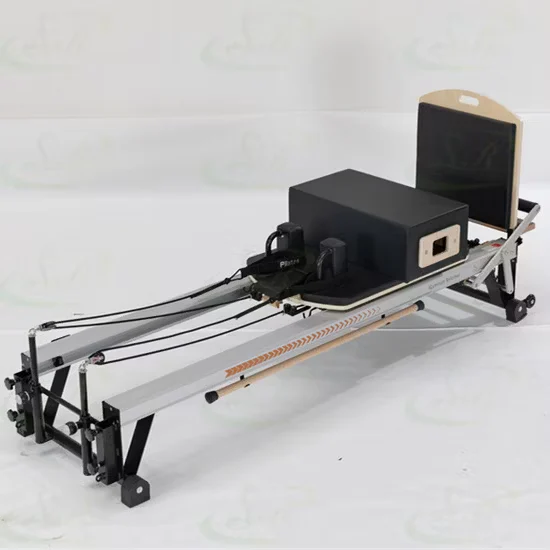
Pilates Reformer with Trapeze Tower, 2570×730×1850mm, 130kg Net Weight — aircraft-grade aluminum carriage rail with sealed bearing pulleys for silent, wobble-free movement across high-repetition studio sessions. Integrated tower provides load-rated suspension points without separate rigging, paired with graded spring resistance for progressive client overload. Backed by BICKFIT's 15,000㎡ vertically integrated facility and 17-year manufacturing heritage ensuring unit-to-unit consistency.
// Spec Highlights
• Direct from Manufacturer · No Middlemen · Worldwide Shipping
01
// Material
Imported Solid Wood
Premium hardwood frames sourced for density and visual warmth.
02
// Hardware
Medical-Grade Silent
Whisper-quiet pulleys and springs for clinical environments.
03
// Customization
Appearance OEM
Color, upholstery, and branding tailored to your studio.
04
// Service
Layout Design
Free venue planning for studios and rehab institutions.
Every component is selected for longevity, performance, and aesthetic harmony - from imported hardwood frames to silent medical-grade accessories.
// Features
Continuous Robotic MIG Welding — every joint on this aluminum Pilates reformer with trapeze tower is fully welded with no spot-weld shortcuts, preventing fatigue cracking under daily studio repetition.
| Parameter | Value |
|---|---|
| Product Type | Pilates Reformer with Tower |
| Model NO. | SRY-12A |
| Frame Material | Aircraft-grade aluminum |
| Carriage Rail System | Precision-machined aluminum rail with sealed bearing pulleys |
| Product Dimensions | 2570×730×1850mm |
| Net Weight | 130kgs |
| Spring System | Graded resistance, multiple springs included |
| Tower Integration | Integrated trapeze tower with load-rated attachment points |
| Accessory Options | Long Box / Jump Board / Platform |
| Color | White (custom options available) |
| Logo | Customized Is Allowed |
| Certification | ISO 9001:2015 / CE / SGS |
| Warranty | 3 Years |
| Facility Type | Typical Use |
|---|---|
| Commercial Pilates studio | Group reformer classes with tower-based suspension sequences |
| Boutique fitness center | Mixed modality sessions combining carriage work and vertical suspension |
| Rehabilitation and physiotherapy clinic | Low-impact controlled-resistance protocols with spring-graded loading |
| Hotel and resort wellness facility | Daily guest use with minimal maintenance between sessions |
| Private training studio | One-on-one instruction requiring both reformer and tower modalities |
Specified aluminum alloy and machined rail tolerance, not a marketing label.
Studio owners frequently purchase reformers described only as "commercial grade" without any documentation on rail material, bearing type, or spring tension calibration. The result surfaces after months of daily group classes: carriage wobble from worn rail surfaces, noisy pulley action from open bushings, and springs that lose calibrated tension unevenly across the set. When a reformer develops play mid-class, the instructor either stops the session or risks client injury — neither outcome protects the studio’s reputation [NEED_CITE: bearing service intervals in high-repetition fitness environments].
This commercial aluminum Pilates reformer with trapeze tower covers horizontal carriage-based resistance training and vertical suspension work within a single footprint. The integrated tower eliminates the need for ceiling-mounted rigging or a separate tower unit, which matters when studio square footage is at a premium. It complements mat-based equipment and cadillacs in a full Pilates studio layout, or serves as the primary apparatus in boutique movement spaces offering reformer group classes. The carriage accommodates a wide range of user heights and strength levels through graded spring selection and adjustable contact points.
In a commercial studio running four to six group sessions daily, each reformer endures hundreds of carriage cycles with varying load profiles — eccentric deceleration during controlled returns, lateral forces when clients shift position on the carriage, and torsional stress at tower attachment points during suspension work. The sealed bearing pulley system prevents sweat and chalk dust from penetrating the bearing race, which is the primary failure point in open bushing designs. Attachment points on the trapeze tower experience cyclic loading that demands continuous weld penetration rather than cosmetic tack welds [NEED_CITE: cyclic fatigue in aluminum fitness equipment frames]. Upholstery contact surfaces on the carriage and long box endure repeated compression and abrasion from diverse body types and clothing materials.
Aircraft-grade aluminum rail construction provides corrosion resistance in humid studio environments and reduces overall unit weight for repositioning during floor plan changes. Precision machining of the rail surface maintains consistent carriage travel without the lateral play that develops in extruded-only rails after repeated use. The sealed bearing pulleys roll on the rail rather than sliding, which eliminates the stick-slip friction pattern that causes noise and accelerates wear in bushing-based systems. Graded spring resistance allows instructors to progress clients from rehabilitation-level loading through advanced strength work without swapping equipment. The integrated tower’s load-rated attachment points are positioned to handle suspension forces without requiring structural reinforcement of the studio ceiling.
When a reformer manufacturer does not disclose rail material grade, the studio owner cannot verify whether the aluminum alloy will resist deformation under years of cyclic carriage loading. Open bushings instead of sealed bearings mean scheduled maintenance downtime — pulling carriages, cleaning contact surfaces, and replacing worn bushings — that takes equipment out of revenue-generating class slots. Springs without calibrated tension ratings create inconsistency across a studio’s reformer fleet, forcing instructors to compensate rather than teach. Non-load-rated tower attachment points introduce liability exposure during suspension exercises. Thin or unverified upholstery foam compresses within months of daily use, requiring reupholstery that costs more than specifying higher-density material at purchase [NEED_CITE: upholstery compression cycles in commercial fitness seating].
Aircraft-grade aluminum sourcing is documented to the batch, providing material traceability comparable to our steel-frame strength equipment. Robotic MIG welding ensures continuous weld lines at every tower-to-base joint with no spot-weld weak points. Each unit undergoes load testing before shipment — not sample-based inspection, but individual verification. The 200μm powder coating applied to steel structural components in our strength line informs our finishing standards across all product categories. Studio floor planning support includes CAD layouts showing reformer spacing with safe clearance for carriage travel and tower reach zones. OEM private label and custom color options allow studio branding consistency across the equipment fleet.
Provide your studio floor area and existing equipment list to receive a 2D-3D layout showing reformer placement with safe operating clearances. Specify your daily class volume and average occupancy so we can confirm the structural grade matches your use intensity. Identify your client demographic range to verify the spring system and adjustment positions cover the necessary resistance and fit parameters. Communicate any branding requirements including custom color and logo placement for studio identity consistency.
Q: How do I tell a true commercial Pilates reformer from a light-commercial one?
A: Request documentation on rail material grade and machining tolerance, bearing type (sealed versus open bushing), and spring tension calibration. Commercial units specify these values and provide test records. Light-commercial equipment typically uses vague language like "studio grade" without verifiable structural data, which surfaces as noise, play, and maintenance issues within the first year of daily class use.
Q: What are the trade-offs between aluminum and steel reformer frames?
A: Aluminum frames resist corrosion in humid studio environments and weigh less, making repositioning easier during floor plan changes. Steel frames offer higher absolute load capacity but require protective coating to prevent oxidation. For Pilates reformer applications where loads are spring-resisted rather than plate-loaded, aluminum provides sufficient structural rigidity with practical handling advantages in a commercial studio setting.
Q: What should I verify about the pulley and bearing system before buying in bulk?
A: Confirm the system uses sealed bearings rather than open bushings, as sealed units prevent sweat and chalk infiltration that causes premature wear. Ask for the expected service interval and whether bearings are field-replaceable without specialized tools. Request a sample unit and run the carriage through several hundred cycles to evaluate noise, lateral play, and smoothness consistency across the full rail travel length.
Q: How should I plan studio floor layout around reformer spacing?
A: Account for the reformer’s full length plus carriage extension range and tower reach zone when calculating clearance. Leave adequate lateral space for instructors to move between units during group classes. Doorway and corridor widths must accommodate delivery of fully assembled units or allow on-site assembly staging. Request CAD layout support from the manufacturer to verify safe operating clearances before finalizing your floor plan.
Q: What is the spring replacement cycle and can I customize resistance options?
A: Spring lifespan depends on class volume and client strength levels, but calibrated springs in daily commercial use typically require tension verification monthly and replacement when they lose consistent resistance across the set. Ask the manufacturer about available spring tension ranges and whether mixed-resistance sets can be configured for your studio’s client demographic. Custom spring sets allow progressive overload programming without swapping entire units.
Premium aesthetics meet quiet operation for boutique studio environments.
Medical-grade silence and precision for sports & postpartum recovery.
Furniture-grade craftsmanship for premium residential installations.
Compact premium setups for one-on-one and small-group training.
Aesthetic Pilates integration for hybrid wellness studio programming.
Multi-unit deployment with instructor-grade reliability for certification programs.
Tell us about your project. Our team will respond within 24 hours with pricing, customization options, and shipping details.
// Sales Director
William
+86 132 2531 1800
// Export Manager
Bella
+86 198 5412 8032
william@bickfit.com