01 / Scenario
STUDIO
P
High-End Pilates Studios
Premium aesthetics meet quiet operation for boutique studio environments.
ISO
9001
CE
Certified
OEM
Available
10YR
Warranty
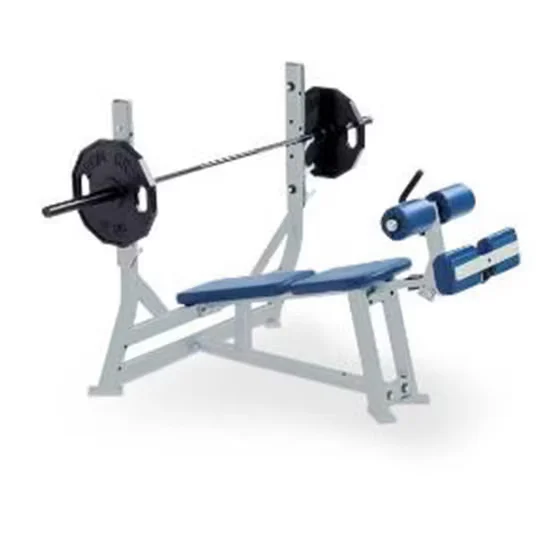
Commercial Decline Bench Machine, 1500×1150×1280mm, 65kg Net Weight — engineered with industrial-grade steel frame and robotic MIG continuous welding to eliminate cold joints and structural fatigue under repetitive plate loading. High-density upholstery resists splitting in high-traffic environments, while precision adjustment mechanisms ensure repeatable positioning for chest-focused training. Every unit undergoes individual load testing before shipment, backed by a 10-year frame warranty and mill-certified steel traceability.
// Spec Highlights
• Direct from Manufacturer · No Middlemen · Worldwide Shipping
01
// Material
Imported Solid Wood
Premium hardwood frames sourced for density and visual warmth.
02
// Hardware
Medical-Grade Silent
Whisper-quiet pulleys and springs for clinical environments.
03
// Customization
Appearance OEM
Color, upholstery, and branding tailored to your studio.
04
// Service
Layout Design
Free venue planning for studios and rehab institutions.
Every component is selected for longevity, performance, and aesthetic harmony - from imported hardwood frames to silent medical-grade accessories.
// Features
Traceable 11-Gauge Steel Frame — Every 3×3 inch Q345 tube is mill-certified and traceable to the original coil, ensuring structural integrity under repeated plate loading on this commercial decline bench machine.
| Parameter | Value |
|---|---|
| Product Type | Incline Decline Bench |
| Model NO. | 5052 |
| Frame Tube Size | 3×3 inch |
| Steel Grade | Q345 |
| Welding Type | Robotic MIG continuous weld |
| Loading Type | Plate loaded |
| Exercise Part | Chest |
| Powder Coating | 200μm scratch-resistant |
| Product Dimensions | 1500×1150×1280mm |
| Net Weight | 65kg |
| Certification | ISO 9001, CE |
| OEM/ODM | Available |
| Production Capacity | 500 PCS/Month |
| Facility Type | Typical Use |
|---|---|
| Commercial gym strength floor | High-frequency chest-focused plate loaded training during peak hours |
| Hotel and resort fitness center | Durable decline pressing station with long service intervals |
| University strength and conditioning room | Heavy-duty bench for multi-user varsity athlete programs |
| Rehabilitation and performance center | Controlled decline angle for progressive overload protocols |
A commercial decline bench machine must resist frame deflection under asymmetric plate loading, not just look solid on day one.
Most catalog listings describe frames as "commercial grade" without specifying gauge or steel grade. In real gym environments, a decline bench sees plates loaded unevenly — one side first, then the other — creating torsional stress that spot-welded, thin-gauge frames cannot sustain. Within months, the cross-member develops visible bowing, and the decline angle shifts under load. The padding may still look intact, but the structural geometry has already compromised the movement path [NEED_CITE: structural deflection limits in EN 957 stationary training equipment standards].
This commercial decline bench machine positions the user at a fixed decline angle targeting the lower pectoral region through a plate loaded pressing path. The 1500×1150×1280mm footprint accommodates a full range of motion while maintaining safe clearance from adjacent stations on a commercial strength floor. It pairs with flat and incline plate loaded benches to cover the full pectoral spectrum. The 65kg frame weight anchors the unit against lateral shift during heavy eccentric loading, making it suitable for facilities where multiple athletes train simultaneously at high daily throughput.
A decline bench endures a distinct stress profile: static load from the user’s body weight, dynamic eccentric force during the lowering phase, and lateral torsion from asymmetric plate loading. The junction where the decline frame meets the base rail concentrates these forces at a single geometric node. Robotic MIG continuous welding eliminates the start-stop inconsistencies of manual spot welding, distributing fatigue resistance along the entire seam rather than at discrete points [NEED_CITE: weld classification and fatigue performance in structural steel joints]. The 200μm powder coating protects these critical junctions from sweat corrosion and cleaning chemical exposure that accelerate micro-cracking at bare steel contact points.
The 3×3 inch tube dimension paired with Q345 steel grade determines the bending moment threshold before permanent deformation occurs. Q345 offers a higher yield point than common Q235, meaning the frame resists deflection at loads where lesser steel would begin to yield plastically. The robotic MIG continuous weld produces a full-penetration seam with uniform heat distribution, avoiding the cold-joint defects that form when manual welders pause and restart. Plate loaded configuration eliminates the cable and pulley maintenance variables, focusing structural demands entirely on the frame and pivot hardware. The 200μm powder coating thickness exceeds typical 60-80μm finishes, providing a sacrificial layer that maintains appearance and corrosion resistance through years of commercial cleaning cycles.
Switching from 11-gauge to thinner wall tube saves material cost at the factory but transfers the expense to the gym operator through premature frame replacement. Spot welds that pass visual QC develop subsurface cracks under cyclic loading, creating sudden failure risk rather than gradual warning. Non-sealed pivot points allow sweat and dust to degrade bearing surfaces, introducing play that alters the pressing arc and accelerates uneven wear. Low-density foam padding compresses permanently within months under daily commercial use, requiring full upholstery replacement while the frame remains serviceable — if the frame was built to last. Thin powder coating chips at plate contact points, exposing bare steel to corrosion that spreads beneath adjacent coating.
Every commercial decline bench machine leaving the Ningjin facility undergoes individual load testing — not batch sampling — verifying frame and weld integrity before shipment. The 3×3 inch Q345 steel is sourced from mill-certified coils with traceable material documentation. Robotic MIG welding ensures every unit receives identical continuous weld quality regardless of production volume. The 200μm industrial powder coating provides scratch and corrosion resistance rated for high-traffic commercial environments. A 10-year frame warranty backs the structural investment. For facility planners, 2D-3D CAD layout support ensures this 1500×1150×1280mm unit integrates with proper safety clearances and traffic flow on your strength floor. OEM private label and custom upholstery options are available for brand-specific deployments.
Provide your strength floor dimensions and equipment list to receive 2D-3D CAD layout integration for this commercial decline bench machine. Share daily user throughput estimates to confirm the structural grade matches your operational intensity. Specify target user anthropometric range to verify the decline angle and seat positioning serve your athlete population. Custom requirements for frame color, facility branding, or upholstery specification can be addressed through OEM configuration.
Q: How does 11-gauge 3×3 inch frame steel differ from lighter gauge alternatives on a decline bench?
A: The 11-gauge wall thickness combined with 3×3 inch tube dimension creates a higher moment of inertia, resisting torsional deflection when plates are loaded asymmetrically. Thinner gauge frames of the same outer dimension will begin permanent deformation at lower total loads, compromising the decline angle geometry and creating uneven pressing paths over time.
Q: Why does robotic MIG continuous welding matter for a plate loaded bench?
A: Plate loaded decline benches concentrate cyclic stress at frame junctions where the decline angle meets the base structure. Continuous robotic welding produces uniform full-penetration seams without the cold joints and restart defects common in manual spot welding, distributing fatigue resistance across the entire joint length rather than at isolated points.
Q: What causes upholstery to collapse prematurely on commercial decline benches?
A: Low-density foam padding loses cell structure under repeated compression from heavy users, creating permanent deformation that cannot recover. Commercial-grade high-density foam maintains structural integrity through significantly more compression cycles, and the vinyl covering resists splitting at stress points where the user’s thighs contact the pad edge during decline pressing.
Q: How should I plan floor spacing around this commercial decline bench machine?
A: The 1500×1150×1280mm footprint requires minimum 600mm clearance on all plate-loading sides for safe loading and user movement. Additional clearance is needed on the decline end for full range of motion without obstruction. Adjacent stations should account for users moving between equipment with loaded plates, maintaining safe traffic corridors through the strength floor.
Premium aesthetics meet quiet operation for boutique studio environments.
Medical-grade silence and precision for sports & postpartum recovery.
Furniture-grade craftsmanship for premium residential installations.
Compact premium setups for one-on-one and small-group training.
Aesthetic Pilates integration for hybrid wellness studio programming.
Multi-unit deployment with instructor-grade reliability for certification programs.
Tell us about your project. Our team will respond within 24 hours with pricing, customization options, and shipping details.
// Sales Director
William
+86 132 2531 1800
// Export Manager
Bella
+86 198 5412 8032
william@bickfit.com