
01 / Scenario
STUDIO
P
High-End Pilates Studios
Premium aesthetics meet quiet operation for boutique studio environments.
ISO
9001
CE
Certified
OEM
Available
10YR
Warranty
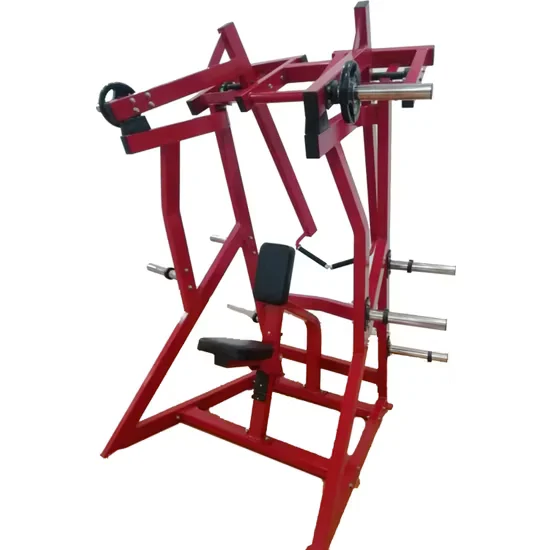
Plate Loaded Iso-Lateral Seated Row Machine, 1455×1476×2133mm, 135kg Net Weight — engineered with converging independent arm travel to target lats and rear delts while minimizing joint stress. Frame construction, welding method, and bearing specs require mill-cert verification before procurement. Every unit undergoes per-unit load testing with documented hold records, backed by ISO 9001 and CE compliance for commercial gym deployment.
// Spec Highlights
• Direct from Manufacturer · No Middlemen · Worldwide Shipping
01
// Material
Imported Solid Wood
Premium hardwood frames sourced for density and visual warmth.
02
// Hardware
Medical-Grade Silent
Whisper-quiet pulleys and springs for clinical environments.
03
// Customization
Appearance OEM
Color, upholstery, and branding tailored to your studio.
04
// Service
Layout Design
Free venue planning for studios and rehab institutions.
Every component is selected for longevity, performance, and aesthetic harmony - from imported hardwood frames to silent medical-grade accessories.
// Features
Mill-Traceable Steel — Frame tubes trace back to certified Q235 or Q345 coil origin, verified before the first cut on this iso-lateral row platform.
| Parameter | Value |
|---|---|
| Product Type | Plate Loaded Seated Row Machine |
| Loading Type | Plate loaded |
| Product Dimensions | 1455×1476×2133mm |
| Net Weight | 135kg |
| Color Options | Optional |
| Certification | ISO 9001, CE |
| Facility Type | Typical Use |
|---|---|
| Commercial gym strength floor | High-volume plate loaded row station for members exceeding selectorized stack limits |
| University strength and conditioning room | Independent arm convergence for bilateral strength assessment |
| Hotel fitness center | Compact footprint row unit integrated into premium interior design |
| Rehabilitation and performance center | Unilateral loading protocols for shoulder and thoracic recovery |
Steel gauge and weld continuity define survival, not marketing language.
Facilities purchase row stations branded as commercial-grade and discover within months that the mainframe flexes visibly when users load heavy plates on one side. The cause traces back to tube walls that measure thinner than what the brochure implied and spot welds at the pivot junctions that were never built to handle torsional stress cycles [NEED_CITE: EN 957 structural requirements for stationary training equipment]. A plate loaded machine absorbs asymmetric force every time a user loads unevenly, and the frame must resist that twist through material mass, not hopeful geometry. This is where procurement fails: the purchase order says "heavy-duty" and the factory ships thin-wall tubing that passes a static visual check but cannot survive dynamic fatigue.
This commercial plate loaded iso-lateral seated row machine targets the latissimus dorsi, rhomboids, and rear deltoids through independent arm travel that converges toward the torso midline. On a commercial strength floor, it pairs with plate loaded pulldowns and T-bar rows to cover the horizontal and vertical pulling planes without movement redundancy. The independent arm mechanism accommodates users with significant shoulder asymmetry or prior injury, allowing each side to track its own path. For facilities operating at high daily throughput, this station absorbs constant plate changes and heavy eccentric loading from users who prioritize back development.
Every rowing repetition sends a lateral torque spike through the pivot bearings and the welds connecting the swing arms to the main upright. Over thousands of daily cycles, these junctions accumulate micro-stress that exposes poor weld penetration and undersized bearing races [NEED_CITE: weld classification and fatigue performance in structural steel]. The contact points — seat pad, chest support, and grip handles — endure compressive fatigue and sweat-driven corrosion simultaneously. Powder coating at contact zones chips under repeated plate loading and unloading, exposing bare steel to humidity if the pre-treatment was inadequate. Sealed bearings resist the dust and perspiration ingress that causes open bushings to develop detectable play within the first year.
Frame tube wall thickness determines how much the main upright deflects when a user loads heavy plates on one side before releasing. A thicker gauge tube resists this torsional creep across years of asymmetric use, maintaining alignment at the pivot axis. Robotic MIG continuous welding produces uniform penetration along the entire seam, avoiding the cold-joint weak points that manual spot welding leaves at high-stress junctions. Sealed industrial bearings at the swing arm pivots prevent sweat and chalk dust from entering the race, which is the primary cause of premature play in plate loaded equipment. Industrial powder coating applied over sandblasted surfaces provides consistent adhesion, preventing the chipping at contact points that leads to cosmetic degradation and eventual corrosion.
Thin-wall tube frames on plate loaded rows develop visible deflection under repeated heavy loading, eventually causing the pivot axis to shift and the arm travel path to bind. Spot-welded joints at the swing arm connection crack along the heat-affected zone after months of torsional stress, creating a liability event on the gym floor [NEED_CITE: fatigue crack propagation in welded steel structures]. Non-sealed bushings at the pivot points require replacement within the first year of commercial use, generating maintenance labor costs and machine downtime. Low-density upholstery on the chest pad compresses permanently under daily use, forcing facilities to reupholster far earlier than projected. Insufficient powder coating thickness at plate-loading contact zones chips within months, exposing bare steel that rusts and degrades the equipment appearance.
The frame on this row station is built from steel traceable to the originating coil with mill certification, not sourced from unverified secondary suppliers. Robotic MIG welding produces continuous seams at every structural junction, verified through factory audit documentation. Every unit undergoes load testing before shipment with documented weight and hold duration, not sample-based quality control pulled from a production batch. The 200μm industrial powder coating is applied after full sandblast pre-treatment, protecting the frame against the humidity and perspiration environment of a commercial strength floor. Floor planning support provides CAD-based clearance calculations specific to this unit’s 1455×1476mm footprint, ensuring safe passage between adjacent stations [NEED_CITE: commercial fitness facility layout and safety clearance standards]. OEM private label customization extends to frame color and upholstery selection without compromising the underlying structural specification.
Provide your strength floor square footage and current equipment list to receive a 2D or 3D layout that positions this row station with verified clearance distances. Specify average daily user volume so the structural grade matches your operational intensity. Confirm the body size range of your primary user population to validate the adjustment range and pad positioning. State any custom requirements including frame color, logo placement, or upholstery material preference.
Q: How do I verify that the frame steel is genuinely commercial-grade rather than just labeled as such?
A: Request mill-certified documentation that traces the steel grade back to the coil of origin. Look for specific designations like Q235 or Q345 rather than generic terms. A verifiable certification includes the heat number, rolling date, and mechanical test results. Without this paperwork, the frame specification is a marketing claim with no structural guarantee behind it.
Q: Why does the welding method matter on a plate loaded row machine?
A: Robotic MIG continuous welding produces uniform penetration along the entire seam length, avoiding the incomplete fusion zones that manual spot welding creates at high-stress junctions. On a row station, the pivot arm connections endure repeated torsional loading. Spot welds at these junctions accumulate fatigue cracks along the heat-affected zone, while continuous welds distribute stress evenly across the full joint length.
Q: What causes bearings to develop play within the first year of commercial operation?
A: Open bushings and non-sealed bearing units allow chalk dust, perspiration, and cleaning solution residue to enter the race or contact surface. This contamination accelerates wear and creates detectable lateral play in the swing arm. Sealed industrial bearings prevent ingress entirely, maintaining tight pivot alignment through years of high-frequency use without requiring lubrication or replacement.
Q: How does powder coating thickness affect long-term equipment appearance in a commercial gym?
A: Thin powder coating at contact zones — where plates are loaded, where grips are grabbed, where feet press — chips under repeated mechanical impact. Once bare steel is exposed, humidity and sweat drive surface corrosion that spreads beneath adjacent coating. Industrial-grade coating applied at sufficient thickness over sandblasted surfaces resists this chipping and maintains structural protection across the equipment service life.
Q: What maintenance schedule should a commercial facility plan for a plate loaded row station?
A: Inspect pivot bearing seals and swing arm alignment quarterly. Check all fastener torque values on the mainframe and pivot connections at the same interval. Examine upholstery on the chest pad and seat for compression or cover splitting. Clean the powder coated frame with pH-neutral solutions to prevent sweat acid from degrading the finish over time.
Premium aesthetics meet quiet operation for boutique studio environments.
Medical-grade silence and precision for sports & postpartum recovery.
Furniture-grade craftsmanship for premium residential installations.
Compact premium setups for one-on-one and small-group training.
Aesthetic Pilates integration for hybrid wellness studio programming.
Multi-unit deployment with instructor-grade reliability for certification programs.
Tell us about your project. Our team will respond within 24 hours with pricing, customization options, and shipping details.
// Sales Director
William
+86 132 2531 1800
// Export Manager
Bella
+86 198 5412 8032
william@bickfit.com


