01 / Scenario
STUDIO
P
High-End Pilates Studios
Premium aesthetics meet quiet operation for boutique studio environments.
ISO
9001
CE
Certified
OEM
Available
10YR
Warranty
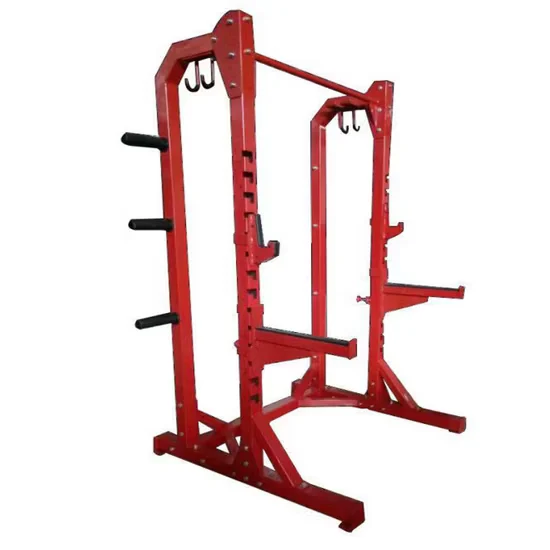
Half Rack Power Cage, 1434×1675×2296mm Frame, 152kg Net Weight — engineered with industrial steel tubing and robotic MIG continuous welding to eliminate spot-weld fatigue under heavy commercial loading. Available with OEM/ODM customization for color, logo, and accessory configurations to match your facility branding. Every unit undergoes individual load testing before shipment, backed by a 10-year frame warranty and free floor planning support for optimal spatial integration.
// Spec Highlights
• Direct from Manufacturer · No Middlemen · Worldwide Shipping
01
// Material
Imported Solid Wood
Premium hardwood frames sourced for density and visual warmth.
02
// Hardware
Medical-Grade Silent
Whisper-quiet pulleys and springs for clinical environments.
03
// Customization
Appearance OEM
Color, upholstery, and branding tailored to your studio.
04
// Service
Layout Design
Free venue planning for studios and rehab institutions.
Every component is selected for longevity, performance, and aesthetic harmony - from imported hardwood frames to silent medical-grade accessories.
// Features
11-Gauge Steel Frame with Mill Traceability — Every upright on this commercial half rack power cage gym machine uses Q345 steel with coil-level certification, ensuring structural consistency across the entire 1434×1675×2296mm footprint.
| Parameter | Value |
|---|---|
| Product Type | Half Rack |
| Frame Tube Size | 3×3 inch, 11-gauge |
| Steel Grade | Q345 industrial steel, mill-certified |
| Welding Type | Robotic MIG continuous weld |
| Product Dimensions | 1434×1675×2296mm |
| Net Weight | 152kg |
| Assembly State | Unfolded |
| Power Source | Manual |
| Certification | ISO 9001, CE |
| Material | Steel |
| Origin | Dezhou, Shandong, China |
| OEM/ODM | Available |
| Production Capacity | 500 PCS/Month |
| Facility Type | Typical Use |
|---|---|
| Commercial gym strength floor | Primary squat and press station for high-traffic zones |
| CrossFit box functional zone | Heavy barbell work and accessory movement platform |
| University strength and conditioning room | Team-based overload training with multiple athletes rotating |
| Hotel fitness center | Space-efficient heavy lifting without full enclosure footprint |
| Rehabilitation and performance center | Controlled barbell path for return-to-load protocols |
Continuous robotic MIG welding eliminates fatigue failure at joint intersections.
Many half racks on the market claim "commercial grade" framing without disclosing steel gauge or weld methodology. Under repeated 200kg+ loads, spot-welded joints develop micro-cracks within months — invisible during visual inspection but structurally compromised. This commercial half rack power cage gym machine addresses that failure mode through full-penetration continuous welds along every load-bearing seam, distributing stress across the entire joint rather than concentrating it at discrete points. The 11-gauge, 3×3 inch uprights resist lateral deflection that thinner tubes cannot contain, even when barbell loads shift off-center during heavy singles. [NEED_CITE: weld classification and fatigue performance in structural steel]
This commercial half rack power cage gym machine occupies the central barbell training plane — squat, press, rack pull, and pull-through variations — while requiring significantly less floor space than a full power cage. It complements plate-loaded machines and selectorized stations by handling the free-weight overload component of periodized programming. The open-front design allows spotters clear access and supports high-density floor planning where full enclosures would create circulation bottlenecks. Athletes ranging from 155cm to 195cm can work within the safety arm and J-cup adjustment range without reconfiguration between sets.
Commercial environments subject framing to three distinct stress categories: static overload during maximal lifts, impact loading from missed reps or dropped safeties, and eccentric force when barbell paths deviate laterally. The 152kg net weight of this unit provides inherent stability without requiring floor anchoring in most installations, though bolt-down options exist for seismic zones or elevated platforms. Weld seams at the upright-to-base junction experience the highest cyclic fatigue — continuous MIG deposition ensures no cold joints or incomplete fusion zones where cracks initiate. [NEED_CITE: fatigue life prediction methods for welded steel structures] Powder coating thickness and adhesion directly affect long-term appearance; sweat, chalk, and disinfectant chemicals attack thin finishes at contact points, exposing bare steel to corrosion within the first year of heavy use.
The 3×3 inch, 11-gauge tube specification determines the moment of inertia — the engineering property governing resistance to bending under load. Thinner walls or smaller cross-sections deflect visibly under 250kg+ squat loads, creating an unstable platform that compromises lifting mechanics. The Q345 steel grade provides higher yield strength than common Q235 alternatives, meaning the frame returns to true alignment after heavy sessions rather than accumulating permanent set. Robotic MIG welding maintains consistent heat input and travel speed, producing uniform weld beads with full fusion to base metal — manual welding introduces variability in penetration depth and porosity that weakens joints over time. Sealed industrial bearings at pivot points (where applicable for attached accessories) exclude chalk dust and moisture that degrade unsealed bushings, maintaining smooth adjustment without play development. The 200μm powder coating, applied after sandblast surface preparation, resists chipping at barbell contact zones and maintains appearance through years of commercial cleaning cycles.
Manufacturers reduce per-unit cost through multiple compromises that compound over the equipment’s service life. Thin-wall tubing (1.8mm or lighter) deflects under heavy loads, creating a perception of instability that erodes user confidence — and in extreme cases, permanent deformation requires full frame replacement. Spot welding speeds production but creates discrete stress concentrators; when these fail under load, the liability exposure far exceeds the initial savings. Unsealed bearings develop play within months of high-traffic use, requiring frequent adjustment or premature replacement. Low-density upholstery compresses permanently under daily commercial use, splitting at seam lines within six months and generating replacement costs that dwarf the original material savings. Thin powder coating chips at contact points, exposing bare steel to rust that spreads beneath adjacent finish, ultimately requiring complete refinishing or unit replacement. [NEED_CITE: total cost of ownership analysis for commercial fitness equipment]
Every commercial half rack power cage gym machine leaving the facility undergoes individual load testing — not batch sampling — verifying structural integrity before shipment. The 11-gauge Q345 steel frame traces back to mill certification for each coil, providing documentation that generic "commercial grade" claims cannot match. Robotic continuous MIG welding produces consistent, full-penetration seams across every unit, eliminating the variability inherent in manual fabrication. The 200μm industrial powder coating, applied after abrasive blast preparation, withstands commercial cleaning chemicals and physical contact without chipping or corrosion. A 10-year frame warranty reflects confidence in these manufacturing standards. For facility planners, 2D-3D CAD layout support ensures optimal equipment placement with appropriate safety clearances around this commercial half rack power cage gym machine — critical when integrating with adjacent stations in high-density strength floors. OEM customization covers frame color, logo placement, and accessory configuration to match facility branding without compromising structural specifications.
Provide your strength area dimensions and equipment list to receive a 2D-3D layout plan showing optimal placement of this commercial half rack power cage gym machine with appropriate safety zones. Specify daily user volume to confirm the structural grade matches your traffic intensity — this unit handles continuous commercial use, but extreme 24-hour facilities may require enhanced specifications. Indicate the athlete height range to verify J-cup and safety arm adjustment positions accommodate your population. Customization requests for frame color, facility logo, or specific accessory packages should be detailed upfront to ensure accurate quoting and production scheduling.
Q: How do I verify the steel specification matches what is advertised?
A: Request mill certification documents showing steel grade (Q345 for this unit), wall thickness (11-gauge equals approximately 3.0mm), and tube dimensions (3×3 inch). Reputable manufacturers provide coil-level traceability linking the certification to your specific production batch, not generic marketing claims of "commercial grade" without supporting documentation.
Q: What is the difference between robotic continuous welding and manual spot welding?
A: Robotic MIG welding produces uniform, full-penetration seams along the entire joint length with consistent heat input, eliminating cold joints and porosity. Manual spot welding creates discrete fusion points with variable quality between welds; under cyclic loading, these points become stress concentrators where fatigue cracks initiate. Continuous welding distributes stress across the full joint, significantly extending structural fatigue life in commercial environments.
Q: Can this half rack be customized for our facility branding?
A: OEM customization covers frame powder coating color to match your facility palette, logo application via screen printing or vinyl decals, and accessory configuration including J-cup types, safety arm styles, and attachment compatibility. Custom color and logo requests typically have minimum order quantities; specify requirements during initial inquiry to confirm feasibility and production timeline for your commercial half rack power cage gym machine order.
Q: What maintenance does the frame require in a commercial environment?
A: The 200μm powder coating resists chipping and corrosion from sweat and cleaning chemicals, requiring only periodic wiping with pH-neutral cleaners. Structural bolts should be checked and retightened after initial break-in and quarterly thereafter. Weld seams at high-stress junctions (upright-to-base connections) warrant visual inspection for any cracking indicators. Sealed bearings at adjustment points exclude contaminants, maintaining smooth operation without frequent lubrication needs typical of unsealed bushings.
Premium aesthetics meet quiet operation for boutique studio environments.
Medical-grade silence and precision for sports & postpartum recovery.
Furniture-grade craftsmanship for premium residential installations.
Compact premium setups for one-on-one and small-group training.
Aesthetic Pilates integration for hybrid wellness studio programming.
Multi-unit deployment with instructor-grade reliability for certification programs.
Tell us about your project. Our team will respond within 24 hours with pricing, customization options, and shipping details.
// Sales Director
William
+86 132 2531 1800
// Export Manager
Bella
+86 198 5412 8032
william@bickfit.com