01 / Scenario
STUDIO
P
High-End Pilates Studios
Premium aesthetics meet quiet operation for boutique studio environments.
ISO
9001
CE
Certified
OEM
Available
10YR
Warranty
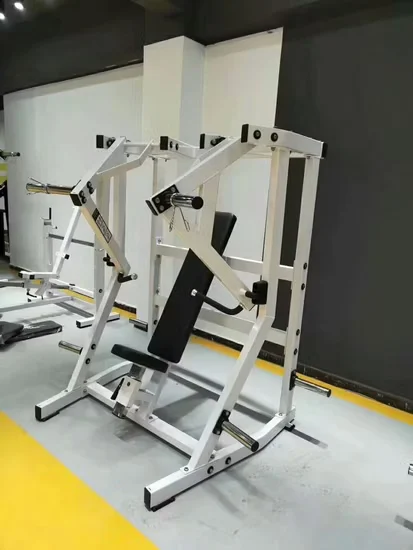
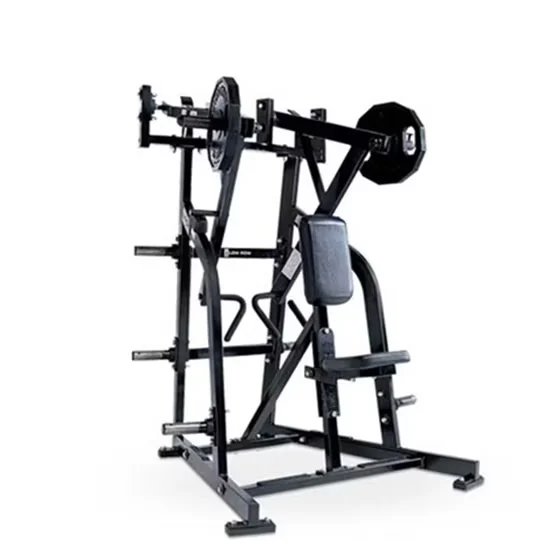
Commercial ISO-Lateral Low Row Machine, 1250×1056×1700mm, 139kg Net Weight — built on a steel frame with pin-select loading and ISO-lateral converging arm path for independent, symmetrical back training. Engineered with robotic MIG continuous welds and sealed bearing pivots to eliminate joint play and weld fatigue under high-volume commercial use. Every unit undergoes per-shipment load testing with mill-certified frame steel and 10-year frame warranty coverage.
// Spec Highlights
• Direct from Manufacturer · No Middlemen · Worldwide Shipping
01
// Material
Imported Solid Wood
Premium hardwood frames sourced for density and visual warmth.
02
// Hardware
Medical-Grade Silent
Whisper-quiet pulleys and springs for clinical environments.
03
// Customization
Appearance OEM
Color, upholstery, and branding tailored to your studio.
04
// Service
Layout Design
Free venue planning for studios and rehab institutions.
Every component is selected for longevity, performance, and aesthetic harmony - from imported hardwood frames to silent medical-grade accessories.
// Features
Robot-Welded Frame — Every joint on this selectorized row receives continuous robotic MIG passes, eliminating cold-joint cracks that spot welds develop under thousands of heavy pulls.
| Parameter | Value |
|---|---|
| Product Type | Selectorized Low Row Machine |
| Frame Material | Steel |
| Loading Type | Pin Select |
| Exercise Part | Back |
| Product Dimensions | 1250×1056×1700mm |
| Net Weight | 139kg |
| Main Frame Color | According to Customer Requirements |
| Cushion Color | According to Customer Requirements |
| Appliance | Community, Gymnasium |
| Fit Area | Professional Gym and Club |
| Certification | ISO 9001, CE |
| OEM/ODM | Acceptable |
| Origin | China |
| Facility Type | Typical Use |
|---|---|
| Commercial gym strength floor | Dedicated back training station for high-volume daily use |
| Hotel and resort fitness center | Durable, low-maintenance pulling machine for diverse guest users |
| University strength and conditioning room | Heavy-duty row station for team training programs |
| CrossFit box functional zone | Supplemental strength work for athletes during programmed accessory blocks |
A robotic MIG weld that runs uninterrupted along every tube junction prevents the micro-cracks that spot-welded frames develop under cyclic pulling loads.
I spent years inspecting selectorized row machines after six months on commercial strength floors. The pattern was always the same: spot-welded pivots on ISO-lateral arms showed hairline cracks along the heat-affected zone, especially where the user’s pulling force created torsional stress at the base of each arm post. A continuous weld bead distributes that torsional load along the full joint length instead of concentrating it at discrete contact points. For a commercial selectorized ISO-lateral low row machine seeing hundreds of loaded reps per day, this difference determines whether the frame holds up for years or starts accumulating repair tickets within the first season. [NEED_CITE: weld classification and fatigue performance in structural steel]
The ISO-lateral converging arm path allows each side to move independently along a natural pulling arc. This addresses asymmetrical strength imbalances and reduces the tendency for one latissimus dorsi to dominate the contraction. On a commercial gym strength floor, this machine typically anchors the seated row section alongside high-row and mid-row stations, giving members a complete horizontal pulling plane. The selectorized pin-load design suits facilities with high member turnover — users change load in seconds without plate handling. Body frames from lighter to heavier builds find usable range through the seat and pad geometry, and the commercial selectorized ISO-lateral low row machine fits into a footprint that leaves adequate walkway clearance when placed with standard spacing.
The dominant load on this frame is cyclic eccentric tension: every rep sends a deceleration impulse through the pulley anchors, cable attachment points, and the base of each ISO-lateral arm post. When a user releases the handles abruptly or controls the return with heavy weight, the shock propagates through the pivot bearings and into the weld seams at the frame junction. [NEED_CITE: EN 957 structural requirements for stationary training equipment] Unsealed bushings in comparable machines develop axial play within months as gym dust and sweat infiltrate the contact surfaces, and that play translates into lateral wobble that accelerates wear on the cable guide rods. The upholstery absorbs friction at the chest pad contact zone on every rep, and the powder coating at adjustment pin holes and seat rail interfaces faces repeated mechanical abrasion from weight selection pins and daily cleaning chemicals.
Frame steel gauge and tube cross-section set the deflection threshold — under a heavy loaded pull, thinner-walled tubing flexes visibly at the arm base and accumulates permanent deformation over thousands of cycles. Heavier gauge steel with a larger tube profile resists that flex and keeps the pivot geometry stable. Welding method directly affects fatigue life: continuous robotic MIG welds produce uniform penetration without the cold-joint gaps that manual spot welds leave between passes. Sealed industrial bearings maintain consistent pivot resistance because their enclosed races keep out abrasive particulates, whereas open bushings wear unevenly and develop radial play that the user feels as looseness in the handle path. Powder coating applied at adequate micron thickness with proper sandblast pre-treatment holds its adhesion at high-contact points — adjustment pins, seat tracks, and cable anchor bolts — preventing bare steel exposure that leads to oxidation in humid gym environments.
Thin-walled frames that appear rigid when new develop visible flex under heavy loads within the first year, and once a tube has yielded plastically, no amount of re-tightening restores the original pivot alignment. Spot-welded arm junctions that fail create a liability event — a crack mid-rep is a safety incident, not a maintenance ticket. Non-sealed bearings require scheduled disassembly and replacement because gym dust and sweat degrade unlubricated contact surfaces rapidly, turning a station into a downtime problem. Low-density upholstery foam compresses permanently within months of commercial use, forcing reupholstery cycles that take the machine offline. Coating that chips at adjustment points exposes bare steel to corrosion, and once oxidation begins under the powder layer, it spreads and requires full strip-and-recoat. [NEED_CITE: industrial powder coating adhesion and corrosion resistance under cyclic mechanical wear]
Mill-certified Q235/Q345 steel with traceable coil documentation means the frame tube specification on this selectorized row is verifiable, not a vague "commercial grade" label. Robotic MIG continuous welding on every structural joint eliminates the cold-joint weak points that cause arm-post failures under cyclic pulling loads. Every unit undergoes load testing before shipment rather than relying on sample-based batch inspection, so the machine arriving at your gym has been physically verified under stress. The 200μm industrial powder coating with sandblast pre-treatment maintains surface integrity at high-wear contact points through years of pin insertion, seat adjustment, and daily cleaning. A 10-year frame warranty backs the structural engineering claims, and 2D-3D CAD floor planning support ensures this commercial selectorized ISO-lateral low row machine integrates into your strength zone with correct safety clearances on all sides.
Provide your strength zone dimensions and existing equipment list to receive a 2D-3D layout showing this machine with correct clearance spacing. State your average daily member traffic so the structural grade can be matched to your volume. Confirm the body frame range of your target users to verify seat and pad adjustability covers the intended population. Specify any custom color requirements for frame and cushion to align with your facility branding.
Q: How do I tell a true commercial selectorized row from a light-commercial one?
A: Check the frame steel gauge and tube dimensions — true commercial machines use heavier gauge steel with documented mill certification. Examine the welding: continuous robotic MIG welds along every joint resist fatigue cracking, while spot welds show visible gaps between contact points. Confirm whether bearings are sealed industrial units or open bushings, as this determines long-term pivot smoothness and maintenance intervals.
Q: What does ISO-lateral movement mean for back training on this machine?
A: ISO-lateral design gives each pulling arm its own independent pivot axis, so the left and right sides move through separate converging arcs. This lets the stronger side complete its full range without being limited by the weaker side, addressing natural asymmetries. The converging path brings the handles inward toward the torso through the contraction, aligning the pull with natural latissimus dorsi fiber orientation.
Q: Why do sealed bearings matter on a high-traffic selectorized row?
A: Gym environments produce constant airborne dust, chalk residue, and sweat that infiltrate open bushing surfaces and accelerate wear. Sealed industrial bearings enclose the race and lubrication inside protective shields, preventing particulate ingress that causes axial and radial play. This keeps the pivot action consistent over years of use and eliminates the downtime associated with bearing disassembly and replacement.
Q: What powder coating process ensures durability on commercial strength equipment?
A: Durable commercial coating starts with sandblast pre-treatment to remove mill scale and create a mechanical anchor profile on the steel surface. The powder is then applied at sufficient micron thickness to resist chipping at high-contact points like weight pin holes, adjustment tracks, and cable anchor bolts. Adequate thickness prevents bare steel exposure from daily mechanical abrasion and cleaning chemical contact.
Q: How should I plan spacing around this machine in a commercial strength zone?
A: Factor in the machine footprint plus clearance for user entry, exit, and full range of motion without encroaching on adjacent walkways. Consider the path of the ISO-lateral arms at full extension to confirm no collision risk with neighboring stations. Providing a 2D floor plan allows precise placement with correct safety clearances and efficient use of available floor area.
Premium aesthetics meet quiet operation for boutique studio environments.
Medical-grade silence and precision for sports & postpartum recovery.
Furniture-grade craftsmanship for premium residential installations.
Compact premium setups for one-on-one and small-group training.
Aesthetic Pilates integration for hybrid wellness studio programming.
Multi-unit deployment with instructor-grade reliability for certification programs.
Tell us about your project. Our team will respond within 24 hours with pricing, customization options, and shipping details.
// Sales Director
William
+86 132 2531 1800
// Export Manager
Bella
+86 198 5412 8032
william@bickfit.com