01 / Scenario
STUDIO
P
High-End Pilates Studios
Premium aesthetics meet quiet operation for boutique studio environments.
ISO
9001
CE
Certified
OEM
Available
10YR
Warranty
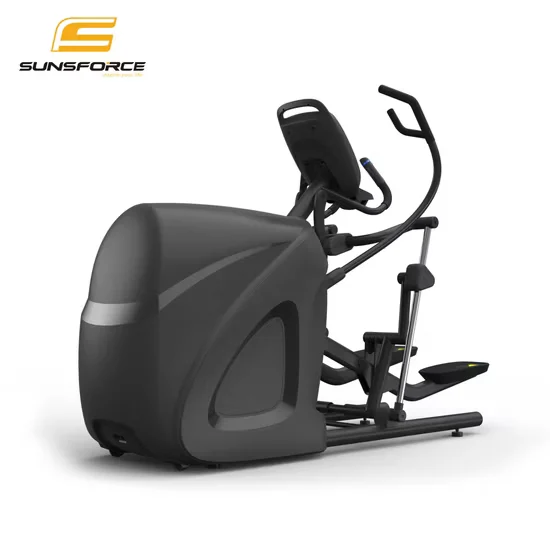
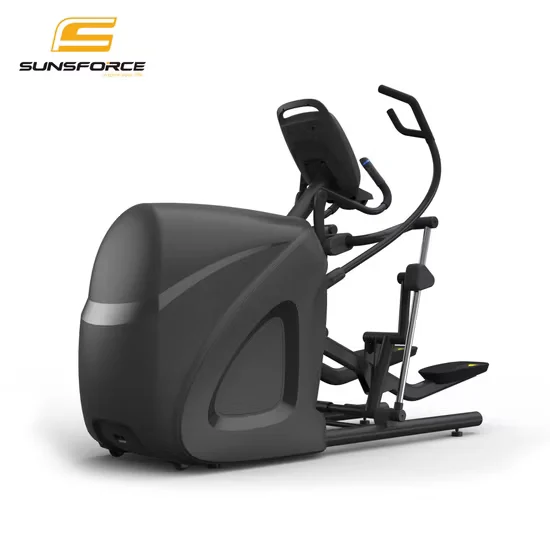
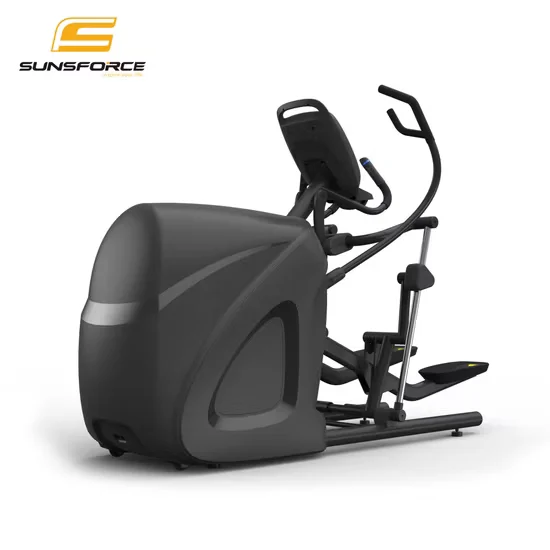
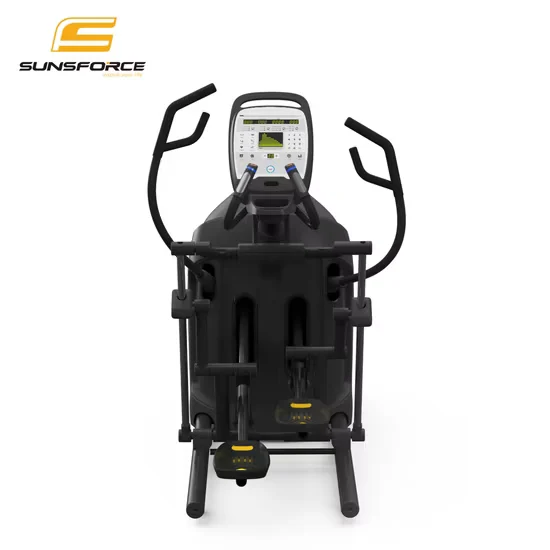
Commercial LED Elliptical Crosstrainer, 240kg Net Weight, 180kg Max User Capacity — 25-level magnetic resistance with 1-10 stride grade adjustment delivers smooth biomechanical motion, while the 230mm pedal center distance reduces lateral knee stress during extended cardio sessions. Every unit undergoes full load testing before shipment, backed by a 10-year frame warranty for high-traffic commercial environments.
// Spec Highlights
• Direct from Manufacturer · No Middlemen · Worldwide Shipping
01
// Material
Imported Solid Wood
Premium hardwood frames sourced for density and visual warmth.
02
// Hardware
Medical-Grade Silent
Whisper-quiet pulleys and springs for clinical environments.
03
// Customization
Appearance OEM
Color, upholstery, and branding tailored to your studio.
04
// Service
Layout Design
Free venue planning for studios and rehab institutions.
Every component is selected for longevity, performance, and aesthetic harmony - from imported hardwood frames to silent medical-grade accessories.
// Features
Precision-Balanced Flywheel System — 240kg net weight chassis suppresses resonance during sustained high-RPM pedaling on the commercial LED elliptical crosstrainer gym fitness equipment.
| Parameter | Value |
|---|---|
| Product Type | Commercial Elliptical Crosstrainer |
| Console Type | LED |
| Resistance Levels | 1–25 |
| Stride Grade | 1–10 |
| Step Depth Grade | 1–15 |
| Pedal Center Distance | 230mm |
| Max User Weight | 180kg |
| Net Weight | 240kg |
| Product Dimensions | 2120 × 790 × 1680mm |
| Certification | ISO, RoHS, CE, EN957 |
| Facility Type | Typical Use |
|---|---|
| Commercial gym cardio zone | High-traffic daily operation exceeding 8 continuous hours |
| Hotel and resort fitness center | Diverse guest fitness levels with wide resistance and stride range |
| University athletic facility | Pre-training warm-up and post-session recovery protocols |
| Corporate wellness gym | Mid-day usage peaks with varied user experience levels |
| Rehabilitation and performance center | Low-impact joint-friendly cardiovascular conditioning |
The commercial LED elliptical crosstrainer gym fitness equipment demands sealed bearing systems — open or semi-sealed bearings in high-traffic environments develop measurable play within months, introducing lateral wobble at the pedal-crank interface that accelerates wear across the entire drive train. [NEED_CITE: bearing seal classification and contamination resistance in fitness equipment]
Sealed industrial bearings paired with a 240kg chassis mass eliminate the vibration cascade that destroys lighter ellipticals.
Operators who have spec’d machines based on glossy brochure photos rather than bearing part numbers consistently report pedal arm oscillation, flywheel noise complaints, and console flickering — all traceable to structural degradation that began at the bearing seat. The 180kg user capacity on this unit is only meaningful if the bearing housing maintains concentricity under that load cycle after cycle.
This commercial LED elliptical crosstrainer gym fitness equipment occupies the low-impact cardiovascular training plane, complementing treadmills and air bikes on a mixed cardio floor. The 230mm pedal center distance aligns the stride path with natural hip-knee-ankle tracking, making it suitable for users across a broad anthropometric range. The 1–10 stride grade and 1–15 step depth grade allow facilities to serve both rehabilitation clients and high-output athletes from a single station without mechanical compromise.
Commercial cardio equipment endures a distinct stress profile: repetitive eccentric loading at the pedal-crank junction, sustained bearing rotation at variable RPM, and constant exposure to sweat corrosion and chemical cleaning agents. The 240kg net weight of this unit reflects frame mass that absorbs vibrational energy rather than transmitting it to the floor or the user’s joints. Weld joints at the main frame intersection experience cyclic fatigue from asymmetric pedaling forces — continuous weld profiles distribute these stresses along the full joint length rather than concentrating them at discrete spot-weld points. [NEED_CITE: weld classification and fatigue performance in structural steel]
The drive system — belt or chain — operates under continuous tension, and pulley alignment tolerance directly determines whether the resistance mechanism engages smoothly or develops irregular drag that users perceive as mechanical failure.
The 2120 × 790 × 1680mm footprint and 240kg mass signal a chassis engineered for stability rather than cost minimization. Heavier ellipticals resist the micro-movement that causes floor anchor loosening and user discomfort during high-cadence intervals. The 25-level resistance system provides granular load progression from rehabilitation-grade effort to high-power output, accommodating the full spectrum of facility users without requiring multiple machine variants.
The LED console delivers real-time feedback on cadence, distance, calories, and heart rate — critical data points for commercial environments where users expect immediate operational confirmation without the latency or failure modes associated with LCD panels in high-usage settings. The 1–10 stride grade adjustment mechanism must maintain structural rigidity at every position; adjustable components that introduce frame flex defeat the purpose of a heavy-duty chassis.
Lightweight ellipticals with thin-wall frame tubing deform visibly under repeated 180kg loading, creating pedal path deviation that users feel as instability long before they see it. Spot-welded joints at high-stress intersections crack under cyclic fatigue, creating safety liability that no amount of cosmetic powder coating can conceal. Non-sealed bearings allow sweat and cleaning chemical residue to penetrate the b*grinding noise that triggers maintenance calls. [NEED_CITE: EN 957 structural requirements for stationary training equipment]
Low-density upholstery compresses permanently within weeks of commercial use, exposing the substrate and creating hygiene concerns. Thin powder coatings chip at contact points — pedal edges, handlebar grips, adjustment levers — revealing bare steel that corrodes rapidly in humid gym environments.
Every commercial LED elliptical crosstrainer gym fitness equipment unit undergoes individual load testing before shipment, verifying structural integrity under simulated commercial conditions rather than relying on sample-based quality assurance. The manufacturing process uses Q235 and Q345 industrial steel with mill certification traceable to the original coil, and robotic MIG welding produces continuous weld lines without the cold joints and spot-weld weak points that characterize cost-reduced alternatives.
The 200μm scratch-resistant powder coating withstands daily contact with sweat, cleaning agents, and user impact at high-wear zones. The 10-year frame warranty reflects confidence in structural longevity that lightweight competitors cannot match. Two-dimensional and three-dimensional floor planning support ensures proper equipment spacing and safe traffic flow around each unit’s 2120 × 790 × 1680mm footprint.
Provide your cardio zone floor area and existing equipment inventory to receive a 2D-3D layout plan that optimizes traffic flow and electrical access for the commercial LED elliptical crosstrainer gym fitness equipment. Specify your expected daily usage hours and user volume to confirm the structural grade matches your operational demands. Indicate your target user anthropometric range to verify the 1–10 stride grade and 1–15 step depth adjustment covers your population. Custom color schemes, facility branding, and upholstery density options are available for multi-unit deployments.
Q: How do commercial-grade ellipticals differ structurally from light commercial or residential models?
A: Commercial ellipticals use heavier-gauge frame steel with continuous robotic weld joints rather than spot welds, sealed industrial bearings instead of open or semi-sealed units, and chassis mass exceeding 200kg to suppress vibration under sustained high-traffic use. The resistance mechanism, pedal-crank assembly, and drive system are all rated for 8+ hours of daily operation without performance degradation.
Q: What impact does pedal center distance have on joint mechanics during elliptical training?
A: A 230mm pedal center distance aligns the foot path with natural hip-knee-ankle tracking, reducing lateral shear forces at the knee joint compared to narrower or wider pedal configurations. This spacing accommodates the majority of adult users without requiring individual machine adjustments, making it suitable for high-traffic facilities serving diverse populations.
Q: How does LED console durability compare to LCD in commercial environments?
A: LED consoles maintain readability under varied lighting conditions and resist the pixel degradation and backlight failure common in LCD panels subjected to continuous commercial operation. The simpler electronic architecture of LED displays reduces failure points and extends service life in environments where equipment operates 8+ hours daily across multiple user sessions.
Q: What maintenance intervals apply to bearings and drive systems on commercial ellipticals?
A: Sealed industrial bearings require lubrication inspection quarterly under high-traffic conditions, with replacement only when measurable play develops at the pedal-crank junction. Drive belts or chains should be inspected monthly for tension and wear, with replacement scheduled based on operational hours rather than fixed calendar intervals to match actual usage intensity.
Q: How should multiple elliptical units be spaced on a commercial cardio floor?
A: Each unit requires minimum 600mm clearance on all sides for safe user access, emergency egress, and maintenance technician access. The 2120 × 790 × 1680mm footprint plus clearance zones determines total floor allocation per unit, and floor planning should account for electrical outlet placement, traffic flow patterns, and visual sightlines across the cardio zone.
Premium aesthetics meet quiet operation for boutique studio environments.
Medical-grade silence and precision for sports & postpartum recovery.
Furniture-grade craftsmanship for premium residential installations.
Compact premium setups for one-on-one and small-group training.
Aesthetic Pilates integration for hybrid wellness studio programming.
Multi-unit deployment with instructor-grade reliability for certification programs.
Tell us about your project. Our team will respond within 24 hours with pricing, customization options, and shipping details.
// Sales Director
William
+86 132 2531 1800
// Export Manager
Bella
+86 198 5412 8032
william@bickfit.com