
01 / Scenario
STUDIO
P
High-End Pilates Studios
Premium aesthetics meet quiet operation for boutique studio environments.
ISO
9001
CE
Certified
OEM
Available
10YR
Warranty
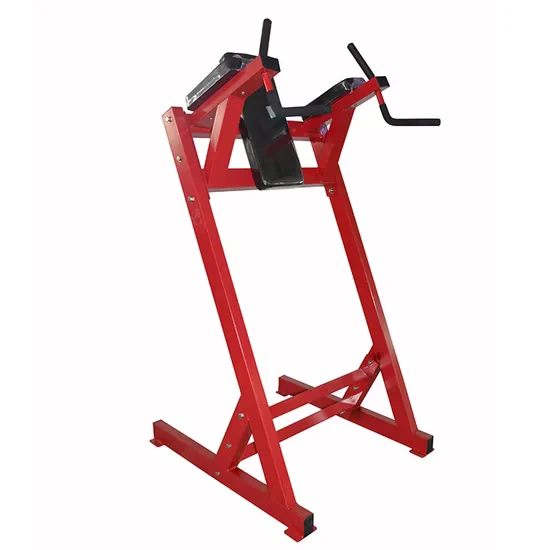
Commercial Leg Raise Machine, Selectorized Weight Stack, 72kg Net Weight — built with steel frame construction and sealed bearing pivot points engineered for repetitive commercial use. High-density upholstery resists splitting under daily traffic, while customizable frame and cushion colors support facility branding. Every unit undergoes load testing before shipment, backed by a 10-year frame warranty and factory-direct floor planning support.
// Spec Highlights
• Direct from Manufacturer · No Middlemen · Worldwide Shipping
01
// Material
Imported Solid Wood
Premium hardwood frames sourced for density and visual warmth.
02
// Hardware
Medical-Grade Silent
Whisper-quiet pulleys and springs for clinical environments.
03
// Customization
Appearance OEM
Color, upholstery, and branding tailored to your studio.
04
// Service
Layout Design
Free venue planning for studios and rehab institutions.
Every component is selected for longevity, performance, and aesthetic harmony - from imported hardwood frames to silent medical-grade accessories.
// Features
Mill-Traceable 11-Gauge Frame — Every tube in this selectorized abdominal trainer traces back to the Q235 steel coil certificate, eliminating guesswork about what is actually holding your athletes under load.
| Parameter | Value |
|---|---|
| Product Type | Selectorized Abdominal Trainer |
| Frame Steel Gauge | 11-gauge |
| Frame Tube Size | 1104 × 990 × 1730 mm |
| Steel Grade | Q235 / Q345 industrial steel, mill-certified |
| Welding Type | Robotic MIG, continuous weld lines |
| Loading Type | Selectorized / Weight Stack |
| Bearing Type | Sealed industrial bearings |
| Pulley System | Aircraft-cable pulley system |
| Upholstery | Standard or high-density options, replaceable |
| Powder Coating | 200 μm scratch-resistant, sandblast pre-treatment |
| Product Dimensions | 1104 × 990 × 1730 mm |
| Net Weight | 72 kg |
| Certification | ISO 9001, CE |
| Warranty | 10-year frame |
| Frame Color | Customizable to customer requirements |
| Cushion Color | Customizable to customer requirements |
| Facility Type | Typical Use |
|---|---|
| Commercial gym strength floor | Dedicated abdominal and core training station within free weight and selectorized zones |
| Hotel and resort fitness center | Low-maintenance core equipment for high-turnover guest use with minimal supervision |
| University strength and conditioning room | Core stabilization work integrated into athlete off-season and in-season programming |
| Rehabilitation and performance center | Controlled-range abdominal loading for return-to-play progressions under therapist guidance |
| Community fitness center | Durable selectorized core station suitable for unsupervised general membership use |
Sealed bearings at every pivot keep the movement path tight long after bushings would develop play.
On a selectorized abdominal trainer, the pivot axis carries the full eccentric load of the weight stack plus the user’s leg mass on every repetition. In high-traffic commercial gyms, that pivot sees hundreds of cycles per day. Unsealed bushings accumulate sweat residue and fine dust, developing lateral play that users feel as wobble mid-repetition. Once play appears, the guide rods begin binding under off-center loading and the stack drags instead of gliding [NEED_CITE: EN 957 structural requirements for stationary training equipment pivot point durability]. Sealed industrial bearings prevent contaminant ingress, maintaining a consistent pivot feel across the full range of motion without scheduled maintenance intervals.
The commercial leg raise machine selectorized abdominal trainer occupies the intersection of core isolation and hip flexor loading. It pairs naturally with rotary torso machines and cable-column functional stations to cover the sagittal and transverse planes in a single core training zone. The footprint fits within standard commercial spacing clearances, allowing back-to-back placement with a selectorized back extension or lateral flexion unit without violating safe passage requirements. The adjustable contact points accommodate users across a wide anthropometric range, which matters in facilities serving both recreational members and athletic populations where torso and femur length vary considerably.
Each repetition subjects the main frame to an eccentric load cycle as the weight stack descends under leg resistance, then reverses direction at peak contraction. Over a typical commercial gym operating day, a busy abdominal station accumulates fatigue cycles that expose every weld discontinuity and stress concentration. The highest stress points occur at the pivot bracket junction where the movement arm meets the upright, and at the weight stack guide rod mounting points where lateral forces transfer into the base frame [NEED_CITE: weld classification and fatigue performance in structural steel under cyclic loading]. The powder coating at contact edges faces abrasion from weight plates and cleaning chemicals, while upholstery at the back pad and hip contact points endures compression cycles that compress lower-density foams beyond recovery within months.
The 11-gauge frame tube provides the cross-sectional wall thickness necessary to resist deflection when a heavy user drives the movement arm through full range against maximum stack resistance. Thinner tubes deflect visibly at these load points, and repeated deflection accelerates fatigue cracking at weld toes. Robotic MIG continuous welding eliminates the cold-start discontinuities inherent in manual spot welding, where each arc restart introduces a potential crack initiation site [NEED_CITE: robotic MIG versus manual spot welding fatigue life comparison in structural tube assemblies]. Sealed bearings at the pivot prevent the progressive play that forces guide rod misalignment, which is the primary cause of weight stack binding on selectorized machines after extended use. The 200 μm powder coating applied over sandblast pre-treatment provides sufficient film thickness to withstand contact abrasion and chemical cleaners without exposing bare steel at high-wear edges.
Reducing frame wall thickness to cut material cost introduces deflection that users perceive as flex during loaded repetitions, and that deflection concentrates stress at every welded joint. Spot-welded pivot brackets pass initial visual inspection but develop micro-cracks under repeated eccentric loading, creating liability exposure when a bracket fails during use. Non-sealed bushings require periodic replacement as play develops, and the labor cost of pulling machines off the floor for bearing service accumulates quickly across a fleet of selectorized units [NEED_CITE: commercial gym equipment maintenance cost comparison sealed bearing versus bushing systems]. Low-density upholstery foam compresses permanently under daily use, and split covers expose foam that absorbs sweat and becomes a hygiene concern. Thin powder coating chips at cable contact points, and once bare steel is exposed, corrosion propagates under the adjacent coating.
The 11-gauge frame specification with Q235/Q345 mill certification means every tube is traceable to the coil it was cut from, so the steel grade is documented rather than claimed. Robotic MIG continuous welds are applied at every structural joint on this commercial leg raise machine selectorized abdominal trainer, producing consistent penetration depth without cold joints. Every unit undergoes load testing before crating, not sample-based testing where one unit per batch represents the rest. The 200 μm industrial powder coating over sandblast pre-treatment is the same specification used across our full selectorized line, chosen for abrasion resistance at contact points and chemical resistance to gym cleaning agents. The 10-year frame warranty covers structural integrity regardless of daily cycle count in commercial environments. For facility layout planning, 2D and 3D CAD files are available to position this station within core training zones while maintaining required safety clearances between adjacent equipment.
Provide your core training zone dimensions and existing equipment list to receive a 2D or 3D layout showing this selectorized abdominal trainer positioned with proper safety clearances. Specify your estimated daily user volume so the structural grade and upholstery density can be confirmed for your traffic level. Indicate the anthropometric range of your primary user population to verify the adjustment positions accommodate your members. Submit frame color, cushion color, and logo placement requirements for OEM customization options.
Q: How do you distinguish commercial-grade abdominal equipment from light-commercial units?
A: Commercial-grade selectorized abdominal trainers use 11-gauge steel frames with mill-certified material traceability, sealed industrial bearings at all pivot points, and continuous robotic MIG welding at structural joints. Light-commercial units typically specify thinner wall tubing, unsealed bushings that develop play under daily use, and spot welding that fails under high cycle counts. Request the steel specification sheet and bearing type documentation before purchasing.
Q: What frame specifications indicate durability for high-traffic abdominal stations?
A: Look for 11-gauge steel with documented grade certification rather than vague "commercial grade" claims. The welding should be continuous MIG along full joint lengths, not spot welds that create fatigue concentration points. Frame tube cross-section dimensions should be stated in millimeters. The manufacturer should provide load testing records for individual units rather than sample-based batch testing results.
Q: How should you evaluate pivot and bearing quality on selectorized core machines?
A: Sealed industrial bearings prevent sweat, dust, and cleaning chemicals from entering the pivot mechanism, maintaining smooth rotation without scheduled disassembly. Unsealed bushings require regular maintenance as contaminants cause progressive play and eventual binding on weight stack guide rods. Ask the manufacturer for bearing specifications including seal type and rated load capacity before accepting a unit for commercial installation.
Q: What upholstery materials withstand daily use in commercial gym environments?
A: High-density foam with a tear-resistant cover material withstands the compression cycles and cleaning chemical exposure typical of commercial abdominal stations. Standard-density foam compresses permanently within months of heavy use, and split covers absorb sweat creating hygiene issues. Confirm with the manufacturer that replacement cushions are available as spare parts to extend equipment service life without full reupholstery.
Q: How do you plan abdominal station placement within a commercial strength training facility?
A: Position selectorized abdominal trainers in dedicated core zones with sufficient clearance around the full pivot arm sweep path. Consider pairing with rotary torso and back extension units to cover all movement planes in a compact footprint. Use manufacturer-provided CAD files to verify spacing between stations meets safety requirements. Account for user traffic flow patterns during peak hours when multiple members cycle through the core training area.
Premium aesthetics meet quiet operation for boutique studio environments.
Medical-grade silence and precision for sports & postpartum recovery.
Furniture-grade craftsmanship for premium residential installations.
Compact premium setups for one-on-one and small-group training.
Aesthetic Pilates integration for hybrid wellness studio programming.
Multi-unit deployment with instructor-grade reliability for certification programs.
Tell us about your project. Our team will respond within 24 hours with pricing, customization options, and shipping details.
// Sales Director
William
+86 132 2531 1800
// Export Manager
Bella
+86 198 5412 8032
william@bickfit.com


