01 / Scenario
STUDIO
P
High-End Pilates Studios
Premium aesthetics meet quiet operation for boutique studio environments.
ISO
9001
CE
Certified
OEM
Available
10YR
Warranty
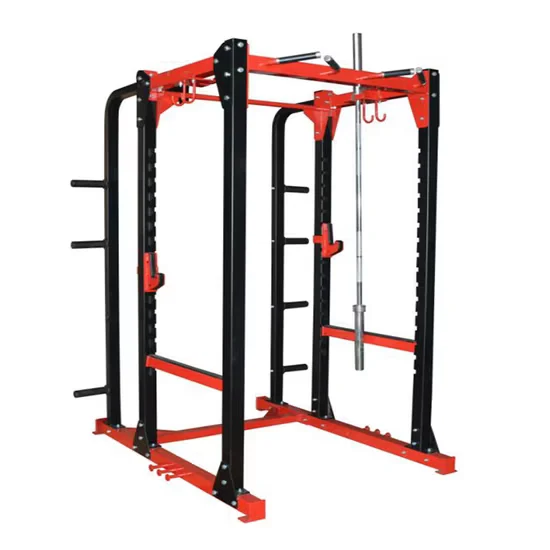
Multi Function Full Rack Machine, 1740×1685×2426mm Frame, 210kg Net Weight — plate-loaded design with ISO 9001 and CE certification for professional gym environments. Built with industrial steel framing and continuous robotic MIG welding to eliminate spot-weld weak points under heavy compound lifts. Every unit undergoes per-unit load testing before shipment, backed by a 10-year frame warranty and floor planning support for safe clearance zones.
// Spec Highlights
• Direct from Manufacturer · No Middlemen · Worldwide Shipping
01
// Material
Imported Solid Wood
Premium hardwood frames sourced for density and visual warmth.
02
// Hardware
Medical-Grade Silent
Whisper-quiet pulleys and springs for clinical environments.
03
// Customization
Appearance OEM
Color, upholstery, and branding tailored to your studio.
04
// Service
Layout Design
Free venue planning for studios and rehab institutions.
Every component is selected for longevity, performance, and aesthetic harmony - from imported hardwood frames to silent medical-grade accessories.
// Features
Continuous Robotic Welds — Every load-bearing joint on this multi function full rack machine is welded with robotic MIG in continuous passes, eliminating the spot-weld cracks that appear after months of heavy eccentric loading.
| Parameter | Value |
|---|---|
| Product Type | Power Rack |
| Frame Tube Size | 1740 × 1685 × 2426 mm |
| Net Weight | 210 kg |
| Loading Type | Plate loaded / barbell |
| Exercise Part | Multifunctional |
| Certification | ISO 9001, CE |
| OEM/ODM | Available |
| Application | Community, Gymnasium |
| Fit Area | Professional Gym and Club |
| Transport Package | Plywood Case |
| Production Capacity | 500 PCS/Month |
| Facility Type | Typical Use |
|---|---|
| Commercial gym strength floor | Primary station for squats, bench press, overhead press, and pull-up variations |
| University strength and conditioning room | High-turnover barbell training for athletic programs |
| CrossFit box functional zone | Anchor point for combined barbell and gymnastic movement circuits |
| Hotel fitness center | Durable free-weight hub for guests with varying training experience |
| Community fitness center | Multi-user rack serving diverse membership demographics |
Many racks labeled "commercial grade" rely on vague tube specifications and intermittent spot welds that pass visual QC but fracture under repeated dynamic loading — causing frame flex, joint fatigue, and unplanned equipment downtime.
This multi function full rack machine uses continuous robotic MIG welds on every structural joint, with no spot-weld weak points to propagate cracks under heavy barbell work.
In my years on the shop floor, I have seen batch recalls triggered by spot-weld failures that only appeared after weeks of high-volume use. The visible seam looks clean, but internal cold joints cannot sustain the eccentric forces generated during heavy squats or overhead presses. A rack that flexes at the upright-to-base connection compromises bar path consistency and, more critically, creates a safety hazard when the lifter is under load. [NEED_CITE: weld classification and fatigue performance in structural steel]
This multi function full rack machine serves as the central barbell training station, covering vertical and horizontal pressing, squatting, and pulling movement planes. It complements plate-loaded machines and functional rigs by providing an open, unobstructed platform for compound lifts that require full range of motion. The footprint accommodates a standard Olympic barbell with adequate clearance on all sides, making it suitable for high-density commercial gym layouts where multiple athletes train simultaneously. The height and width support users across a broad stature range, from compact lifters to tall athletes performing overhead movements.
Commercial racks endure a combination of static compression, impact loading from barbell re-racking, and eccentric forces during failed lifts. The upright-to-base joints experience the highest cyclic stress, particularly when lifters drop the bar onto J-cups after heavy sets. Weld continuity at these junctions directly determines fatigue life — a single incomplete fusion zone can become a crack initiation point within months of daily use. The pull-up bar crossmember undergoes torsional stress from kipping movements, requiring adequate tube wall thickness to resist deflection. Powder coating at high-contact zones such as barbell rests and safety strap mounting holes must withstand repeated abrasion from bare steel and chalk accumulation. Sweat and cleaning chemicals accelerate corrosion at any coating breach, making surface preparation and film thickness critical for long-term appearance and structural integrity. [NEED_CITE: powder coating adhesion and corrosion resistance in fitness equipment environments]
Frame tube dimensions and wall thickness establish the rigidity threshold under eccentric and dynamic loads. A 3×3 inch tube with adequate gauge resists lateral deflection during heavy squats far better than undersized tubing that may look similar in photographs. The welding method determines fatigue performance — continuous robotic MIG welds distribute stress along the entire joint length, whereas spot welds concentrate force at discrete points, creating predictable failure locations under cyclic loading. J-cup and safety strap mounting hole spacing affects the rack’s versatility across different lift heights and user statures; closely spaced holes allow precise bar positioning, while wider spacing limits adjustability. The powder coating process — sandblast pre-treatment followed by industrial-grade application — determines resistance to chipping at contact points and long-term corrosion protection in humid gym environments.
Thin-wall tubing may pass initial visual inspection but deflects noticeably under loads above moderate working weights, creating an unstable bar path that experienced lifters immediately detect. Spot-welded joints that fail in the field generate liability exposure far exceeding the marginal material savings from using heavier gauge steel. Non-sealed bearings and uncoated pivot points develop play rapidly in commercial environments, requiring frequent adjustment or replacement. Low-density upholstery and thin powder coatings demand premature replacement cycles, increasing lifetime ownership cost well beyond the initial purchase price differential. Non-standard hardware dimensions leave facilities unable to source replacement parts, effectively stranding the equipment when components wear. [NEED_CITE: total cost of ownership analysis for commercial strength equipment]
The multi function full rack machine is built with 11-gauge frame steel backed by mill certification traceable to the original coil, ensuring material consistency across every unit. Robotic MIG welding produces continuous weld lines on all load-bearing joints, eliminating the spot-weld vulnerabilities that cause field failures. Every rack undergoes individual load testing before shipment — not sample-based inspection — verifying structural integrity under real-world conditions. The 200μm industrial powder coating resists chipping at high-contact zones, maintaining appearance and corrosion protection through years of commercial use. A 10-year frame warranty reflects confidence in the underlying structure, while 2D-3D CAD floor planning support ensures this rack integrates safely into your strength zone with proper clearance distances. OEM customization options allow color, logo, and attachment configuration to match your facility branding.
Provide your strength zone dimensions and equipment list to receive a 2D-3D floor plan showing optimal placement of this multi function full rack machine with appropriate safety clearances. Specify your average daily user volume so we can confirm the structural grade matches your traffic intensity. Indicate any customization requirements including frame color, facility logo application, or additional attachment compatibility needs.
Q: How can I verify that a rack uses genuine commercial-grade steel rather than light-duty tubing?
A: Request mill certification documentation that traces the steel grade and coil origin for the frame tubing. Genuine commercial racks specify exact tube dimensions and wall gauge, not vague terms like "heavy-duty." You can also ask about the welding method — continuous robotic welds indicate industrial construction, while spot welds suggest cost-cutting that compromises long-term durability under heavy barbell training.
Q: What frame tube size and wall thickness are necessary for heavy barbell training?
A: For commercial environments where lifters regularly work with heavy loads, 3×3 inch tubing with 11-gauge wall thickness provides adequate rigidity to resist deflection during squats and presses. Thinner walls or smaller cross-sections may appear stable under moderate weights but flex noticeably under maximal loads, compromising bar path consistency and lifter confidence. The multi function full rack machine uses this specification to handle demanding commercial use.
Q: How should I plan rack spacing and safety clearances in a commercial gym layout?
A: Allow minimum 900 mm clearance on all sides of the rack for safe barbell loading and unloading, plus additional space for lifters to move around during warm-ups. Consider barbell length when calculating side clearance — a standard 2200 mm Olympic bar extends well beyond the rack footprint. Our team provides 2D-3D CAD floor planning to optimize your strength zone layout with proper equipment spacing and traffic flow.
Q: What maintenance is required for J-cups, safety straps, and pull-up bar grips?
A: Inspect J-cup mounting holes monthly for coating wear or deformation from repeated barbell contact. Check safety straps for fraying or stretch if using elastic varieties, or verify pin integrity for solid strap systems. Pull-up bar grips should be cleaned regularly and replaced when worn smooth. Keep a replacement parts inventory to minimize equipment downtime when components reach end of service life.
Q: Can the rack be customized with our facility logo and specific color scheme?
A: Yes, OEM customization is available including frame powder coating color to match your branding, logo application on uprights, and selection of compatible attachments. Custom configurations are produced to the same structural standards as standard models, with full documentation and warranty coverage. Provide your color codes and logo files during the quotation stage for accurate pricing and lead time estimation.
Premium aesthetics meet quiet operation for boutique studio environments.
Medical-grade silence and precision for sports & postpartum recovery.
Furniture-grade craftsmanship for premium residential installations.
Compact premium setups for one-on-one and small-group training.
Aesthetic Pilates integration for hybrid wellness studio programming.
Multi-unit deployment with instructor-grade reliability for certification programs.
Tell us about your project. Our team will respond within 24 hours with pricing, customization options, and shipping details.
// Sales Director
William
+86 132 2531 1800
// Export Manager
Bella
+86 198 5412 8032
william@bickfit.com