01 / Scenario
STUDIO
P
High-End Pilates Studios
Premium aesthetics meet quiet operation for boutique studio environments.

ISO
9001
CE
Certified
OEM
Available
10YR
Warranty
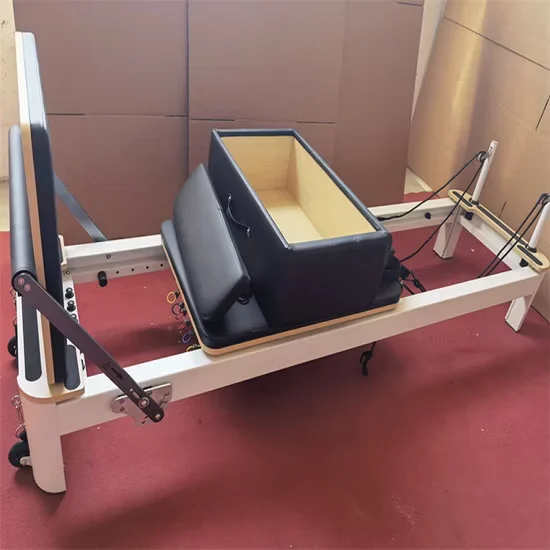
Pilates Trapeze Table Cadillac, 2520×760×2050mm, 150kg Net Weight — full-size apparatus with long box, jump board and platform, solid-color upholstery engineered for daily studio-level spring tension cycles. Custom logo branding available across frame and carriage components. Every unit undergoes load testing before shipment with 10-year frame warranty and floor planning support for multi-station studio layouts.
// Spec Highlights
• Direct from Manufacturer · No Middlemen · Worldwide Shipping
01
// Material
Imported Solid Wood
Premium hardwood frames sourced for density and visual warmth.
02
// Hardware
Medical-Grade Silent
Whisper-quiet pulleys and springs for clinical environments.
03
// Customization
Appearance OEM
Color, upholstery, and branding tailored to your studio.
04
// Service
Layout Design
Free venue planning for studios and rehab institutions.
Every component is selected for longevity, performance, and aesthetic harmony - from imported hardwood frames to silent medical-grade accessories.
// Features
Full-Size Frame Rigidity — 2520 mm steel chassis engineered for daily spring-loaded and dynamic studio use without frame sway.
| Parameter | Value |
|---|---|
| Product Type | Pilates Cadillac / Trapeze Table |
| Product Dimensions | 2520 × 760 × 2050 mm |
| Net Weight | 150 kg |
| Included Accessories | Long Box, Jump Board, Platform |
| Upholstery | Solid color, customizable |
| Logo | Customized branding available |
| Transport Package | Standard wood case |
| Warranty | 3 Years |
| Production Capacity | 80 pieces per month |
| Age Group | Adult |
| Gender | Unisex |
| Facility Type | Typical Use |
|---|---|
| Commercial Pilates studio | Group reformer and Cadillac sessions with daily client turnover |
| Rehabilitation and physical therapy center | Controlled movement therapy and post-injury recovery protocols |
| Boutique fitness studio | Premium one-on-one apparatus training and private sessions |
| Yoga and wellness facility | Flexibility, core stabilization, and decompression work |
| Personal training facility | Versatile full-body conditioning across diverse client profiles |
A Cadillac table lives under constant multidirectional pull — every spring, every strap, every jump board impact loads the joints differently than a vertical barbell press.
Most studio owners have seen it: a Pilates trapeze table that looks solid on day one starts developing frame sway within six months of daily group classes. The uprights shift slightly under repeated spring tension, the tower bar mounting points show hairline cracks, and the upholstery along the platform edges begins to split. The root cause is almost always the same — thin-gauge tubing held together with spot welds that pass a visual inspection but cannot survive thousands of asymmetric load cycles [NEED_CITE: weld classification and fatigue performance in structural steel]. When a jump board session sends dynamic force through the platform into the base frame, those spot-welded joints become the first failure points.
This commercial Pilates trapeze table Cadillac reformer addresses the full spectrum of supine, prone, seated, and standing movement patterns. The tower bar, push-through bar, roll-down bar, and spring attachments target spinal articulation, core stabilization, hip mobility, and upper-body conditioning across a single apparatus. In a studio layout, it pairs naturally with reformer stations for circuit-style group classes, giving instructors seamless transitions between equipment without sacrificing training variety. The 2520 mm length accommodates taller users comfortably, while the accessory mounting interfaces allow quick swaps between the long box, jump board, and platform to match each session’s focus.
A Pilates Cadillac in a busy studio endures a uniquely mixed loading profile. Static spring tension pulls on the tower uprights throughout every session, while jump board use introduces impact forces that travel through the platform into the base frame welds. Eccentric loading occurs whenever a client controls a heavy spring return, concentrating stress at the spring anchor points and bar mounting nodes. With multiple classes per day, these fatigue cycles accumulate far faster than on equipment used for isolated sets [NEED_CITE: EN 957 structural requirements for stationary training equipment]. The upholstery along contact edges faces repeated compression and friction, while the powder coating must resist sweat, cleaning chemicals, and the abrasion of spring hooks sliding against anchor points session after session.
Frame tube gauge and wall thickness define how much deflection the uprights tolerate before permanent deformation begins — a critical threshold when spring tension and body weight combine during advanced Cadillac exercises. Continuous MIG welding along every joint ensures that load transfers smoothly across the frame rather than concentrating at isolated weld points that can crack under fatigue. Spring anchor point reinforcement directly affects how well the table resists the repeated pull-and-release cycles that define Cadillac training; under-engineered anchors develop play and eventually compromise the spring system’s alignment. Upholstery foam density and cover material determine whether the platform surface holds up under daily client use or requires replacement within the first year of studio operation. Accessory mounting interfaces for the long box, jump board, and platform must fit precisely — any play in these connections creates noise, accelerates wear, and undermines client confidence during exercises that demand stability.
Downgrading to thinner tubing on a Cadillac table saves money upfront but introduces frame flex that clients feel immediately during spring-loaded exercises. Spot-welded joints may hold during factory testing, but the multidirectional loads of real studio use expose weak points within months — and a frame failure under a client in mid-exercise carries liability no studio owner wants to face. Non-commercial upholstery compresses and tears under daily use, forcing costly replacements and downtime. Low-grade spring hardware loses tension consistency over time, making exercises feel unpredictable and driving experienced clients to competitor studios. Non-standard accessory fittings mean replacement parts become difficult or impossible to source, turning a repairable machine into disposable equipment [NEED_CITE: commercial fitness equipment maintenance and lifecycle cost analysis].
The frame uses steel gauge specifications traceable to the mill coil, so you can verify what you are buying rather than trusting a vague "commercial grade" label. Robotic MIG welding produces continuous weld lines at every joint — no spot-weld shortcuts that crack under repetitive spring tension. Each unit undergoes load testing before shipment, confirming structural integrity under real stress rather than relying on sample-based quality checks. The powder coating is applied at industrial thickness to resist chipping at spring anchor contact points and withstand daily cleaning. A three-year warranty backs the frame and structural components. For studio owners planning a full equipment layout, 2D and 3D CAD floor planning support ensures proper clearance around each Cadillac station so instructors can move freely and clients can transition safely. Custom branding and upholstery color options let the equipment match your studio identity without compromising structural specifications. OEM private label programs are available for distributors and franchise operators building consistent brand environments across multiple locations.
Share your studio floor dimensions and current equipment list to receive a 2D or 3D layout showing how the Cadillac integrates with your existing apparatus and traffic flow. Specify your expected daily session volume so we can confirm the structural grade matches your usage intensity. Provide your target client profile — height range, experience level, and primary training goals — to verify accessory configuration. If custom upholstery color or logo placement is part of your studio branding, include those details early so production scheduling aligns with your opening or renovation timeline.
Q: How do I tell a commercial-grade Pilates Cadillac from a light-commercial or home model?
A: Check the frame tube gauge and wall thickness — commercial units use thicker steel to handle daily group class traffic without frame deflection. Examine the welding: continuous MIG welds along every joint indicate commercial intent, while spot welds suggest lighter-duty construction. Ask for spring system specifications including wire gauge and fatigue cycle data, and verify that upholstery foam is rated for high-frequency use rather than occasional home sessions.
Q: What frame steel gauge is appropriate for a busy Pilates studio running multiple classes daily?
A: Studios running three or more Cadillac sessions per day need frames built from substantial gauge steel with verifiable mill certification. The tubing must resist deflection under combined spring tension and dynamic jump board loading without developing sway over time. Request documentation of the welding method — continuous welds distribute stress more evenly than spot welds, which concentrate fatigue at isolated points and crack under repeated asymmetric loading.
Q: How does spring tension rating affect the user experience and long-term maintenance?
A: Springs that are too light make advanced exercises feel unsupported, while overly heavy springs compromise the controlled movement quality that defines Cadillac training. Inconsistent tension across springs on the same unit creates unpredictable resistance that experienced practitioners notice immediately. From a maintenance standpoint, springs should maintain rated tension over thousands of compression cycles — ask for fatigue test data and confirm that replacement springs matching the original specifications remain available through the supplier.
Q: What should I look for in accessory mounting to ensure the long box and jump board fit securely?
A: Play-free mounting depends on precise interface tolerances between each accessory and the main frame connection points. If the long box shifts or rattles during use, the mounting pins or slots are undersized for commercial repetition. Quick-swap capability matters in group class environments where instructors transition between accessories between sessions — the system should lock securely without requiring tools while remaining easy to release when needed.
Q: How often does upholstery need replacement on a commercially used Cadillac table?
A: In a studio running daily classes, standard-density upholstery typically shows compression and edge wear well before the frame or mechanical components require attention. Higher-density foam and reinforced cover materials extend the replacement cycle meaningfully. When sourcing, confirm that replacement upholstery panels are available as spare parts and can be installed without specialized tools, minimizing studio downtime between ordering and reinstallation.
Premium aesthetics meet quiet operation for boutique studio environments.
Medical-grade silence and precision for sports & postpartum recovery.
Furniture-grade craftsmanship for premium residential installations.
Compact premium setups for one-on-one and small-group training.
Aesthetic Pilates integration for hybrid wellness studio programming.
Multi-unit deployment with instructor-grade reliability for certification programs.
Tell us about your project. Our team will respond within 24 hours with pricing, customization options, and shipping details.
// Sales Director
William
+86 132 2531 1800
// Export Manager
Bella
+86 198 5412 8032
william@bickfit.com