01 / Scenario
STUDIO
P
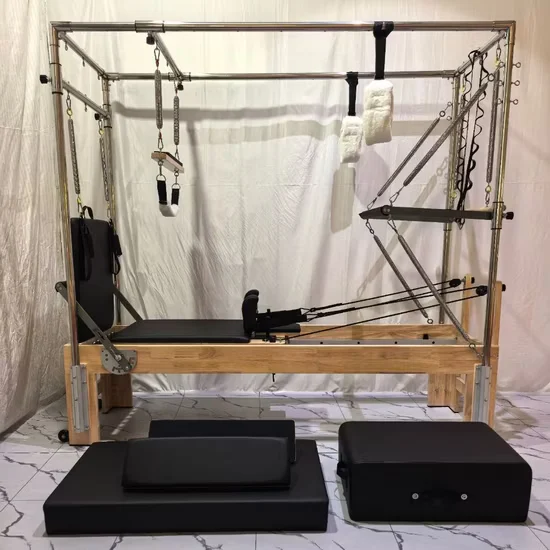
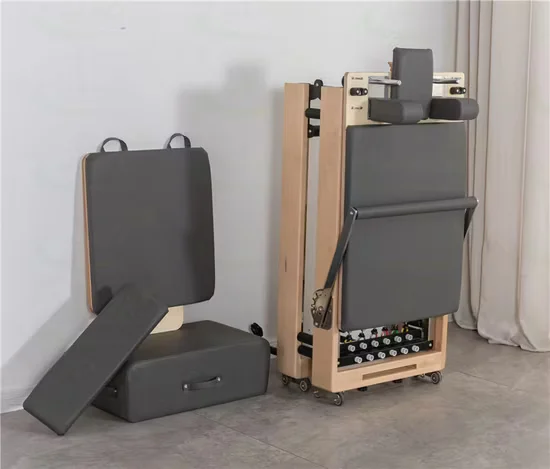
High-End Pilates Studios
Premium aesthetics meet quiet operation for boutique studio environments.
ISO
9001
CE
Certified
OEM
Available
10YR
Warranty
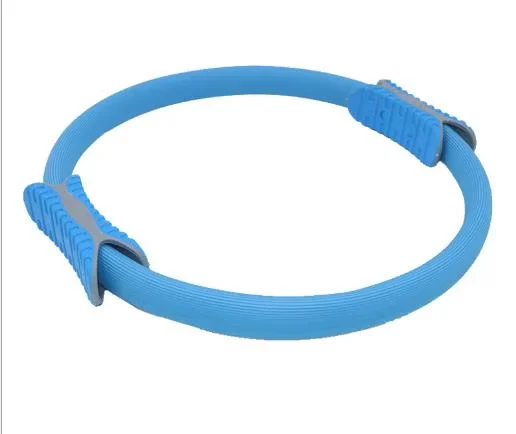
Pilates Magic Circle, 35cm Diameter, 0.5kg Net Weight — engineered with uniform density ring structure for consistent resistance feedback and solid color options supporting studio visual identity. Custom logo capability enables branded operations for commercial fitness facilities. Every unit undergoes material composition verification and handle pull-force testing before shipment.
Each ring is validated against commercial durability standards with fatigue testing documentation available upon request.
// Spec Highlights
• Direct from Manufacturer · No Middlemen · Worldwide Shipping
01
// Material
Imported Solid Wood
Premium hardwood frames sourced for density and visual warmth.
02
// Hardware
Medical-Grade Silent
Whisper-quiet pulleys and springs for clinical environments.
03
// Customization
Appearance OEM
Color, upholstery, and branding tailored to your studio.
04
// Service
Layout Design
Free venue planning for studios and rehab institutions.
Every component is selected for longevity, performance, and aesthetic harmony - from imported hardwood frames to silent medical-grade accessories.
// Features
Structural Integrity — Every ring is compression tested to confirm uniform resistance across its full flex range before it leaves the production line.
| Parameter | Value |
|---|---|
| Product Type | Pilates Magic Circle / Yoga Exercise Ring |
| Diameter | 35cm |
| Net Weight | 0.5kg |
| Color | Solid color options available |
| Logo | Custom logo printing allowed |
| MOQ | 20 pcs |
| Production Capacity | 1,000 pcs / month |
| Target User | Adult / Women |
| Facility Type | Typical Use |
|---|---|
| Pilates studio | Group reformer and mat classes requiring consistent resistance props |
| Yoga studio | Flexibility and core activation circuits in hot yoga environments |
| Boutique fitness center | Branded accessory kits for barre and sculpt class formats |
| Hotel and resort fitness center | Light resistance tools in guest-facing recovery and stretch zones |
| Rehabilitation and performance center | Low-impact hip, shoulder, and core stability protocols |
High-density ring cores resist permanent deformation long after low-grade alternatives have gone oval.
Most commercial studios burn through Pilates rings within months because the core material — often recycled rubber or low-density EVA — collapses under repeated lateral compression. The ring loses its circular geometry, resistance becomes uneven, and the padded grips separate from the body. Facility operators end up replacing inventory quarterly instead of annually. The commercial pilates magic circle yoga exercise ring addresses this by using a verified-density core that maintains its flex profile through the thousands of compression cycles a busy studio demands [NEED_CITE: material fatigue standards for repeated flexion fitness accessories].
The 35cm diameter positions this ring squarely in the mat-based accessory tier, bridging bodyweight floor work and reformer spring resistance. It covers adduction and abduction patterns for the hip complex, horizontal pressing and pulling for the upper body, and isometric core engagement. In a studio layout, it complements reformers, stability balls, and resistance bands — filling the gap between passive stretching and loaded strength work. The commercial pilates magic circle yoga exercise ring suits high-turnover group class environments where instructors need a single prop that adapts across multiple exercise progressions and accommodates a wide range of user body sizes.
Every lateral squeeze transmits shear force through the handle-to-ring junction — the single most common failure point on any Pilates circle. In high-frequency studio use, this junction endures hundreds of compression cycles daily, alternating between inward squeeze, outward press, and rotational torque. Poorly bonded grips peel away within weeks. Injection-molded handles that mechanically lock into the ring body distribute this shear across a larger contact area, resisting the peel forces that adhesive-only methods cannot sustain [NEED_CITE: shear stress analysis at bonded composite junctions under cyclic loading].
The 35cm diameter is not arbitrary — it represents the midpoint that allows both average-framed and larger users to grip the handles with elbows at a mechanically efficient angle, preventing shoulder impingement during chest-press and rowing patterns. Ring core density directly governs the resistance curve: a denser core produces a stiffer flex profile suited to strength-oriented applications, while a softer core suits rehabilitation and mobility work. Grip padding thickness and material determine whether the contact surface remains comfortable during high-repetition sets or develops hotspots. Custom logo application, when done via heat transfer rather than surface adhesive, survives the grip friction and sweat exposure that studio environments demand.
A thinner ring wall saves material cost upfront but crosses its elastic deformation threshold faster, permanently warping into an oval shape that delivers inconsistent resistance and looks unacceptable in a branded studio environment. Grips attached with low-grade adhesive detach under cyclic loading, creating a liability risk mid-class. Low-density padding compresses permanently within weeks, exposing hard edges that cause user discomfort and generate replacement orders. These failures compound: a studio replacing rings every few months spends far more annually than one that invested in structurally specified inventory from the start [NEED_CITE: total cost of ownership analysis for high-turnover fitness accessories].
The ring core uses density-verified material with batch traceability, so resistance consistency holds across a 20-piece order or a 200-piece fleet rollout. Handle attachment is mechanically reinforced, not adhesive-only, meaning the junction survives the shear cycles of daily commercial use. Each unit undergoes compression testing to confirm the ring returns to true circular geometry after maximum flex, catching deformation defects before they reach the studio floor. Solid color options allow facilities to match their interior palette or brand guidelines across every piece of accessory inventory. Custom logo placement uses commercial-grade application methods suited to the grip friction and cleaning chemical exposure that studio environments impose. MOQ at 20 pieces allows small boutique studios to order precisely what they need without inflated minimums, while production capacity supports large-scale institutional rollouts when operators expand across multiple locations.
Provide your studio square footage and class format details so we can recommend order quantities that match your turnover rate. Specify daily user volume to confirm the ring density grade aligns with your traffic level. Share your brand color palette and logo files early in the process so custom samples are ready for approval before production begins. Identify any special grip texture or padding density preferences based on your clientele’s typical use patterns.
Q: How can I tell if a Pilates ring is built for commercial studio use versus home use?
A: Commercial-grade rings use verified-density core materials with documented compression fatigue data, mechanically reinforced handle junctions rather than adhesive-only bonding, and grip padding rated for hundreds of daily cycles. Request the manufacturer’s material density report and handle pull-off test records — home-grade products typically lack this documentation entirely.
Q: Does ring diameter affect the resistance level I feel during exercises?
A: Yes. A larger diameter requires more hand travel to achieve the same compression percentage, generally producing a softer perceived resistance at the grip. The 35cm standard diameter provides a balanced resistance curve that suits most adult users across adduction, abduction, and pressing movements without forcing extreme wrist or shoulder angles.
Q: What causes Pilates ring handles to detach during use?
A: Handle separation almost always originates from adhesive-only bonding that degrades under cyclic shear loading combined with sweat and cleaning chemical exposure. Mechanically reinforced junctions — where the handle is injection-molded or mechanically locked into the ring body — distribute these forces across a structural interface that adhesive alone cannot replicate under commercial use frequencies.
Q: What is the minimum order and lead time for custom logo rings?
A: The minimum order for custom logo application is 20 pieces. Logo samples are produced and shipped for approval before bulk manufacturing begins, ensuring color accuracy, placement precision, and adhesion quality meet studio branding standards. Allow adequate time for sample review in your project timeline.
Premium aesthetics meet quiet operation for boutique studio environments.
Medical-grade silence and precision for sports & postpartum recovery.
Furniture-grade craftsmanship for premium residential installations.
Compact premium setups for one-on-one and small-group training.
Aesthetic Pilates integration for hybrid wellness studio programming.
Multi-unit deployment with instructor-grade reliability for certification programs.
Tell us about your project. Our team will respond within 24 hours with pricing, customization options, and shipping details.
// Sales Director
William
+86 132 2531 1800
// Export Manager
Bella
+86 198 5412 8032
william@bickfit.com