01 / Scenario
STUDIO
P
High-End Pilates Studios
Premium aesthetics meet quiet operation for boutique studio environments.
ISO
9001
CE
Certified
OEM
Available
10YR
Warranty
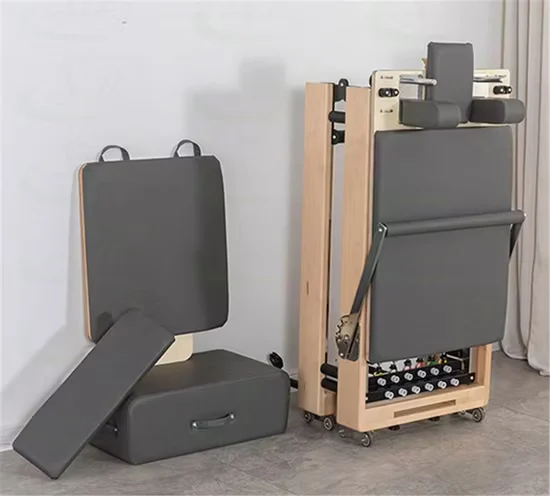
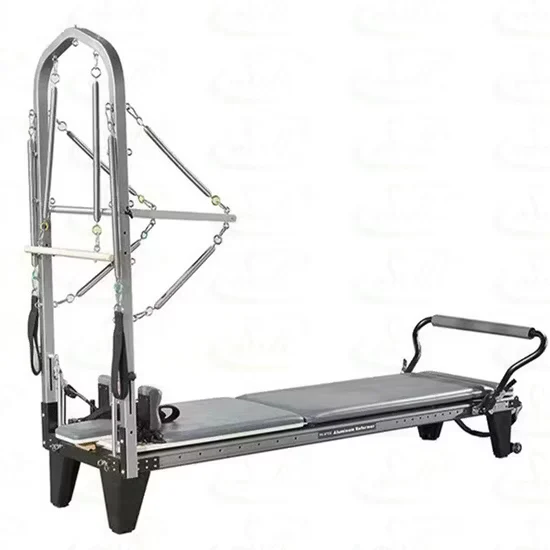
Commercial Pilates Reformer Half Tower, 2390×900×1960mm, 120kg Net Weight — engineered for back-to-back studio classes with reinforced carriage rails and sealed pulley systems ensuring smooth resistance delivery. Includes long box, jump board, and platform for modular training configurations. Every unit undergoes structural load testing before shipment, backed by a 3-year warranty covering frame and wearable components.
// Spec Highlights
• Direct from Manufacturer · No Middlemen · Worldwide Shipping
01
// Material
Imported Solid Wood
Premium hardwood frames sourced for density and visual warmth.
02
// Hardware
Medical-Grade Silent
Whisper-quiet pulleys and springs for clinical environments.
03
// Customization
Appearance OEM
Color, upholstery, and branding tailored to your studio.
04
// Service
Layout Design
Free venue planning for studios and rehab institutions.
Every component is selected for longevity, performance, and aesthetic harmony - from imported hardwood frames to silent medical-grade accessories.
// Features
Mill-Certified Steel — Every frame tube traces back to its coil origin with verifiable Q235/Q345 grade documentation, eliminating guesswork on material integrity for studio buyers.
| Parameter | Value |
|---|---|
| Product Type | Pilates Reformer Half Tower |
| Model NO. | SRY-11 |
| Product Dimensions | 2390 × 900 × 1960 mm |
| Net Weight | 120 kg |
| Color | Black (custom color available) |
| Accessory | Long Box / Jump Board / Platform |
| Warranty | 3 Years |
| Logo | Customized Is Allowed |
| Age Group | Adult |
| Gender | Unisex |
| Transport Package | Standard Wood Case |
| Facility Type | Typical Use |
|---|---|
| Pilates studio | Group and private reformer sessions across daily class schedules |
| Commercial fitness studio | Hybrid strength-and-movement programming with reformer integration |
| Rehabilitation and conditioning center | Low-impact recovery protocols and post-injury movement retraining |
| Boutique yoga and movement facility | Complementary resistance work alongside mat-based class formats |
Studios that cycle six or more classes daily expose carriage rails and spring anchors to cumulative stress that thin-gauge frames cannot absorb.
I have seen reformers come back to the shop with cracked welds at the trapeze suspension point — not because the welder did poor work, but because the aluminum tube underneath was too thin to handle repeated off-axis loading. When a studio owner swaps steel for lighter-gauge material to cut cost, the frame flexes under carriage travel. That flex concentrates stress at every joint, and within months hairline cracks appear where the tower upright meets the rail platform. [NEED_CITE: EN 957 structural requirements for stationary training equipment] The commercial pilates reformer half tower must absorb both the static load of the user on the carriage and the dynamic pull of springs anchored to the tower — a dual-force environment where steel grade and tube thickness are not negotiable.
The SRY-11 covers sagittal-plane movement patterns — spring-resisted leg presses, arm pulls, and spinal articulation sequences — while the half tower adds upright kneeling and seated work that a standard reformer alone cannot support. In a studio with six to ten stations, this unit pairs with mat zones and small apparatus (chairs, barrels) to give instructors programming range without requiring a full tower wall. The commercial pilates reformer half tower fits facilities that serve mixed-ability clientele, from post-rehab clients to advanced movers, because spring tension and accessory swapping (long box, jump board, platform) adjust the intensity without changing equipment.
Carriage rails endure repeated lateral and longitudinal loading every time a user transitions between supine, prone, and seated positions. The tower upright bears eccentric pull from springs at multiple anchor heights, creating bending moments that concentrate at the base plate. In studios running eight or more sessions daily, these load cycles accumulate quickly — pulley cables experience friction fatigue, spring hooks see repeated engagement stress, and the upholstery at contact points compresses thousands of times per week. [NEED_CITE: weld classification and fatigue performance in structural steel] Sweat exposure and cleaning agents add chemical wear to any coating on contact surfaces, meaning powder coat thickness and cure quality directly affect whether the frame holds up cosmetically as well as structurally.
Frame dimensions at 2390 × 900 × 1960 mm define the footprint a studio must allocate per station, including clearance for the long box extension and instructor walkway on each side. Net weight at 120 kg signals the mass of steel in the structure — lighter units in this category often indicate thinner tube walls or fewer reinforcing gussets at load-bearing joints. The accessory package (long box, jump board, platform) determines how many exercise variations a single station can deliver, which affects how many total units a studio needs to purchase for a full class format. A three-year warranty on a unit of this size suggests confidence in spring anchor integrity and carriage rail alignment over extended use, but buyers should confirm what components the warranty covers beyond the frame itself.
Thin-wall tubing bends under loaded carriage travel, throwing rail alignment off and causing the carriage to track unevenly — instructors notice clients complaining of asymmetrical resistance within weeks. Spot-welded joints at spring anchor points may pass a visual inspection on the showroom floor but fail under the repeated off-axis pull that a jump board generates. Unsealed pulley mechanisms accumulate dust and lint from studio environments, developing play that makes cable-driven exercises feel inconsistent. Low-density upholstery compresses permanently under daily use, leaving visible depressions and forcing studios to reupholster or replace pads on a cycle that disrupts scheduling. [NEED_CITE: bearing seal performance under particulate contamination in fitness environments] Non-standard hardware and proprietary spring fittings mean replacement parts are unavailable once the original supplier moves on, turning a minor maintenance issue into a full equipment swap.
Steel sourcing uses Q235 and Q345 industrial grade with mill certification traceable to the coil — no mystery tubing from unverified suppliers. Robotic MIG welding delivers continuous weld lines at every structural joint, so the tower upright and rail base share load without weak points at the seams. Every unit undergoes load testing before it ships, not sample-based inspection that leaves untested frames in the batch. The 200 μm industrial powder coat resists chipping at contact points where carriage stops and accessory brackets engage. Floor layout planning with 2D and 3D CAD support helps studio operators position each reformer with safe instructor clearance and client passage space — for a unit at 2390 × 900 mm, that means mapping at least 600 mm walkway on the open side and additional depth for the long box when deployed. OEM customization covers color, logo placement, and accessory configuration to match studio branding without altering the structural specification.
Provide your studio floor area and target station count so we can generate a 2D or 3D layout showing safe spacing around each unit. Specify average daily class volume to confirm the structural grade matches your usage intensity. Indicate whether your clientele skews toward rehabilitation clients or advanced movers so we can verify spring tension range and accessory configuration. Submit color, logo, and upholstery preferences early in the order process to align production scheduling with your studio opening or renovation timeline.
Q: How do I tell a commercial-grade reformer half tower from a light-commercial one?
A: Check the frame steel specification — commercial units cite gauge thickness and steel grade with mill traceability, while light-commercial frames often describe material only as "heavy duty" without verifiable data. Inspect weld continuity at load-bearing joints; continuous MIG welds signal structural intent, whereas spot welds suggest cost reduction. Request per-unit load test records rather than accepting sample-based quality claims.
Q: What does frame tube gauge mean for long-term durability in a studio?
A: Thicker gauge steel resists bending under the combined static and dynamic loads of carriage travel and spring tension. When the frame flexes, stress concentrates at joints and rail mounting points, accelerating fatigue failure. A rigid frame keeps the carriage tracking true and maintains alignment between spring anchors and pulley attachment points over years of daily use.
Q: How should I evaluate spring and pulley quality for high-traffic use?
A: Ask for the spring origin, load rating, and cycle-test data from the supplier. Sealed pulleys resist dust and lint infiltration common in studio environments, maintaining smooth cable travel and consistent resistance delivery. Confirm that replacement springs and cables are stocked as standard parts rather than custom-order items with long lead times.
Q: What should I confirm about upholstery before placing a bulk order?
A: Request upholstery density specifications and covering material grade — commercial studios need high-density foam that resists permanent compression under repeated use. Check whether pad covers are removable and replaceable without specialized tools. Confirm stitching method at stress points, as single-stitch seams split faster than reinforced or double-stitched construction.
Q: How do I plan floor layout around multiple reformer half tower stations?
A: Map each unit footprint including accessory extension depth (long box, jump board deployment) and add minimum instructor walkway clearance on the open side. Account for storage zones for accessories when not mounted. Request a 2D or 3D CAD layout from the manufacturer to verify that spacing supports safe client movement and class workflow without creating dead zones or congestion points.
Premium aesthetics meet quiet operation for boutique studio environments.
Medical-grade silence and precision for sports & postpartum recovery.
Furniture-grade craftsmanship for premium residential installations.
Compact premium setups for one-on-one and small-group training.
Aesthetic Pilates integration for hybrid wellness studio programming.
Multi-unit deployment with instructor-grade reliability for certification programs.
Tell us about your project. Our team will respond within 24 hours with pricing, customization options, and shipping details.
// Sales Director
William
+86 132 2531 1800
// Export Manager
Bella
+86 198 5412 8032
william@bickfit.com