
01 / Scenario
STUDIO
P
High-End Pilates Studios
Premium aesthetics meet quiet operation for boutique studio environments.
ISO
9001
CE
Certified
OEM
Available
10YR
Warranty
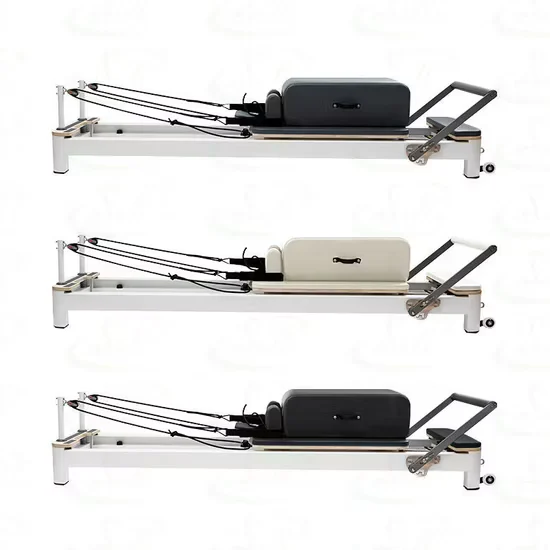
Commercial Pilates Reformer, White Aluminum Alloy Frame, 2570×730×270mm — engineered with corrosion-resistant alloy construction and sealed carriage bearings for smooth, noise-free motion under high-repetition studio use; includes long box, jump board, and platform for full movement progression without additional floor equipment. Every unit undergoes load testing and 3-year warranty coverage for frame, carriage, and springs.
// Spec Highlights
• Direct from Manufacturer · No Middlemen · Worldwide Shipping
01
// Material
Imported Solid Wood
Premium hardwood frames sourced for density and visual warmth.
02
// Hardware
Medical-Grade Silent
Whisper-quiet pulleys and springs for clinical environments.
03
// Customization
Appearance OEM
Color, upholstery, and branding tailored to your studio.
04
// Service
Layout Design
Free venue planning for studios and rehab institutions.
Every component is selected for longevity, performance, and aesthetic harmony - from imported hardwood frames to silent medical-grade accessories.
// Features
Mill-Certified Frame Rigidity — White aluminum alloy extrusion maintains rail straightness under repeated sliding carriage loads in high-traffic studio environments.
| Parameter | Value |
|---|---|
| Product Type | Pilates Reformer |
| Product Dimensions | 2570×730×270mm |
| Net Weight | 90kgs |
| Frame Material | Aluminum Alloy |
| Color | White |
| Accessory | Long Box / Jump Board / Platform |
| Warranty | 3 Years |
| Production Capacity | 80 Pieces/Month |
| Facility Type | Typical Use |
|---|---|
| Commercial Pilates studio | Group reformer classes with high daily carriage cycling and frequent surface sanitization |
| Boutique wellness center | Premium interior integration with full accessory ecosystem for varied client programming |
| Hotel fitness suite | Low-maintenance aesthetic durability for guest use with minimal technician visits |
| Home training environment | Compact footprint with complete attachment range for progressive single-user routines |
A commercial Pilates reformer white aluminum alloy frame holds straightness tolerance where thin-walled alternatives develop carriage play.
I have seen studio owners replace reformer fleets within eighteen months because the carriage wheels carved grooves into under-spec rails, creating lateral wobble and grinding noise that no amount of lubrication could fix. The failure always starts the same way: a manufacturer saves material cost by extruding thinner rail profiles, the wheel bearings develop play under hundreds of daily repetitions, and the aluminum surface degrades at contact points until the carriage no longer tracks true [NEED_CITE: EN 957 structural requirements for stationary training equipment]. The white finish then chips at stress concentrations, exposing raw alloy to sweat corrosion.
This reformer covers the full sagittal and transverse plane repertoire that a Pilates studio demands, from supine footwork through seated spinal articulation and standing platform work. It complements Cadillac and Wunda Chair stations by providing the primary sliding carriage modality that group classes are built around. Facilities running six or more classes daily benefit from the aluminum alloy frame’s resistance to humidity-induced surface degradation, and the long box, jump board, and platform attachments allow programming variety without additional floor-standing equipment consuming studio square footage. The commercial Pilates reformer white aluminum alloy configuration accommodates users across a wide height range through standard carriage travel length.
The carriage system endures cyclic impact loading every time a user performs jump board plyometrics, and eccentric deceleration forces during controlled spring-return phases [NEED_CITE: cyclic fatigue in aluminum alloy structural components]. In a studio running back-to-back classes, the carriage wheels complete thousands of linear travel cycles weekly, concentrating wear at the rail-wheel interface and bearing housings. The spring anchoring points experience repeated tension-release fatigue across multiple resistance levels throughout each operating day. Upholstery contact surfaces face compression and shear simultaneously during exercises that require the user to maintain position against spring tension while the carriage moves beneath them.
The aluminum alloy frame specification dictates how much lateral deflection occurs when a user loads the carriage off-center during single-leg work or standing balance exercises. Rail straightness tolerance directly governs whether the carriage tracks smoothly or develops the side-to-side play that clients immediately notice and report. Wheel bearing type — sealed cartridge versus open bushing — determines whether studio dust and cleaning solution infiltration degrades rolling smoothness over months of operation. The attachment connection points for the long box, jump board, and platform must maintain bolt-on rigidity through hundreds of installation and removal cycles without thread wear or mounting surface deformation. Spring resistance curves depend on consistent anchoring geometry; if the frame deflects under load, spring tension delivery becomes unpredictable across the repetition.
Thin-walled aluminum extrusions flex visibly when a heavier user performs jump board exercises, and that flex accelerates fatigue cracking at carriage stop points. Non-sealed wheel bearings absorb studio humidity and airborne chalk dust, developing grinding roughness that forces carriage replacement rather than simple bearing service. Low-density carriage upholstery compresses flat within months of commercial use, creating an uncomfortable surface that drives client complaints and premature re-upholstery expense. Spring attachment hardware made from soft alloy rounds off at the hook points, causing springs to detach unexpectedly mid-exercise and creating a liability incident.
The aluminum alloy frame arrives with material certification traceable to the extrusion batch, confirming alloy grade and wall thickness claims rather than leaving buyers to trust marketing language. Every weld joint at the frame connections receives continuous bead treatment rather than intermittent tack welding that fails at stress concentrations. Each unit undergoes load testing before crating, verifying carriage smoothness under rated user weight and confirming spring anchor integrity across all resistance positions. The 200μm industrial powder coating on steel connection hardware prevents the contact-point rust that stains white aluminum surfaces in humid studio environments. The three-year warranty covers frame, carriage, and spring systems with documented replacement part availability, and the 2D-3D floor planning support calculates safe reformer spacing for instructor walkthrough access and full carriage extension clearance.
Provide your studio floor area and class schedule density to receive a 2D-3D layout showing reformer spacing, instructor access corridors, and storage wall placement for accessories. Specify your average daily class count and user weight range so the carriage and spring specification can be matched to your actual structural demand. Confirm any custom color or branding requirements for the frame finish and upholstery to align with your interior design standard.
Q: How do I verify that a commercial Pilates reformer is truly studio-grade rather than a relabeled home model?
A: Request the aluminum alloy mill certificate and check carriage wheel bearing type. Commercial units use sealed bearings rated for thousands of daily cycles, while home models typically use bushings that develop play quickly under studio-level usage. Frame wall thickness documentation and weld inspection at carriage stop points reveal structural intent.
Q: What maintenance does the carriage and rail system require in a high-traffic studio?
A: Carriage wheels and rails need regular inspection for surface wear and bearing smoothness, with cleaning to remove dust and residue buildup. Sealed bearing systems require less frequent service than open bushings. Spring tension should be verified periodically, and accessory mounting hardware needs torque checks after repeated attachment cycles.
Q: Can third-party accessories fit this reformer’s mounting system?
A: Accessory compatibility depends on mounting point geometry and connection hardware specification. The long box, jump board, and platform use dedicated attachment interfaces designed for secure connection under dynamic loading. Verify bolt pattern dimensions and mounting surface specifications before attempting cross-brand attachment to avoid unsafe fitment and warranty voidance.
Q: How often do springs need replacement under daily commercial use?
A: Spring replacement intervals depend on daily class volume and resistance levels used most frequently. Commercial studios running multiple classes daily experience faster spring fatigue than home environments. Monitor for visible coil spacing changes and resistance curve inconsistency, and replace springs showing permanent elongation or surface corrosion immediately.
Q: How should I plan studio floor layout with multiple reformers?
A: Calculate clearance based on full carriage extension distance plus instructor walking space between stations. Account for accessory storage when long boxes and jump boards are not in use. Consider ventilation and lighting placement relative to user supine position, and ensure emergency access pathways remain unobstructed during fully-booked group classes.
Premium aesthetics meet quiet operation for boutique studio environments.
Medical-grade silence and precision for sports & postpartum recovery.
Furniture-grade craftsmanship for premium residential installations.
Compact premium setups for one-on-one and small-group training.
Aesthetic Pilates integration for hybrid wellness studio programming.
Multi-unit deployment with instructor-grade reliability for certification programs.
Tell us about your project. Our team will respond within 24 hours with pricing, customization options, and shipping details.
// Sales Director
William
+86 132 2531 1800
// Export Manager
Bella
+86 198 5412 8032
william@bickfit.com


