01 / Scenario
STUDIO
P
High-End Pilates Studios
Premium aesthetics meet quiet operation for boutique studio environments.

ISO
9001
CE
Certified
OEM
Available
10YR
Warranty
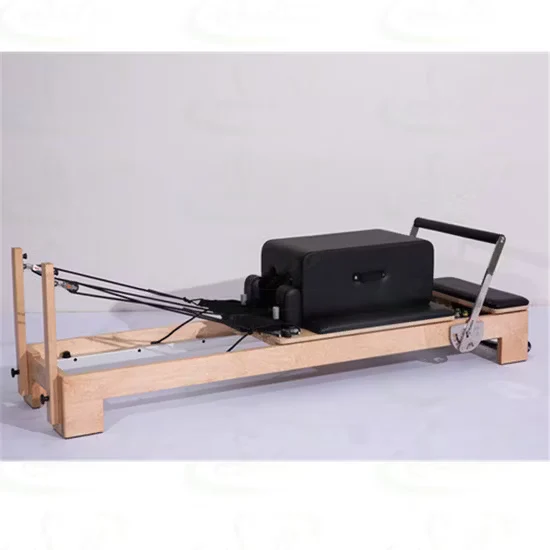
Pilates Reformer Yoga Chair, 800×620×1100mm, 45kg Net Weight — solid wood frame with reinforced joints ensures structural rigidity under repetitive studio loading, precision spring system delivers consistent resistance across full range of motion. Backed by ISO 9001:2015, CE, and SGS certifications with full OEM private label capability.
Every unit undergoes rigorous load testing before shipment, ensuring long-term durability in high-traffic environments.
// Spec Highlights
• Direct from Manufacturer · No Middlemen · Worldwide Shipping
01
// Material
Imported Solid Wood
Premium hardwood frames sourced for density and visual warmth.
02
// Hardware
Medical-Grade Silent
Whisper-quiet pulleys and springs for clinical environments.
03
// Customization
Appearance OEM
Color, upholstery, and branding tailored to your studio.
04
// Service
Layout Design
Free venue planning for studios and rehab institutions.
Every component is selected for longevity, performance, and aesthetic harmony - from imported hardwood frames to silent medical-grade accessories.
// Features
Precision Wood Joinery — kiln-dried solid maple frame with reinforced mortise joints load-tested before shipment.
| Parameter | Value |
|---|---|
| Product Type | Pilates Chair |
| Product Dimensions | 800×620×1100mm |
| Frame Material | Solid White Maple Wood |
| Net Weight | 45kgs |
| Spring System | Multiple resistance springs included |
| Pedal Surface | Non-slip textured platform |
| Upholstery | Standard or high-density options available |
| Color | Solid Color, custom options available |
| Logo | Customized Is Allowed |
| Assembly State | Standard Wood Case |
| Warranty | 3 Years |
| Certification | ISO 9001:2015, CE, SGS |
| Facility Type | Typical Use |
|---|---|
| Commercial Pilates studio | Group reformer classes and private instruction on Pilates chair movements |
| Yoga and wellness center | Complementary strength work and balance training between mat sessions |
| Rehabilitation and physical therapy clinic | Controlled resistance exercises for lower limb and core recovery protocols |
| Home fitness environment | Compact footprint for dedicated personal practice space |
Most failures start at the frame joints, not the springs.
Many commercial Pilates chairs on the market use low-density wood composites or thin-gauge metal tubing that looks acceptable on day one. After six months of daily studio classes, the joints loosen, the frame racks under off-center pedal loading, and the upholstery compresses into permanent valleys. Studio owners end up replacing equipment on a cycle that destroys their return on investment [NEED_CITE: structural fatigue in repeated-loading fitness equipment]. The commercial pilates reformer yoga chair addresses this with a solid white maple frame and reinforced joinery that maintains rigidity through thousands of compression and release cycles.
The Pilates chair targets sagittal and frontal plane movements — seated presses, standing pedal work, and lateral balance challenges that complement reformer and cadillac stations. In a studio configuration, it serves as a transitional piece between mat-based warm-up zones and heavier apparatus work. The 800×620mm footprint allows placement in high-density floors without compromising the clearance needed for standing exercises alongside the unit. It accommodates users across a wide range of body sizes, with spring configuration adjustable to match individual resistance requirements. The commercial pilates reformer yoga chair fills a gap that most studio operators only notice after their members start requesting more variety.
Every pedal press sends a compression cycle through the frame joints, and in a busy studio, a single chair may see hundreds of these cycles daily. The stress concentrates at the pedal pivot point and the upright-to-base connection. Over time, frames built with adhesive-only joinery or undersized dowels develop micro-movement at these junctions, which accelerates into visible racking [NEED_CITE: wood joinery fatigue under cyclic loading]. Non-slip pedal surfaces degrade under sweat exposure and repeated shoe contact. Upholstery foam compresses unevenly where users consistently sit, and low-density padding reaches its collapse threshold well before the frame itself shows wear.
The solid white maple frame is kiln-dried to a controlled moisture content before machining, which prevents the seasonal swelling and shrinking that opens joints in improperly cured wood. Reinforced joinery at the base and upright connections resists the lateral forces generated during standing pedal exercises — a failure point in chairs that rely on simple butt joints. The spring system provides a gradient of resistance levels, allowing instructors to scale difficulty from rehabilitation-grade to advanced athletic loading. Pedal surface material is selected for grip retention under moisture exposure, and the upholstery is available in standard or high-density options to match the expected daily traffic of the installation environment. The 45kg net weight provides stability during off-center standing work without making the unit immovable for studio reconfiguration.
A chair that costs less upfront but uses particle board or softwood framing will show joint separation within the first year of commercial use. When a pedal pivot loosens mid-class, the liability exposure is significant. Springs sourced without fatigue testing lose their resistance profile unevenly, creating an experience that frustrates practitioners and drives member attrition [NEED_CITE: spring fatigue and resistance consistency in Pilates apparatus]. Low-density upholstery requires replacement on a cycle that adds ongoing parts and labor expense. Thin surface finishes on wood frames chip and absorb moisture, leading to staining and surface degradation that makes equipment look neglected regardless of actual structural condition.
The solid maple frame stock is sourced with kiln-drying certification traceable to the batch, so moisture content is verified before any machining begins. Robotic and precision jig-assisted assembly ensures that joint alignment is consistent across production runs, not dependent on individual carpenter variation. Every unit undergoes load testing before crating — pedal compression cycles and static frame loading to confirm joint integrity under forces that exceed normal studio use. The 200μm-grade protective finish is applied in controlled conditions to resist moisture absorption and surface wear. A 3-year warranty backs the structural package, and 2D layout planning support is available to help studio operators position the commercial pilates reformer yoga chair with correct spacing for safe movement around each station. OEM branding and custom color options are available for operators building a consistent visual identity across their equipment fleet.
Provide your studio floor dimensions and existing apparatus list to receive a 2D or 3D layout showing optimal placement and safety clearances. Specify your expected daily class volume and practitioner profile so we can recommend the appropriate spring configuration and upholstery density. Indicate any branding, color, or logo requirements early in the specification process to align production scheduling with your project timeline.
Q: How do I tell a commercial-grade Pilates chair from a home-use model?
A: Commercial units use solid hardwood frames with reinforced joinery and load testing documentation. Home-use models typically use composite wood or thin metal tubing with adhesive-only joints. Check the warranty length, net weight, and whether the manufacturer provides per-unit structural testing records rather than sample-based inspection reports.
Q: What wood treatment ensures the frame stays stable long term?
A: Kiln-drying to controlled moisture content is essential before machining. Wood that ships with high internal moisture will swell and contract with seasonal humidity changes, opening joints and compromising structural alignment. Ask for kiln-drying batch records and the target moisture content specification.
Q: How does spring configuration affect the user experience?
A: Multiple springs with varying resistance gradients allow instructors to scale exercises from gentle rehabilitation work to advanced strength challenges. A single fixed-resistance spring limits programming variety. Spring material quality determines whether resistance stays consistent or degrades unevenly over hundreds of compression cycles.
Q: What maintenance does a wood-frame Pilates chair require?
A: Quarterly inspection of all bolted connections, especially at the pedal pivot and upright joints. Wipe frames with a damp cloth after exposure to sweat or cleaning products. Avoid solvent-based cleaners that strip the protective finish. Check spring anchors and pedal surface condition for wear indicators.
Premium aesthetics meet quiet operation for boutique studio environments.
Medical-grade silence and precision for sports & postpartum recovery.
Furniture-grade craftsmanship for premium residential installations.
Compact premium setups for one-on-one and small-group training.
Aesthetic Pilates integration for hybrid wellness studio programming.
Multi-unit deployment with instructor-grade reliability for certification programs.
Tell us about your project. Our team will respond within 24 hours with pricing, customization options, and shipping details.
// Sales Director
William
+86 132 2531 1800
// Export Manager
Bella
+86 198 5412 8032
william@bickfit.com