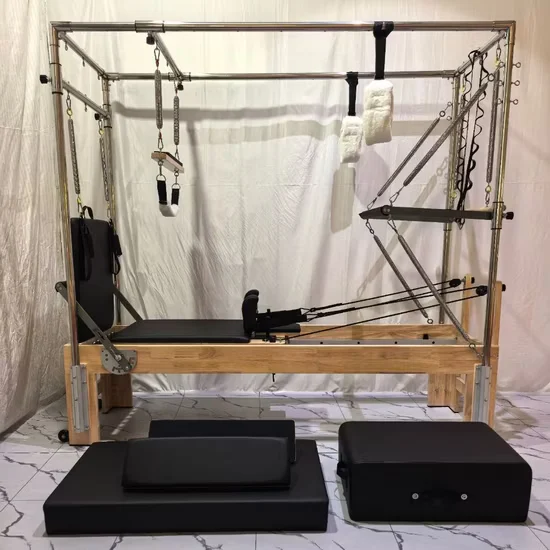
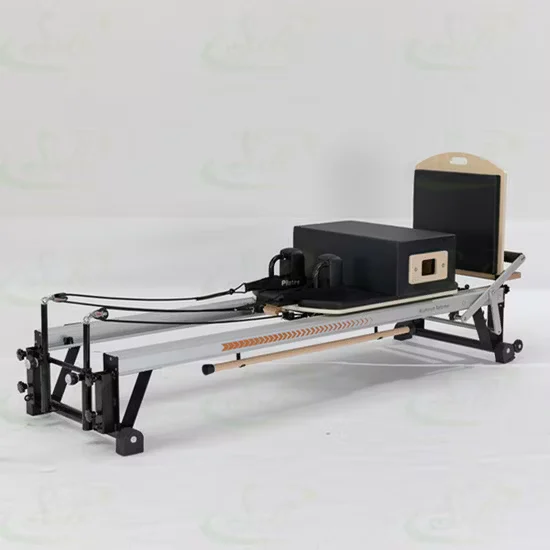
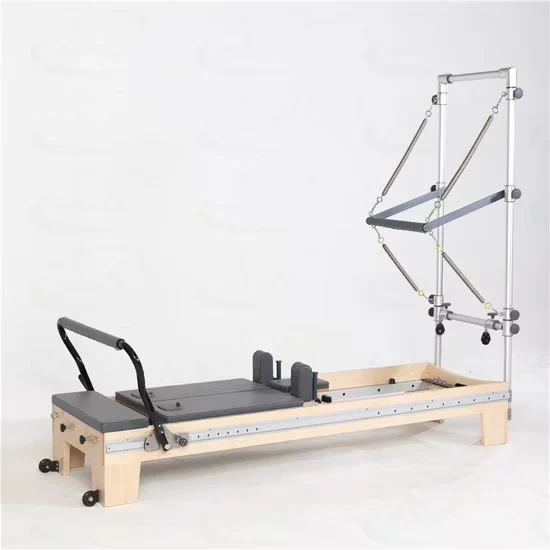
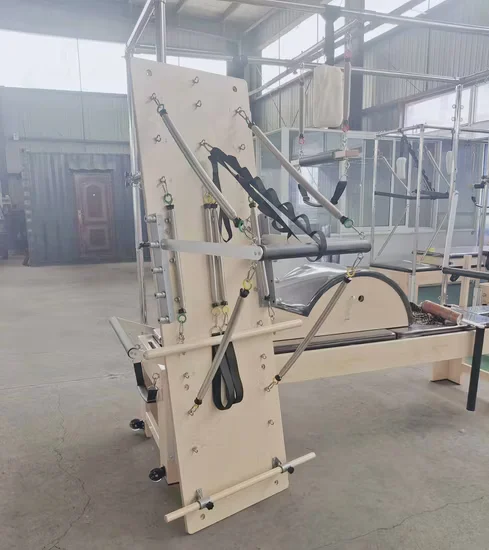
01 / Scenario
STUDIO
P
High-End Pilates Studios
Premium aesthetics meet quiet operation for boutique studio environments.

ISO
9001
CE
Certified
OEM
Available
10YR
Warranty
Pilates Spring Board Wall Unit, 1850×560×75mm, 35kg Net Weight — engineered with reinforced frame construction and integrated spring resistance system for high-repetition studio environments. Modular accessory interface supports long box, jump board, and platform with secure locking for rapid changeover between class formats. Backed by 3-year warranty and BICKFIT's 17-year manufacturing heritage with 15,000㎡ vertically integrated production facility.
// Spec Highlights
• Direct from Manufacturer · No Middlemen · Worldwide Shipping
01
// Material
Imported Solid Wood
Premium hardwood frames sourced for density and visual warmth.
02
// Hardware
Medical-Grade Silent
Whisper-quiet pulleys and springs for clinical environments.
03
// Customization
Appearance OEM
Color, upholstery, and branding tailored to your studio.
04
// Service
Layout Design
Free venue planning for studios and rehab institutions.
Every component is selected for longevity, performance, and aesthetic harmony - from imported hardwood frames to silent medical-grade accessories.
// Features
Continuous MIG Welding — every joint on this Pilates spring board wall receives robotic continuous-pass welds, eliminating the spot-weld weak points that fail under repetitive spring tension.
| Parameter | Value |
|---|---|
| Product Type | Pilates Wall Unit with Spring Board |
| Product Dimensions | 1850 × 560 × 75 mm |
| Net Weight | 35 kg |
| Frame Finish | Powder coated |
| Color Options | Solid color, custom available |
| Accessory Compatibility | Long box / Jump board / Platform |
| Logo | Customized allowed |
| Warranty | 3 years |
| Production Capacity | 800 pieces per month |
| Transport Package | Standard wood case |
| Facility Type | Typical Use |
|---|---|
| Commercial Pilates studio | Group reformer-wall hybrid classes with daily scheduling |
| Boutique movement and rehabilitation center | One-on-one spring resistance therapy and conditioning sessions |
| Hotel and resort wellness facility | Guest-accessible Pilates wall stations in compact fitness areas |
| University athletic department | Supplemental flexibility and core work for sports teams |
| Functional training facility | Integrated spring board stations within mixed-modality floors |
Sealed spring mounting points prevent the rattle, play, and inconsistent resistance that plague wall units after a few months of studio scheduling.
When a Pilates wall unit leaves the factory, the spring system feels tight and responsive. But studios running back-to-back classes place thousands of compression cycles per week on each spring housing. Open-mount spring anchors accumulate dust, chalk, and sweat residue that accelerates wear on the spring coils and attachment hardware. Within months, users notice a grinding sensation at full extension, and the resistance profile shifts from what the instructor calibrated during class planning [NEED_CITE: EN 957 structural requirements for stationary training equipment].
The commercial pilates spring board wall unit addresses this with attachment points engineered for serviceability — spring replacement does not require disassembling the entire wall frame, and the mounting hardware is standardized so replacement parts remain available beyond the initial purchase.
A Pilates wall unit with spring board occupies a distinct role in studio configuration. It covers resisted flexion, extension, and rotational movement patterns across the sagittal and transverse planes, targeting the posterior chain, hip stabilizers, and deep core musculature. In a mixed-equipment studio, it complements reformer stations by providing standing and kneeling resisted work that reformers cannot replicate, and it pairs with mat zones by adding spring-loaded resistance to bodyweight sequences. The commercial pilates spring board wall unit suits facilities running four or more classes daily, where quick accessory changeover between long box, jump board, and platform configurations keeps class transitions efficient. The 1850 mm mounting height accommodates users across a broad range of statures without requiring overhead clearance adjustments.
Every spring compression sends a reactive force through the wall board and into the mounting structure. In a studio running six classes per day, each wall station endures well over a hundred full-extension cycles daily. The stress concentrates at the spring anchor plate, the frame-to-wall mounting brackets, and the junction where the board meets its hinge or sliding rail. Spot welds at these junctions may pass visual inspection initially, but the cyclic loading pattern — tension, release, lateral shear from off-angle pulls — finds any discontinuity in the weld bead. Powder coating at contact edges also faces abrasion from spring hooks and accessory clamps being engaged and released repeatedly. The finish must resist chipping at these high-touch interfaces to prevent bare steel exposure and corrosion initiation [NEED_CITE: weld classification and fatigue performance in structural steel].
The 1850 × 560 × 75 mm board dimension determines both the movement envelope and the wall space required per station — plan for lateral clearance so users can perform standing lateral work without contacting adjacent equipment. The 35 kg net weight signals a frame substantial enough to resist flex under full spring tension without requiring structural wall reinforcement beyond standard commercial construction. Powder coating thickness at contact zones matters more than overall coverage; springs and clamps abrade the finish at attachment points, so the coating specification at these wear interfaces determines how long the unit maintains its appearance before touch-up is needed. Accessory compatibility — long box, jump board, platform — should be evaluated by the locking mechanism design, not just the presence of mounting holes; secure engagement without lateral wobble during dynamic movements is what separates a functional accessory interface from one that develops play within weeks. Custom logo placement indicates the manufacturer’s capacity for finish-level detail work, which often correlates with care taken on less visible structural processes.
Thin-gauge board frames flex noticeably under heavy spring loads, creating an unstable feeling during resisted movements that instructors cannot correct through cueing. Spot-welded spring anchors may hold during factory testing but develop hairline cracks under the asymmetric loading patterns that occur when users pull at angles. Non-standard spring hooks and accessory clamps become a procurement problem when replacements are needed — if the hardware is proprietary or sourced from a supplier the manufacturer no longer works with, the entire station sits idle. Insufficient powder coating at spring contact points chips within months, exposing steel to sweat and humidity that initiates surface rust, which then spreads beneath the surrounding coating and accelerates delamination. These failures do not appear in the showroom; they emerge after the unit has been in daily rotation [NEED_CITE: fatigue failure modes in cyclically loaded fitness equipment].
The 11-gauge frame steel sourcing applies to wall-mounted structures the same way it applies to freestanding rigs — mill-certified material with traceability to the coil ensures the frame does not become the failure point under spring tension. Robotic continuous MIG welding at every frame junction means the spring anchor plate, mounting brackets, and board hinge connections all receive full-penetration weld passes rather than cosmetic tack welds. Every unit undergoes load testing before shipment, which for a wall unit means verifying spring housing integrity under maximum extension force and confirming mounting bracket rigidity. The 200μm industrial powder coating provides abrasion resistance at the spring hook and clamp contact interfaces where finish wear concentrates. The 10-year frame warranty reflects confidence in the structural assembly surviving years of studio scheduling. Floor planning CAD support helps determine how many wall stations fit a given studio footprint while maintaining safe clearance for accessory use and instructor movement between stations.
Provide your studio floor dimensions and intended station count to receive a 2D or 3D layout showing wall unit placement, accessory clearance zones, and traffic flow paths. Specify your expected daily class volume so the structural grade and spring specification match your usage intensity. Confirm the height range of your client base to verify the 1850 mm board height accommodates your user population. Communicate any branding requirements — custom color, logo placement, or upholstery matching — early in the specification process so finish samples can be reviewed before production.
Q: How do I distinguish a commercial-grade Pilates wall unit from a light-commercial model?
A: Commercial-grade units specify frame steel gauge, welding method, and load testing protocols rather than relying on vague "studio-quality" claims. Look for documented powder coating thickness at wear points, standardized spring hardware for long-term parts availability, and accessory locking mechanisms that resist lateral play under dynamic loading. Manufacturer-direct sourcing typically provides more detailed structural documentation than trading company listings.
Q: What wall structure requirements should I verify before installation?
A: The 35 kg unit weight plus dynamic spring reaction forces require solid wall construction — reinforced concrete, structural steel studs, or properly anchored plywood shear panels. Drywall-only mounting is insufficient regardless of anchor type. Confirm wall flatness within tolerance so the 1850 × 560 mm board seats flush without inducing frame twist that transfers stress to mounting brackets over time.
Q: How should I evaluate spring resistance consistency across multiple wall units?
A: Request load-tested resistance values at defined extension points rather than relying on spring color coding alone, which varies between manufacturers. In a multi-station studio, consistent resistance feel across units matters for group class instruction where participants rotate between stations. Verify that replacement springs are available with documented resistance calibration matching the originals.
Q: What accessory changeover speed is realistic for a multi-class studio schedule?
A: The long box, jump board, and platform should engage and disengage through a positive locking mechanism — pin, latch, or cam — rather than friction-fit or bolt-on attachment. In studios running consecutive classes with different formats, instructors need to swap accessories between sessions without tools. Test the locking mechanism for secure engagement without lateral wobble before committing to a specification.
Premium aesthetics meet quiet operation for boutique studio environments.
Medical-grade silence and precision for sports & postpartum recovery.
Furniture-grade craftsmanship for premium residential installations.
Compact premium setups for one-on-one and small-group training.
Aesthetic Pilates integration for hybrid wellness studio programming.
Multi-unit deployment with instructor-grade reliability for certification programs.
Tell us about your project. Our team will respond within 24 hours with pricing, customization options, and shipping details.
// Sales Director
William
+86 132 2531 1800
// Export Manager
Bella
+86 198 5412 8032
william@bickfit.com