01 / Scenario
STUDIO
P
High-End Pilates Studios
Premium aesthetics meet quiet operation for boutique studio environments.
ISO
9001
CE
Certified
OEM
Available
10YR
Warranty
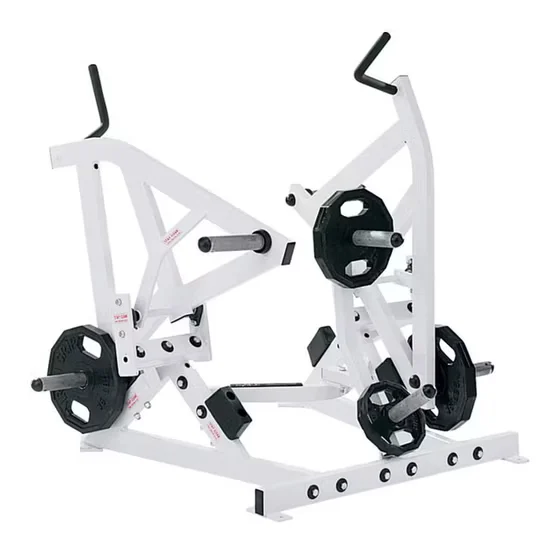
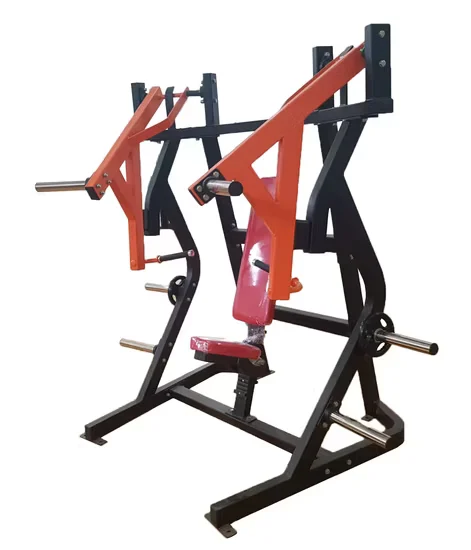
Commercial Plate Loaded Chest Press, 3×3 Inch Frame Steel, 140kg Net Weight — built with Q235/Q345 industrial-grade steel and robotic MIG continuous welding to eliminate spot-weld failure points under repeated heavy loading. Sealed industrial bearings and aircraft-cable pulley systems ensure smooth operation without play in high-traffic environments. Every unit undergoes individual load testing before shipment, backed by a 10-year frame warranty and professional floor planning support.
// Spec Highlights
• Direct from Manufacturer · No Middlemen · Worldwide Shipping
01
// Material
Imported Solid Wood
Premium hardwood frames sourced for density and visual warmth.
02
// Hardware
Medical-Grade Silent
Whisper-quiet pulleys and springs for clinical environments.
03
// Customization
Appearance OEM
Color, upholstery, and branding tailored to your studio.
04
// Service
Layout Design
Free venue planning for studios and rehab institutions.
Every component is selected for longevity, performance, and aesthetic harmony - from imported hardwood frames to silent medical-grade accessories.
// Features
Weld Integrity Under Load — Robotic MIG continuous welds eliminate the spot-weld fracture points that typically fail within months of heavy commercial use on plate loaded chest press equipment.
| Parameter | Value |
|---|---|
| Product Type | Plate Loaded Chest Press Machine |
| Frame Tube Size | 3×3 inch |
| Steel Grade | Q235 / Q345 |
| Welding Type | Robotic MIG continuous weld |
| Loading Type | Plate loaded |
| Exercise Part | Chest |
| Product Dimensions | 1323×1599×1746mm |
| Net Weight | 140kg |
| Powder Coating | 200μm scratch-resistant |
| Certification | CE, ISO 9001, RoHS |
| Assembly State | Unfolded |
| Power Source | Manual |
| Customization | Available |
| Facility Type | Typical Use |
|---|---|
| Commercial gym strength floor | High-traffic pressing station for general membership |
| Hotel and resort fitness center | Durable chest training point for transient guest use |
| University strength and conditioning room | Heavy-load pressing for athletic team programming |
| Crossfit box functional zone | Supplemental hypertrophy work alongside barbell stations |
The joint fails long before the frame tube reaches its yield point.
I have pulled entire batches of plate loaded equipment back to the factory because spot welds cracked along the main upright after less than a year of commercial gym rotation. The steel tube itself was fine — the failure happened at discrete weld points where repeated eccentric loading concentrated stress beyond what a discontinuous joint could absorb [NEED_CITE: weld classification and fatigue performance in structural steel]. When a commercial plate loaded chest press machine carries plate after plate dropped onto the horns by members who do not control the negative, the frame endures thousands of impact cycles per week. Continuous robotic MIG welding distributes that load along the entire joint line rather than isolating it at individual spots, which fundamentally changes the fatigue profile of the structure.
This plate loaded chest press machine targets the horizontal pressing plane, engaging the pectorals, anterior deltoids, and triceps through a converging movement arc. On a commercial strength floor, it pairs naturally with an incline plate loaded press and a plate loaded shoulder press to complete the anterior upper-body pressing circuit. The footprint suits medium-to-high density layouts where floor space commands a premium, and the seat geometry accommodates users across a broad anthropometric range without requiring multiple frame variants. A commercial plate loaded chest press machine fills the gap between free-weight bench stations and selectorized machines, offering plate-loaded feel with guided movement safety.
Every loaded repetition generates both static compressive force and dynamic impact at the moment plates settle on the horns. The main upright-to-base junction absorbs the majority of this cyclic loading, making it the critical fatigue zone on any plate loaded chest press [NEED_CITE: EN 957 structural requirements for stationary training equipment]. Continuous weld lines at this junction prevent crack initiation at discrete points. The pivot bearings endure rotational wear proportional to daily user volume, while the powder coating at plate contact zones faces abrasion from repeated loading and unloading, compounded by sweat and cleaning chemical exposure over extended service periods.
Frame tube dimensions of 3×3 inch paired with Q235 or Q345 steel define the bending resistance threshold — larger cross-sections resist deflection under off-center plate loads more effectively than smaller profiles. Robotic MIG continuous welding produces unif* avoiding the cold joints and incomplete fusion that plague manual spot welding on high-volume production lines. The 200μm powder coating applied over sandblasted surfaces provides abrasion resistance at plate horn contact points where bare steel would otherwise corrode from sweat exposure. Each unit undergoes load testing before shipment rather than sample-based batch inspection, catching structural anomalies at the individual machine level.
Thinner frame tubing may pass a static load test but develops measurable deflection under repeated heavy plate loading, gradually shifting the pressing arc away from its designed path. Spot-welded joints that look clean on the showroom floor fracture under six months of commercial impact cycles, creating liability exposure for facility operators. Non-sealed bearings at pivot points accumulate chalk dust and sweat residue, developing rotational play that degrades movement quality and demands premature replacement. Thin powder coatings chip at contact surfaces within weeks, exposing substrate steel to corrosion that spreads beneath adjacent coating layers [NEED_CITE: industrial powder coating durability under commercial fitness use].
The 11-gauge steel frame with mill-traceable certification means the tube wall thickness you specify is the tube wall thickness you receive, verified back to the coil source. Robotic continuous MIG welding on every joint eliminates the spot-weld fracture pattern I have seen shut down pressing stations mid-contract. The 1323×1599mm footprint leaves adequate clearance for plate loading on both sides when placed with standard commercial spacing between adjacent stations. Each commercial plate loaded chest press machine ships with individual load test documentation rather than batch-level sampling. The 10-year frame warranty reflects confidence in weld integrity under sustained commercial loading, and 2D-3D CAD layout support ensures this unit integrates cleanly with your surrounding station clearances and traffic flow paths.
Provide your strength floor dimensions and target station count to receive a 2D-3D CAD layout showing this plate loaded chest press machine integrated with surrounding equipment clearances. Specify your expected daily user volume so we can confirm the structural grade matches your traffic profile. Indicate any custom color, logo, or upholstery requirements for brand alignment across your facility floor.
Q: How do I verify a plate loaded chest press is genuinely commercial grade?
A: Request the steel mill certificate confirming tube gauge and material grade, not just a marketing label. Inspect the weld pattern — continuous MIG beads along the full joint indicate structural commitment, while discrete spot welds suggest cost reduction at the joint level. Ask whether load testing is performed on every unit or only on production samples, as this distinction determines whether your specific machine has documented structural verification before shipment.
Q: What maintenance intervals apply to the pivot bearings on this machine?
A: Sealed industrial bearings resist chalk dust and sweat intrusion far longer than open bushings, but quarterly inspection for rotational play remains necessary. Listen for grinding or feel for lateral wobble at the pivot during slow unloaded articulation. Bearing replacement is straightforward when needed, and sealed units typically deliver a meaningfully longer service interval before attention is required compared to non-sealed alternatives in high-traffic commercial environments.
Q: How should I plan spacing around a plate loaded chest press on the gym floor?
A: Account for the machine footprint plus full arm extension on both sides for plate loading, plus a walkway for member passage. Crowding plate loaded stations together creates unsafe pinch points when users load and unload simultaneously. Requesting a CAD layout from the manufacturer ensures safety clearances meet operational standards and that adjacent equipment does not interfere with the pressing arc or loading access.
Q: What upholstery lifespan should I expect under commercial use?
A: High-density commercial upholstery resists compression breakdown far longer than standard padding, but daily heavy use will eventually compress the contact surface. Replacement pads should be available as spare parts from the manufacturer rather than requiring full seat reconstruction. Confirm upholstery attachment method and spare part availability before purchase, as proprietary mounting patterns can complicate field replacement.
Premium aesthetics meet quiet operation for boutique studio environments.
Medical-grade silence and precision for sports & postpartum recovery.
Furniture-grade craftsmanship for premium residential installations.
Compact premium setups for one-on-one and small-group training.
Aesthetic Pilates integration for hybrid wellness studio programming.
Multi-unit deployment with instructor-grade reliability for certification programs.
Tell us about your project. Our team will respond within 24 hours with pricing, customization options, and shipping details.
// Sales Director
William
+86 132 2531 1800
// Export Manager
Bella
+86 198 5412 8032
william@bickfit.com