01 / Scenario
STUDIO
P
High-End Pilates Studios
Premium aesthetics meet quiet operation for boutique studio environments.

ISO
9001
CE
Certified
OEM
Available
10YR
Warranty
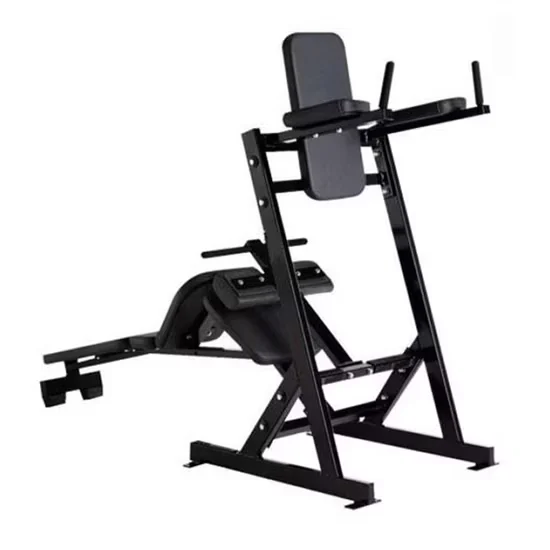
Commercial Plate Loaded Flat Bench, 3×3 Inch Frame Tube, 63kg Net Weight — engineered with 11-gauge steel tubing and robotic MIG continuous welding to eliminate cold joints under repetitive barbell loading, finished with 200μm industrial powder coating for chip resistance at contact points. Every unit undergoes individual load testing before shipment, backed by a 10-year frame warranty and factory-direct floor planning support.
// Spec Highlights
• Direct from Manufacturer · No Middlemen · Worldwide Shipping
01
// Material
Imported Solid Wood
Premium hardwood frames sourced for density and visual warmth.
02
// Hardware
Medical-Grade Silent
Whisper-quiet pulleys and springs for clinical environments.
03
// Customization
Appearance OEM
Color, upholstery, and branding tailored to your studio.
04
// Service
Layout Design
Free venue planning for studios and rehab institutions.
Every component is selected for longevity, performance, and aesthetic harmony - from imported hardwood frames to silent medical-grade accessories.
// Features
Traceable Steel Frame — Every tube in this plate loaded flat bench traces back to a mill-certified coil of 11-gauge industrial steel, eliminating vague "commercial grade" claims.
| Parameter | Value |
|---|---|
| Product Type | Flat Bench |
| Frame Tube Size | 3×3 inch |
| Frame Steel Gauge | 11-gauge |
| Steel Grade | Q235 / Q345 industrial steel |
| Welding Type | Robotic MIG continuous welding |
| Loading Type | Plate loaded |
| Product Dimensions | 1304 × 1300 × 1234 mm |
| Net Weight | 63 kg |
| Powder Coating | 200μm scratch-resistant |
| Upholstery | Standard or high-density options |
| Main Frame Color | Customizable |
| Cushion Color | Customizable |
| Certification | ISO 9001, CE |
| OEM / ODM | Acceptable |
| Facility Type | Typical Use |
|---|---|
| Commercial gym strength floor | Paired with plate loaded chest and shoulder presses for a complete pressing station |
| University strength and conditioning room | Heavy barbell work under supervised team training sessions |
| Hotel and resort fitness center | Professional-grade construction with compact footprint for guest-facing environments |
| CrossFit box functional zone | Flat pressing and dumbbell work within modular rig layouts |
| Institutional athletic department | High-traffic daily use requiring low maintenance and structural durability |
Continuous weld lines distribute barbell impact across the entire joint, not a single fused point.
Most benches marketed as commercial grade rely on spot-welded joints at the legs and cross supports. Under repeated barbell loading, those isolated weld points concentrate stress and develop micro-fractures that propagate quickly in high-traffic gyms [NEED_CITE: weld classification and fatigue performance in structural steel]. A commercial plate loaded flat bench built with robotic MIG continuous welding eliminates those cold joints entirely, producing a weld bead that runs the full length of each connection. The difference is not theoretical — spot-welded bench frames returned from the field consistently show crack propagation radiating outward from the weld nugget boundary, while continuous welds fail only when the parent steel itself yields.
This bench anchors the horizontal pressing plane, targeting the pectoralis major with secondary recruitment of the anterior deltoids and triceps. In a commercial strength zone, it sits between plate loaded incline and decline stations to give members a complete pressing spectrum without redundant equipment. The footprint accommodates standard Olympic barbell clearance on both sides, making it suitable for facilities with moderate to high member density where floor space commands a premium. The stable base geometry supports a wide range of user body types without requiring backrest adjustments.
The primary stress on a plate loaded flat bench is vertical compression through the legs and horizontal shear at the seat-to-frame junction each time a lifter racks or unracks a loaded barbell. In a commercial gym seeing hundreds of sets per day, those micro-impacts accumulate into fatigue cycles concentrated at the rear leg gussets and the upright support brackets [NEED_CITE: EN 957 structural requirements for stationary training equipment]. The powder coating at barbell contact zones faces abrasion from knurled bar sleeves, while sweat and cleaning chemicals attack any exposed steel at weld seams. Upholstery compression set becomes visible first at the hip contact point, where repetitive loading drives the densest foam deflection.
Frame tube gauge and cross-section dimensions define the deformation threshold: an 11-gauge 3×3 inch tube resists flex under heavy dumbbell or barbell loads where thinner-walled frames permanently bend after repeated use. Robotic MIG welding produces uniform penetration depth across every joint, which matters because inconsistent hand-welded beads create internal voids invisible to visual inspection. The 200μm powder coating applied after sandblasting provides a measurable wear layer that survives barbell sleeve contact and repeated cleaning cycles without chipping down to bare steel. Upholstery density directly determines how many months pass before the foam compresses past recovery and the vinyl splits along stitch lines.
Downsizing from 3×3 inch 11-gauge tubing to thinner-walled alternatives saves material cost upfront but introduces frame flex under loads common in commercial environments, leading to premature weld fatigue. Spot-welded construction passes a static load test at the factory but cracks within months of cyclical barbell impacts in a busy gym. Undersized powder coating chips at barbell contact points, exposing raw steel to sweat corrosion that accelerates structural degradation. Low-density upholstery foam compresses beyond recovery within the first year, forcing costly reupholstering or full bench replacement while members complain about discomfort [NEED_CITE: upholstery compression testing standards for commercial fitness equipment].
Our frames use 11-gauge Q235 or Q345 steel with mill certification traceable to the source coil — every tube in this bench can be verified against its material documentation. Robotic MIG continuous welding runs the full length of every joint with no spot-weld weak points and no cold joints to inspect post-production. Each unit undergoes load testing before shipment rather than relying on sample-based batch approval. The 200μm industrial powder coating resists chipping at high-contact zones. We provide 2D and 3D CAD floor planning that maps safe barbell clearance zones around this bench so your layout does not create traffic conflicts with adjacent stations. OEM customization on frame color, cushion color, and logo placement is available without compromising structural specifications. A 10-year frame warranty backs the entire structure.
Provide your strength floor dimensions and current equipment list so we can generate a 2D or 3D layout showing this bench integrated with safe barbell clearance zones. Specify your estimated daily user volume to confirm the structural grade matches your traffic pattern. Indicate any customization requirements for frame color, cushion color, or branding placement.
Q: How do I distinguish a true commercial-grade flat bench from a light-commercial model?
A: Request the frame tube gauge and cross-section dimensions with mill certification rather than accepting vague "commercial grade" labels. Verify the welding method is continuous MIG rather than spot welding, and confirm that load testing is performed on every unit before shipment rather than on a sample basis. These three checkpoints separate equipment built for daily heavy use from models that will degrade under commercial traffic.
Q: What frame tube specifications matter most for a plate loaded flat bench?
A: The tube gauge thickness and cross-section dimensions together determine how much load the frame absorbs before permanent deformation occurs. An 11-gauge 3×3 inch tube provides a deformation threshold suitable for repeated heavy barbell pressing in commercial environments. Steel grade certification such as Q235 or Q345 with traceable coil documentation ensures material consistency across production batches.
Q: How should I plan equipment spacing around a flat bench in a commercial layout?
A: Account for full Olympic barbell length on both sides plus a safety buffer for loading and unloading plates. Consider foot traffic flow between adjacent stations so members carrying heavy dumbbells do not intersect with barbell paths. A CAD floor plan from the manufacturer should map these clearance zones specifically for your room dimensions rather than relying on generic spacing guidelines.
Q: What determines the upholstery lifespan on a commercial flat bench?
A: Foam density dictates how long the padding resists compression set under daily use, while vinyl thickness and stitch quality determine when splitting begins at stress points. High-density foam options maintain structural support longer in high-traffic environments. Confirm that replacement upholstery covers are available as spare parts so you can extend the bench service life without replacing the entire unit.
Premium aesthetics meet quiet operation for boutique studio environments.
Medical-grade silence and precision for sports & postpartum recovery.
Furniture-grade craftsmanship for premium residential installations.
Compact premium setups for one-on-one and small-group training.
Aesthetic Pilates integration for hybrid wellness studio programming.
Multi-unit deployment with instructor-grade reliability for certification programs.
Tell us about your project. Our team will respond within 24 hours with pricing, customization options, and shipping details.
// Sales Director
William
+86 132 2531 1800
// Export Manager
Bella
+86 198 5412 8032
william@bickfit.com